
Begin with the area everyone means
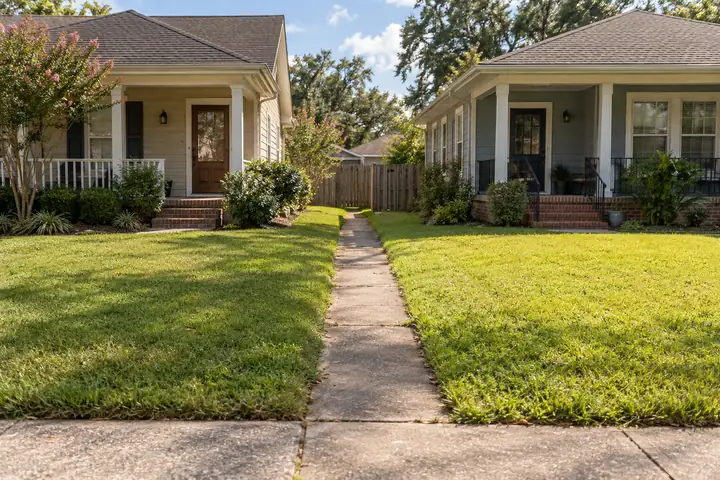
The phrase “our yard” can mean different things to different people. One person may be talking about the front grass, another about a common side passage and another about the small patch beside a rear patio. Before asking for lawn service, identify the exact area being discussed. Use ordinary landmarks and photographs to show it clearly.
This guide helps coordinate a maintenance request. It does not determine ownership, interpret a lease or resolve a boundary disagreement. Clarify those matters with the appropriate people before asking Happy to work in an uncertain area. A cheerful lawn routine starts more easily when the people involved agree about the space than when a crew is expected to decide whose grass begins at a particular fence post.
Choose the person who can confirm the work
Several people can help gather information, but someone needs clear authority to confirm the requested scope. Establish who that person is and tell Happy their role. If another owner, landlord or manager must approve a decision, explain the step while requesting the estimate. Do not treat a group discussion as approval from someone who has not agreed.
Keep routine instructions coordinated through one contact when practical. That person can collect questions from the people who use the property and pass along a consistent request. It is easier than sending several messages that describe different visit intervals or different areas to include. Clear coordination is not about making a simple yard formal; it is about preventing an ordinary service visit from arriving with three incompatible sets of instructions.
- Identify the authorized person confirming scope.
- Name any separate approval step early.
- Choose a contact for routine visit questions.
- Keep everyone informed when the agreed plan changes.
Draw the work area with photos and plain descriptions
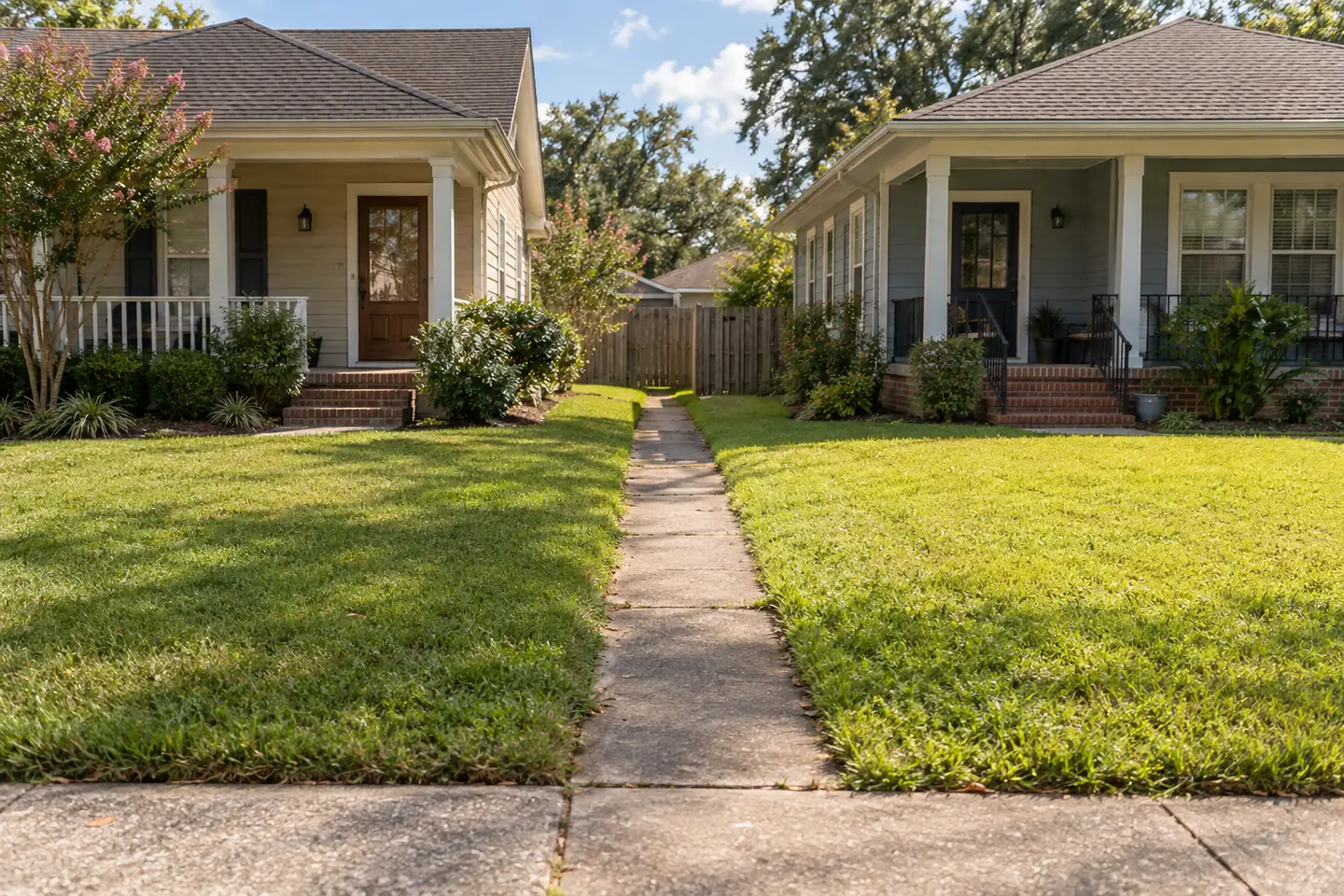
A wide view can show the shared lawn and its relationship to paths, porches and neighboring grass. Add a description such as the strip between two existing walks or the backyard up to an agreed fence. Use the description to communicate a boundary that has already been clarified, not to establish one by assertion.
Include any excluded area in the same conversation. A garden, pet enclosure or separately maintained patch should not be left for someone to infer from its appearance. If the boundary is uncertain, hold that part out of the request until the responsible people clarify it. A lawn service quote should not become a substitute for settling who has the right to authorize work on a disputed section.
Make the access route part of the shared plan
Shared access can change during an ordinary day. One person may store a bin beside the gate while another uses the passage for a bicycle. Look at the actual route to the agreed lawn and identify who will keep it available before the visit. Photograph the opening and the path beyond it, including fixed obstacles and any step or narrow turn.
Confirm who can open or unlock the gate and how private access details will be shared directly. Do not assume everyone who uses the yard has authority to distribute a code or change an access arrangement. A clear route and a responsible contact make the lawn visit easier to discuss. They also avoid putting a crew in the position of asking several occupants for different answers at the same gate.
Give pets one coordinated arrangement
If more than one household uses the space, ask each responsible person about pets during the service discussion. A plan that secures one animal but overlooks another is not a complete access arrangement. Confirm who will make sure the agreed work area is available for the actual visit, especially if people follow different daily schedules.
Collect pet items and waste from the included area through the responsible household arrangement. Tell Happy about anything that cannot be cleared or an area that should remain excluded. Do not leave conflicting notes about whether a gate may be opened. The useful result is one current, understood plan, with the people who care for the animals aware of when lawn access is being arranged.
Define the maintenance tasks without relying on shared shorthand
Mowing, edging, weed-eating and blowing should be discussed by included area. A path that everyone uses may not automatically be part of the requested finishing cleanup. A fence line may belong to one maintenance arrangement while the adjoining patch belongs to another. Say what is being requested and ask Happy to clarify scope before assuming that a familiar household phrase covers all of it.
If you want a separate task reviewed, name it. Moving stored furniture, hauling a mixed pile or treating a plant concern is not automatically part of keeping the lawn tidy. Happy Grass does not offer fertilization, aeration, overseeding or pest control. Weed-control questions require their own discussion. A clear request helps the people sharing the yard compare the same proposed work instead of imagining different services under one simple label.
Coordinate timing around how the space is used
Tell Happy about a planned gathering, a regular access restriction or another activity that affects the work area. Ask what arrangement is possible rather than assuming that any requested time is available. The person coordinating the yard should distinguish an estimate conversation from a confirmed visit and pass along the actual arrangement to the other people involved.
When the plan changes, update the household or property contacts who handle access and pets. An old message can continue circulating after a newer arrangement has been made. Keep the current information in one place where the relevant people can find it. You do not need a complicated scheduling system; a clear date, scope and responsible person can do a great deal of useful work.
- Share known restrictions while asking about timing.
- Confirm the visit before relying on it.
- Update the people responsible for pets and access.
- Make the latest arrangement easy to identify.
Keep service questions separate from private disagreements
If the people sharing the property disagree about responsibility, cost or a boundary, resolve that through the appropriate conversation before requesting uncertain work. Happy needs a clear authorized service request, not an invitation to choose between different accounts of who should maintain which patch. Avoid passing along unrelated private messages just to explain the disagreement.
This article does not advise how expenses should be divided or what a particular agreement requires. Those questions depend on arrangements outside a lawn quote. For maintenance purposes, identify who is arranging the service, what area is authorized and what scope is being considered. When those points are unsettled, say so plainly. An honest limitation is easier to work with than two people each assuming the other has confirmed the same thing.
Review the finish against the same agreed scope
After the work, use the included areas and tasks as the reference for any question. Take a current photograph of the exact location and describe the concern. Send the coordinated question through the agreed contact rather than several different interpretations of the same corner. That helps Happy understand what needs review without sorting out a second household discussion first.
If the group wants a different arrangement for future visits, discuss it explicitly. A change in how the shared yard is used may affect access or the requested scope. Do not assume one person’s new preference has automatically replaced the existing agreement. A short update can keep the maintenance plan aligned with the people using the space, even as routines change over time.
Make room for the happy part of sharing a yard
The point of the plan is to make the lawn easier to live with. Agree on the area, choose the authorized contact, keep access clear and describe the work. Those practical details can reduce friction and leave more time for enjoying the outdoor space together. The lawn does not need to become a recurring debate every time a visit is discussed.
Call or text Happy Grass at 504-339-3571 and Ask for Happy, or use the quote form with current photographs. Explain that the yard is shared, identify your role and describe the authorized area you want reviewed. Clear boundaries and a friendly conversation can go together. A little lawn love works best when everyone knows the plan and the next step belongs to the same yard.
Check that everyone means the same shared strip
In a shared-yard discussion, two people may agree that the “middle strip” needs attention while pointing to different boundaries. Use one marked overview or a short written route between fixed references to settle the description. Then have the person responsible for authorizing the work confirm that same area. Agreement on a nickname alone is not enough to establish the scope.
Keep household cost-sharing and private disagreements outside the maintenance instruction. A lawn description can identify the requested grass and the person who confirms it without deciding anyone's legal rights or financial arrangements. If authorization remains unclear, leave the affected area unresolved rather than using apparent agreement as a substitute.
Once a scope is confirmed, use that version for subsequent updates. A new photograph should explain whether it shows a changed condition within the same area or a proposed addition. This distinction helps several people communicate about one yard without allowing a routine condition report to become an accidental expansion of the work.