
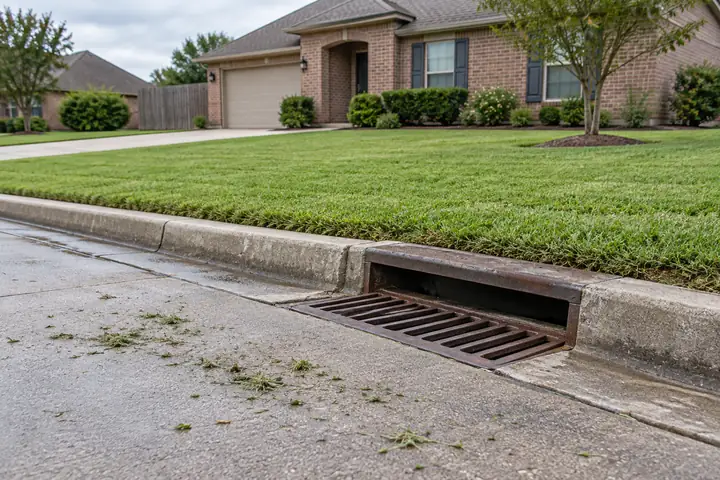
Start with the whole lawn-to-street view
A small storm-drain inlet can disappear from a broad photograph of the front yard. Take a view that connects the lawn, sidewalk, curb and inlet so the layout is understandable. Add a closer picture from a safe place if there is a particular concern. Do not stand in traffic or enter an uncertain roadside area just to show one detail of the lawn request.
Describe what you want reviewed in ordinary terms. Perhaps mowing debris collects on the driveway edge, grass hangs over the concrete or a narrow strip beside the inlet needs attention. Those are different observations, and each deserves a clear location. Happy can discuss the lawn work more usefully when the request shows where the grass ends and which adjoining surfaces you want included in the finishing conversation.
Keep clippings out of the water route
Grass clippings and leaves belong in an appropriate lawn or yard-waste plan, not as a convenient deposit in a storm drain. Jefferson Parish explains that stormwater runoff enters drainage systems and carries material toward local waterways. University of Florida extension guidance specifically recommends keeping lawn clippings from entering storm drains. That is a practical reason to look beyond the freshly cut grass when discussing a neat finish.
Ask how the ordinary mowing debris on the agreed paved surfaces will be addressed. Name the driveway, front walk and curb-side area you want considered instead of relying on a broad instruction to blow everything away. Away needs a destination. The useful question is whether the finishing work keeps material out of the street gutter and inlet while matching the actual service arrangement and site conditions.
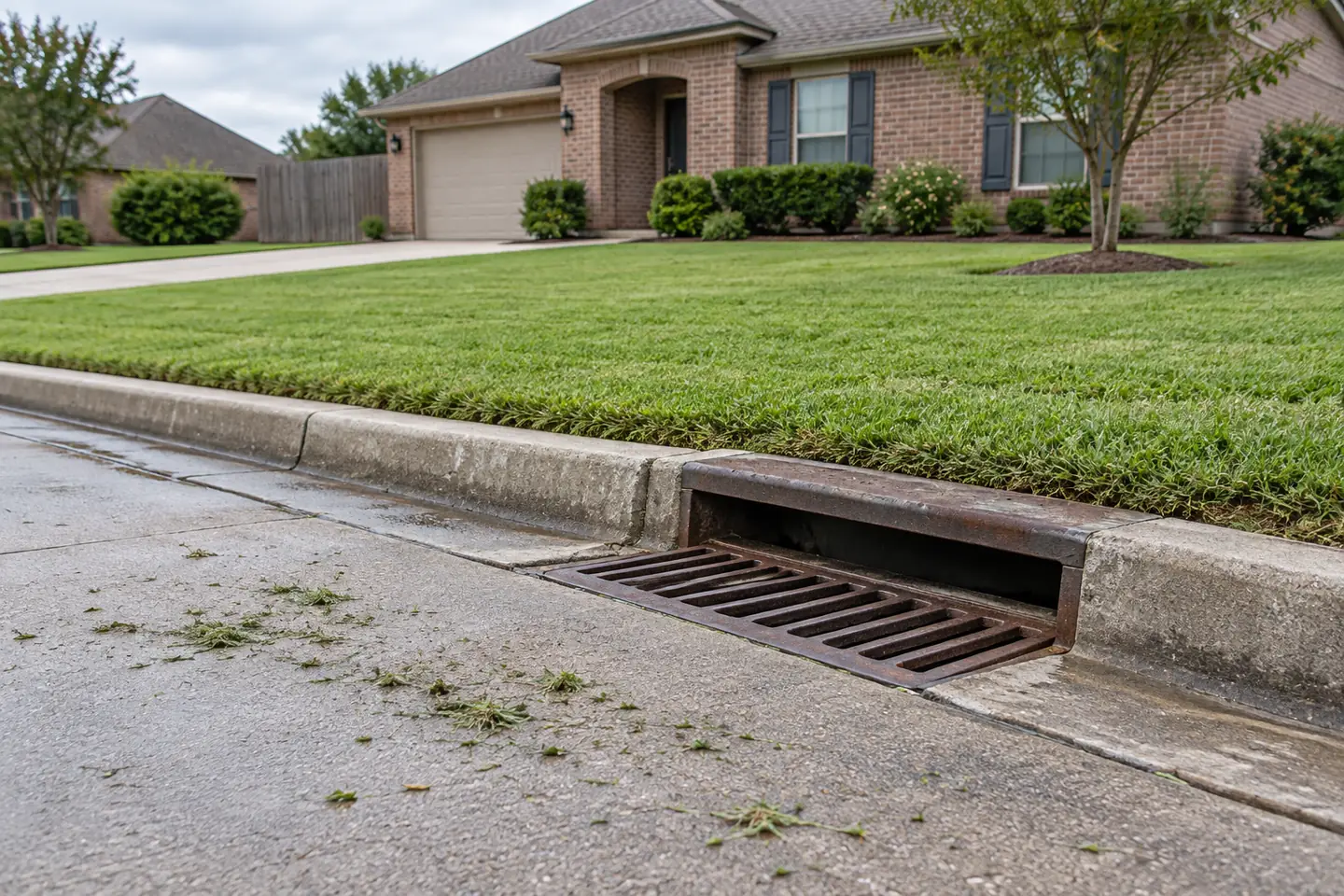
Separate a visible surface finish from drain servicing
Loose material on a paved surface is not the same as a blocked underground drainage system. If water is not moving normally or a grate appears damaged, report the condition to the responsible property contact or appropriate drainage authority. A lawn visit does not inspect pipes, certify capacity or establish why a street floods. Keep those concerns separate from the grass-cutting request.
Do not lift a grate, enter an inlet or put tools into an unfamiliar opening to prepare a quote photograph. You can describe what is visible without investigating the structure yourself. If the area cannot be approached safely, say so. A clear exclusion or a separate report is a more useful next step than asking routine lawn maintenance to quietly become drain repair or confined-space work.
Show the existing edge without redesigning it
A grass-to-concrete boundary may need an ordinary edging discussion, while a changed grade or altered drainage path is a different project. Show the current line and explain the appearance you want reviewed. Mention a broken slab, missing edge or low feature close to the work. A good photo can explain the concern without assuming that soil removal or reconstruction is included.
Avoid asking for a new trench or deeper cut beside an inlet as a quick way to make the yard drain. Changes around drainage infrastructure need appropriate review and authorization. This guide does not supply a grading plan. For the lawn conversation, identify the existing grass and hard-surface boundaries and ask what routine maintenance can reasonably address around the property as it stands.
Describe accumulated debris honestly
A few loose clippings after mowing and an established pile of mixed material are different requests. If the area already contains leaves, branches, litter or construction debris, show the current condition and describe what you know is present. Do not use an old clean photo to stand in for a new estimate. The scope should reflect the material that needs review now.
Ask about handling and disposal when you are requesting more than an ordinary lawn finish. Do not assume unlimited collection or haul-away is included because the material happens to sit beside the grass. Some concerns may need a separate provider or the responsible public service. Clear information makes it easier to distinguish the work Happy Grass offers from another cleanup or infrastructure question.
Account for the street and pedestrian route
An inlet near a sidewalk or corner can sit beside a busy route. Tell Happy about regular pedestrians, school pickup activity or an access constraint that affects the property. You do not have to provide traffic instructions or stand outside directing a crew. The useful information is the normal site condition and the areas you want reviewed before a visit is arranged.
Keep children and pets away from the work area, and make household preparation part of the plan. If parked vehicles obscure the curb or leave little room to see the edge, mention that before the visit. Do not assume an obstructed roadside section can be serviced in the same way as an open front lawn. Access and the practical work area still need an individual look.
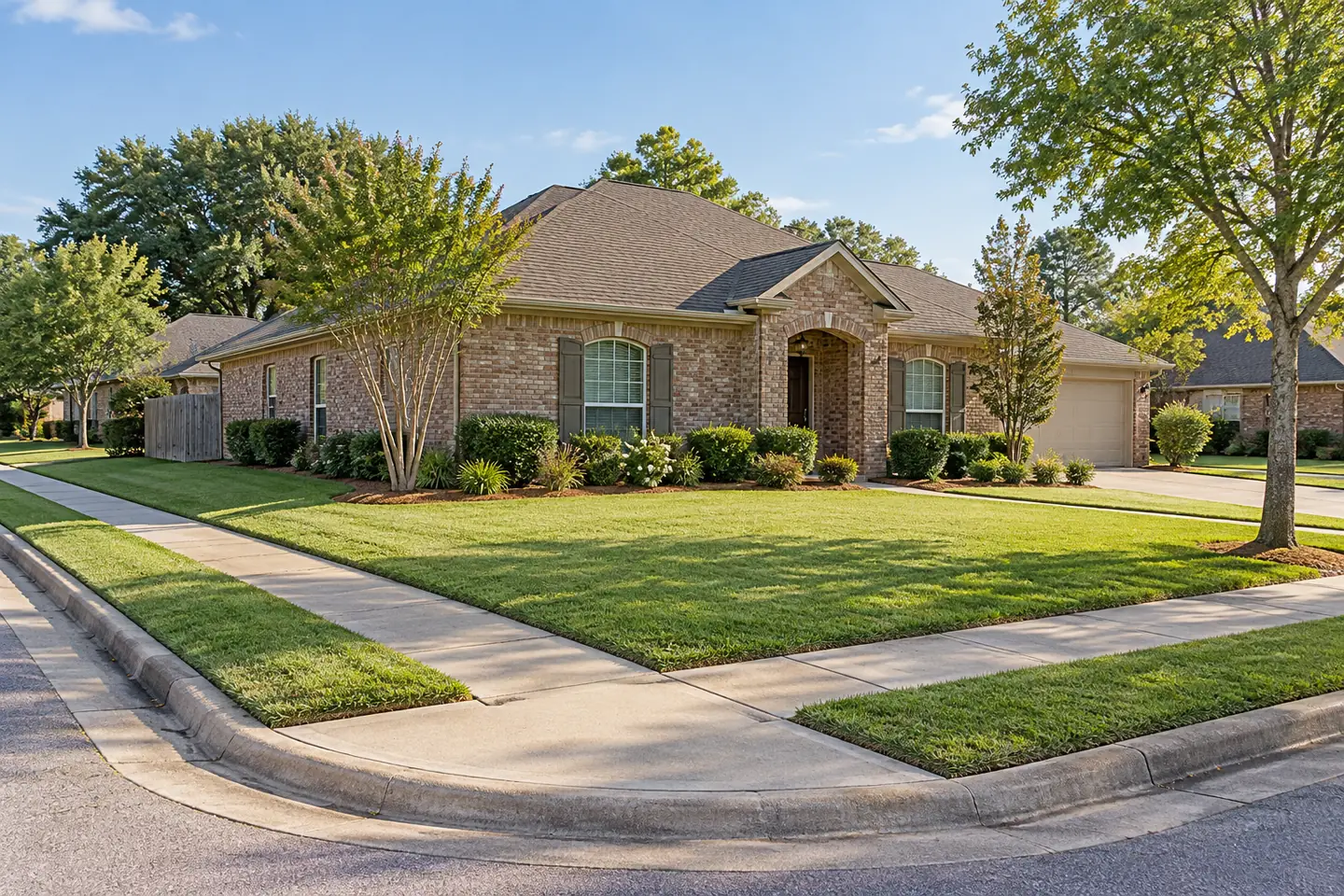
Use a short finishing checklist
A simple checklist can keep the requested result clear without making the service conversation complicated. List the lawn areas, the existing edges and the paved surfaces you want discussed. Add the inlet location and any known concern beside it. The purpose is to connect a tidy-looking lawn with the actual finish around its boundaries, rather than leaving the last part of the visit to guesswork.
- Show the grass section and adjoining hard surfaces.
- Identify the visible storm-drain inlet in a broad view.
- Describe loose clippings separately from mixed accumulated debris.
- Ask about an appropriate finishing and disposal arrangement.
- Report damaged infrastructure through the appropriate separate channel.
Keep the checklist tied to your own property and authorized work area. A helpful photo does not establish ownership of a neighboring strip or permission to change a public feature.
Keep the service request within its actual scope
Happy Grass offers mowing, edging, weed-eating and blowing, with weed-control questions reviewed separately. Fertilization, aeration, overseeding and pest control are outside the offered scope. A visible drain does not add pipe cleaning, pumping, excavation or drainage installation to a routine lawn visit. If you need another task, name it separately and ask who should handle it.
You can still ask for help with an untidy lawn without solving every drainage question first. Explain the uncertainty and identify any area that needs to remain excluded while another concern is reviewed. The useful arrangement describes the lawn work that can be considered now and the separate next step for the unresolved feature. That is clearer than an all-or-nothing request to fix everything near the curb.
Review the finish from a safe familiar viewpoint
After an agreed visit, use a broad photo from the sidewalk or another safe location to discuss a concern. Point to the exact surface or edge and compare it with the agreed tasks. If you see material where it should not be, describe what is visible and when you noticed it. Specific observations are easier to address than a general statement that the whole front yard was unfinished.
If a drainage problem appears during rain, contact the appropriate responsible party rather than trying to assess the system in moving or uncertain water. Keep the lawn-finish question separate from assumptions about the cause of flooding. A photograph may document a condition without proving what caused it. Your service notes can remain factual while the infrastructure concern receives the right attention.
A happy lawn includes a thoughtful edge
The last few feet between grass and street deserve a clear plan. Show the current yard, name the surfaces and explain what finish matters to you. You do not need technical drainage language to make a useful request. A broad view and a few accurate notes can give Happy enough context to start reviewing the actual work.
Text Happy Grass at 504-339-3571 and Ask for Happy, or use the quote form with current photos. Mention the inlet early when it affects the lawn boundary or finishing request. Happy Grass serves Harvey and surrounding Westbank communities. Let’s kick some grass with a tidy-yard conversation that remembers where the rainwater goes after it leaves the lawn.
Name the pavement finish without adding drain work
A photo of the street edge may show lawn clippings, old litter and the drain opening together. Caption the material and surface you want reviewed so the request does not imply inspection or servicing of the drainage system. Keep any question about a blocked or damaged public inlet with the appropriate responsible source.
For the lawn conversation, describe the grass boundary, nearby paved area and the finish being requested. If accumulation was present before the visit, date that observation and keep it separate from new mowing material. Review the named area afterward from a safe position rather than entering the roadway for a closer look. This provides a fair before-and-after reference while keeping the important distinction between thoughtful lawn cleanup and work on water-carrying infrastructure.