
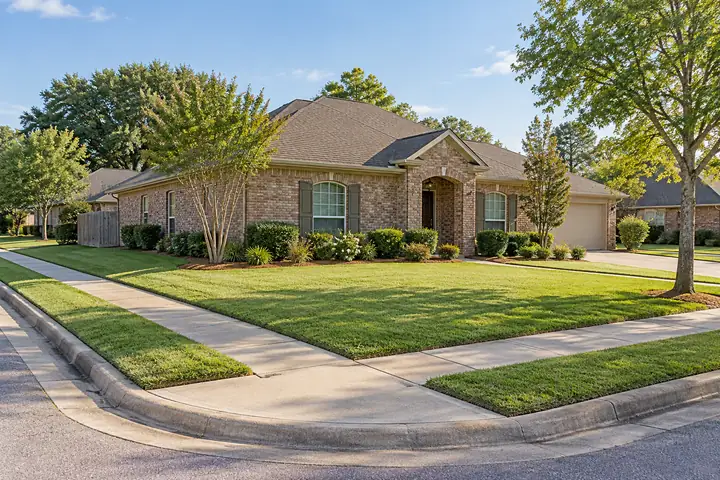
Show both street-facing sides from the start
The front-door photograph may explain only half a corner lot. Take broad views of both street-facing lawn sides from safe established locations. Include the driveway, sidewalk and the way the side lawn connects with the backyard. You do not need a perfect aerial image to explain the shape; a few clear ground-level views can make the layout much easier to follow.
Label the views in ordinary terms so another person can connect them. Front-door side and driveway side may be more useful than calling both areas the front. Identify the grass you want considered on each side and explain which parts are separate. A quote conversation gets clearer when one familiar street address comes with an actual description of the lawn areas and their boundaries.
Do not assume every visible strip belongs in the request
A corner property may have grass between a sidewalk and street, beside a neighbor or around another frontage. Clarify who is responsible for the area and who can authorize work before asking Happy to include it. This guide does not determine ownership, right-of-way responsibilities or permission to change a public feature. If responsibility is uncertain, resolve that with the appropriate owner or local authority.
Once the authorized work area is understood, show it plainly in current pictures or a simple sketch. Use landmarks such as the walk, driveway and fence corner to mark the intended sections. Name exclusions as well as included areas. That helps prevent an easily seen patch from becoming an unspoken part of the request just because it appears beside the rest of the yard.
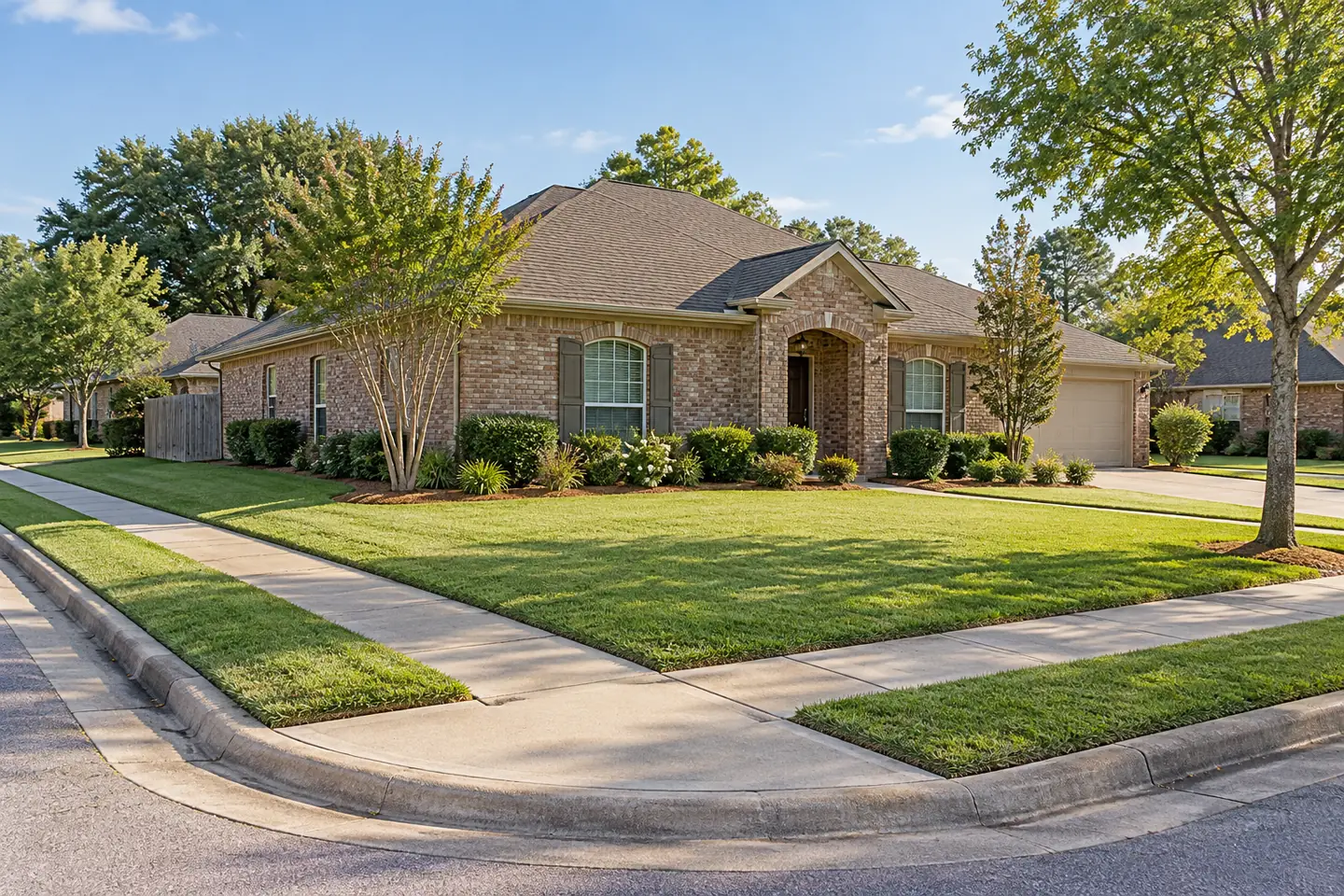
Give each existing hard edge a name
A corner lot can have a long sidewalk run, a driveway opening, a side path and several curb-side transitions. Identify which existing grass-to-hard-surface edges you want reviewed. Show breaks, uneven slabs and low features near the line. The purpose is to define the actual edging question, not to imply that every linear boundary is identical or automatically included.
Maintaining a current edge is a different task from creating a new bed shape or rebuilding a damaged boundary. If you want a layout change, put it on a separate list and ask about the appropriate scope. Happy Grass lawn maintenance should not silently become concrete repair, excavation or landscaping redesign. Clear locations make ordinary finishing work easier to discuss without blurring those project questions.
Explain the route between lawn sections
Two lawn sides may be visible from the street but separated by a driveway, fence or narrow passage. Show how the work areas connect and where entry would occur. A gate that opens into the driveway may have different practical clearance when a vehicle is parked there. Include the usual arrangement rather than a temporary photograph that hides the access constraint.
Tell Happy who will clear movable items and provide entry if the backyard is part of the request. Do not assume that maintaining street-facing grass also settles access to every enclosed section. A clear route and an authorized contact belong in the service conversation before timing is confirmed. If something changes between the estimate and visit, send the update while there is still time to review it.
Notice where the grass grows differently
A sunny side lawn and a shaded front strip can look different at the same point between cuts. Show representative areas rather than sending only the tallest patch or the neatest view. Describe what you notice and the finish you want reviewed. You do not need to diagnose the cause of every difference to start a useful maintenance conversation.
If you know the grass type, explain how it was identified; if not, say that it is uncertain. Different growth conditions can affect the mowing discussion, and a corner address does not make the lawn uniform. Ask about a suitable arrangement for the actual yard instead of assuming that a preferred cutting height or interval should be applied without looking at the distinct sections.
Put roadside details into the same conversation
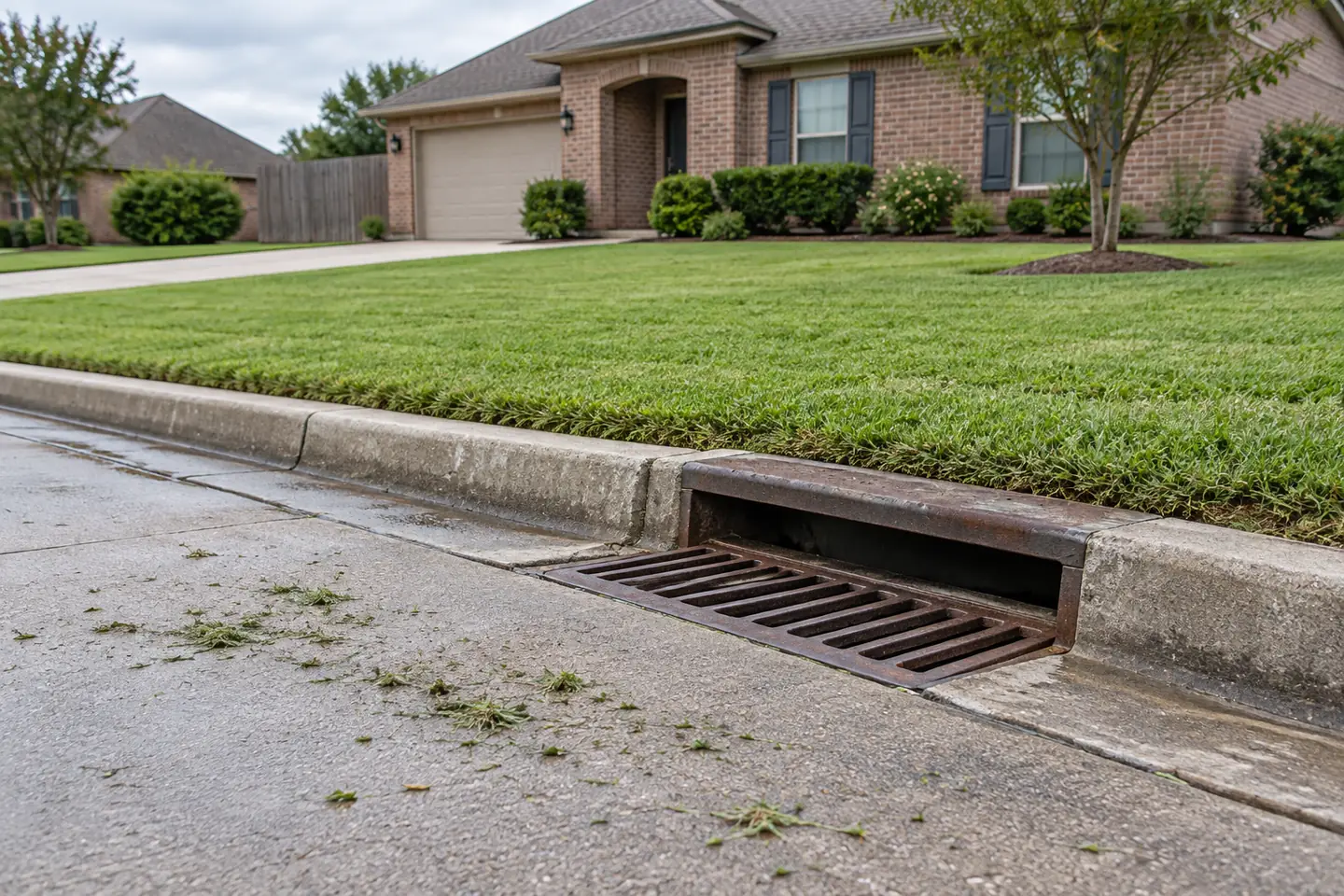
A storm-drain inlet, roadside ditch, utility cover or sign near the grass can change the practical boundary. Point out known features in the broad view and add a detail where useful. Do not move, open or alter unfamiliar infrastructure to prepare photos. The lawn request can identify the area while a separate concern goes to the responsible person.
Keep the normal street and sidewalk activity in mind when describing the site. Tell Happy about regular access constraints or parked vehicles that obscure an edge. Do not step into traffic to measure or photograph the corner. The aim is a useful description from safe locations, not a homeowner traffic-control plan. Any practical limitation should be reviewed with the actual work area before the visit is arranged.
Compare the complete scope when requesting a quote
A corner-lot estimate should refer to the same areas and tasks you expect at the visit. List mowing, edging, weed-eating and blowing as appropriate questions, and identify the sections where each matters. Explain whether you want an initial catch-up condition reviewed, a recurring arrangement or both. A new frequency should not become a shortcut for describing work that is already present.
If you compare estimates, compare the actual lawn sections and finishing tasks rather than assuming that every quote describes the same yard. There is no universal corner-lot surcharge or price in this guide. The layout, current condition and requested work need their own discussion. Ask about anything unclear before treating a broad phrase such as whole yard as a complete description of the agreement.
Keep the two-sided preparation checklist simple
A short preparation note can prevent a clearly planned visit from depending on household guesswork. Identify the contact, access and movable items on each side. Remember loose toys, a hose or bins that may sit outside the view from the front door. Keep children and pets away from the working area, and arrange preparation before equipment is operating.
- Name the front-door and driveway-side lawn sections.
- Confirm included areas and any excluded strip.
- Show the route to each section and the backyard if requested.
- Identify ordinary loose items that the household will collect.
- Report known fixed features and changed access.
Keep private entry details in the agreed direct contact channel. A useful yard sketch does not need household security information or unrelated personal details to make the maintenance layout understandable.
Review the finish from both regular viewpoints
After an agreed visit, look at the yard from the views you normally use. A neat front-door side does not answer a specific concern beside the other sidewalk. If an edge or strip needs review, send a current photograph of that exact location and compare it with the agreed work. Specific landmarks help Happy respond without guessing which side of the corner you mean.
If you want additional work next time, describe it as a change rather than assuming it was included before. Happy Grass does not offer fertilization, aeration, overseeding or pest control. A larger or more visible yard does not expand that scope into unrelated treatments, infrastructure repair or landscaping projects. Keep the service conversation focused on the actual tasks that can be reviewed and agreed for the lawn.
Let the layout do the explaining
Corner lots can be a pleasure to look at when the plan accounts for both sides. You do not need technical terminology or an elaborate property drawing to make the request clear. Start with current broad photos, a few named landmarks and the grass areas you want considered. A little layout information can save a lot of repeated explanations later.
Text Happy Grass at 504-339-3571 and Ask for Happy, or use the quote form with both street-facing views and access details. Tell Happy which finish matters most and whether you want initial or recurring service reviewed. Happy Grass serves Harvey and nearby Westbank communities. Let’s kick some grass with a plan that makes sense from both sides of the corner.
Give each frontage a stable name
Use the street names or another fixed property reference to distinguish the two frontages in your notes. Avoid calling both the front when different household members use different entrances. Pair each label with a wide photograph and identify the lawn strip, relevant pavement edge and any part whose ownership or service boundary is uncertain.
When the quote is reviewed, check both named frontages against the included areas. Keep an uncertain public-side strip marked for clarification instead of assuming that all visible grass belongs to the request. If access or parking changes on only one side, update that side’s note without rewriting the whole property description. A small naming convention can make a corner-lot conversation much easier to follow and prevent an ordinary two-sided layout from generating two different understandings of the work.