
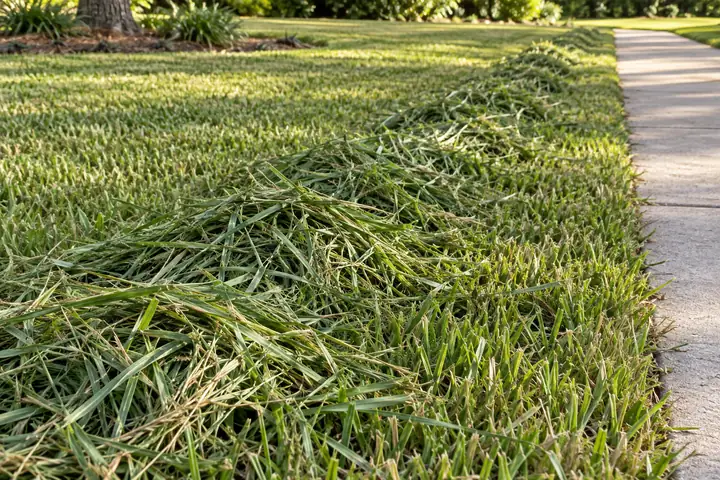
Recognize what is lying on the canopy
Not every visible clipping means the lawn needs collection. Small cut pieces can settle among the standing leaves, while long tangled material may remain as a noticeable row or mat on top. LSU AgCenter explains that ordinary well-managed clippings can be returned to the turf, but thick clumps can yellow the grass underneath. The useful question is therefore how the material lies, rather than whether you can find any cut leaf at all.
Look across the lawn from the path. Is there a light scattering, several isolated handful-sized clumps, or a continuous windrow following a mowing pass? Include that pattern in a photograph before disturbing it. A close-up can show texture but says little about how much of the yard is covered. Happy Grass can review a clear picture of the distribution and discuss the intended finish. Calling every loose clipping a thick mat makes it harder to identify the places that actually need attention.
Explain the growth before the visit
Long grass produces a different amount of cut material from a lawn with modest new growth. If rain, travel or access trouble delayed the last cut, say so before the next visit. Do not ask for the usual short appearance without explaining the gap. A realistic recovery conversation includes the amount to remove, the resulting clippings and whether the desired finish is achievable in one visit under the conditions present.
Record the last known mowing date when you know it. If you inherited the lawn's condition after moving in, say the date is uncertain instead of guessing. Send a view that shows the full standing canopy before service, especially thick patches near fences or beds. The cut-grass volume is not determined by the street address or town alone. A dense backyard in Belle Chasse may need a different plan from a lightly growing front strip on the same property. Describe those sections separately so the request reflects the grass that will actually be cut.
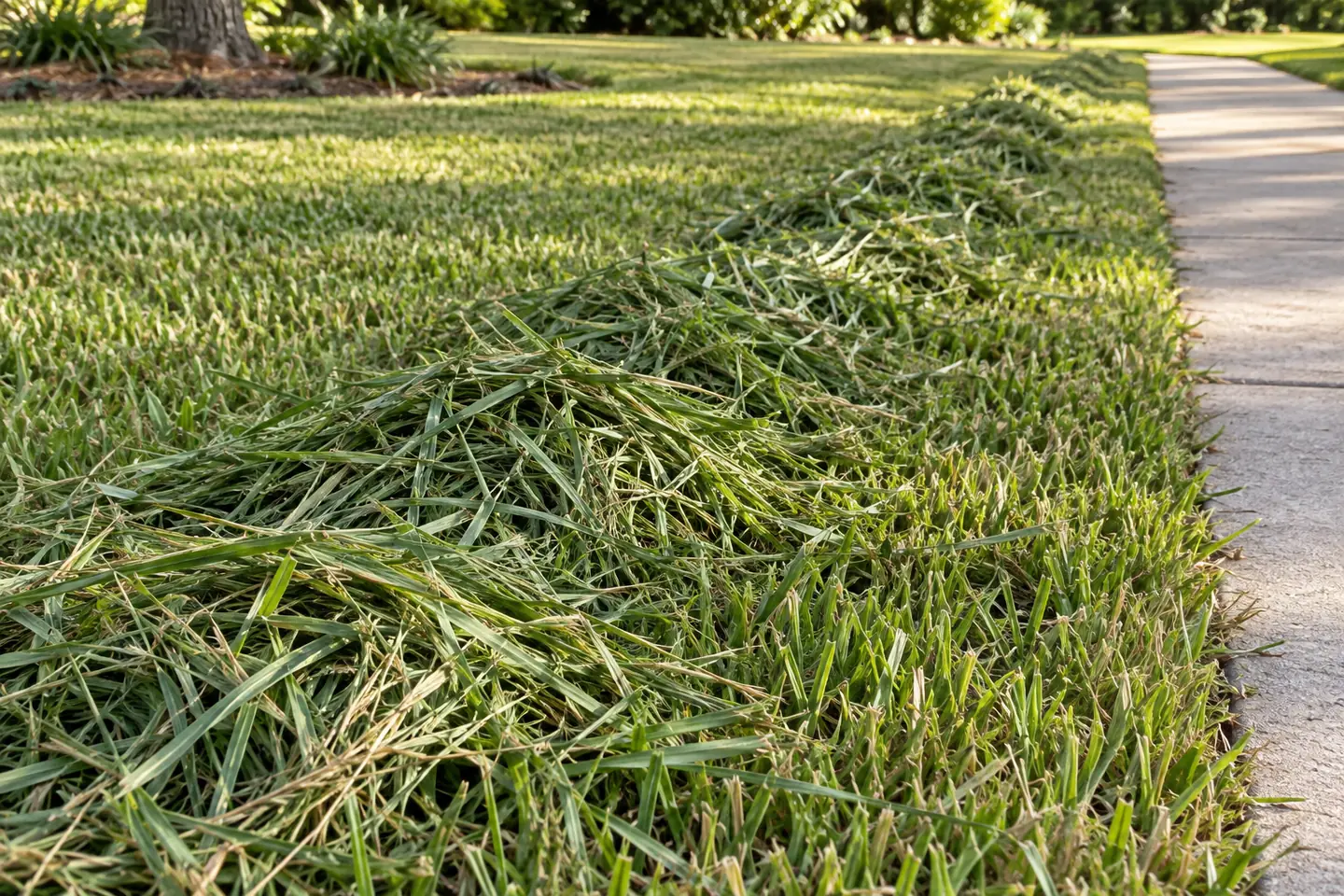
Notice whether the clippings are wet and tangled
Wet grass can produce material that sticks together rather than dispersing easily. University of Minnesota guidance notes that wet or overgrown grass can mat after cutting. That does not make every damp clipping a failure, but it does explain why a weather-delayed lawn may need a changed finish expectation. Tell Happy about recent rain, watering and sheltered sections that remain damp after the open grass has dried.
Do not judge only by how dry the concrete looks. Grass beside a shaded fence may retain moisture while the driveway appears ready for the day. If a visit is postponed for conditions, the next request should acknowledge the additional growth rather than assuming the original cutting plan remains unchanged. Avoid promising a fixed drying time from a photograph. The crew needs to review the property as it is when work is considered, including the route and turning ground. Clipping handling is part of that discussion, alongside whether the lawn is suitable to mow at all.
Agree on what the finish includes
Before service, distinguish ordinary mowing and blowing from a request to collect or remove a large amount of cut material. Do not assume a special cleanup or haul-off is included in the quoted visit. Explain whether your concern is a few visible rows, material on the path or a heavy layer over the turf. The answer may differ for each part of the property, and any additional work needs an explicit agreement.
Use a short finish checklist when discussing a heavy-growth visit:
- Identify the lawn sections expected to generate the most material.
- Confirm which paved surfaces need the normal clean finish.
- Ask how any substantial clumps will be addressed within the agreed scope.
- Clarify whether collection or removal is included before work begins.
Those details make a quote more useful than a request for no clippings anywhere. A living lawn can contain small pieces after a suitable cut. The goal is an agreed, sensible result, with heavy deposits handled appropriately rather than an unrealistic promise that every cut fragment will vanish.
Keep cut grass out of the wrong places
A row on the lawn should not be made someone else's problem by pushing it into the street, a storm drain or the neighboring yard. Tell Happy about nearby drainage openings, a pool edge, open doors or planted beds that influence the clean finish. A narrow side passage can leave fewer suitable places for loose material to go, so show that constraint before the visit.
Do not sweep clippings into an inlet as a preparation step. If the property already has an accumulation near a drain, photograph and identify it separately from fresh mowing debris. The requested service should distinguish existing material from the expected results of the new cut. Move ordinary loose belongings off accessible grass and paths so the finish can be completed without working around a collection of toys or furniture. Clear space helps everyone see the remaining material accurately. It also avoids a misunderstanding in which an old hidden pile is assumed to have been produced during the latest visit.
Inspect the turf beneath persistent deposits
If a heavy clump remains, make a note of its location and how long you have observed it. A thick covering deserves attention, but do not tear at the grass to prove what lies below. Photograph the deposit and the surrounding canopy, then discuss the appropriate next step. Where material has already been moved, record that action so a later photograph is not mistaken for the untouched finish.
Look for whether the grass beneath appears pale, flattened or otherwise different from nearby turf. Those are observations, not proof of one cause. A patch can have more than one contributing condition, and mowing cannot diagnose every change in color. If the same row repeatedly appears in the same place, share the sequence rather than only the latest close-up. It may prompt a useful review of growth, timing and the finish process. A specific repeated pattern is easier to address than a general statement that the entire lawn always looks wrong.
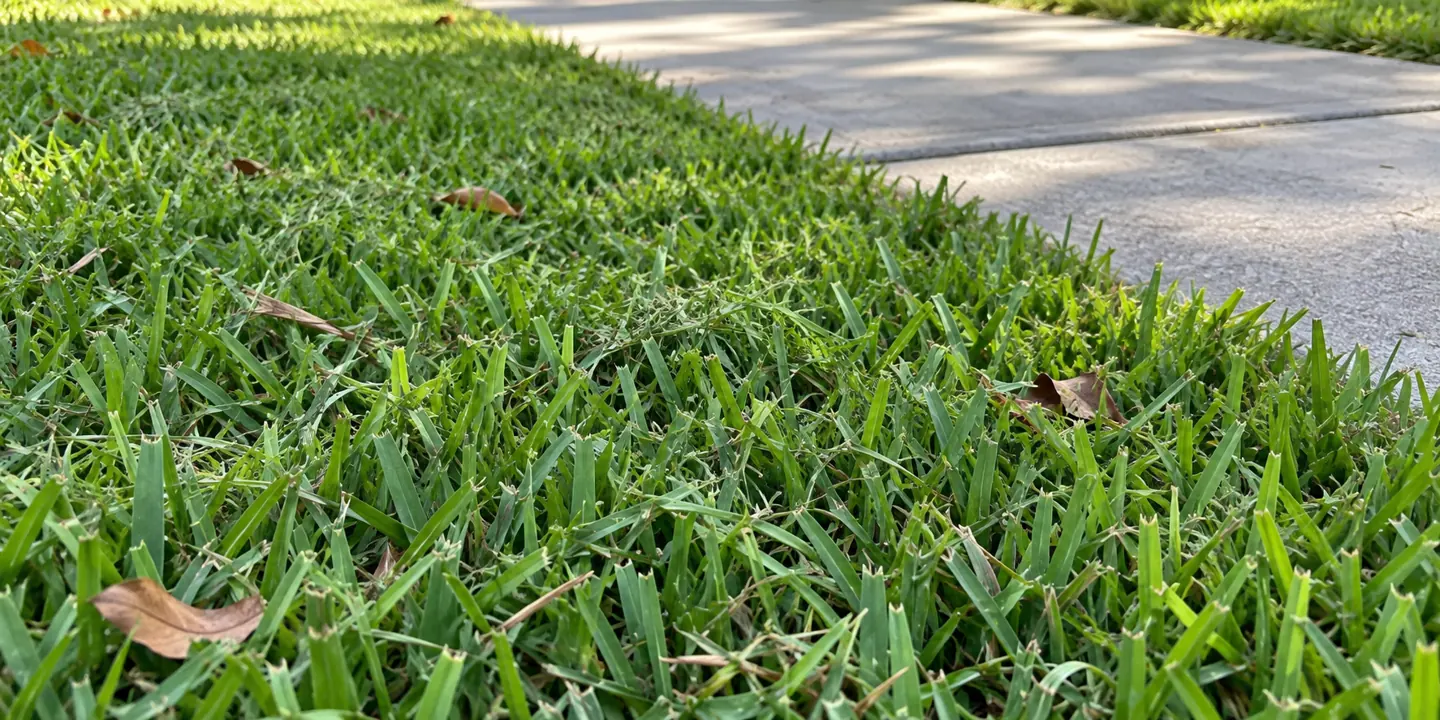
Revisit the interval when heavy material repeats
A recurring heavy clipping load may be a sign that the service timing and actual growth need another conversation. The calendar interval should be considered alongside how much grass is present at each visit. A lawn that changes quickly during a growing period can outpace an arrangement that looked adequate earlier. Explain the visible result you are seeing and ask Happy whether a revised interval would better fit that property.
Changing frequency is not a guarantee of a particular result in every weather condition. Rain, access limitations and uneven growth can still affect a visit. Keep records simple: date cut, whether the lawn was unusually tall, and where heavy rows remained. That is enough to make the next discussion concrete. Avoid choosing a lower height merely to stretch the time between visits. The height decision belongs with the grass and its condition; the schedule decision belongs with growth, access and the finish you want. Keeping both visible helps prevent a repeated cycle of long gaps and difficult cleanup.
Request a review that can be acted on
If you are reporting a concern after service, send the wide view promptly and identify the affected section. Explain whether the grass was moved, watered or walked on after the visit. Ask for a review of the clumps shown rather than claiming that all returned clippings damage the lawn. A precise report leaves room to distinguish ordinary small pieces from a deposit that should receive attention.
For a new quote, include the current lawn view and tell Happy whether the property has a history of long gaps or heavy growth. Confirm any collection expectation in the scope before accepting it. You can call 504-339-3571 and ask for Happy to discuss the actual yard. A good clipping plan does not need fancy language: it needs a suitable cut, an honest picture of the material produced and a clear agreement about the finish. That combination is more useful than chasing a spotless photograph while overlooking what the grass and ground can reasonably support.
Map the pattern before discussing the finish
An isolated clump and a long row of cut material can create different questions about the lawn's appearance. Show the pattern in one broad view before sending close details. Identify whether several pictures show the same row from different directions or genuinely separate areas. This keeps the scale of the concern understandable without relying on an image count.
When discussing what happened, separate direct observations from explanations you have not confirmed. You may know when the grass was cut and when the photograph was taken without knowing why material gathered in that pattern. Ask about the visible finish and the agreed handling of cut material. A factual starting point makes it easier to review the concern without assigning blame to a method or piece of equipment that nobody actually observed.