
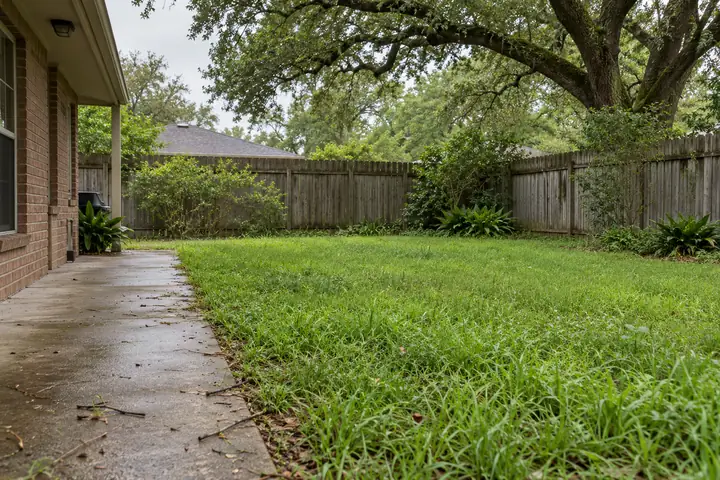
Start with today’s yard, not the old routine
A lawn that has missed several cuts may need a different first-visit conversation from one maintained on a steady schedule. The useful starting point is its present condition. Tell Happy when it was last cut as accurately as you can, which areas are included and what has changed since then. If you do not know the last mowing date, say that. A rough estimate clearly labeled as an estimate is better than a made-up date.
Take recent wide photos from a safe, clear place. Include the backyard and side areas if they are part of the request. Do not tidy one visible strip and use it to represent the whole property. Happy needs to review the actual work, access and limits. There is no need to be embarrassed about the grass getting away from you; an honest picture helps get the conversation moving.
Separate long grass from hidden obstacles
Taller growth can make familiar objects harder to see. A hose, toy, wire or small stump may no longer be obvious from the gate. Describe known obstacles in writing and point them out in photos when you can do so without entering uncertain ground. Do not walk into dense growth to investigate something you cannot identify. You can explain that a section has not been safely checked.
The first mowing request should distinguish grass cutting from clearing a site. Building materials, dumped waste, large branches and heavy stored items are not automatically part of lawn maintenance. If they are present, show the condition and ask what must be addressed before work can proceed. Moving objects out of view does not resolve the question if they still block the route or border. A clear scope is the first useful improvement.
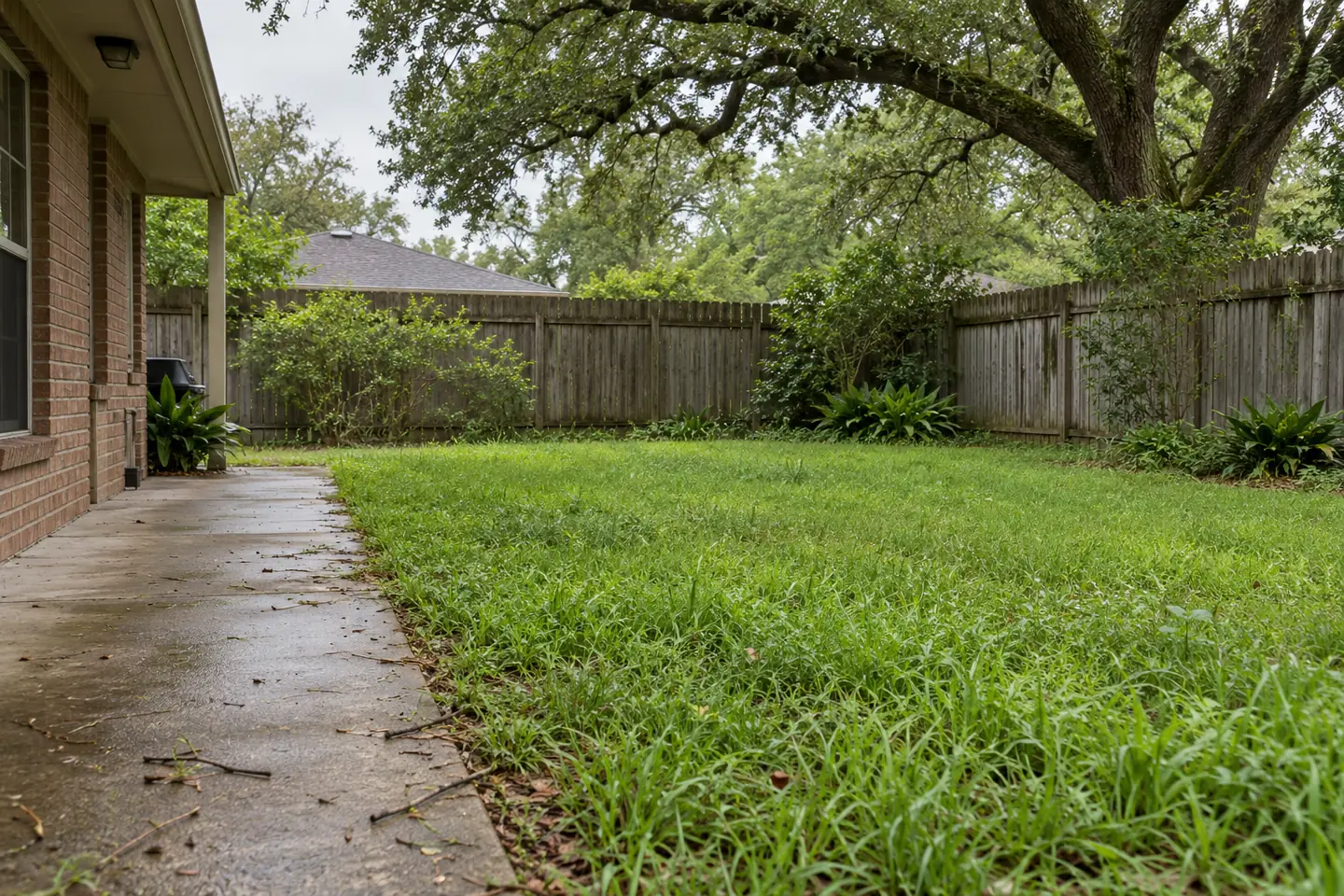
Avoid promising a drastic one-cut change
It is tempting to ask for the lowest possible cut so the lawn will stay short longer. That does not replace an appropriate mowing plan. LSU AgCenter’s general one-third guidance is to avoid removing more than roughly a third of the grass blade height in one mowing. The suitable height depends on the turf and conditions, so an overgrown lawn needs a property-specific review rather than a universal low setting.
Do not use a neighbor’s lawn or a photo online as the instruction for your own cutting height. Tell Happy the result you are hoping for and let the current growth be part of the discussion. The first visit may not produce the appearance of a regularly maintained lawn in a single pass. Ask what is realistic before agreeing to the work, including whether follow-up review will be needed.
Show where the lawn ends
Overgrown grass can blur the line between a lawn, a planted border and an area intended to remain natural. Point out young plants, tree margins and groundcovers that should stay untouched. If a border is no longer visible, show an older layout photo as background and explain that it does not represent the current grass condition. Do not assume every tall green area should be cut down.
Sidewalk and driveway edges also deserve a separate look. Routine edging along a known line is different from reclaiming a heavily buried path or removing accumulated soil. Photograph the condition and ask what can be included. The same applies to a fence line with woody growth rather than ordinary grass. Happy needs enough information to distinguish mowing and trimming from a larger cleanup or another kind of property work.
Include the gate and working route
The access path may have changed during the gap too. Grass can hide a threshold, storage can narrow a side passage and a gate may no longer open fully. Photograph the gate in its current usable position and show any tight turns. If you can safely measure the clear opening, send the measurement. Do not remove fencing or force a damaged gate for a quote photo.
Tell Happy whether a person must be present for entry and whether pets use the yard. Arrange a secure place for animals away from the work and route. A first visit already has enough conditions to review without adding uncertain access. If the route is blocked, say so before a visit is planned. A promise to clear it later should be followed by confirmation once it is actually ready.
Talk about clippings before the work
The amount and handling of cut material can affect the finish you expect. A regularly mowed lawn and a lawn with much taller growth do not present the same clipping situation. Ask Happy how the current condition will be assessed and what cleanup is included. Bagging, collecting or hauling material should not be assumed merely because you have asked for mowing.
Describe the hard surfaces you want included in the finishing work, such as the front walk, patio or driveway. Lawn blowing addresses loose grass clippings on the agreed surfaces; it is not an agreement to pressure wash, remove stains or clear every item from the property. If the grass has grown across a walkway, show that separately. Your request should make the desired outcome clear while leaving room for an honest review of what the first visit can achieve.
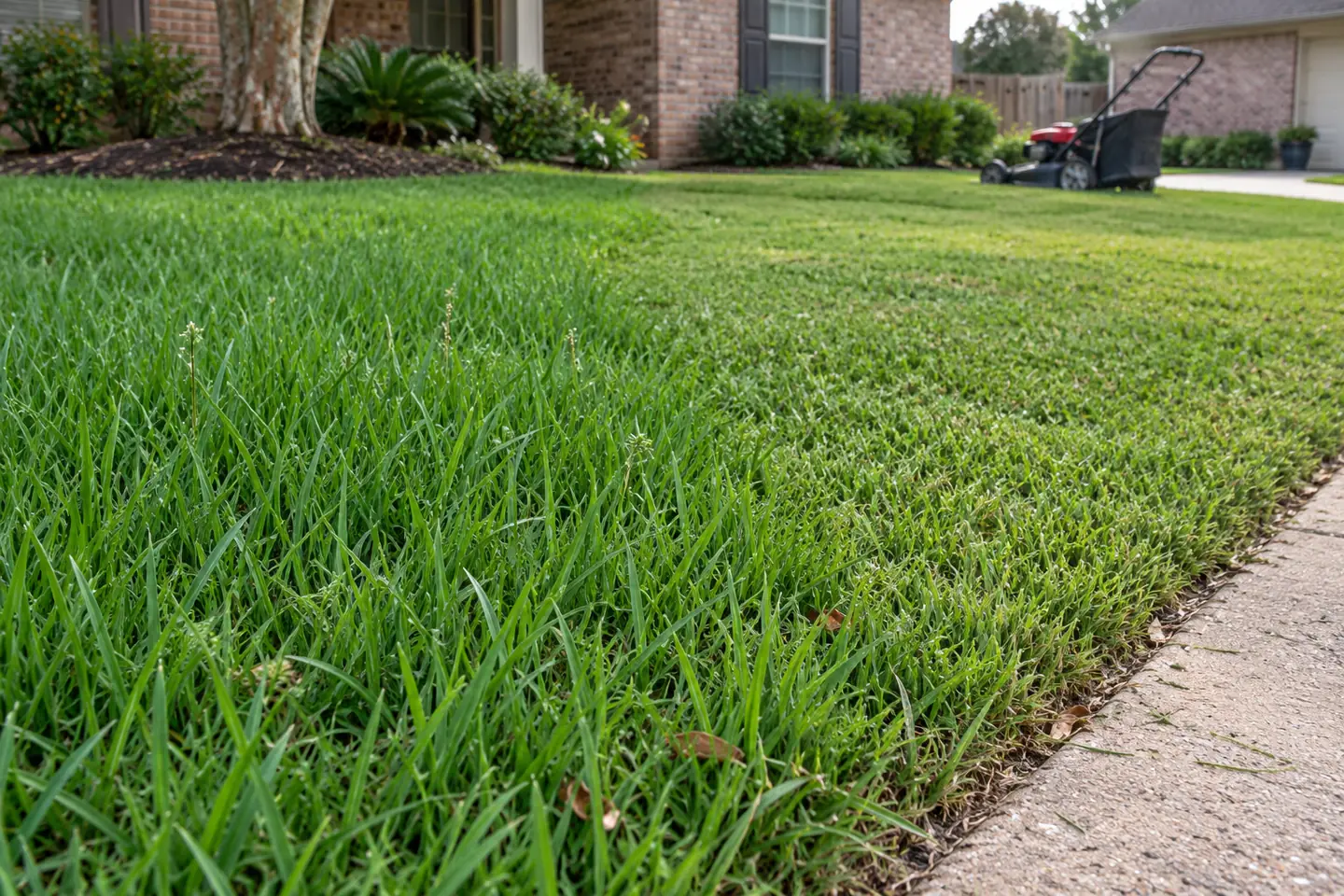
Let ground conditions be part of the decision
An overdue lawn can create pressure to get it cut immediately, but the ground still needs to be workable. Mention standing water, persistent soft spots and any access section that changes after rain. Photos taken from firm ground can help. Do not demonstrate the condition by driving equipment across it or walking through a place that feels unsafe.
Happy can review timing alongside the growth and access. Avoid treating the end of a rain shower as an automatic all-clear for mowing. The current yard matters more than a generic promise about how quickly lawns dry. If timing is especially important because of guests, a property visit or another event, explain the deadline while understanding that availability and conditions still need confirmation. A realistic plan is more useful than an exact time nobody has agreed to.
Make the first quote different from the recurring plan
Ask whether the initial visit and later maintenance are being quoted on the same basis. The first service may involve conditions that will not be present once the lawn is regularly maintained. Be clear about which tasks are included in each request. Do not compare an established recurring price from another property with a first cut on an overgrown yard and assume the work is equivalent.
Once the initial condition has been reviewed, discuss weekly or every-other-week visits based on actual growth and the property. A calendar interval should be reviewed when it stops fitting the lawn. If you expect to be away, arrange access and communication early rather than simply missing visits and assuming the next cut will be unchanged. The aim is a routine that prevents the same catch-up conversation from becoming the normal pattern.
Set a useful first-visit expectation
Before work is agreed, summarize the request in plain language: the grass areas, known obstacles, access, included finishing tasks and any uncertainty that remains. Ask about the next step if some section cannot be assessed from photos. Keep the answer with your quote so you can refer to the agreed scope rather than a memory of a quick conversation.
After the visit, review the lawn against that scope and raise a specific question if something needs explanation. A newly visible thin patch or uneven surface may have been hidden by taller grass; do not treat mowing as a promise to repair every underlying condition. Ready to get back on track? Ask Happy about your Westbank lawn, bring the current photos and let’s work toward fewer mow worries, one sensible visit at a time.
Compare the first finish with the actual starting point
Before the catch-up conversation, choose a wide view that shows both the tall area and a fixed border. Keep that image with the date and the approximate mowing gap, labeling an uncertain date as uncertain. It gives the first-visit discussion a factual starting point without requiring you to guess how many passes or which equipment the work will involve.
Use a separate follow-up note for the recurring plan. The first finish may answer whether access and scope were understood, while the later routine concerns how the lawn looks between visits. Do not judge both questions from one cropped after-photo. Name any area that was excluded or still needs review so the next request starts from the actual completed work rather than an assumption that the whole property was brought into a settled routine.