
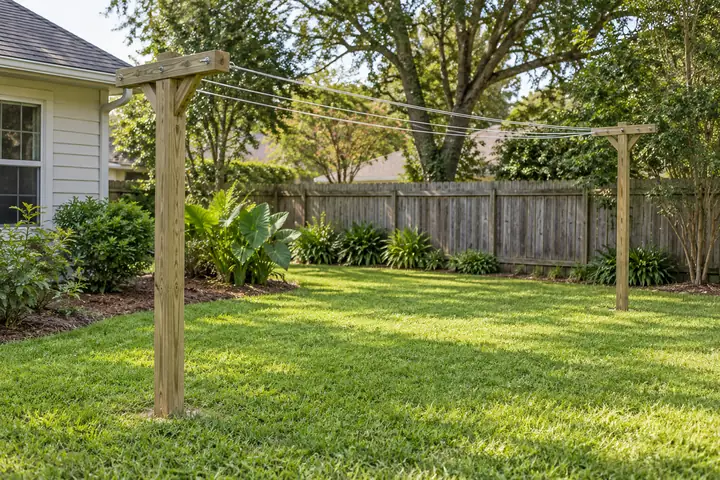
Show the space above the grass
A photograph aimed only at the lawn can leave out the feature that most affects the route: the clothesline above it. Take a wider view that includes the posts, the lowest visible line and the approach from the gate. Happy Grass needs to understand the space available for the person operating the equipment as well as the ground the wheels would cross.
Do not assume an empty line creates an open work area. Its position, sag and supports remain part of the yard even after the laundry is brought inside. A household member passing comfortably beneath it is not a complete equipment-access assessment. The quote should identify where routine lawn maintenance can be considered and whether the drying arrangement needs appropriate owner preparation first. Keeping overhead features in the picture prevents a familiar backyard from being described as open lawn when the usable route actually has an additional constraint.
Distinguish fixed posts from removable parts
Some clothesline arrangements have permanent posts, while others have retractable lines, folding frames or removable sections. Explain your actual setup rather than asking the crew to work out its operation on arrival. A part that folds in a product photograph may be fixed or worn in your installation. Do not assume the mowing crew will release a latch, remove a support or alter tension to create access.
If the owner plans a suitable preparation step, confirm who will complete it and what parts remain afterward. Include separate sockets, ground sleeves or bases that can be hidden by grass when a frame is removed. Those pieces still matter to the cutting route. If you are uncertain how the arrangement should be handled, consult its instructions or the responsible installer. Routine lawn service can be planned around a clearly described installation without becoming a repair or dismantling service for the drying equipment.
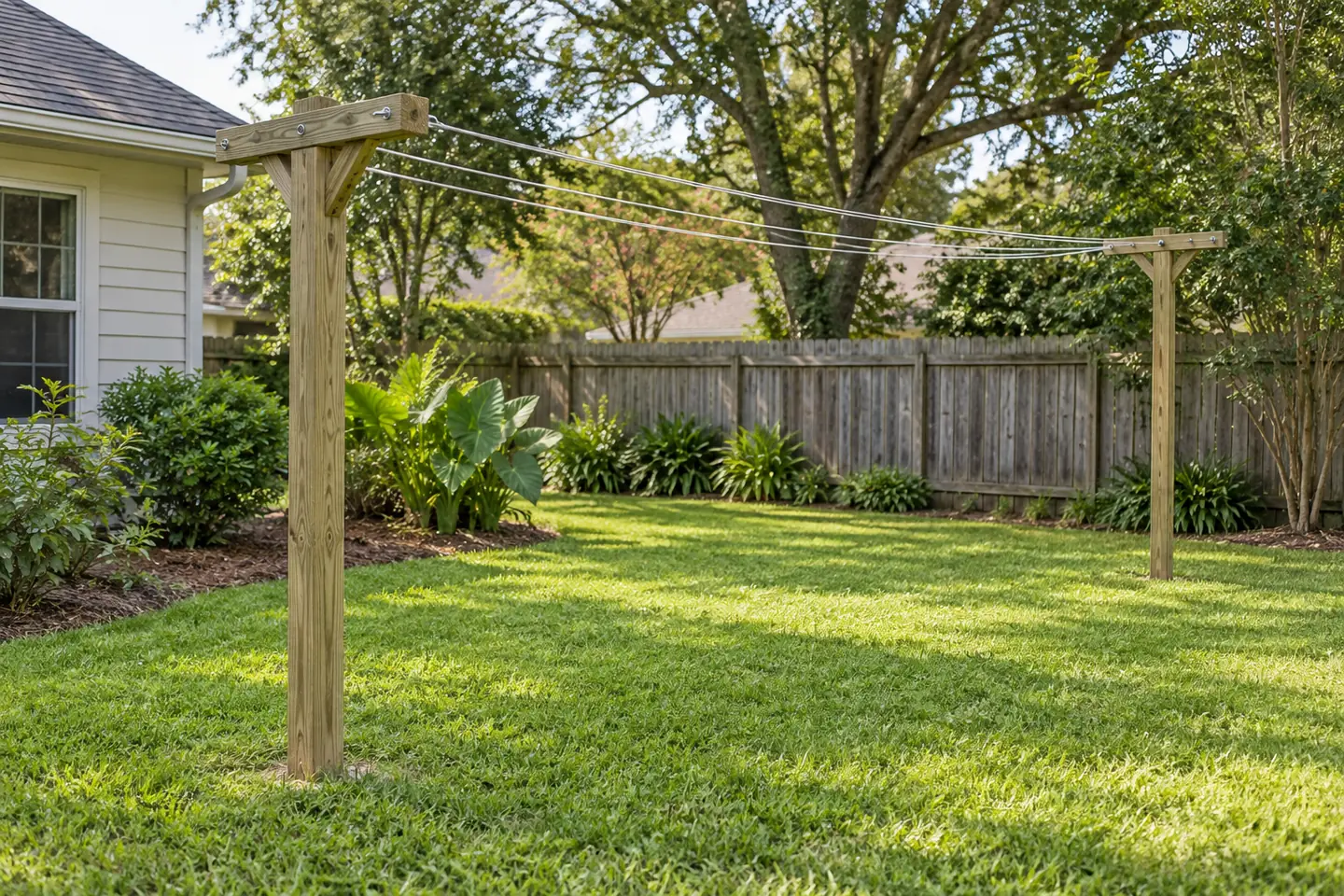
Account for pegs and small dropped items
An area beneath a drying line may contain loose pegs, clips, hangers or small pieces from a basket. Gather ordinary visible items before the visit and check the route between the house and the line as well. A bright item on concrete can be easier to notice than the same object lying in green growth. Do not rely on the mower to discover what was dropped during the previous use.
Toro's operator guidance includes inspecting the operating area and removing objects that machinery could throw. The relevant machine's manual still governs the operator's decisions. For the household, the practical preparation is to remove belongings and disclose anything missing or difficult to locate. If an attachment has broken and parts may remain in the grass, identify that location. The work area should not be represented as fully cleared when an important uncertainty remains, particularly beside a post where growth makes a small item harder to see.
Keep laundry and lawn work from competing
Arrange the visit so that laundry, baskets and household activity are outside the work area. Do not assume an operator can simply weave around hanging sheets or keep a particular distance from items that swing into the route. Describe the timing constraint before service if the drying area will be in use. A plan dependent on the exact moment laundry is taken down needs direct confirmation.
For an unattended visit, make the household sequence clear: who clears the line, where baskets are stored and who confirms the preparation. Avoid placing a loaded basket in the gate passage as the final step. Clearing the overhead area while blocking the entrance does not produce a useful route. If the arrangement cannot be prepared for the proposed visit, discuss a defined omission or another plan. An intentional exclusion around the drying area is easier to understand than an expectation that the crew will move personal laundry to complete the lawn work.
Review post bases and the ground around them
Show each post where it meets the lawn. There may be a visible concrete base, a metal sleeve, a support brace or an edge that differs from the rest of the turf. Do not hide those features under loose soil or decorations before the visit. Their outline helps establish where equipment can approach and where an appropriate trimming boundary may need to remain.
Tell Happy about known movement, a leaning post or recently disturbed ground. A lawn assessment is not a certification that the structure is secure. If the support's condition is uncertain, keep the affected area out of the maintenance route pending suitable review. Avoid requesting that the crew push the post back into place or mow against it to test firmness. The grass around a stable, understood feature can be discussed separately from an installation that needs attention. The owner should know which question is being addressed by the proposed lawn visit.
Give the cutting boundary a recognizable shape
If grass beneath part of the line is excluded, describe that section using the posts and nearby yard features. A vague instruction to avoid the clothesline can mean different things to different people. Does it mean the narrow ring around each post, the strip directly beneath the lines or the entire drying corner? Confirm the intended boundary so an uncut section is understood as part of the agreement.
Pictures can make the boundary clearer without introducing stakes into unknown ground. Show the approach, the posts and the intended lawn edge together. If a separate garden bed or path provides a natural stopping point, identify it. Do not promise a universal clearance measurement from this guide; actual equipment, overhead space, ground shape and installation condition matter. Happy can review a realistic maintained area rather than a diagram whose dimensions ignore how the yard is used. The useful scope describes reachable grass and any intentional margin in ordinary language.
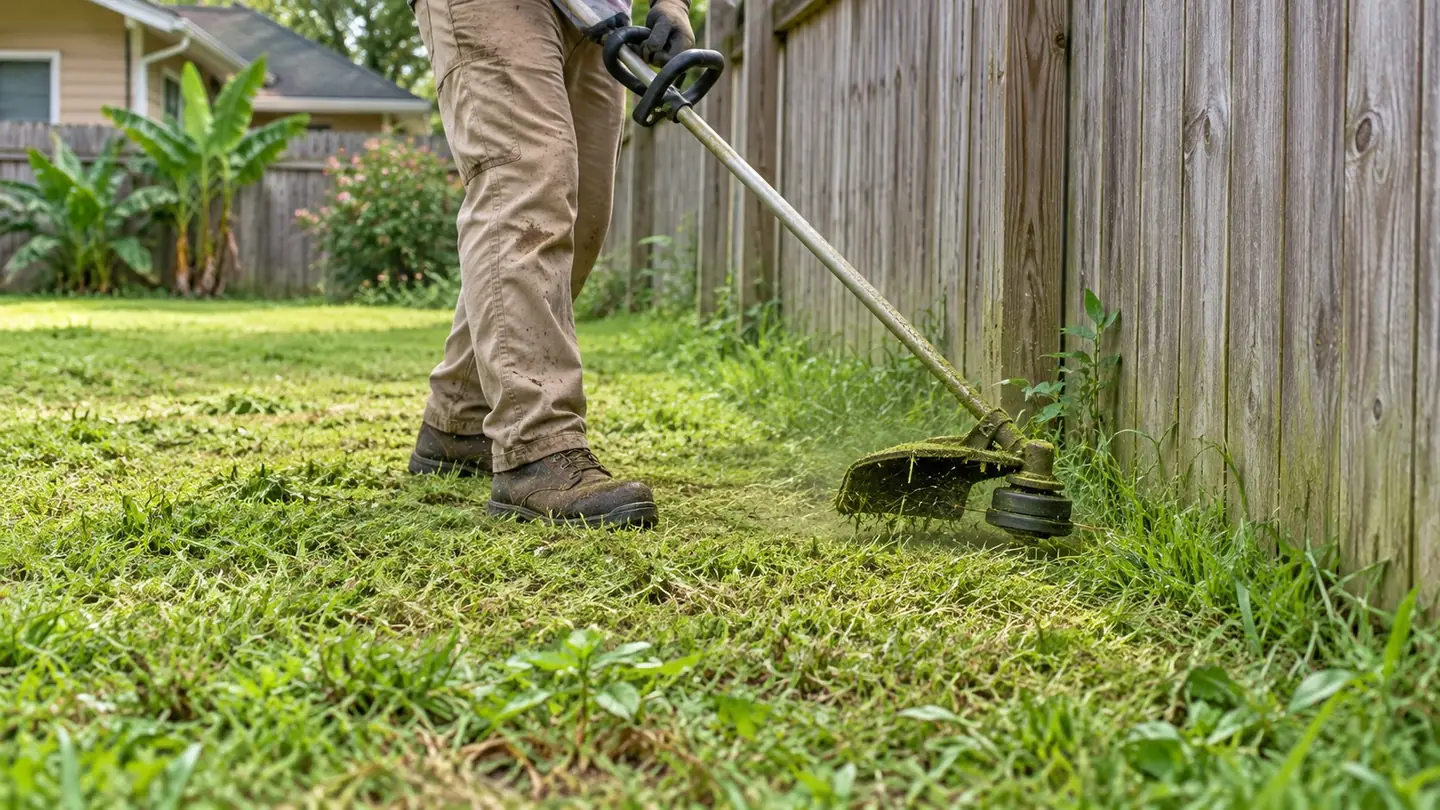
Observe the lawn beneath repeated household traffic
The route to the drying line may have its own grass condition. A worn path, flattened patch or damp spot should be noted separately from the posts themselves. Describe what you actually see and when you noticed it. Mowing can manage leaf length along a reachable route, but it cannot promise to restore missing grass or resolve a recurring ground problem simply by changing the direction of a pass.
Keep any follow-up photographs consistent. A picture taken after several trips with a laundry basket may show a different canopy from the one immediately after service. If you are asking about the finish, explain that activity rather than treating both views as identical. The same applies when a retractable line has been extended again or a frame has been repositioned. Changes in household use are normal; including them in the record helps distinguish maintenance results from the lawn's condition after it has been used again.
Request care around the actual installation
A useful message says whether the clothesline is fixed or retractable, includes an overhead-and-ground view and identifies the owner's preparation. Add any remaining sleeves or braces and the route from the gate. That gives Happy a concrete access question, rather than an empty-lawn photograph with the line omitted from the frame.
If the backyard has a separate reachable area outside the drying corner, show it too. A partial visit may be worth reviewing when suitable independent access exists and the agreed scope is clear. Do not assume that access to one side establishes access beneath the line. Call 504-339-3571 and ask for Happy to discuss the property. A familiar household feature can fit comfortably into a maintenance arrangement when its overhead space, ground fittings and preparation responsibilities are all made visible before the grass-cutting plan is confirmed.
A retractable line needs its own current description. Tell Happy whether it will be secured in its storage position or remain stretched across the yard, and identify the wall fitting or opposite support that stays. Do not leave a loose length hanging into a gate opening after the rest is retracted. If the mechanism does not work as expected, update the preparation plan rather than asking the crew to force it. The lawn request should reflect the installation as it stands that day.
Show the working arrangement of the line
A clothesline photographed while empty can look very different when laundry occupies it. Describe the expected arrangement during the proposed lawn work, including whether removable lines will remain in place. A photograph of the posts alone does not explain hanging items or the route beneath them.
If household timing changes, update the affected area instead of assuming the earlier preparation still applies. Keep the responsibility for laundry and line adjustments clear; a lawn visit should not depend on someone improvising around personal items that were expected to be removed. For the final scope, connect the grass boundary to recognizable post locations and identify any section left out of the request. This creates a more dependable arrangement than describing the whole installation as either “clear” or “in the way.”