
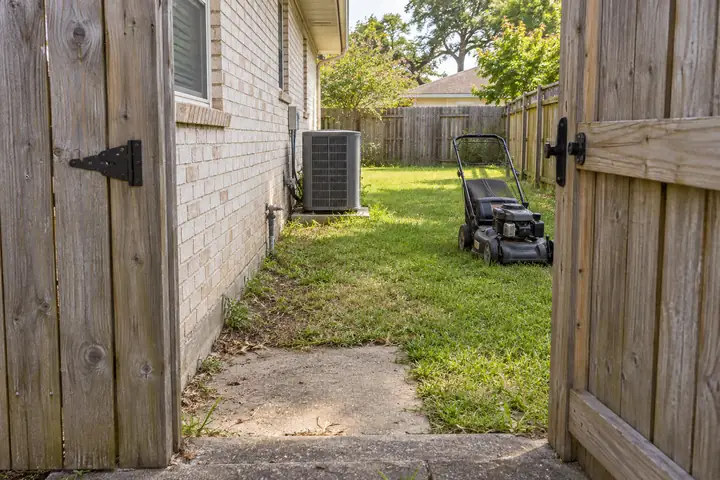
Look beyond the size of the lawn
A backyard may be easy to mow once you are inside and surprisingly awkward to reach. The gate is only one part of the route. A narrow side passage, a raised threshold or a sharp turn beside the house can matter as much as the opening itself. When you ask Happy for a lawn quote, include the way into every grass area you want maintained. It saves a lot of guessing from a front-yard photo.
You do not need to decide which equipment should be used. Your part is to describe the route honestly and safely. Happy can review whether the available access works for the requested visit. A compact property is not automatically a simple access job, and a larger property is not automatically difficult. It is the combination of openings, surfaces, obstacles and grass areas that needs a look.
Measure the clear opening, if you can
If the gate can be opened safely, measure the space that is actually available with it in its usable position. The outside distance between fence posts can be misleading. Hinges, a latch, an angled gate or a fixed stop may reduce the clear gap. Note the narrowest point and send the measurement with a photograph so the number has some context. A rough memory of the fence installer’s description is less useful.
Do not force a stuck gate, remove hardware or hold up a sagging panel for the sake of a measurement. Show the problem and explain that the opening needs attention. If a gate opens only partway, that is the current usable condition. A larger opening that might exist after repairs should not be treated as available until the repair has actually been completed and the new access has been reviewed.
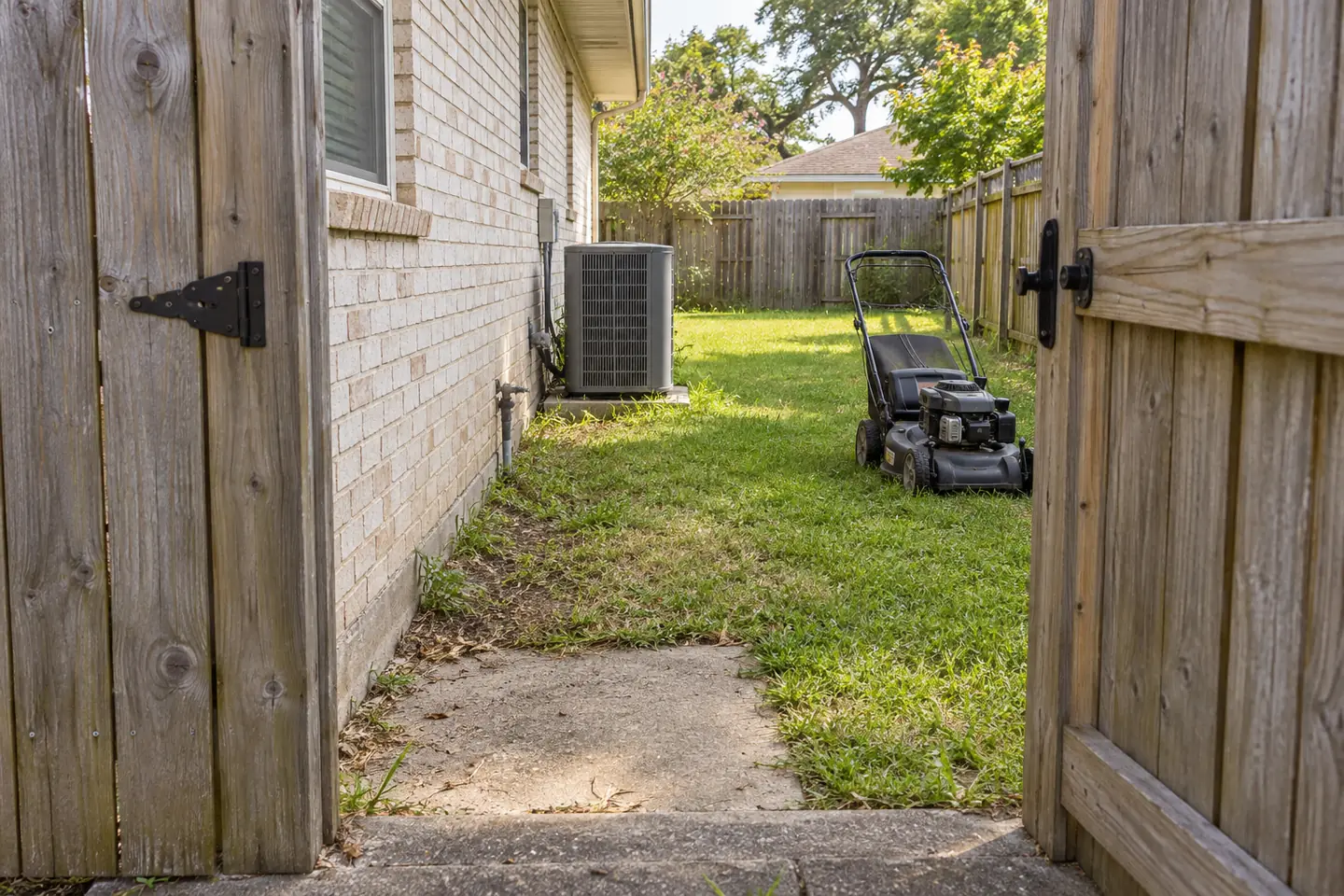
Follow the route from start to finish
Stand at the point where the agreed access begins and look toward the backyard. Does the path stay wide enough all the way through? An air conditioning unit, storage bin or planter may make one section narrower than the gate. Photograph that spot and the approach to it. A picture straight through the opening can hide an obstruction around the next corner.
Then look at the transition into the grass. Tight turns, steps and changes in surface need to be described. Mention a route that passes through a carport, shared driveway or enclosed area. Do not assume indoor access, carrying equipment through a house or crossing a neighbor’s property is available. Those are separate questions about permission and practical access, and they need an explicit arrangement rather than a surprise on mowing day.
Include thresholds and uneven surfaces
A flat passage and a passage with steps are different access situations even if they have the same width. Show raised concrete, exposed roots, loose pavers and any sudden change in level. Take the picture from a firm position without trying to demonstrate the route with equipment. Happy needs to understand the condition, not watch you test whether a heavy machine can be pushed over an obstacle.
If the surface changes after rain, mention the pattern you have observed. For example, a side strip may be firm in dry weather but hold water near the gate. Do not promise that it is always usable based on one dry-day photo. Current conditions still need review before work. Keep access information specific: “the back threshold has a step” tells more than “the route is pretty easy.”
Explain how the gate stays open and closes
Some gates swing closed on their own; others need someone to operate a latch from one side. Tell Happy how yours normally works and whether a person must be there for entry or exit. Do not improvise a loose prop that could fall into the route. If the gate cannot stay in a workable position, discuss a safe arrangement before the visit rather than assuming a worker can hold it and move equipment at the same time.
Closing the gate matters too, particularly where pets live. Identify a latch that appears closed before it has actually engaged, or a panel that needs repair. Arrange the pet plan separately so an ordinary access step does not depend on containing an animal at the same moment. Lawn service is easier to coordinate when the gate’s condition and the household’s expectations are both clear.
Keep access details private and current
A usable opening is not the same as permission to enter. Confirm the agreed gate and the contact person for access. If a lock, code or appointment is involved, use a private channel and follow the arrangement actually confirmed with Happy. Avoid putting codes on a public page, in a photo caption or in a review. There is no need to share more security information than the visit requires.
If you change the lock or move a stored item into the passage, update the access information. Old notes can become wrong quietly. The same applies when a household member who usually opens the gate will be away. Tell Happy about the change before the expected visit and ask what can be arranged. Do not assume a different entrance can be used or that a blocked visit can automatically be moved to later that day.
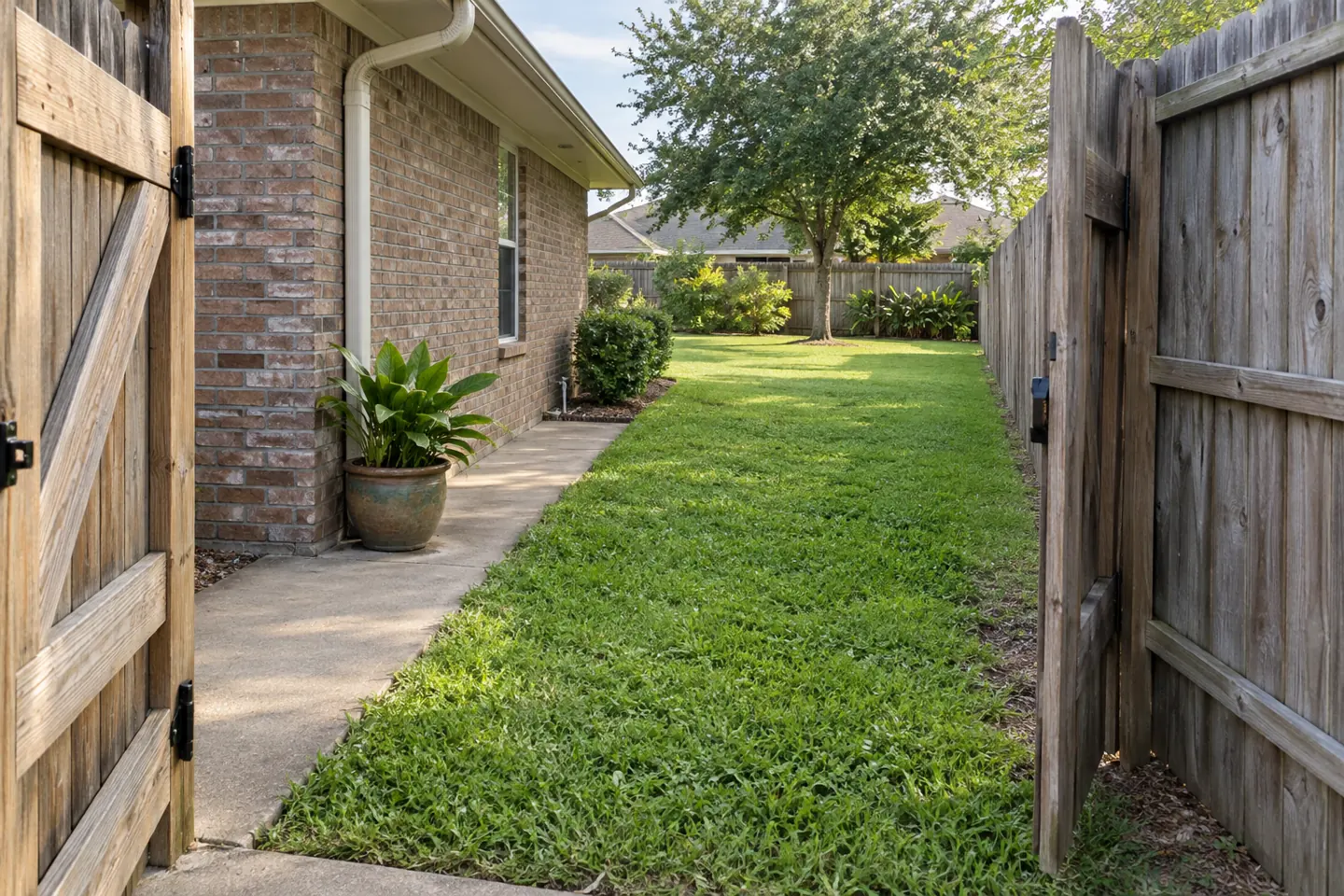
Separate movable clutter from fixed limits
A wheeled trash bin may be something the homeowner can relocate before service. An installed condenser or fence post is a fixed part of the route. Make that distinction in your request. If a movable object will be cleared, say when and where it will go, without blocking another part of the access. If it will stay, show the available gap with the object in place.
Do not assume lawn service includes moving heavy pots, taking down fence panels or shifting equipment belonging to someone else. Those actions can introduce damage and permission concerns beyond the mowing request. A better starting point is a photo of the real route and a question about whether it is workable. If access needs improvement, discuss that before planning recurring lawn visits. An honest limit is easier to work with than an opening that exists only in theory.
Review shared and unusual access carefully
Some properties have a passage used by more than one household, or a side gate reached across an adjoining driveway. Explain the arrangement without assuming permission transfers to a lawn service provider. Confirm who can authorize the route and whether there are timing restrictions. If another vehicle often blocks the passage, that is a scheduling detail worth raising before the first visit.
For separate grass sections, show how each one is reached. A front lawn, fenced backyard and detached side strip may require more than one entrance. Use a simple written description tied to the photos rather than an elaborate map with private security details. Happy can ask about anything missing. The aim is a route that works for the actual property, including entry, movement between grass areas and leaving the gate as agreed.
Send a useful access request
A good access note can be short: “The backyard is through the left wooden gate. The clear opening measures about this much with the gate open. There is a tight turn beside the condenser, shown in the second photo. I will handle the lock and keep the dog indoors.” Include the real measurement rather than copying a sample number from a website. Add any steps or soft sections the pictures do not show clearly.
Happy can then review the access alongside the lawn tasks, current growth and visit frequency. No generic gate-width statement guarantees that equipment will fit your route, and there is no need to make that call yourself. Get the useful details together, ask about the whole property and let’s work toward a backyard with fewer mow worries. Happy reviews lawn requests across Harvey, Marrero, Gretna, Algiers, Belle Chasse and Westwego.