
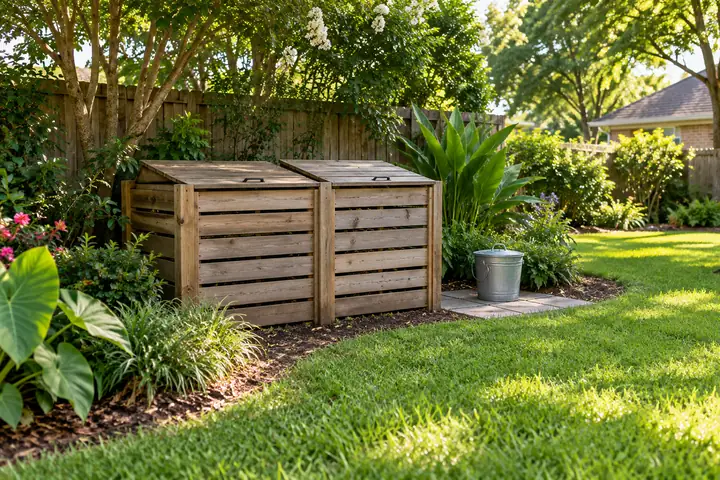
Include the working corner in your lawn plan
A compost bin is more than a box beside the fence. You may open a front panel, turn a tumbler, carry a bucket along the grass or stage leaves nearby. Those activities affect the lawn space around it. When describing your yard to Happy, include the working side of the setup as well as the side you see from the house. A closed bin can look compact while its normal use requires much more room.
The lawn request should explain which grass belongs in the visit and what remains a separate gardening responsibility. Turning compost, opening the container, sorting its contents and rebuilding a bay are not implied by mowing nearby. This distinction is especially helpful if someone else in the household manages the compost. Confirm their usual storage and access before agreeing instructions. A practical corner of the backyard deserves the same clarity as the front lawn, even if it is not the view you photograph most often.
Identify the bin style and its moving parts
A tumbler raised on a frame presents a different shape from a wooden bay resting on the ground. Some bins have removable lower panels; others have doors that swing outward onto the grass. Explain the parts that project into the requested lawn area and whether they will be closed before the visit. Do not ask someone to open an unfamiliar unit to find out where its base ends.
Show a close view of the lower edge if it contains exposed wire, a damaged board or hardware that is difficult to distinguish from surrounding vegetation. Leave unstable components alone and arrange any necessary container work separately. The point of the photograph is to communicate the existing boundary. A mower or trimmer should not become a way to test whether a bin panel is secure. If a side cannot be included while repairs are pending, describe the excluded strip so its condition does not surprise either person after the visit.
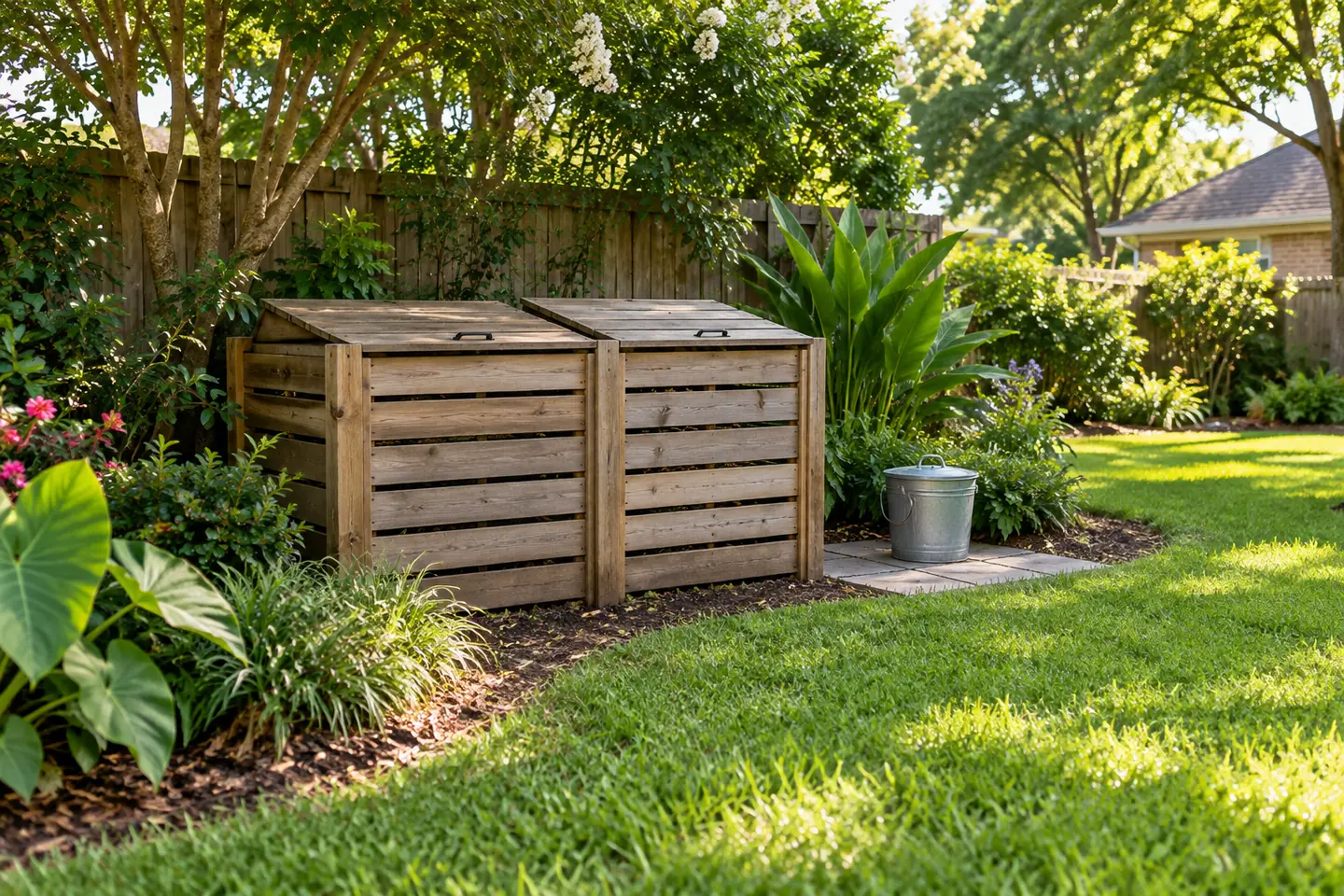
Keep stored ingredients distinct from lawn debris
A pile of dry leaves beside the bin may be a resource you intend to use. A stack of small branches may be waiting for a different project. Neither is automatically material to remove because it sits on or beside the grass. Label these areas in your message and show their full footprint. Avoid a general instruction to clear the compost corner when only the grass along the approach needs attention.
The EPA's home-composting guidance distinguishes materials that can go into a backyard pile from materials to avoid. Use that resource for managing your own compost system. A lawn visit does not sort an unknown pile or certify its ingredients. In the maintenance conversation, the useful details are where stored material stops, whether loose pieces extend into the lawn and who will prepare the working strip. If you want a pile moved, that is a separate request to discuss rather than a hidden part of routine mowing.
Follow the route used to reach the bin
Repeated bucket trips may create a worn path through the yard. A wheelbarrow approach may be wider than the narrow gap visible beside the bin. Show how those routes connect with the gate and the rest of the lawn. Do not assume the access used for composting is also suitable for every piece of lawn equipment. Ground condition, turns and the surrounding objects all matter to the actual review.
Use a short preparation check for this working area:
- Put handheld tools and empty containers in their proper storage location.
- Account for loose wire, ties and detached panels near grass level.
- Identify stored leaves or woody material that should remain undisturbed.
- Explain where the door or operating side needs to stay available.
Those steps make the lawn request easier to follow without rearranging the compost process itself. They also help the homeowner notice that a small storage change has narrowed a previously clear route.
Discuss clippings before asking for compost material
You may enjoy returning yard material to a home compost system, but that preference should not be inferred from the presence of a bin. Say whether you are asking about lawn-clipping collection, and ask what is actually included. Bagging, moving material to a container and placing it inside are separate actions. An ordinary mowing scope does not silently become all three because the destination is only a few steps away.
Also distinguish a collection request from a question about suitability. The condition and treatment history of material can matter to your compost choices; the lawn conversation should not offer an unsupported guarantee about an unknown mixture. Keep responsibility for the compost contents explicit. If collection is not part of the agreed visit, discuss the expected lawn finish on its own terms. A clear decision beforehand is much easier than finding out afterward that one person expected returned clippings while the other pictured a freshly filled compost bay.
Describe soft ground without diagnosing the bin
If the grass near the compost corner is wet, disturbed or covered by spilled material, report that condition as you see it. Say whether it follows a recent rain, a gardening session or an unknown change. A photograph of the ground and a note about the normal route are useful. They do not establish why the spot is soft or whether the container needs a particular repair.
Keep the mowing decision separate from compost-management advice. A bin can require attention while other lawn areas remain accessible, or its approach can be temporarily unavailable even when the main lawn looks dry. Tell Happy which situation applies before relying on the usual plan. Do not add loose fill or hide a depression under leaves just to make the corner resemble an older picture. The current ground condition is the one that needs review, and an honest exception can prevent confusion about an unfinished strip later.
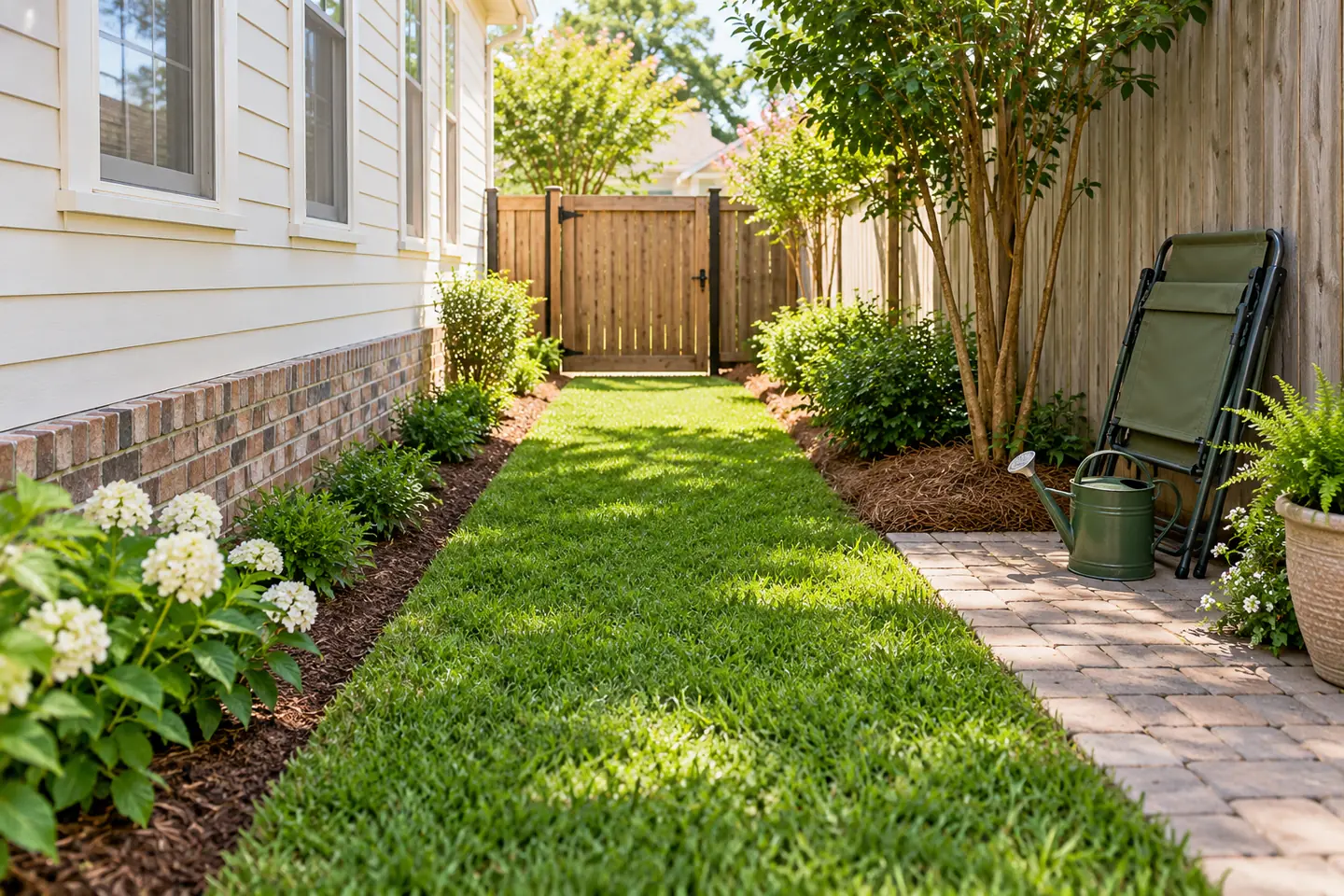
Maintain a boundary that supports your routine
You might want a narrow grass edge beside the bin while leaving a mulched operating pad intact. Someone else may have a paved approach with only a small lawn pocket behind it. Describe the finish using those existing materials. Cutting the grass shorter is not a way to enlarge a working pad, and trimming around the base should not imply contact with the container or its frame.
After a visit, compare the grass boundary with the agreed scope rather than the contents or appearance of the bin. If a front panel has been left open by a household member, mention that change before assuming an area was missed. If the bin has been relocated, update the property notes so the former location and new approach are both understood. A compost setup is allowed to evolve. The lawn plan simply needs to keep pace with the space it occupies and the way you use it.
Give Happy the details that make this corner different
For a compost area in Gretna or a neighboring Westbank community, start with the bin type and the grass you want maintained. Then explain the stored materials, opening side and route to the gate. One useful message might say that the wooden bays remain closed, the dry-leaf pile stays, and only the grass approach belongs in the requested visit. That is enough to begin a focused conversation without a long lesson about your compost recipe.
Call 504-339-3571 and ask for Happy to discuss the lawn around the working area. Include a current photo when the setup has changed, particularly after adding a second bin or moving supplies. By separating lawn maintenance from container care and material handling, you make room for both routines. The result you are aiming for is a backyard that remains useful to you, with its grass cared for according to a plan everyone can understand.
Keep a temporary sifting area off the assumed lawn map
When you harvest finished compost, a screen, tarp or open container may temporarily occupy grass that is usually clear. Explain when that work is happening and whether the setup will remain on the visit day. Storing the main bin neatly does not account for those temporary pieces. After you finish, have the responsible gardener put the tools and material where they belong before presenting the space as open lawn again. If a patch remains covered, describe it as a current exclusion rather than asking the lawn visit to finish the composting task. The working area and the routine mowing area can change independently.