
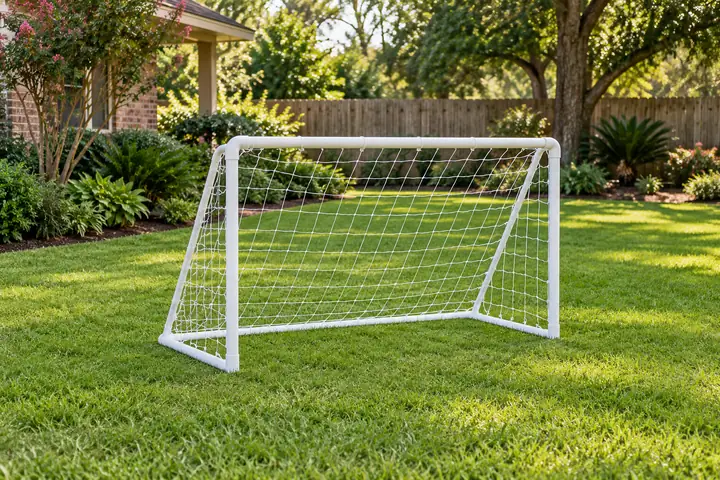
A portable goal still needs a preparation plan
A small soccer goal or practice net can make a backyard much more useful, but portable does not mean ready to move at any moment. The frame may have anchors, weighted feet, guy lines or a net that reaches farther than the uprights suggest. When arranging lawn care with Happy, explain the complete setup and who will prepare it. A general note that the goal can be moved leaves too many practical questions unanswered.
The lawn request should distinguish the grass under the equipment from the grass around equipment that remains in place. Handling, dismantling and reassembling sports equipment are separate responsibilities unless a specific arrangement is discussed. The owner should follow the manufacturer's instructions for storage, anchoring and use. A lawn visit should not require someone to decide whether an anchor can be pulled or whether a partly folded frame is secure. Good preparation gives both activities a clear place in the week.
Count anchors, lines and detached pieces
The upright frame is easy to see. A dark ground peg or thin cord beside it may not be. Before the visit, account for every part associated with the equipment, including pieces removed during storage. A goal moved to the patio does not leave a clear mowing area if its anchors remain in the turf. Explain any fixed components that cannot be removed rather than assuming they will be visible through the grass.
Toro's mower guidance asks operators to inspect for objects that could interfere with operation or be thrown. For a sports area, the homeowner's useful contribution is a complete equipment handoff. Do not place loose fittings in a small pile at the edge of the same lawn and call the preparation finished. Store them together in their proper location. If you are unsure whether a buried or fixed piece belongs to the goal, identify the uncertainty before mowing is arranged rather than trying to uncover it during a rushed cleanup.
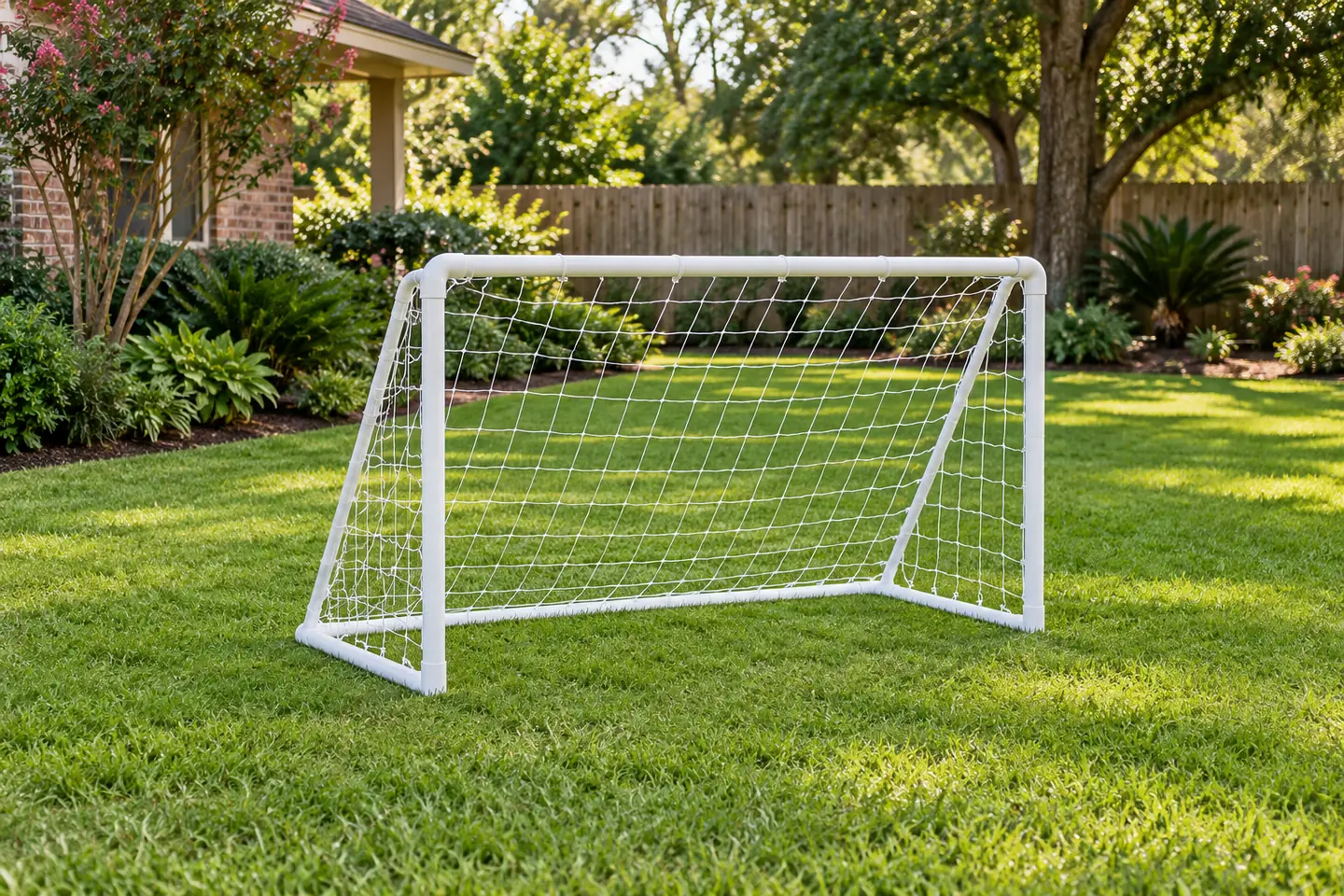
Choose storage that opens the whole route
Where the goal goes matters as much as where it starts. Moving it from the center of the lawn to the narrow gate approach can block the rest of the visit. Think through the route from the entrance to the rear grass and choose an appropriate storage place using the equipment's instructions. Keep the frame, net and associated pieces contained rather than allowing netting to drape back into the working strip.
Tell Happy whether the equipment will be fully stored or will remain as a fixed exclusion for that visit. If it must stay in place, show the outside footprint, including feet and lines. The grass beneath may not have the same access as the open lawn. An explicit exception is easier to understand than expecting the entire hidden patch to look identical afterward. The decision should be made before the visit, with the actual equipment and property arrangement in mind.
Keep practice activity separate from lawn work
The family may be used to short practice sessions while someone else works outside. Do not carry that routine into a mowing visit. Account for children, pets and anyone who uses the goal so the working area is clear. A net can partially block the view of a person behind it, and the equipment itself should not be treated as a boundary that makes nearby play suitable during lawn operations.
Include these items in your household preparation:
- Put balls, bats, cones and portable training markers away with the equipment.
- Confirm who is responsible for the frame and any anchors before the scheduled visit.
- Keep users and pets out of the operating area during the work.
- Explain any fixed posts that remain after a removable net has been stored.
The lawn plan does not replace the equipment's own safety instructions. It simply prevents play arrangements and maintenance arrangements from competing for the same piece of grass at the same time.
Describe the lawn under the practice area
The patch beneath a goal may have flattened grass, worn spots or a different appearance from the open yard. Show that condition after the equipment is properly stored, if you can do so without changing its safe setup. A current ground view helps explain what is already there. Do not assume that a mowing pass can erase wear or make a newly exposed patch match the rest of the lawn immediately.
Separate two requests: maintaining the accessible grass and addressing a longer-term lawn concern. If the goal has remained in one place for an extended period, tell Happy that history in plain terms. If it has just been moved, identify the former location so the difference does not appear unexplained. The visit can be discussed honestly around the existing lawn. There is no need to promise that changing a cutting height will restore every practice-worn spot, or to treat every color difference beneath the frame as a diagnosed grass problem.
Make the finish around fixed equipment explicit
Some sports installations are not practical to remove for each visit. Fixed posts or a permanent practice enclosure may define an area that needs its own discussion. Show the base, nearby grass and any attached netting at ground level. Explain whether the request concerns only the outside perimeter or includes an interior area with a separate entrance. Avoid describing a large enclosed practice space as simply another open lawn section.
Ask how the grass boundary should look given the actual clearance. Trimming beside a post and cutting under loose netting are different situations. Do not ask anyone to lift netting with a running machine or improvise a way around a cord. If a section cannot be included as expected, agree a clear limit and identify who will address the equipment preparation before a later visit. A well-defined boundary keeps the finish conversation focused on what was actually accessible and included.
Coordinate changes after a new purchase or event
A replacement goal may be wider, have a deeper net or use a different anchoring system. Update the property notes after the change instead of assuming it is equivalent to the old one. The same applies when a temporary practice cage, party game or tournament setup remains in the yard. Mention its presence before the next lawn visit and explain when it will be removed by the responsible person.
After storage, check that no detached component or temporary marker remains in the grass. Use an inventory suited to your particular equipment rather than relying on a generic count from this page. A brief household handoff can be enough: frame stored in its designated place, loose pieces contained, fixed post locations identified. That note is more useful than a promise that everything will be handled somehow before arrival, especially when different family members use and store the equipment on different days.
Give Happy a view of the real practice footprint
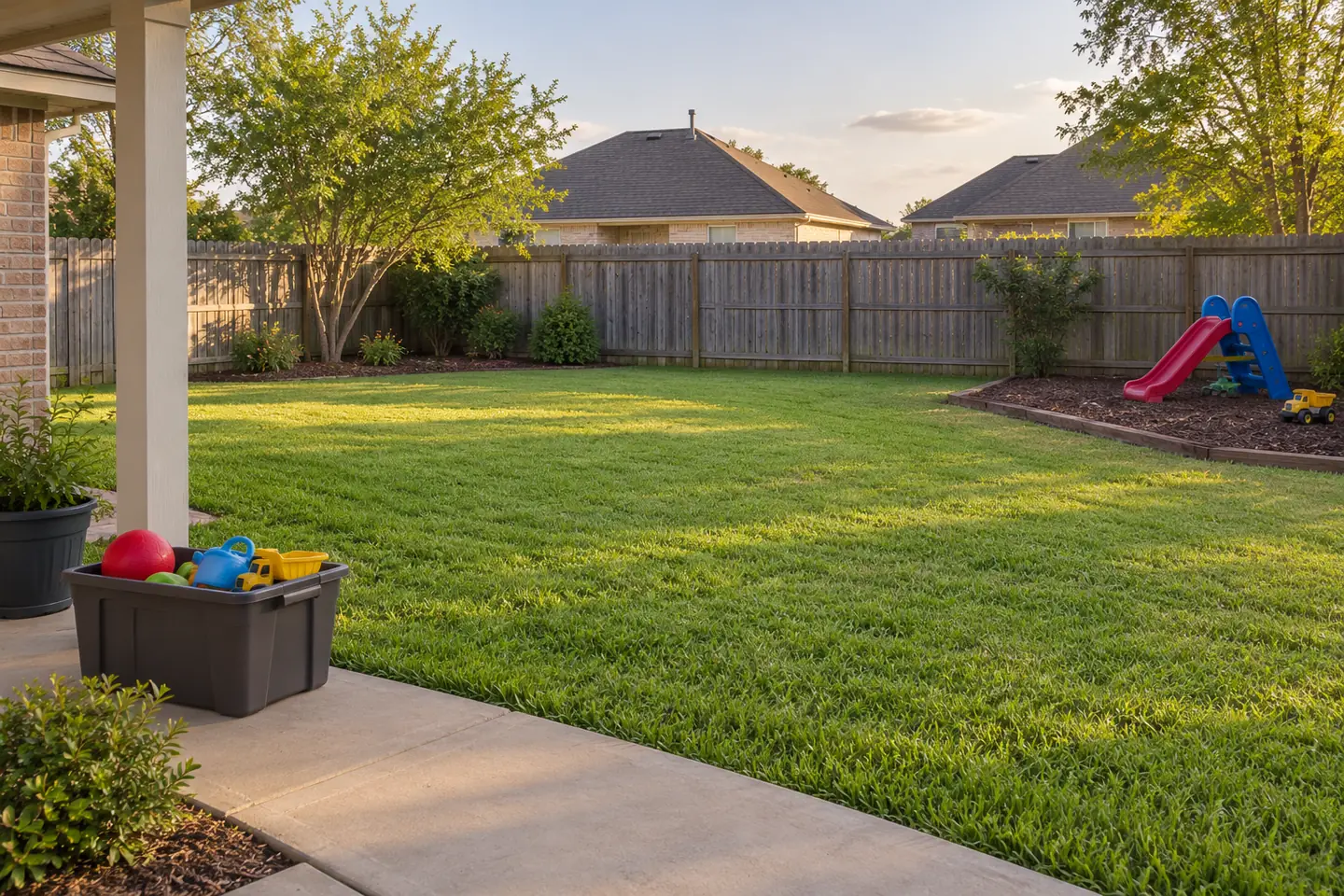
For a backyard in Algiers or another part of the Westbank, send a wide view showing the goal in relation to the gate, fence and open lawn. Add a close view of fixed bases or low connections when those remain relevant. If the goal will be stored for the visit, show the prepared area as it will actually be presented, not only an older picture from when the equipment was new.
Call 504-339-3571 and ask for Happy to discuss the lawn work you want around the practice space. State who handles the sports equipment and whether grass beneath it belongs in the requested scope. The aim is a routine that fits your household: play equipment accounted for, access explained and the lawn maintained according to an agreement that does not require last-minute dismantling or guesses about hidden pieces. Then the yard can get back to being a place you enjoy using.
Distinguish an unoccupied frame from a prepared area
An empty practice enclosure is not necessarily ready for lawn work. A batting net may have no users or balls nearby while its bottom cord, protective mat or weighted bag still covers the grass. Describe those pieces individually and explain which ones stay in place. If a mat is removed, show the newly exposed patch rather than assuming it looks like the surrounding lawn. Keep any storage decision within the equipment's instructions. This helps the maintenance discussion focus on accessible grass instead of confusing a quiet practice area with one that has actually been prepared for the requested visit.