
Start with a simple walk around
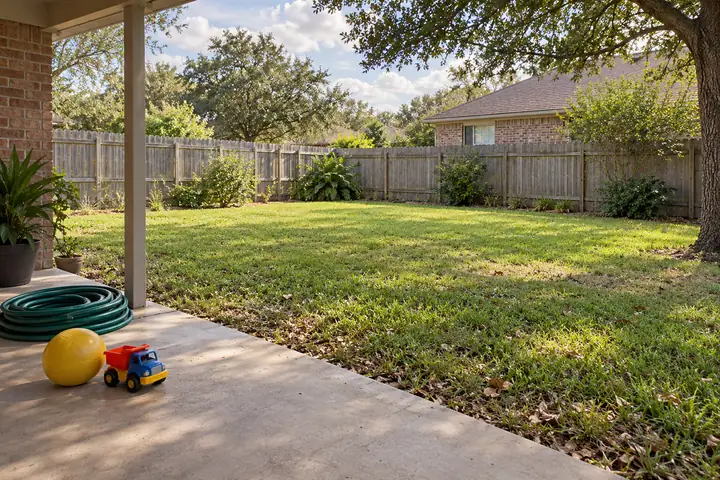
Getting ready for lawn service should not feel like doing the whole job yourself. Think of it as making the yard understandable and accessible. Before an agreed visit, walk the areas included in your request if you can do so safely. Look for items that were not there when you first asked for a quote. A delivery box, a child's toy or a hose stretched across the grass can change the working area surprisingly quickly.
You do not have to cut the grass before Happy cuts the grass. Focus on the things that equipment should not encounter and the details another person would not know. If you cannot clear an item or reach part of the yard safely, say so. Discussing that limitation in advance is better than assuming the visit includes lifting, hauling or sorting belongings. The lawn plan starts with a shared understanding.
Gather the small things from the grass
Balls, pet toys, garden tools and loose outdoor decorations can be hard to notice once grass grows around them. Pick up the movable items you normally manage and place them outside the agreed mowing route. A patio or storage area may work if it does not block access or create a trip hazard. Check beside the fence and under a low shrub where a toy may have rolled out of sight.
- Collect children's and pets' toys.
- Put hand tools in their usual storage spot.
- Lift loose hoses and extension cords off the grass.
- Remove lightweight decorations from the cutting area.
Do not handle an unfamiliar sharp object or exposed electrical item just to finish the checklist. Tell Happy where it is and arrange the appropriate help. Lawn service is not a reason to take a risk with something you cannot identify.
Give the hose a home for the visit
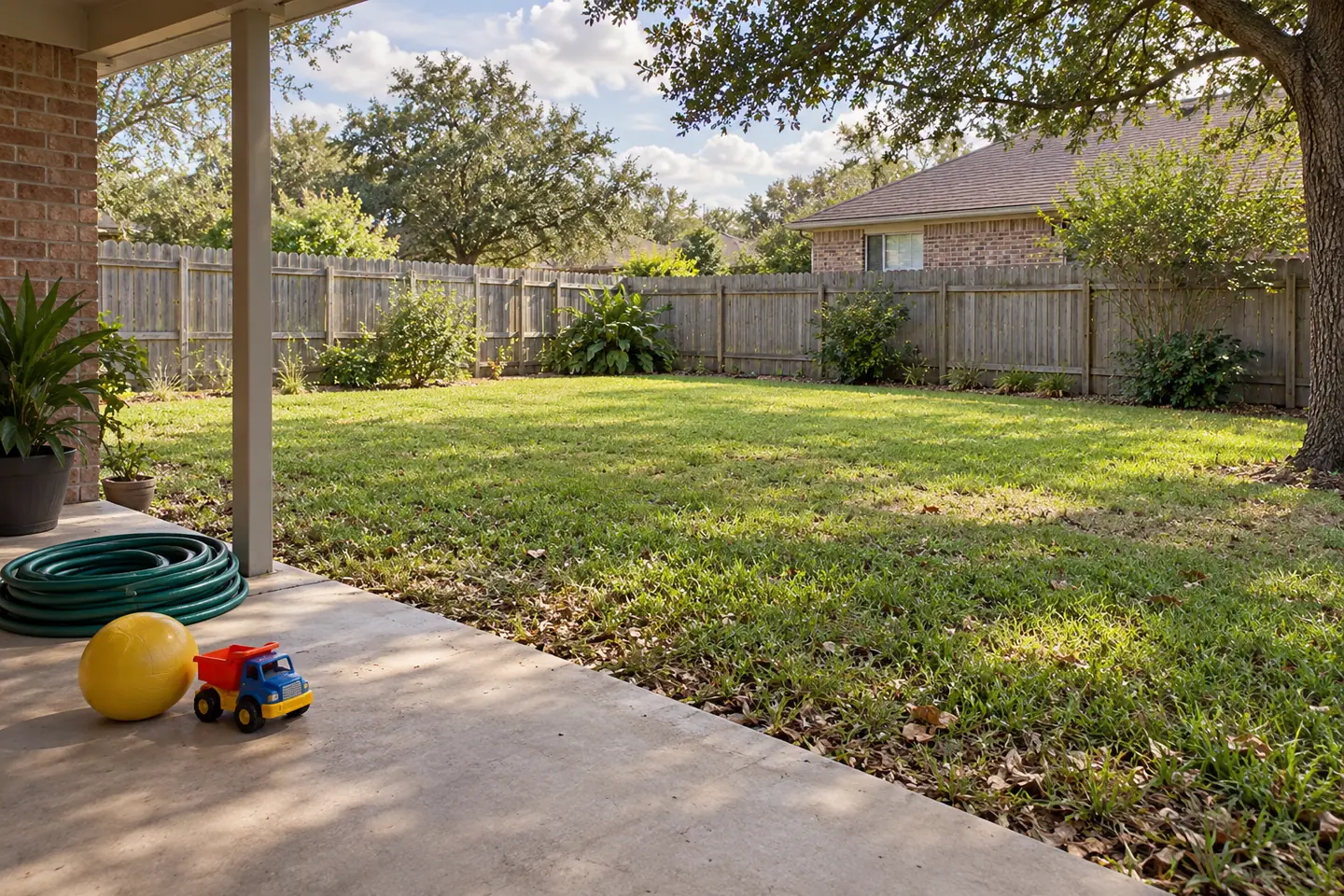
A garden hose can disappear along an overgrown edge, especially where it crosses from grass to a planted border. Coil it in a suitable place away from the mowing and trimming areas. Shut off portable sprinklers and move them if that is part of your normal household routine. If a timer is set to run near the visit, discuss the timing so the lawn is not being watered as work is due to begin.
Fixed irrigation is different from a portable hose. Do not dismantle a system for lawn service. Point out visible heads, valve covers, exposed tubing and any damaged or unusually high components. If something is already broken, mention it before the visit and keep a photo for your records. A marker or written note can be useful, but confirm how Happy wants important obstacles identified instead of leaving a surprise sign in tall grass.
Settle the gate plan before the day
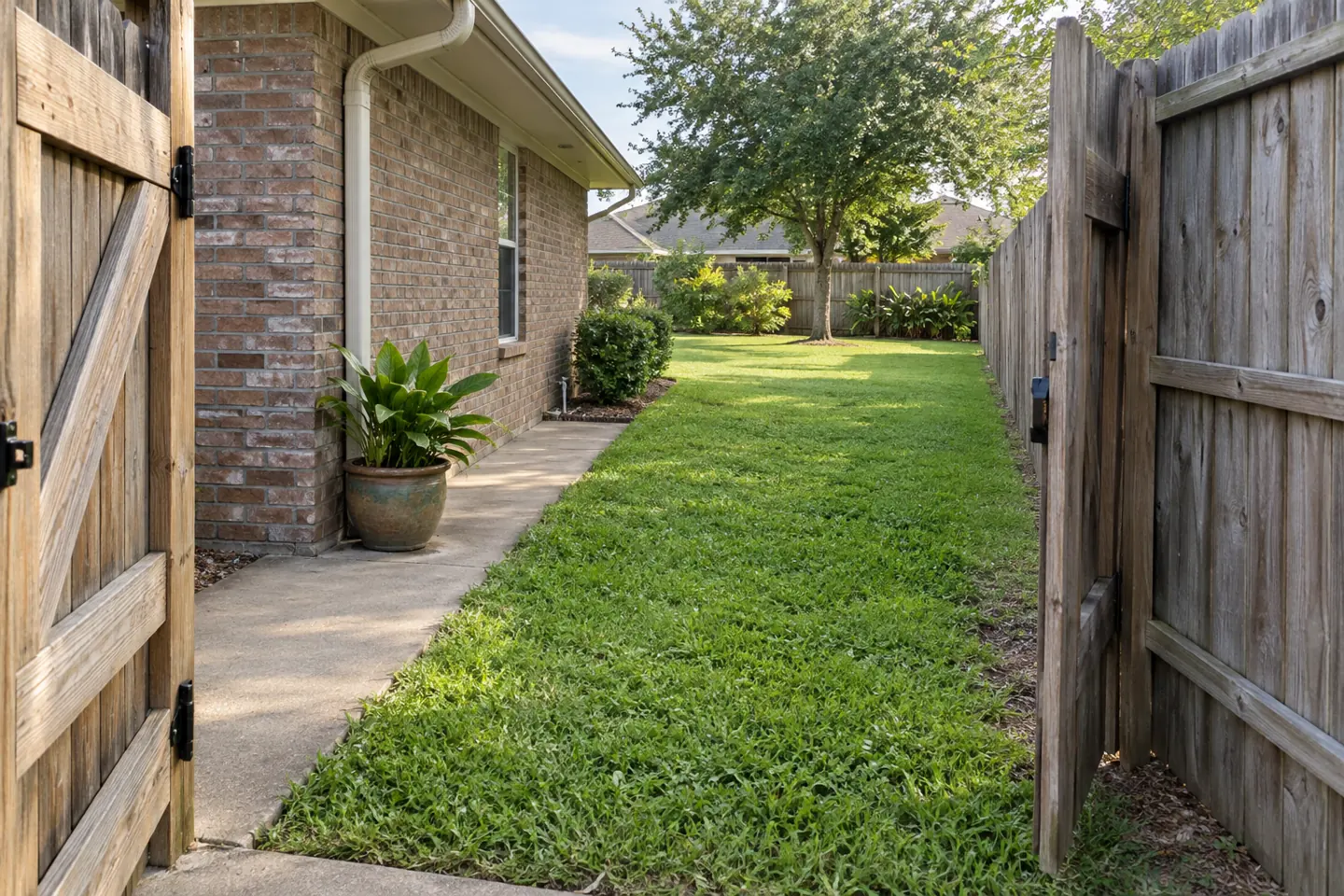
Access should be agreed, not improvised. Confirm which gate is used, whether someone must be home and how the yard can be entered without putting pets or property at risk. Check that the gate opens normally if it is safe to do so. A latch that worked last month may be sticking now, and a board leaning against the opening can turn a clear passage into an obstacle.
Keep private access details in the agreed private channel. Do not leave keys in an obvious place or publish a gate code in a review. If access changes, update Happy as soon as you know. There is no promise that a missed or inaccessible visit can be fitted into the same day. Clear communication gives you both a better chance to work out the next step without an avoidable surprise.
Make a separate plan for pets
Before equipment arrives, arrange a secure place for pets away from the work and the access route. Being behind a backyard fence does not keep a dog separated if that same gate must be opened for the service. An invisible boundary or a pet that normally stays close is not a substitute for a secure arrangement. Tell everyone in the household what is happening so someone does not open the back door midway through the visit.
Pick up pet waste in the included grass areas before the visit, and move bowls, leads and loose pet equipment out of the working route. If your pet cannot be secured or a household member needs help with the arrangement, raise the issue ahead of time. Happy needs to review a workable plan rather than discover the problem at the gate. A happy yard day should work for the people and the pets too.
Identify the things that should stay untouched
Young plants, newly seeded patches, exposed roots and favorite garden ornaments can blend into a yard from the wrong angle. Tell Happy what is being protected and where the boundary is. Use a description tied to a recognizable feature: “the new planting beside the back steps” is clearer than “that spot over there.” If you have a photo, pair it with a short written note.
Do not assume every green patch is grass to cut. A planted groundcover, a natural area or a neighbor's adjoining strip may look similar in a wide view. Agree on exclusions before the visit. If a new bed has been added since the quote, that is a change worth sharing. Trimming around an established boundary and redefining an entire planting area are different requests, and the visit should reflect the one you actually want.
Separate ordinary prep from extra cleanup
Moving a ball is one thing. Clearing building materials, hauling branches or emptying a storage area is another. Routine mowing does not automatically include those jobs. If the grass is hidden beneath debris or heavy objects, photograph the condition from a safe place and ask what must happen before lawn service can proceed. Do not push debris into a corner and assume it will be collected during blowing.
The same applies after a storm. A familiar lawn may have unfamiliar hazards, and scattered material can change the access route. Keep the request accurate: grass cutting, edging, weed-eating and blowing should be discussed alongside any special conditions. Happy can explain what can be reviewed as lawn maintenance and what requires another service or prior cleanup. That keeps the scope practical and the expectations clear.
Check the condition of the ground
If water is standing in the yard or the access path is unusually soft, let Happy know. A clear sky does not always mean the ground is ready for equipment. You do not need to make a technical drainage assessment. A plain description and a recent photo taken from a safe, firm place are enough to start the conversation. Avoid walking into an area just to prove how deep or soft it is.
If you have been watering, mention that too. Happy can review the current conditions and discuss timing. A planned visit is still subject to safe access and workable lawn conditions; do not assume an exact alternative time until it has been confirmed. When the weather changes, keep the conversation in one place so the latest arrangement is easy to find. The useful preparation is accurate information, not a risky test of the ground.
Leave a short note that people can follow
A long collection of messages can hide the one detail that matters most. Before the visit, put any remaining changes into a brief note: which grass areas are included, how access works and what needs to stay untouched. If you are asking someone else in the household to handle access, make sure they have the same instructions. Do not add a new service through a note and assume it has been accepted.
For example: “Front and backyard as agreed. Hose is on the patio, pets will be indoors, and the new plants beside the shed are excluded. Please let me know if the ground is still too soft.” That is a useful handoff. It describes preparation and asks for review without changing the quote. With the small stuff settled, you can leave the mowing conversation to Happy and enjoy a shorter outdoor to-do list.