
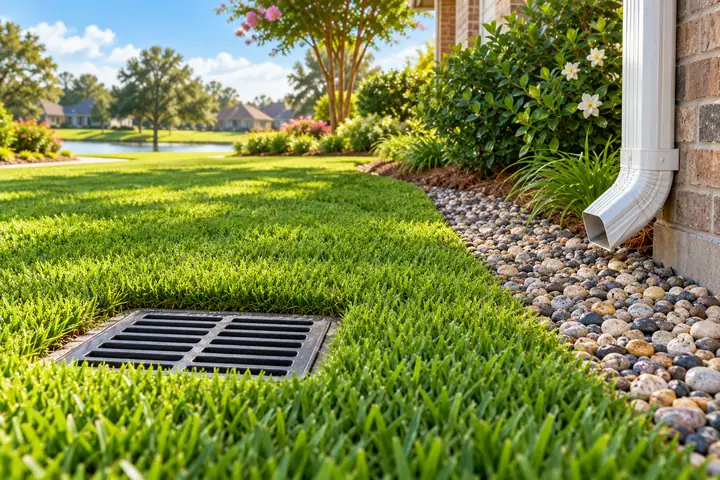
Identify what is actually visible
Homeowners often use “French drain” for several different features: a gravel trench, perforated pipe below ground, a catch basin, a grated inlet or a discharge point. For a lawn visit, describe only the parts that can be seen. A photo and zone name are more reliable than guessing at the hidden system.
Do not probe the soil or remove a grate to confirm construction. Drainage design, cleaning and repair belong with the owner and an appropriate drainage professional. The maintenance question is where grass ends, where equipment can pass and which openings must stay free of added residue.
Put every inlet on the lawn map
Mark grates, basin lids, gravel strips and outlets using permanent references such as a wall corner or walkway joint. Include dimensions only when the owner has measured them accurately. A low dark grate can disappear in shaded turf, especially after leaves settle.
Review the map after landscaping or utility work. If an inlet moves or a new one appears, retire the old version so a crew is not searching in the wrong patch.
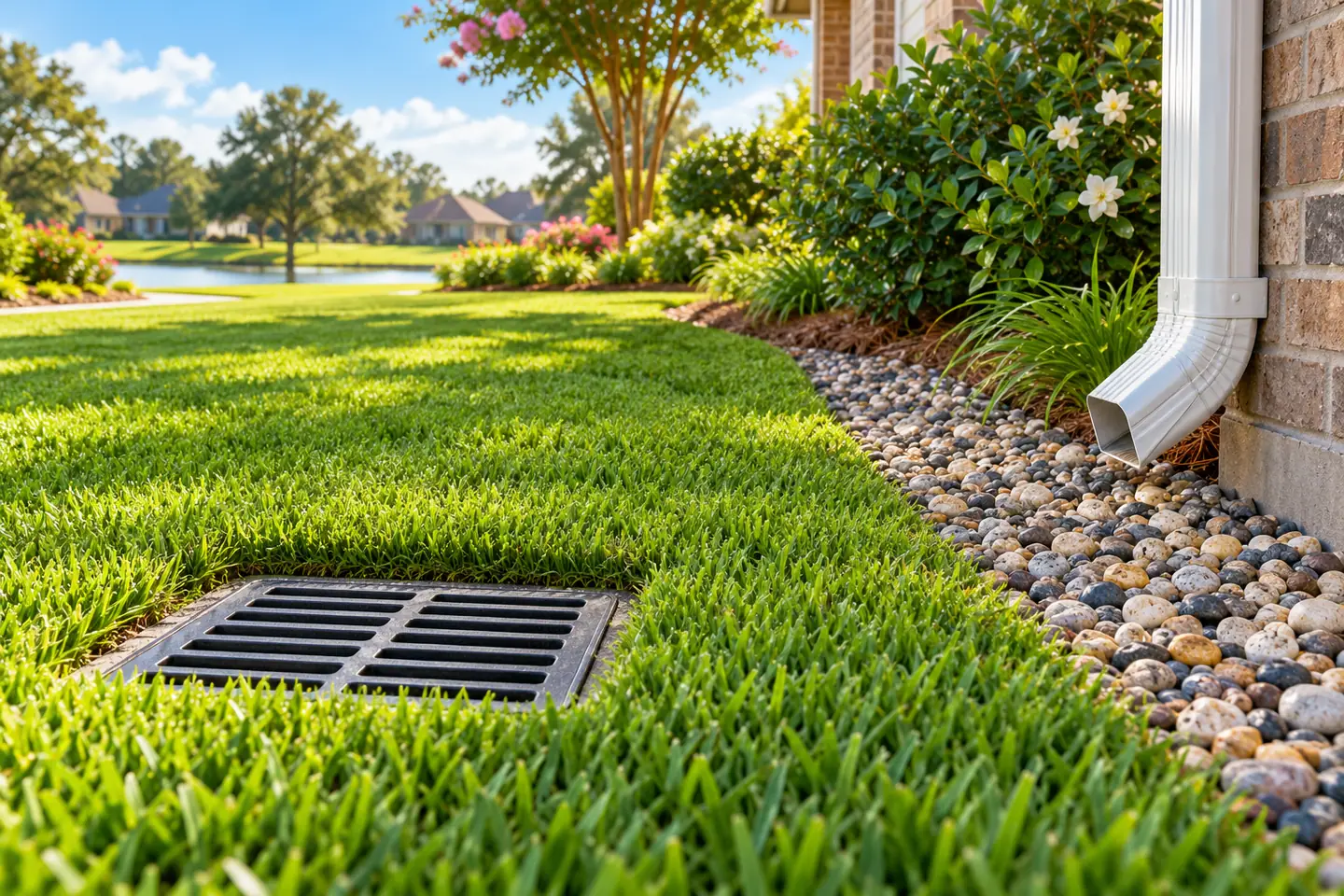
Keep the cover visible
Trim reachable grass around the agreed feature without striking or lifting the cover. The owner should remove decorative pots, stones or loose objects that conceal it. Do not paint, alter or wedge a grate open for visibility.
If the cover is broken, loose or below the surrounding surface, mark a conservative exclusion and report it. Lawn service should not certify that a drainage cover can support equipment.
Separate clipping control from drain cleaning
Ordinary mowing and blowing should avoid deliberately sending fresh clippings and leaves into an inlet, gravel channel or waterway. EPA yard guidance encourages keeping grass clippings and leaves off hard surfaces and out of storm drains. Direct the routine finish toward an agreed vegetated or collection area.
Existing sediment, roots, standing water and internal blockages are not solved by blowing across the top. Do not insert tools or chemicals. Ask the property owner to arrange the correct drainage maintenance.
Watch the approach after rain
A grate may appear dry while the surrounding soil remains soft. Observe standing water, sheen and footprints without entering unsafe water. Name the exact strip that is firm or soft and let the authorized contact decide whether the zone is ready.
Avoid stating that the drain works or fails based on one rain. The lawn record can note how long visible water remained, but diagnosis requires more context and expertise.
Treat gravel as its own boundary
Where grass meets a stone-filled trench, decide whether the existing line is part of the trimming scope. Loose gravel can migrate into turf and become hard to see. The property contact should return displaced stones or repair the border before mowing, not ask equipment to cross them.
Do not create a deeper channel under the label of edging. Edging follows an accepted hard border; excavation and drainage shaping are different work.
Use a marker that does not create another hazard
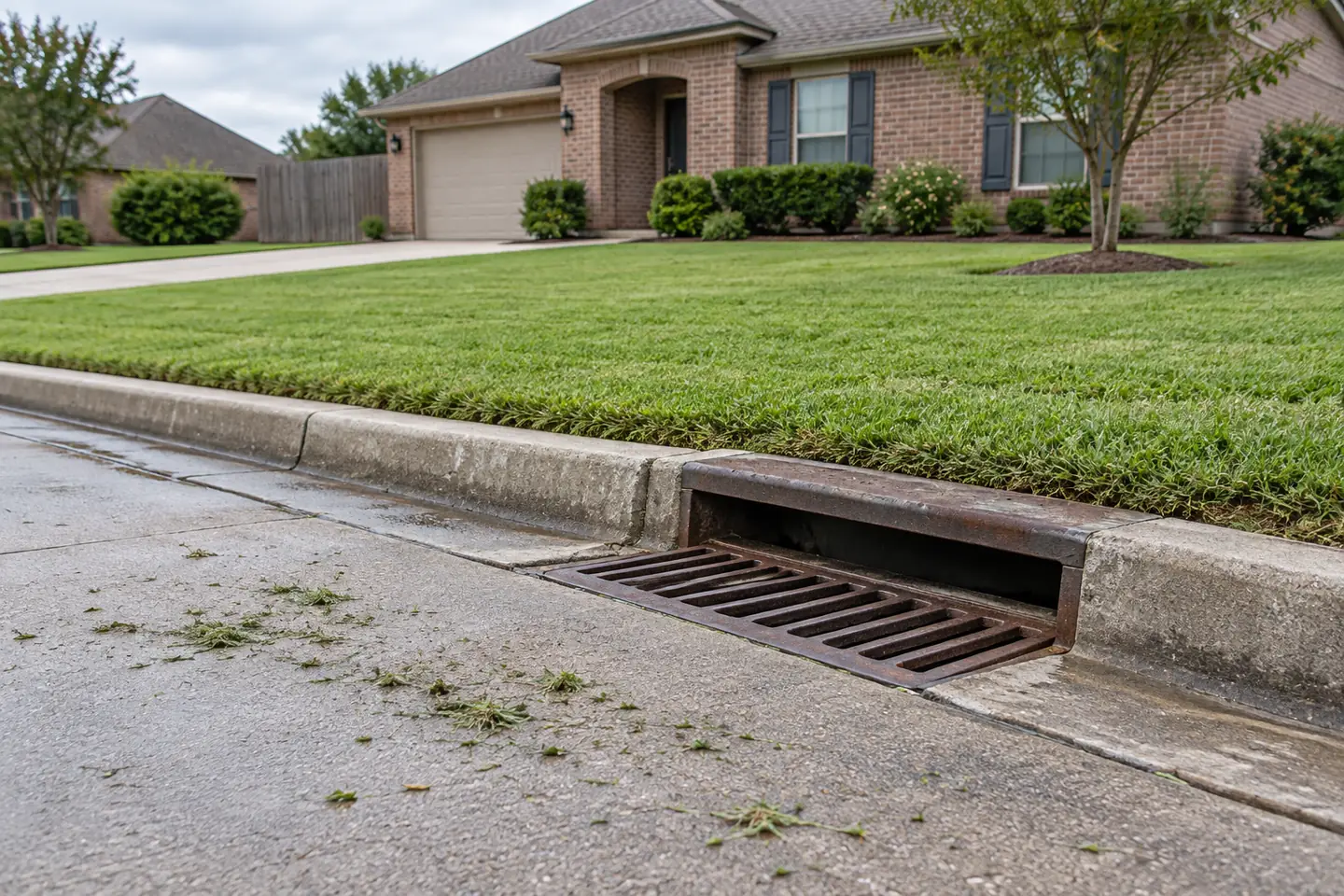
If the inlet is regularly hidden, choose an owner-approved above-ground reference outside the travel path. Do not drive a stake beside an unknown pipe or basin. A nearby fence post, bed corner or fixed paver often provides a safer reference.
Remove temporary flags only through the responsible project or utility process. Never assume a marker exists solely for lawn convenience.
Plan mower turns away from the grate
The safest route may pass alongside rather than directly over a cover. Show the intended approach on the property sketch and identify the no-turn strip. The actual equipment route remains a service decision based on access and visible conditions.
If the yard is too narrow to avoid a questionable cover, leave the patch untouched until the owner obtains the right evaluation. A smooth appearance does not justify an uncertain crossing.
Check downspouts and outlets separately
A downspout extension, pop-up emitter or open pipe may connect to the broader drainage layout, but each visible feature needs its own note. Do not move an extension or force an emitter open to reach grass. Photograph how it lies on visit day.
Discharge water can leave a wet fan beyond the outlet. Describe that surface condition without making a claim about the underground pipe.
Keep household chemicals out of the plan
Do not suggest herbicide, detergent or another product as a shortcut for vegetation around an inlet. Any weed-control conversation must identify the target, lawful product use and water proximity accurately. When that cannot be done, rely on accessible mechanical maintenance or leave the area alone.
Happy Grass does not provide pest control, fertilization, aeration or overseeding. Drain treatments and plumbing chemicals are also outside routine lawn service.
Photograph the drainage relationship
Take one wide image showing the inlet, grass, nearby hard surface and slope direction visible to the eye. A close image can show the cover condition without opening it. Avoid people, precise GPS, neighboring interiors and claims that the system was installed by Happy Grass.
Date the view after meaningful rain when safe, and again when dry. The comparison documents access conditions; it does not prove capacity or code compliance.
Respond to leaves and storm debris
Leaves can blanket a grate quickly. The owner should clear significant storm material through the appropriate cleanup before maintenance. Routine service should not push a heavy mat into the opening or hide branches beneath surrounding grass.
If the affected area cannot be seen, pause it. The rest of the lawn may remain available, so describe the exception by zone rather than canceling every assumption.
Handle a sunken or raised inlet carefully
An inlet that sits above or below the turf can catch wheels or cutting equipment. Do not fill around it, reset it or promise a particular clearance. Mark the visible footprint and request professional correction when needed.
After repair, update the map and photograph the new relationship. An older warning may point to a hazard that moved, while a new edge may require different trimming.
Recover tall grass conservatively
If a drainage strip was skipped for several visits, measure representative blade height without stepping on the cover. LSU AgCenter’s general one-third mowing rule supports avoiding removal of more than roughly one-third of the blade in one cut.
The return may need staged maintenance. Hidden stones, damp soil and cover height matter as much as appearance, so do not demand an instant match to the open lawn.
Use a visit-day checklist
Confirm the cover is visible, the route is firm, loose stones are out of turf, temporary items are gone and no unknown debris hides the opening. Send a current picture when any answer changes.
The checklist concerns access, not system performance. A lawn crew can report water or damage but should not certify drainage.
Define the quote boundary
List mowing and reachable trimming around named drainage features. State that internal cleaning, excavation, grading, stone replacement and repair are excluded. Clarify the included paved surfaces for blowing so residue has an agreed destination.
Precise language prevents a request to “clean around the drain” from becoming an undefined plumbing or landscaping job.
Ask Happy with current facts
For a yard in Harvey, Marrero, Gretna, Algiers, Belle Chasse or Westwego, call 504-339-3571 and ask for Happy. Share the zone map, wide photo and visible wet or blocked conditions.
Happy Grass can discuss the accessible lawn finish while keeping drainage claims honest. The goal is a clear, friendly plan that protects the opening from added lawn residue and leaves technical drainage work to the right provider.
Distinguish a pop-up outlet from loose debris
Some buried drainage lines end at a small hinged or rising emitter in the lawn. Map the visible lid and keep its movement unobstructed according to the owner’s drainage plan. Do not tape it shut, pry it open or cover it with soil to improve the mowing appearance.
An outlet can be difficult to spot when it sits flush with dense grass. Use a fixed reference and current photo, then leave a generous visible margin whenever the exact edge is uncertain. Broken hinges or missing caps need drainage repair, not a closer cut.
Record residue after the surface dries
When water recedes, silt, leaves or gravel may remain around an inlet. Do not assume the area is ready merely because standing water disappeared. The owner should clear unusual deposits through the appropriate maintenance process and confirm the grate is visible again.
Routine mowing can resume only in the portion where the surface, cover and border can be seen. This dry-condition check is separate from judging whether the drainage system performed correctly during the storm.