
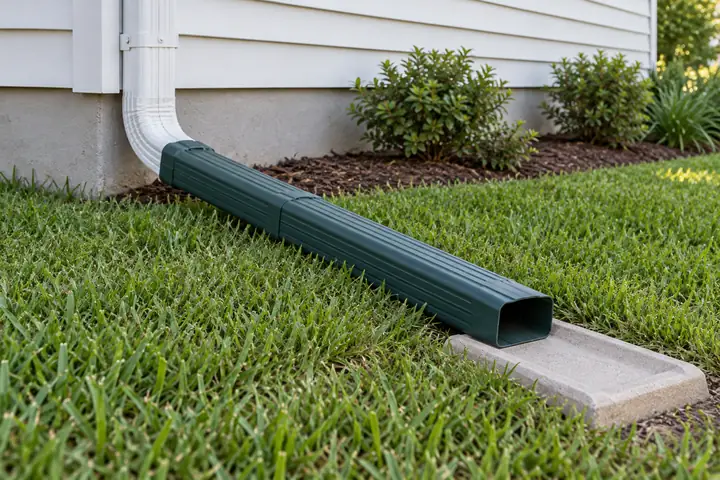
Treat the extension as a fixed feature first
A downspout extension can look like a loose object lying across the lawn, but it may be attached, secured or positioned for a particular drainage purpose. Begin with the assumption that it stays where it is unless the owner has an appropriate plan for moving it. The mowing request should identify the entire visible run, including a splash block or outlet that grass may partly conceal.
EPA guidance explains that redirected roof water may enter a lawn or garden, while noting that the location and property conditions matter. That general purpose is why moving an extension to simplify one cut can have consequences beyond appearance. Happy Grass needs to know where the grass can be maintained around the hardware. Mowing should not quietly become a redesign of where roof runoff goes. If the extension's purpose or attachment is uncertain, tell Happy that before the visit instead of describing it as an ordinary removable garden hose.
Photograph both the connection and the outlet
Take a wide view from the house toward the end of the extension so its route through the grass is clear. Add closer views of the visible connection and the outlet from accessible ground. Do not pull the fitting apart to make the photograph. Include bends, stakes, straps and any nearby bed edge that limits the approach. A picture of only the white downspout on the wall leaves out the part that affects mowing.
Describe what you know about movement. Does the extension fold upward as part of its intended design, or has someone simply pushed it aside in the past? Is a splash block separate and heavy, or attached to another feature? If a contractor installed the arrangement, share any relevant instructions. A worn hinge or loose joint should not be tested by the mowing crew as a convenience. The goal is to establish a dependable service boundary and an access route, with any owner preparation agreed before equipment arrives.
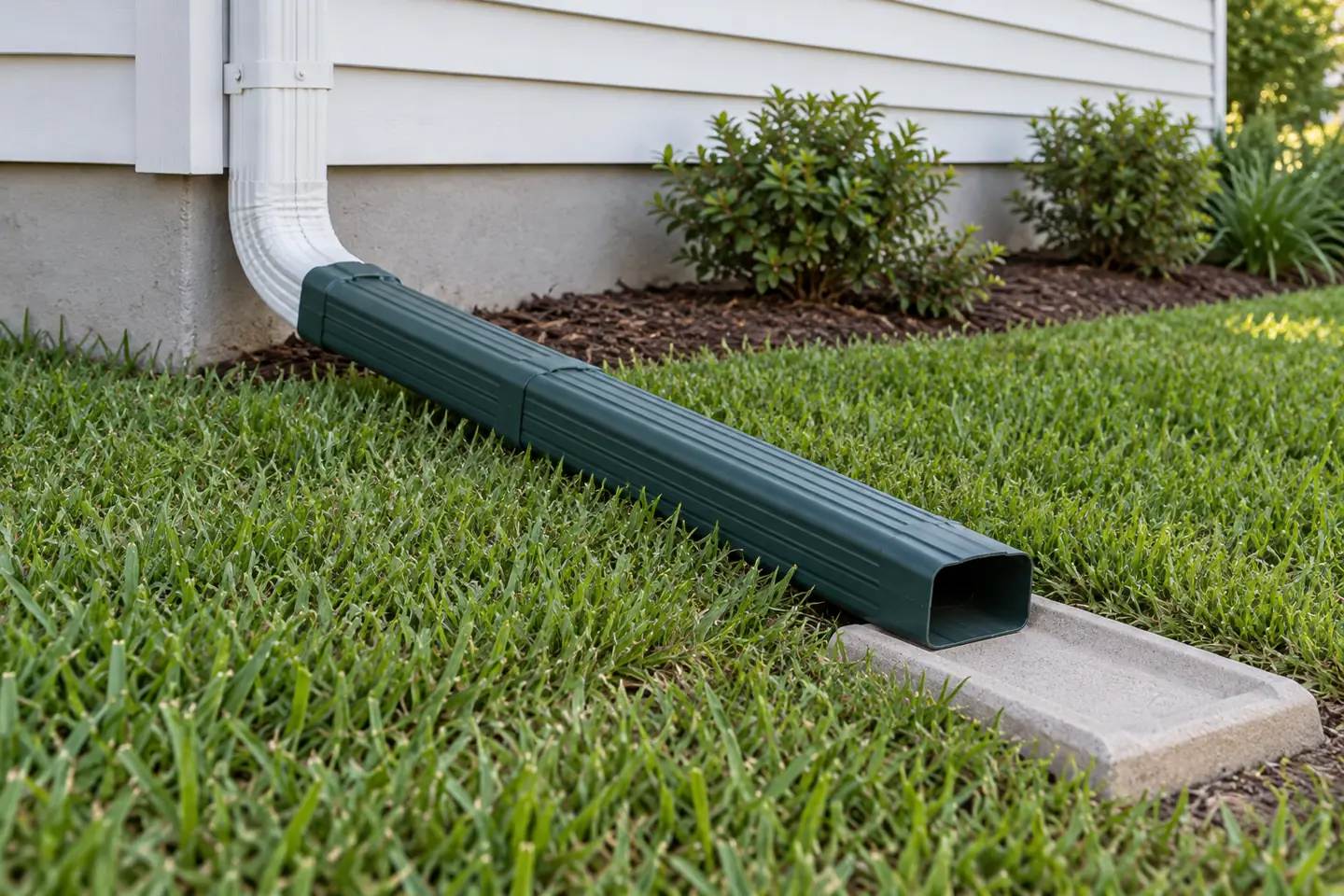
Keep the lawn route distinct from water routing
An extension across a narrow side yard can divide a grass strip into two sections. Show whether either section can be reached independently, and identify the usable gate route. Do not assume equipment can drive over the pipe because the grass on both sides needs cutting. A feature that is easy to step over may still be unsuitable for mower travel. The actual route needs to be reviewed with the equipment and property in mind.
If there is no useful route around it, discuss whether the section should be excluded pending owner preparation. That is clearer than arriving with an expectation that the crew will disconnect drainage hardware. A partial visit needs its own sensible scope: which grass is reachable, which edge is left untouched and what finish is expected nearby. Put those details into the service request. The property can have a tidy accessible lawn while a restricted strip remains intentionally outside the work, provided everyone understands that boundary before the visit.
Notice the ground at the discharge end
The outlet may lead to grass that stays wetter than the surrounding lawn. Tell Happy if you have actually observed that pattern, including when and under what conditions. A dry pipe on a sunny day does not show how the adjacent ground behaved after rain. Conversely, one wet photograph does not prove a continuing drainage defect. Keep the description factual so the mowing decision can respond to the current surface.
Look from a suitable edge for a soft patch, washed material or an exposed outlet hidden by long grass. Do not probe the pipe, open a buried connection or alter the discharge direction as preparation for the mower. If the ground is uncertain, identify an exclusion around it rather than trying to demonstrate firmness by repeatedly crossing it. Drainage repair belongs in a separate qualified review. Happy's immediate question is whether the grass and access route can carry routine maintenance equipment without making a known wet area the unavoidable travel path.
Agree who handles any movable section
If the owner has confirmed that a particular extension is designed to be moved temporarily, settle the responsibility and timing before service. Explain who will prepare it, where it will rest and how its original arrangement will be restored under that plan. Do not leave an unannounced loose fitting in the mowing route. A plan that depends on the owner being present needs to account for a change in arrival time or an unattended visit.
Useful preparation notes can be brief:
- Identify the specific movable piece rather than all roof drainage.
- Describe any manufacturer or installer restriction that applies.
- Confirm who is responsible for moving and restoring it.
- Explain what happens if that preparation has not occurred.
This is a coordination checklist, not advice to disconnect a particular system. If the arrangement cannot be moved appropriately, maintain the agreed boundary around it. A small uncut margin can be an honest temporary outcome; a disconnected or misplaced drain is a different problem that a neat lawn photograph does not justify.
Give trimming a realistic boundary
Grass immediately beside rigid plastic, thin metal or a delicate connection may not be reachable with the same approach used on an open lawn. Tell Happy about brittle parts, a recently repaired joint or a section that is already loose. Do not assume string trimming can safely erase every tall blade touching the hardware. The proposed finish should leave room for the condition of the actual feature.
Describe whether the extension rests over grass, mulch, paving or a combination. A narrow border with gravel introduces loose material as well as hardware. Photographs should show that surface before you request close trimming. If the owner wants the strip beneath a long-standing extension maintained, access to that grass may require a separate appropriate preparation plan. The crew should not have to lift a system by guesswork to discover the request. Clear boundaries make it easier to preserve the drainage feature while maintaining what can reasonably be reached around it.
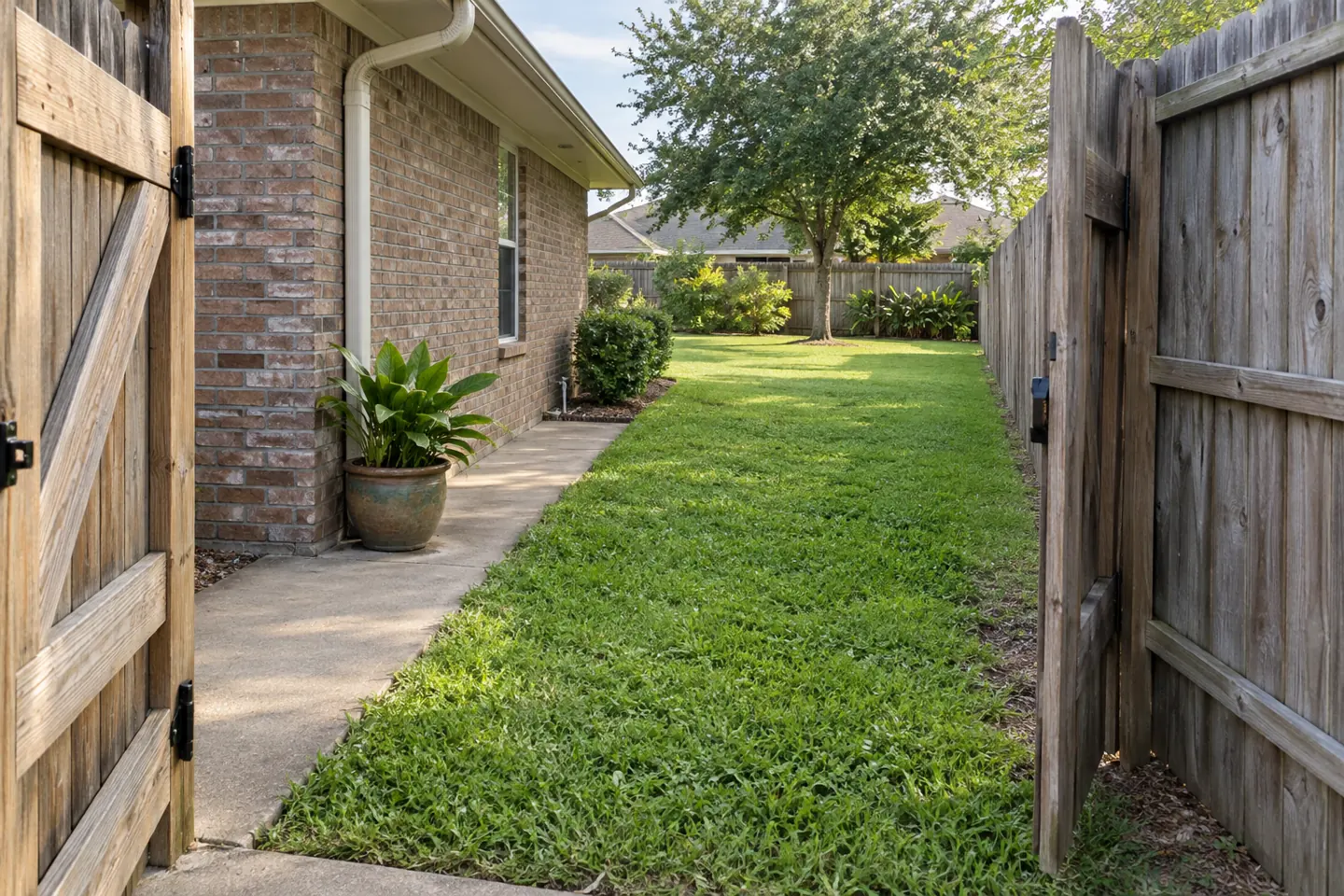
Check the arrangement after other yard work
An extension may be shifted by gardening, a contractor or household activity between mowing visits. After such work, update the service note with its current position. Do not rely on last month's picture if the outlet now crosses the gate path or rests beside a different bed. Mention new supports, fresh soil and temporary materials around the route. Each can change how the lawn is reached even if the downspout itself has not moved.
After maintenance, review the area from the same wide viewpoint. If you believe the hardware changed position, describe the specific joint or direction and provide the earlier picture when available. Avoid assuming the latest crew caused a movement that may have occurred between visits. A dated record supports a fair conversation. If a part is damaged or water routing no longer appears suitable, arrange the appropriate repair review. Lawn maintenance can continue around a clearly defined restriction when suitable access exists, without treating a temporary workaround as a permanent drainage solution.
Put the constraint into the quote request
A useful request says that the side lawn has an attached extension across it, includes a photograph of the full run and asks which grass can be maintained without moving the system. Add whether the far section has another entrance. That gives Happy a concrete access question to answer rather than an unexpected piece of hardware to manage on arrival.
If the owner will carry out an appropriate preparation step, state it in the same request and explain the fallback when it is not ready. Include the desired ordinary mowing, edging, weed eating or blowing scope without assuming drainage installation or repair. Call 504-339-3571 and ask for Happy to review the property. A clear route and a clear responsibility for the extension are the useful ingredients. They let the yard receive a realistic maintenance plan while keeping roof-water decisions with the person responsible for the drainage arrangement.
Keep the outlet in the current version of the map
A downspout extension can appear unchanged beside the wall even after its far end has moved. Show the full visible route and outlet in the current photograph. If the household changed the arrangement, describe the change without assuming the older lawn route still applies. A close view of the connection alone cannot show whether the extension now crosses a grass strip.
For the request, identify the grass you want considered around the present setup and any preparation the responsible person still needs to handle. Do not make moving the extension or choosing a new discharge location an unspoken part of the visit.
When reviewing the proposed boundary, trace it back to the current outlet rather than a remembered position. This small check keeps a lawn instruction from quietly becoming a water-routing decision. It also makes future updates simpler: you can name the changed part of the setup and leave the rest of the property description intact.