
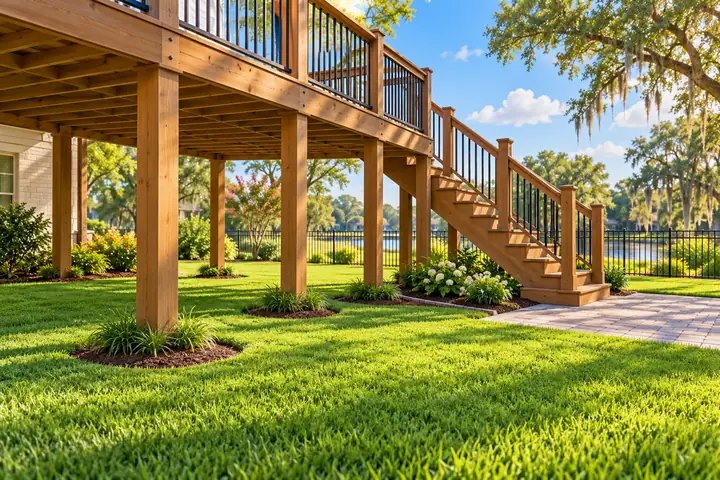
View the deck from the lawn
Walk around the entire structure and identify posts, stairs, landings, skirting, low beams and the grass edge. A deck that looks open from one side may have a tight corner or stored item on the other. Use a wide property view before discussing close trimming.
The owner is responsible for structural condition. Happy Grass does not inspect footings, railings or stair safety. The lawn plan records visible clearance and avoids contact with the structure.
Name each access zone
Separate open lawn, post pockets, stair-side grass and any under-deck area. Each may need a different approach. Do not label all of it “under the deck,” because a reachable outer bay is not the same as a dark enclosed center.
Show the approved mower route and the people’s walking route. If one crosses the other, coordinate timing rather than leaving the conflict to visit day.
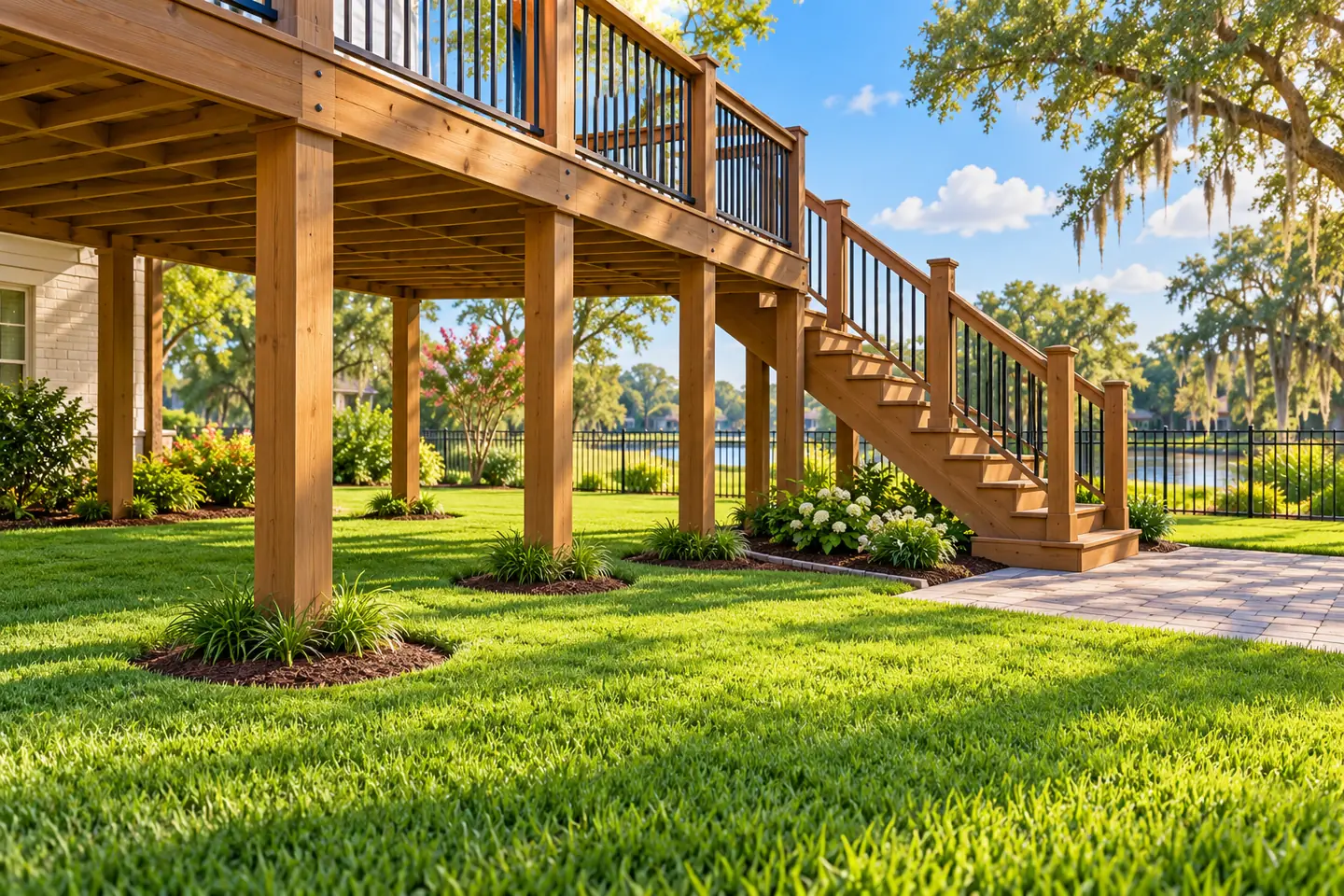
Keep the stair landing clear
Remove toys, shoes, planters, hoses and loose décor before service. Do not ask a crew to place household items on the stairs or grass. The landing should remain available for normal entry and exit.
Routine blowing can clear fresh lawn residue from an included landing. It does not include washing stains, removing mud or cleaning stored belongings.
Treat posts as fixed obstacles
Photograph the post bases and any metal hardware visible above grade. Do not trim against wood, fasteners or decorative sleeves. Where the pocket is too narrow to see, define a small leave-alone area.
Never loosen a skirt panel or move a support to gain access. Structural and carpentry work require the right provider.
Decide what happens beneath the deck
An elevated deck may cover grass, bare soil, gravel, plants or storage. State which visible outer strip, if any, belongs in the lawn scope. Do not assume equipment can enter simply because the opening appears tall enough.
Poor light, low beams, hidden debris and uneven ground can make the interior unsuitable. The owner should clear and inspect it before requesting maintenance.
Remove storage conflicts beforehand
Ladders, kayaks, lumber, grills and yard tools often migrate under decks. The property contact should relocate them to an approved place. A lawn crew should not handle valuable, sharp or heavy personal property.
If storage remains, draw the exclusion around the full footprint, including anything that protrudes into grass. Do not blow clippings into the pile.
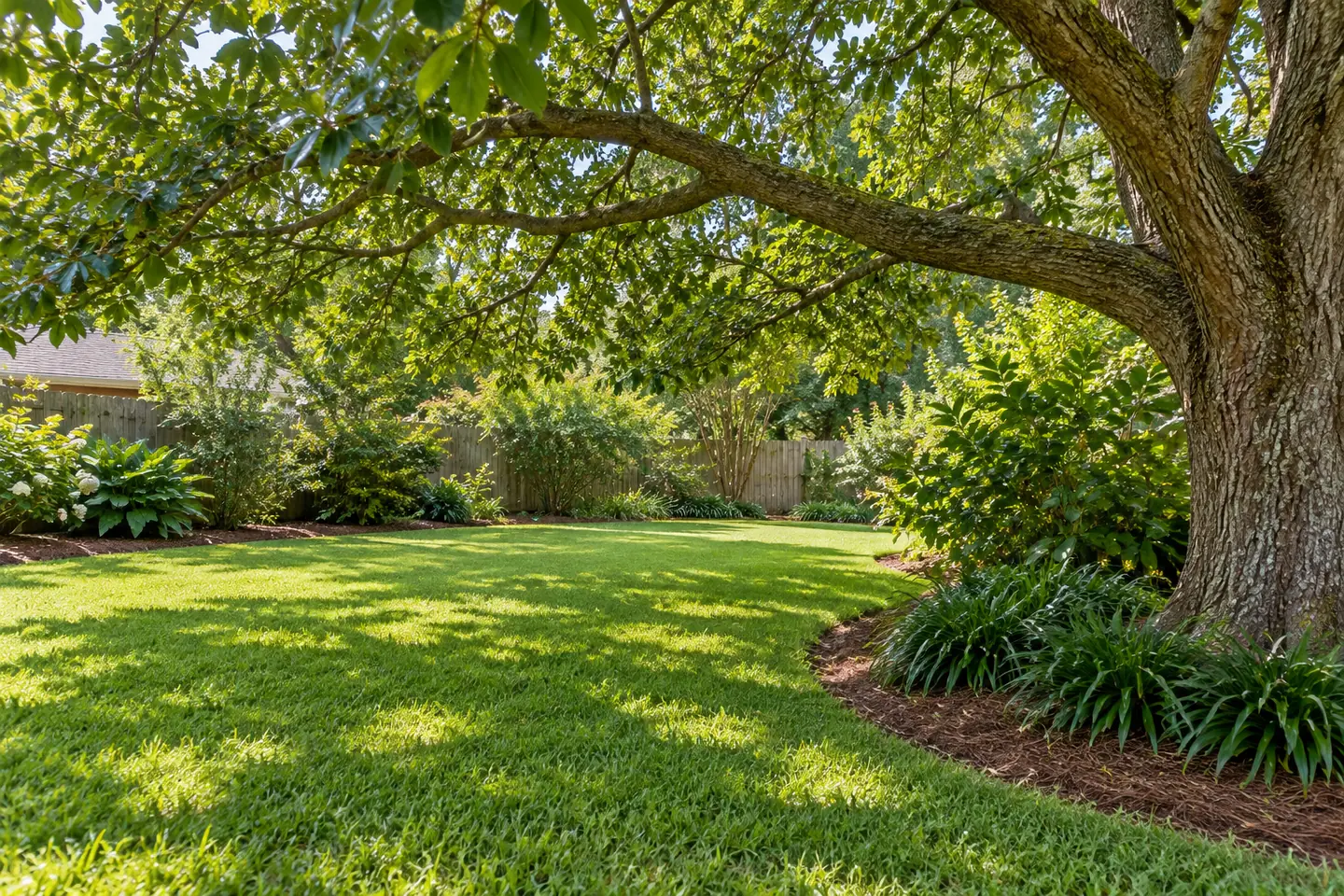
Check the stair-side turn
Exterior stairs can narrow the path between a deck and fence. Walk the turn with gates open and note the lowest tread, handrail posts and bed edge. If the turn cannot be made without contact, use another route or leave the rear zone unavailable.
Do not carry equipment up residential stairs unless the agreed service plan and equipment safely support it. An upper lawn may need its own ground-level entrance.
Keep people above and below coordinated
Let residents know when work will occur near the stairs and under-deck edge. Avoid blowing toward someone using the deck. Children and pets should remain away from active lawn equipment.
Do not block the only exit. If the deck door is the required route, sequence the work so passage remains available.
Watch runoff and drip lines
Roofless decks can shed water between boards, while gutters and stair landings can concentrate flow. Observe wet soil and standing water without diagnosing drainage. A shaded strip may stay soft after the open lawn firms.
Leave wet pockets untouched rather than creating ruts around posts. Drainage changes and erosion repair are outside mowing.
Define the hard edges
Identify concrete pads, paver landings and existing borders that may be edged. Grass against wood skirting or a post is a trimming conversation, not hard-surface edging. Do not cut a new trench along footings.
If a border is broken or buried, describe the finish you want and request a separate review. Exact language prevents “edge the deck” from meaning different things to different people.
Keep debris visible
Inspect for screws, nails, splinters, glass and small toys beneath stairs and around posts. These are not materials to mow through. The owner should clear unknown or sharp debris before the visit.
Leaves alone may still hide hardware. Rake or remove the heavy cover through the appropriate property cleanup before asking for a close cut.
Handle tall post pockets carefully
If a narrow pocket was skipped, measure representative height and look for debris. LSU AgCenter’s general one-third mowing guideline favors a conservative return rather than removing most of the blade at once.
The pocket may take more than one suitable visit to resemble the open lawn. Do not trade visibility and structure clearance for an instant match.
Photograph all four sides
Take wide views of each deck face with the grass and access route visible. Add a low-angle image only when it can be taken safely and reveals a hidden post or obstacle. Avoid people, house numbers and neighboring private space.
Update the set after skirting, stairs, landscaping or storage changes. Old images should be retired, not layered into a confusing archive.
Plan construction and staining days
Deck repair, staining and washing can introduce tarps, cords, wet coatings and debris. Pause the affected lawn zone during active work. Do not blow dust or clippings toward fresh finishes.
The project contact should confirm cleanup and curing requirements before normal maintenance returns. Happy Grass does not manage the coating schedule or construction site.
Keep clippings out of drains and doors
Direct the final blow away from door thresholds, under-deck drains and water paths. EPA yard guidance discourages sending grass and leaves into storm drains and waterways. Identify the included hard surfaces and appropriate destination for routine residue.
Existing drain blockages and heavy leaf storage require separate cleanup. The lawn finish should not conceal them.
Use a deck-side checklist
Confirm the landing is clear, storage is outside the lawn route, pets are secured, post pockets are visible, ground is firm and construction is inactive. Send a current photo when one of those conditions changed.
The checklist is short because it focuses on observable readiness. It does not certify the deck or promise access to every shadowed corner.
Write the quote by zone
List open-lawn mowing, reachable post trimming, named hard edges and included landings for blowing. Exclude structural inspection, storage movement, carpentry, pressure washing, drainage repair and construction cleanup.
Happy Grass also does not provide fertilization, aeration, overseeding or pest control. A separate, precise weed-control discussion should never be assumed to include deck materials or planted beds.
Review after a deck change
After new stairs, skirting or posts are installed, walk the lawn again. Check for debris, soft soil and altered turns. Replace the map and confirm whether formerly reachable areas became enclosed.
Do not restore old instructions merely because the project is called finished. The built condition, not the proposal, controls the new lawn boundary.
Ask Happy about the workable edges
For a deck-side yard in Harvey, Marrero, Gretna, Algiers, Belle Chasse or Westwego, call 504-339-3571 and ask for Happy. Share current wide photos, the gate route and the zones you want included.
The conversation can keep the stairs usable, protect the structure from contact and give accessible grass a tidy finish. Honest exclusions make the recurring plan stronger, not smaller.
Confirm lighting and visibility
Deck shadows change through the day, and an evening accent light can be almost invisible in bright sun. Ask the owner to identify low fixtures, extension cords or temporary lighting that crosses the grass. Do not unplug or reposition electrical items to make a mowing lane.
If the under-deck area cannot be seen clearly at the scheduled time, keep work at the visible perimeter. A different visit hour may improve visibility, but it should be discussed rather than promised as a permanent exact arrival time.
Keep skirting openings recognizable
Deck skirting may include a small access door, removable panel or ventilation gap. The property contact should identify it so trimming does not treat the opening as an ordinary solid wall. Never fasten, open or cover a panel to improve the grass line.
If an access door swings over turf, include its full arc in the map and keep it closed or managed according to the owner’s plan. Damage, rot or animal activity inside the enclosure requires the appropriate property response, not an improvised lawn treatment.
Keep the landing separate from the space below
A photograph facing exterior stairs may show the landing clearly while hiding the area beneath the deck. Name those spaces separately. Explain which reachable grass belongs in the request and whether any under-deck area is excluded or still uncertain. The presence of visible grass through a gap should not be treated as permission to enter an unseen storage space.
If the household plans to clear items, describe the current condition first and the intended preparation second. Follow with an updated view when that preparation is complete. This keeps a proposed scope from depending on crawling, shifting stored property or opening skirting that was never discussed. It also gives you a recognizable boundary for reviewing the finished stair-side strip without confusing it with a separate under-deck project.