
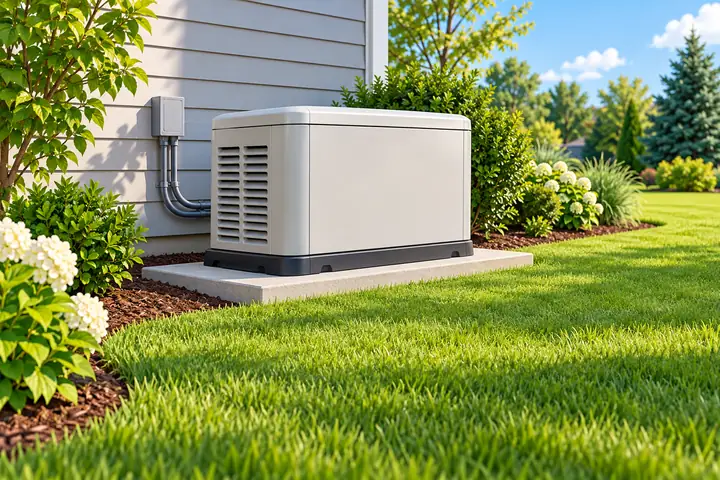
Begin with a no-contact equipment zone
Photograph the complete generator, concrete pad, wall connections and surrounding grass from a respectful distance. The lawn map should identify the visible boundary without leaning tools or equipment against the enclosure.
Happy Grass does not operate, test, open, clean or service a generator. All installation, ventilation, fuel and electrical requirements belong with the owner, manufacturer and appropriately qualified professionals.
Use the owner’s required clearances
Ask the property contact to provide the current manufacturer or installer clearance instructions. Do not invent a universal distance from a photograph because equipment designs and site conditions differ.
The mowing plan begins outside the confirmed equipment area. If clearance information is unavailable, choose a conservative visible exclusion instead of promising close trimming.
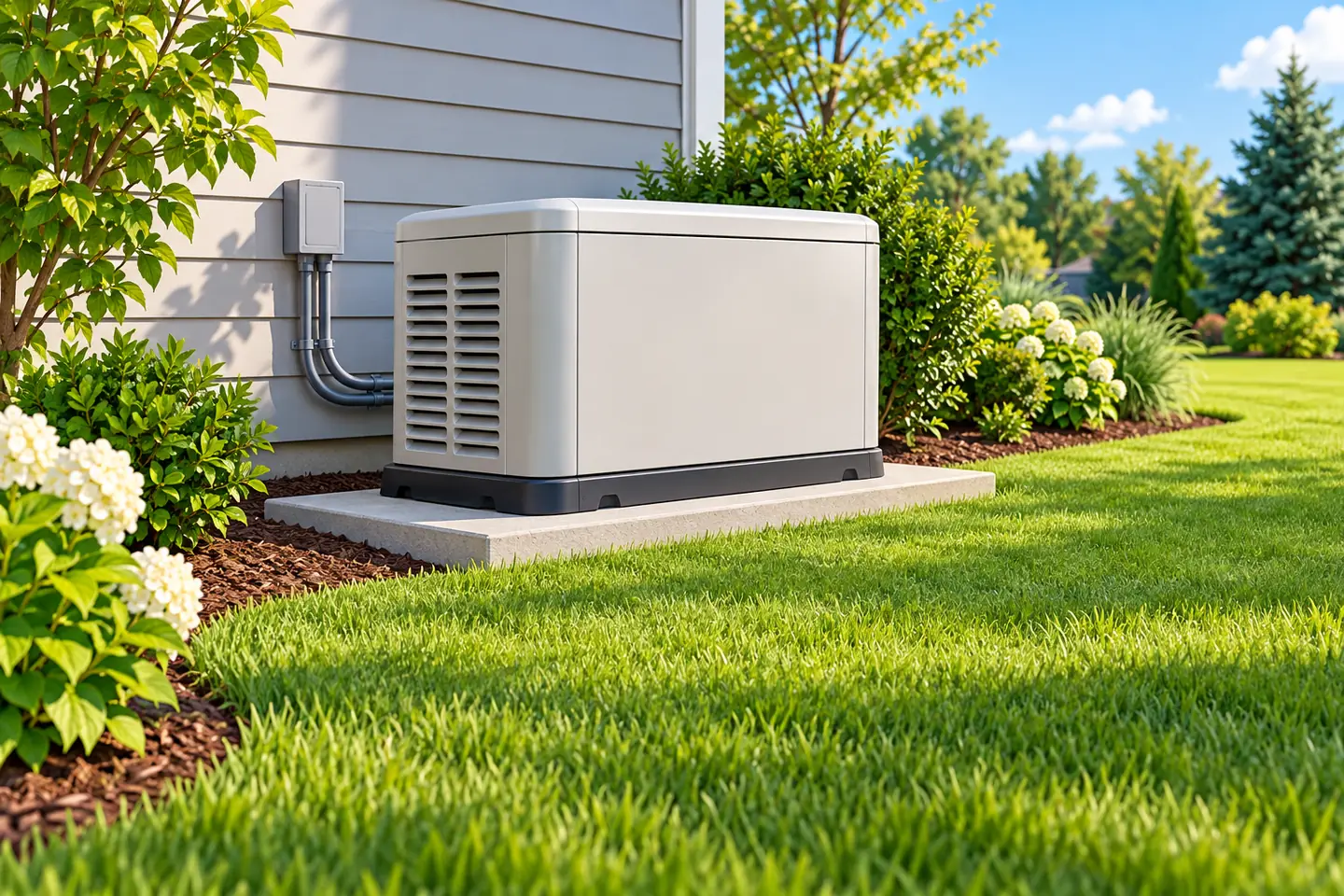
Map the pad and connections
Show every side of the slab, conduits, pipes, disconnects and any cable that meets the building. A tidy front panel can hide more delicate service connections behind the unit.
Do not edge against a conduit or cut vegetation by feel beneath a pipe. Preserve technician access and keep the route to shutoffs or panels free of lawn equipment.
Keep the service side open
Identify which panel or side a technician uses and record the travel route from gate or driveway. Do not stage mowers, blowers or bags on the pad or in the access lane.
A recurring lawn visit should leave that lane as open as it was found. If furniture, storage or construction materials block it, the owner should clear them before work begins.
Never work around a running test
Coordinate known generator testing or maintenance windows with lawn service. If the unit starts while work is nearby, stop and move to the agreed safe area rather than continuing beside operating equipment.
CPSC and Ready.gov guidance emphasize generator hazards, including carbon monoxide and electrical risks. Lawn workers should not troubleshoot sounds, odors or alarms.
Treat unusual odors as a stop signal
If anyone smells fuel, gas or exhaust where it is not expected, stop work, avoid switches or ignition sources and move away. Contact the property representative or emergency authority according to the situation.
Do not investigate a suspected leak with a mower or blower running. The service note should record that work stopped without offering a diagnosis.
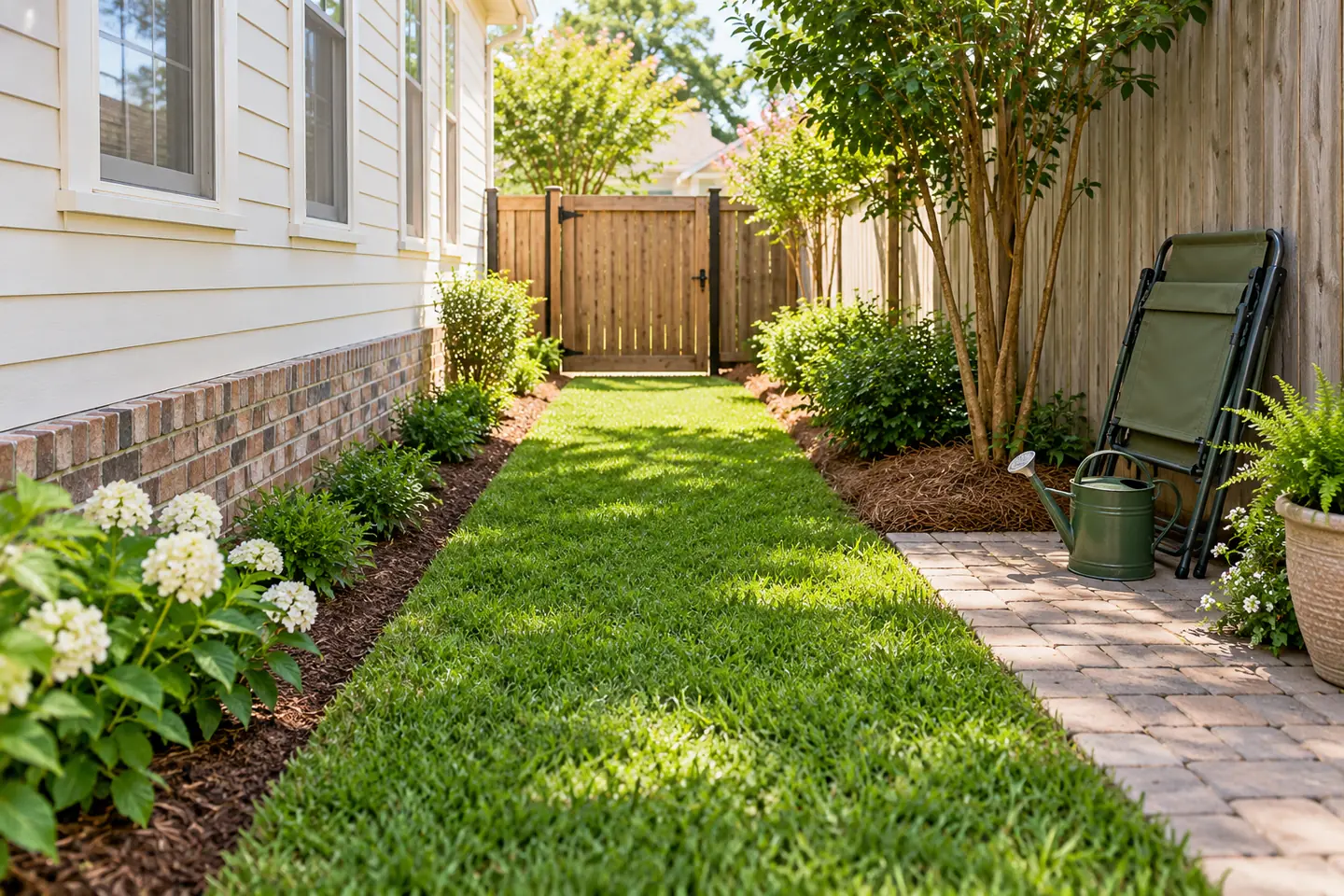
Keep grass and debris out of openings
Direct routine clippings away from louvers, vents, seams and the pad. Do not use a blower to clean the enclosure or force material from underneath it.
Leaves, mulch or nests inside equipment require qualified attention. The goal of lawn work is simply to avoid adding fresh residue to the generator zone.
Define the grass-to-pad edge
Mark the actual concrete boundary and any gravel strip around it. A sound exposed slab edge may be part of the edging scope; loose stone or buried borders need a more conservative finish.
Never use the metal cabinet as the edge reference. Leave a visible buffer where the lawn line cannot be maintained without contact.
Inspect for hidden utility paths
Look for labels, risers and above-grade routes without opening anything. Ask whether known buried utility work affects stakes, landscaping or planned changes near the pad.
Happy Grass does not dig or locate utilities. Any separate soil-disturbing project requires the proper utility process and qualified planning before the lawn boundary changes.
Check side-yard width
Generators often narrow a passage between house and fence. Measure the tightest point, including pad corners, gate hardware, shrubs and wall fixtures.
If ordinary equipment cannot pass without entering the confirmed clearance zone, use another route or leave the rear lawn unavailable. The generator does not become movable because access is inconvenient.
Read wet ground independently
Air-conditioning drainage, roof runoff or low soil can leave the pad-side grass soft while the front yard is firm. Note the actual condition at the turn and connection side.
Skip saturated turf rather than rutting near utilities. Drainage diagnosis and repair are outside routine lawn maintenance.
Coordinate pets and household travel
Keep pets away from the equipment and lawn-work area. Do not attach a leash, gate chain or storage hook to generator piping, conduit or enclosure.
If the side yard is also a household walkway, sequence the work so people can pass after equipment is stopped. Preserve a clear exit instead of blocking both ends of the lane.
Photograph changes after service work
Request new wide images after a technician replaces the generator, enlarges the pad or reroutes connections. Old clearance notes should not survive a meaningful equipment change.
Avoid close photos of serial numbers, access codes or private labels. The lawn record needs the physical boundary and route, not sensitive equipment identifiers.
Pause during installation or repair
Temporary cables, open panels, trenches, protective barriers and technician vehicles make the area unsuitable for ordinary mowing. Stop the affected zone until the project contact confirms the site is released.
Construction and utility cleanup are not included. The owner should remove debris and request a new map if grading, fences or landscaping changed.
Keep fuel and stored items separate
Do not place fuel containers, extension cords, garden chemicals or tools on the generator pad. The owner should store them according to applicable product guidance and away from the lawn route.
Lawn service never moves fuel or electrical supplies to gain access. An obstructed pad-side strip remains excluded until the property contact clears it.
Use a generator-side checklist
Confirm no test or technician visit is active, the service lane is open, the unit is in normal closed condition, grass is firm and no unusual odor or alarm is present.
This readiness check does not certify operation. It gives the crew a simple observable decision about whether the adjacent lawn can be approached.
Write a precise recurring scope
List the open lawn, named reachable trim line, approved pad edge and included paved route. Exclude equipment operation, enclosure cleaning, utility work, fuel handling, wet pockets and areas inside the owner-confirmed clearance.
Happy Grass does not provide fertilization, aeration, overseeding or pest control. Vegetation or pest concerns inside the equipment boundary belong with the right specialist.
Ask Happy about the equipment-side lawn
For a generator-side yard in Harvey, Marrero, Gretna, Algiers, Belle Chasse or Westwego, call 504-339-3571 and ask for Happy. Share current wide views and the installer-defined boundary.
A careful map can preserve technician access and keep routine lawn work away from connected equipment. Clear exclusions are essential around a system that must remain untouched.
Keep landscape fabric and stone contained
Some generator pads are surrounded by gravel or decorative stone. Mark the intended transition and keep loose pieces out of mower and trimmer paths.
Do not rake stone beneath the enclosure or pull fabric from around utilities. The owner should repair a failed border before requesting a closer lawn finish.
Record seasonal vegetation changes
Shrubs and vines can narrow the service side during the growing season even when winter photos show open clearance. Use the current condition, not a dormant-season assumption.
Pruning around connected equipment should follow the owner’s professional plan. Happy Grass limits the recurring note to accessible grass beyond the protected zone.
Plan for outage conditions
After a power outage, the generator may be operating, cooling down or awaiting technician attention. Treat the surrounding lawn as unavailable until the property contact confirms ordinary conditions.
Do not prioritize a scheduled cut over emergency equipment access. A missed strip can be revisited; interference with a generator response should never be normalized.
Keep discharge paths unobstructed
Do not place clipping bags, carts or temporary tarps beside louvers or an exhaust side. The owner’s confirmed clearance applies while lawn tools are present, not only after the crew leaves.
If a narrow strip can be reached only by standing inside that protected area, exclude it. A hand tool does not cancel the equipment boundary.
Review snowless seasonal debris
Louisiana leaves, seed pods and storm twigs can gather behind a pad even without winter snow. The owner should arrange safe equipment-area cleanup when debris enters the protected footprint.
Routine lawn work can collect material from the accessible outer grass. It should not reach beneath the enclosure or push a pile toward connected pipes.
Keep equipment instructions with their source
If a generator professional or the manufacturer has given the owner particular access or clearance instructions, retain that information with its source and identify the equipment it concerns. Do not convert a remembered number or a neighbor’s setup into a rule for your installation. The lawn note can point to the owner-confirmed boundary without pretending to replace equipment guidance.
For the maintenance request, show where the grass ends relative to that boundary and which authorized route reaches it. Keep any unresolved equipment condition listed as unresolved rather than treating routine lawn access as confirmation that the installation is ready. When a technician changes the enclosure, pad or nearby connections, update the photograph before reusing the note. This keeps a lawn-service description focused on the presented safe perimeter while equipment operation and professional clearance decisions remain with the appropriate source.