
Start with the fixture, not the grass
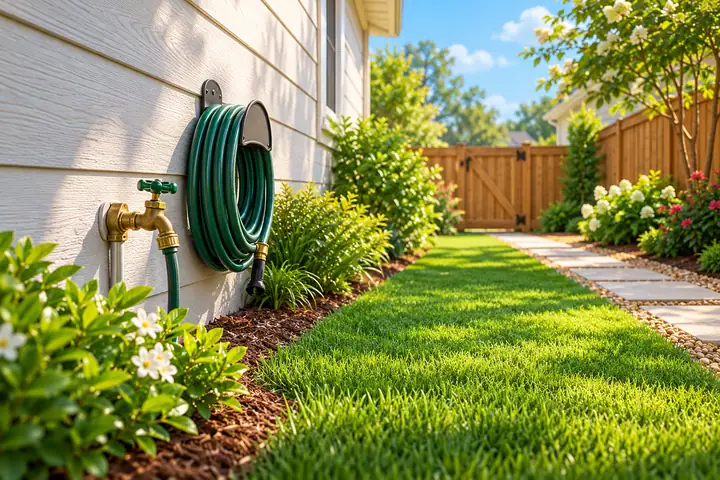
An outdoor faucet looks simple until a mower route, bed edge and coiled hose all meet in the same narrow strip. Begin by locating the faucet body, handle, hose connection and any nearby pipe that rises from the ground. The goal is to understand what is fixed, what can move and what must remain reachable before anyone discusses the grass.
Look from the lawn side as well as from the wall. Leaves, vines or tall growth can hide a low pipe, while a hose may disappear under blades after watering. Do not tug, straighten or test plumbing as part of lawn preparation. If the fixture leaks, feels loose or appears damaged, stop and direct the plumbing question to the property owner or an appropriate repair professional.
Give the hose one dependable home
A wall hanger, hose reel or paved coil area keeps the hose from becoming a changing obstacle. Choose a place that does not cross the gate, lawn route or steps. A neat coil on Tuesday is not helpful if the loose end reaches the grass again by the next visit, so include the nozzle and short connector in the storage habit.
Drain and arrange the hose according to the owner's equipment instructions; lawn service should not be expected to operate or repair it. Before a visit, walk the full length from the faucet to the stored end. A green hose can blend into St. Augustine or other dense turf, especially in shade, and a partly buried loop deserves more attention than the height of the grass.
Name a small keep-clear zone
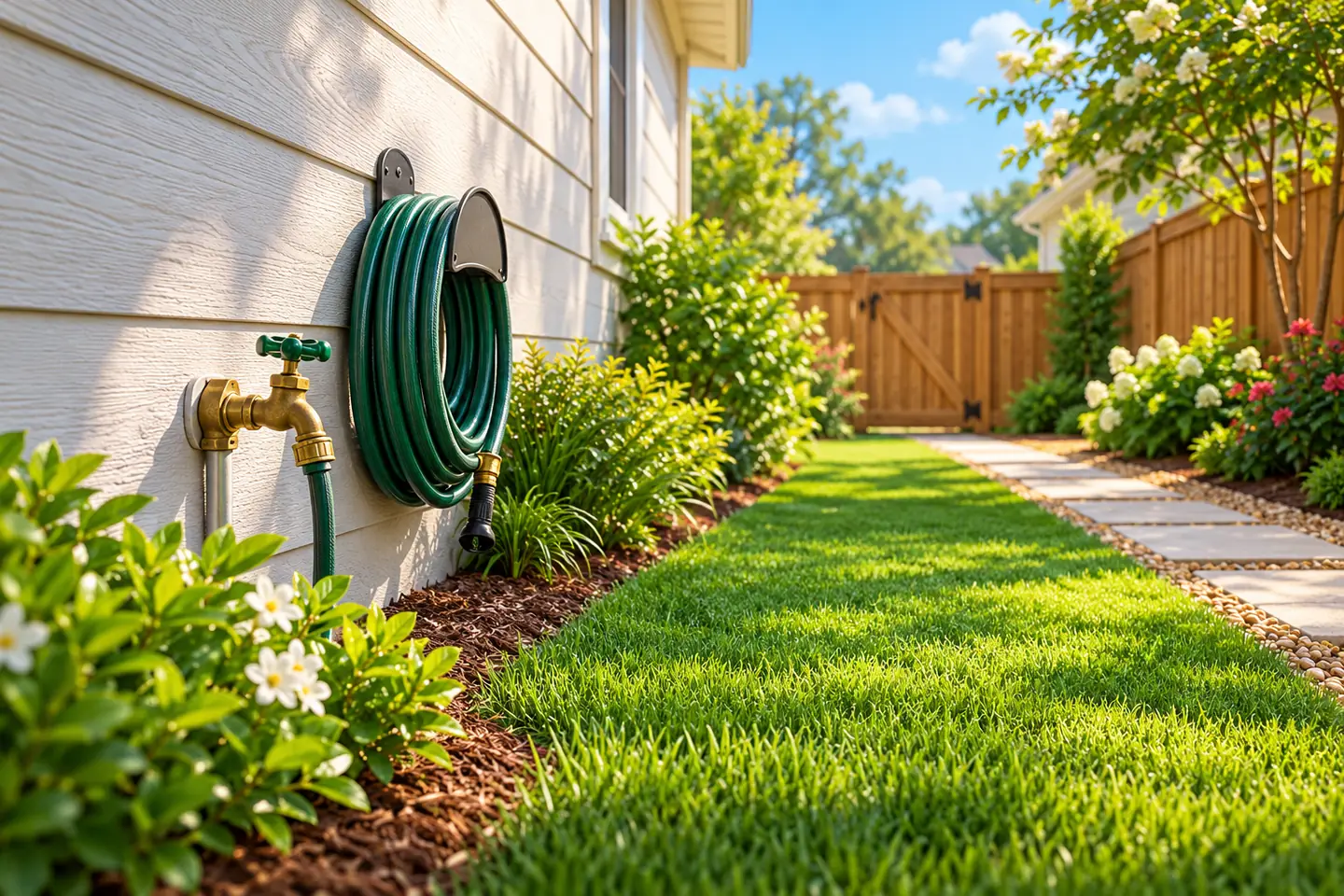
Use the wall corner, a bed edge or another durable reference to describe the area that should stay open. A phrase such as “the two-foot strip between the faucet wall and the paver” is easier to follow than “be careful over there.” The correct space depends on the fixture, access and property layout, so avoid treating one measurement as a universal rule.
The keep-clear zone is not permission to remove plants, move irrigation or alter plumbing. It is a communication tool for mowing and trimming. If a decorative cover, foam wrap or temporary winter item changes the shape of the fixture, send a current photo and update the zone rather than relying on an older description.
Separate turf trimming from plumbing work
Grass beside a wall may need careful weed-eating where mowing equipment cannot reach, but the scope remains vegetation maintenance. It does not include tightening a hose bib, clearing a drain line, replacing insulation or diagnosing water pressure. Write those boundaries into the request when the fixture has already caused confusion.
If the pipe or faucet sits unusually low, ask whether the nearby strip should be left slightly higher or excluded until the owner marks it. Choosing a conservative lawn boundary is better than guessing at a hidden connection. Happy Grass can discuss the accessible mowing and trimming area; a licensed trade handles plumbing condition and repair.
Check the route after watering
Recent hose use can leave a small soft patch even when the rest of the side yard feels firm. Observe the surface without stepping into standing water or making a cause claim. Note whether the wet area is directly below the faucet, along the hose path or somewhere unrelated, then share that visible condition before the visit.
A damp mark does not prove a leak, and a dry surface does not certify the fixture. The useful lawn question is whether equipment can approach without rutting or slipping. If the answer is uncertain, leave the narrow area untouched and let the authorized property contact decide when it is ready.
Keep gates and corners independent
Many exterior faucets sit close to a gate because the wall space is convenient. Confirm that the gate can open through its normal arc without catching the hose, reel or nozzle. Then confirm that the faucet setup does not narrow the usable mowing route after the gate opens.
Do not wrap a hose around a latch, hinge or fence post as a shortcut. That creates two moving obstacles in one place and can delay access. A gate route should be understandable to someone who has not seen the yard before, with the plumbing area visible rather than hidden behind the opened panel.
Photograph the whole side-yard relationship
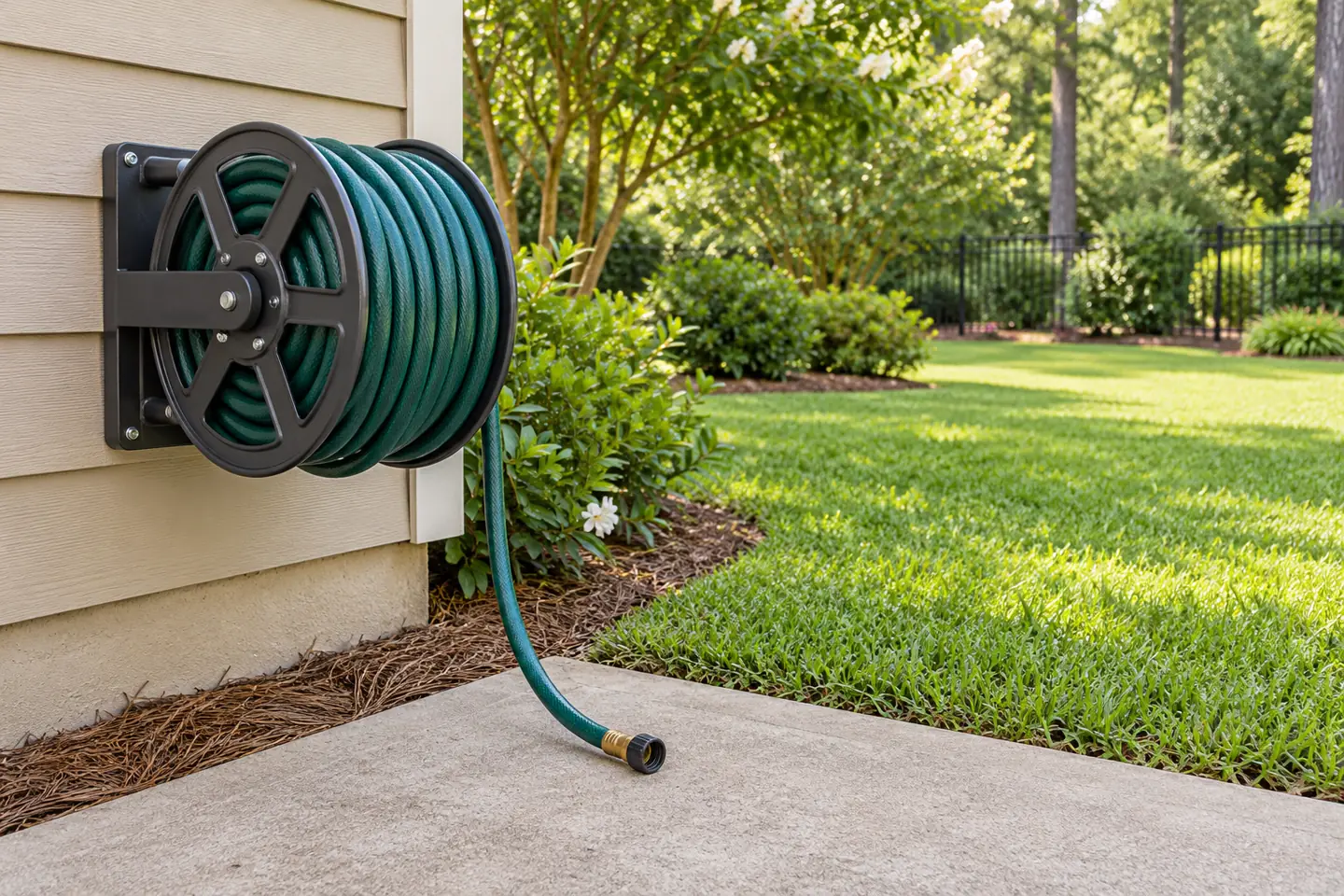
A useful photo shows the faucet, wall, grass strip, nearby gate and storage point in one frame. Add one close view only if the fixture is hard to see. Avoid including people, neighboring windows, license plates or unrelated interior space; the image exists to explain access and lawn boundaries.
Take a new picture when the hose holder moves, a bed expands or construction changes the route. Photos can document arrangement but cannot verify that plumbing is safe. Label the view with a plain zone name such as “east side faucet strip,” not a precise location shared more broadly than necessary.
Plan for temporary hoses and sprinklers
Portable sprinklers, soaker hoses and wash-down lines may appear only on certain days. Decide who removes them and by what time before recurring maintenance. “It usually gets moved” is weaker than assigning the task to a named property contact who can confirm the lawn is clear.
Never drive a marker into the soil beside unknown pipes to identify a hose. Use a visible above-ground reference chosen by the owner. If a temporary watering layout must remain, explain its route and ask whether the affected zone should be skipped rather than expecting equipment to weave through it.
Protect the paved landing from clutter
Where a faucet sits above concrete or pavers, keep the landing free of buckets, wash brushes and disconnected fittings. Blowing can address ordinary loose lawn residue on included hard surfaces, but it is not a general cleanup for stored household items. Move those items before the visit or identify the surface as unavailable.
Check that the storage solution itself is stable and does not protrude into the walking route. A heavy reel or cabinet is a property feature, not something a lawn crew should reposition. The clearer the landing, the easier it is to distinguish routine grass finishing from unrelated chores.
Discuss edging near the wall
Identify whether the grass meets a bed, concrete strip, pavers or the foundation. Edging applies to agreed hard borders, while weed-eating handles reachable vegetation where appropriate. Do not ask for a new soil trench or a change to drainage merely by calling it edging.
If the border is broken or buried, photograph the actual condition and describe the finish you want in ordinary terms. The service conversation can decide what is accessible without promising repair. Keep the faucet zone distinct from the rest of the foundation so a special caution does not become a vague instruction for every wall.
Notice seasonal covers and insulation
Cold-weather covers, pipe wrap or temporary shields can enlarge the fixture and change clearance. The owner is responsible for installing and removing protective plumbing materials. When a cover is present, treat it as a fixed object and do not assume it can be bumped aside for trimming.
After the season changes, update the photo and confirm whether the old keep-clear description still fits. Discarded tape, foam or ties should be picked up before mowing. Small fragments can hide in grass and do not belong in the normal blowing scope.
Use a simple before-visit check
Walk the strip and answer four questions: Is the hose fully stored? Is the gate route open? Is the surface reasonably firm? Can the faucet and any exposed pipe be seen? If one answer is no, send that fact instead of a general “yard is ready” message.
The checklist should take less than a minute because it uses visible conditions, not technical judgments. Add a current wide photo when something changed. This small habit makes the owner’s plumbing responsibility and the lawn-maintenance boundary easier to understand at the same time.
Keep clippings away from drains and water paths
If the faucet area includes a channel, drain or sloped paved strip, keep loose grass and leaves from being deliberately blown into it. EPA yard guidance encourages keeping grass clippings and leaves off hard surfaces and out of storm drains and waterways. Identify the included paved finish and the direction residue should be moved.
This does not make a lawn visit a drain-cleaning service. Existing blockages, plumbing discharge and standing water require their own response. The practical goal is to avoid adding routine lawn residue to a visible water path while completing the agreed finish.
Decide what happens when the area is blocked
A bicycle, grill, pool item or delivery may temporarily occupy the faucet strip. Do not ask a crew to relocate personal property without prior agreement. Choose whether the narrow zone will be skipped or cleared by the owner before arrival, and record the choice in the normal contact channel.
When the blockage is removed later, request a normal follow-up rather than assuming an immediate return. The rest of the yard may still be serviceable. A zone-based decision prevents one small corner from creating uncertainty about the whole property.
Put the faucet on the property sketch
Add a small faucet symbol to the current lawn map along with the hose-storage point and usual approach. The map does not need pipe routes, valves or private plumbing details. It only needs enough information to keep the visible fixture from being treated as an ordinary patch of wall-edge grass.
Review the sketch after repairs, exterior painting or bed changes. Retire older versions so they are not mistaken for current instructions. A concise current map is more useful than a collection of messages describing different arrangements.
Bring Happy the current facts
For a lawn in Harvey, Marrero, Gretna, Algiers, Belle Chasse or Westwego, call 504-339-3571 and ask for Happy. Share the wide photo, the zone name, the storage plan and any part you want left untouched. Mention wet ground or blocked access without guessing why it happened.
Happy Grass can discuss mowing, edging, weed-eating, blowing and an accurately defined weed-control conversation. It does not provide plumbing repair, fertilization, aeration, overseeding or pest control. A friendly quote starts with the yard as it exists now and keeps this small fixture in its proper lane.