
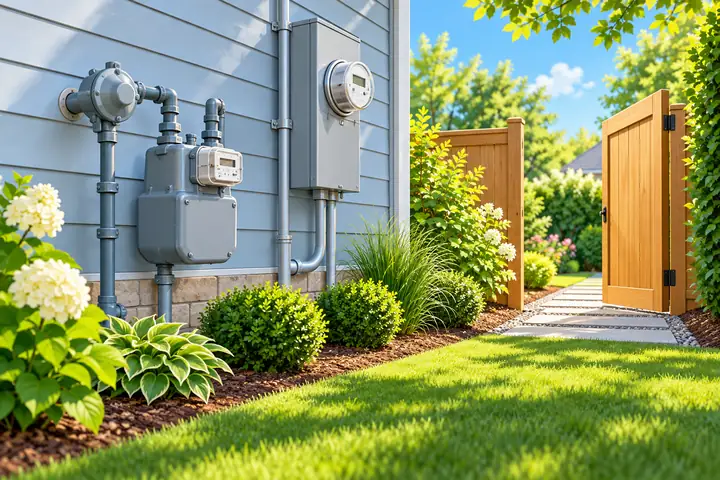
Identify every utility component
Use a wide side-yard view to show the gas meter, electric meter, risers, service boxes, conduit and surrounding lawn. Do not assume two gray fixtures have the same function or clearance.
Happy Grass does not open, read, test, clean, paint or repair utility equipment. The owner and serving utility remain responsible for access, condition and technical requirements.
Establish a strict no-contact boundary
Mark the visible equipment footprint and any owner-provided utility clearance. Keep trimmer line, mower handles and blower nozzles away from pipes, seals, wires and enclosures.
If grass cannot be reached without brushing a component, leave it alone. A slightly wider living border is preferable to repeated contact with essential infrastructure.

Preserve the utility worker’s route
Show the path from gate or driveway to the meters. Keep it free of bins, furniture, hoses, locked obstacles and lawn equipment during the visit.
Do not stage bags or tools beneath the equipment. The property contact should maintain whatever access the serving utility requires, even when no appointment is scheduled.
Keep shutoffs visible
Do not cover valves, disconnects or handles with mulch, plants, storage or clippings. The lawn finish should leave visible components as clear as they were found.
Never operate a shutoff to make room. Questions about a valve or panel belong with the utility or a qualified professional, not a lawn-maintenance decision.
Respond correctly to a gas concern
PHMSA advises recognizing possible leak signs and moving away before contacting the appropriate emergency or pipeline operator. Unusual gas odor, hissing or disturbed vegetation is not something to investigate with powered lawn equipment.
Stop work, avoid flames and switches, leave the immediate area and follow the property’s emergency procedure. Record only that the lawn visit stopped; do not offer a diagnosis.
Map above-grade pipes before trimming
Follow visible pipes and conduit from soil to wall. A low bend, support bracket or grounding element can be hidden by tall grass even when the meter face is easy to see.
The owner should expose the route using an appropriate professional if its condition is uncertain. Never probe vegetation with a trimmer to discover where a line runs.
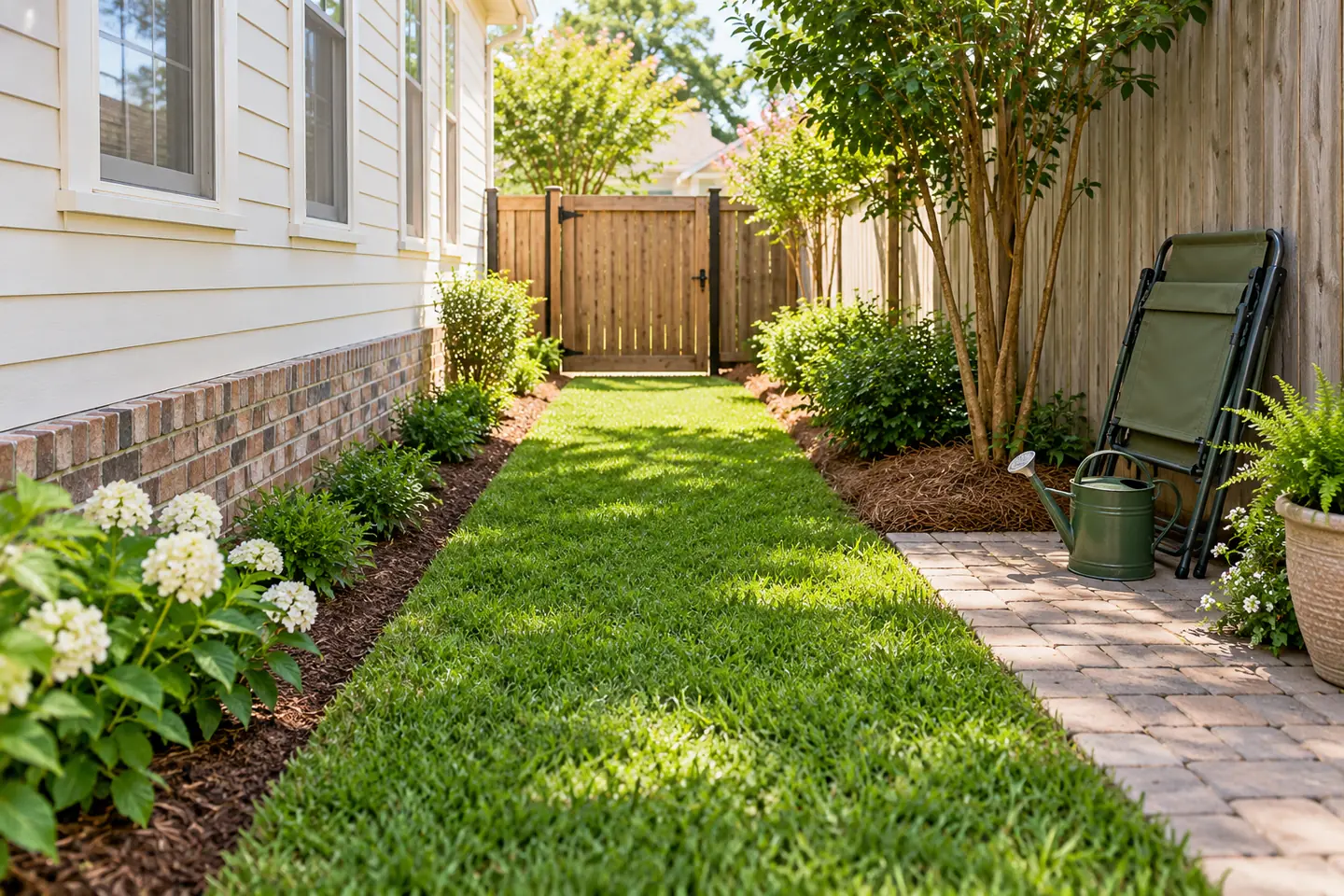
Use 811 before separate digging
Routine mowing does not involve excavation, but new edging, stakes, trees, fences or landscape work may. Those separate projects should use the proper 811 process before soil is disturbed.
Visible meters do not reveal every underground line. The lawn plan should not turn a surface photograph into a utility-location claim.
Define the wall-side grass strip
Name the open lawn, meter-side strip, gate turn and any bed between them. A narrow strip may support careful trimming while the broader area accepts ordinary mowing.
If the grass directly beneath equipment cannot be seen, make it an exclusion. Do not promise a uniform wall line where access is structurally limited.
Keep vines and shrubs owner-managed
Climbing plants, thorny shrubs and ornamental beds can surround meters. The property contact should maintain required utility access and arrange appropriate pruning when plants enter the equipment zone.
Happy Grass should not cut a vine from a pipe or remove a shrub to reach turf. Lawn work stays within the agreed grass boundary.
Check gate swing and locks
Open the gate fully and observe whether it approaches the meters, pipes or conduit. Record the safe position and the owner’s access plan without resting the gate against utility hardware.
If a lock or pet plan prevents entry, leave the side yard unavailable. Never climb a fence or manipulate utility equipment to create another route.
Read wet conditions near services
Downspouts, condensate or low grading can keep the meter-side ground soft. Observe the surface without claiming the utility caused the moisture.
Skip saturated grass rather than rutting near pipes or panels. Drainage diagnosis and utility investigation remain outside the mowing scope.
Keep clippings and mulch away
Direct routine lawn residue away from meter faces, ventilation openings, regulator components and electrical cabinets. Do not use compressed airflow to clean equipment.
Loose mulch or leaves already packed around the utility require owner or professional attention. The lawn visit should not redistribute them into openings.
Photograph without sensitive details
Use an angle that shows the equipment footprint, grass and route. Avoid close readable account labels, serial numbers, barcodes or access markings.
Replace the image after a meter change, utility upgrade or fence alteration. A current boundary photo is useful; a detailed equipment record is unnecessary.
Pause for utility work
Open boxes, temporary cables, markings, trenches and technician barriers make the area unsuitable for ordinary mowing. Skip the affected zone until the owner confirms the worksite is released.
Utility project debris and soil repair are separate. Request a new walk-through if grading or equipment placement changes the recurring lawn route.
Coordinate household movement
Side yards often connect trash storage, air-conditioning equipment and the backyard. Keep people and pets away from active work, but do not block the only household exit.
When someone needs to pass, stop and secure lawn equipment. The utility access lane should remain recognizable throughout the visit.
Use a meter-side readiness check
Confirm the gate opens normally, the route is free of storage, visible components are unobstructed, no utility work is active and no unusual odor or sound is present.
This is an access check, not a technical inspection. Any suspected equipment condition goes to the owner and appropriate utility response.
Write the scope by visible zone
List open-lawn mowing, reachable grass trimming and any real hard edge. Exclude all contact with utility equipment, valve operation, vine removal, digging, blocked pockets and project cleanup.
Happy Grass does not provide fertilization, aeration, overseeding or pest control. Concerns inside a utility enclosure or beneath covered piping need the right provider.
Ask Happy about the utility-side route
For a meter-side yard in Harvey, Marrero, Gretna, Algiers, Belle Chasse or Westwego, call 504-339-3571 and ask for Happy. Share a privacy-conscious wide photo and the current gate plan.
A clear no-contact map can protect essential equipment while giving the genuinely accessible lawn a tidy finish. It should always preserve the utility’s path first.
Keep meter-reading visibility intact
Do not lean bags, carts or blowers against the wall beneath a meter. Temporary staging can obstruct a reading or make a utility worker step into an active lawn zone.
Finish one side-yard segment and remove equipment before moving to the next. The route should look open again when the crew leaves.
Review new landscaping carefully
A new bed, fence panel or screen may hide utility components that were previously visible. The owner should confirm utility requirements before creating decorative screening.
After installation, replace the lawn map and expand exclusions where visibility decreased. Happy Grass does not remove screening or reach through it to trim grass.
Keep emergency details out of public notes
The working map can identify a “utility access lane” without publishing shutoff procedures, account numbers or household emergency information. Share sensitive instructions only through appropriate owner and utility channels.
The website guide remains general. Each property’s actual response plan must come from verified providers, not a copied lawn-service note.
Distinguish meter space from an ordinary wall
The same side of a home may include hose bibs, cable boxes, air-conditioning lines and utility service. Label each obstacle instead of calling the whole area “the wall strip.”
Different providers may need separate access. The lawn route should remain outside all visible equipment and preserve the broadest required passage until the owner confirms otherwise.
Watch for protective posts and bollards
Some utility areas include posts, guards or barriers intended to prevent impact. Treat those as fixed parts of the equipment footprint, not furniture that can be shifted.
Grass between a guard and meter may be impossible to reach safely. Record it as excluded rather than threading equipment through a protected space.
Keep the finish visible from the gate
At the end of work, look back from the entrance and confirm that no clippings, bag or tool obscures the route. Do not judge the meter reading or equipment performance.
This final view verifies only that the lawn crew restored ordinary access. It creates a useful service record without claiming a utility inspection.
Use a location key without identifying account details
A property with several wall-mounted components benefits from a simple location key. Name the side of the house and the visible grass strip rather than copying meter numbers or account information into a shared lawn note. A wider photograph can show the route and boundary while leaving sensitive labels unreadable.
Keep the key current after utility work. A replacement enclosure, changed pipe route or temporary work area may make an older photograph misleading even if the meter remains in the same general place. Record what has changed and which part still needs professional review. The lawn instruction should describe the accessible strip around visible fixed equipment, not authorize moving, covering or interpreting the installation. A concise location key gives Happy useful context without turning the quote packet into a private utility record.