
Start with two different spaces
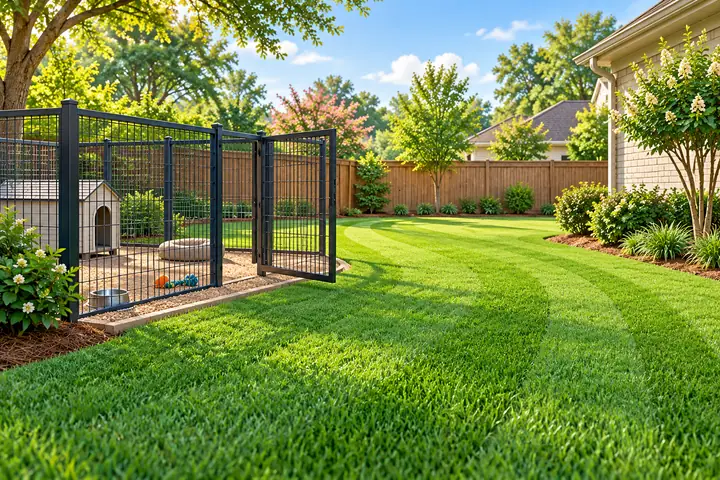
The fenced enclosure and the open lawn may look like one backyard on a sketch, but they behave like two separate work areas. The run has a gate, a narrow threshold, bowls, bedding, toys, shade pieces and places where a dog may dig or pace. The lawn outside usually has the cleaner turning room. Naming those areas separately keeps the quote honest: Happy can discuss reachable grass, while the homeowner remains responsible for the animal, enclosure and everything stored inside it.
Walk the route from the street gate to the dog-run gate without moving anything. Notice latches that need a second hand, low chains, hose loops and corners where the mower would have to reverse. A photograph taken from outside the enclosure can explain more than a broad statement such as “the dog will be inside.” The useful question is whether the enclosure will be empty, unlocked and intentionally included when service begins.
Decide whether the interior grass is in scope
Some runs contain turf from fence to fence. Others use gravel, mulch, pavers or a mixed surface with only a strip of grass. Measure the actual green area and identify any panel or kennel wall that narrows the path. A small grass pocket behind a doghouse can require more handling than a larger open rectangle. It should never be assumed to be part of ordinary mowing merely because it is visible.
If the interior will stay out of scope, say so and keep the gate secured. If it will be considered, make a current access plan rather than relying on how the run looked last month. Bedding can spread, a bowl can shift into the doorway and a new tie-out point can change the working width. Happy Grass does not move kennels, dismantle fencing or relocate an animal to reach hidden grass.
Make the animal plan unambiguous
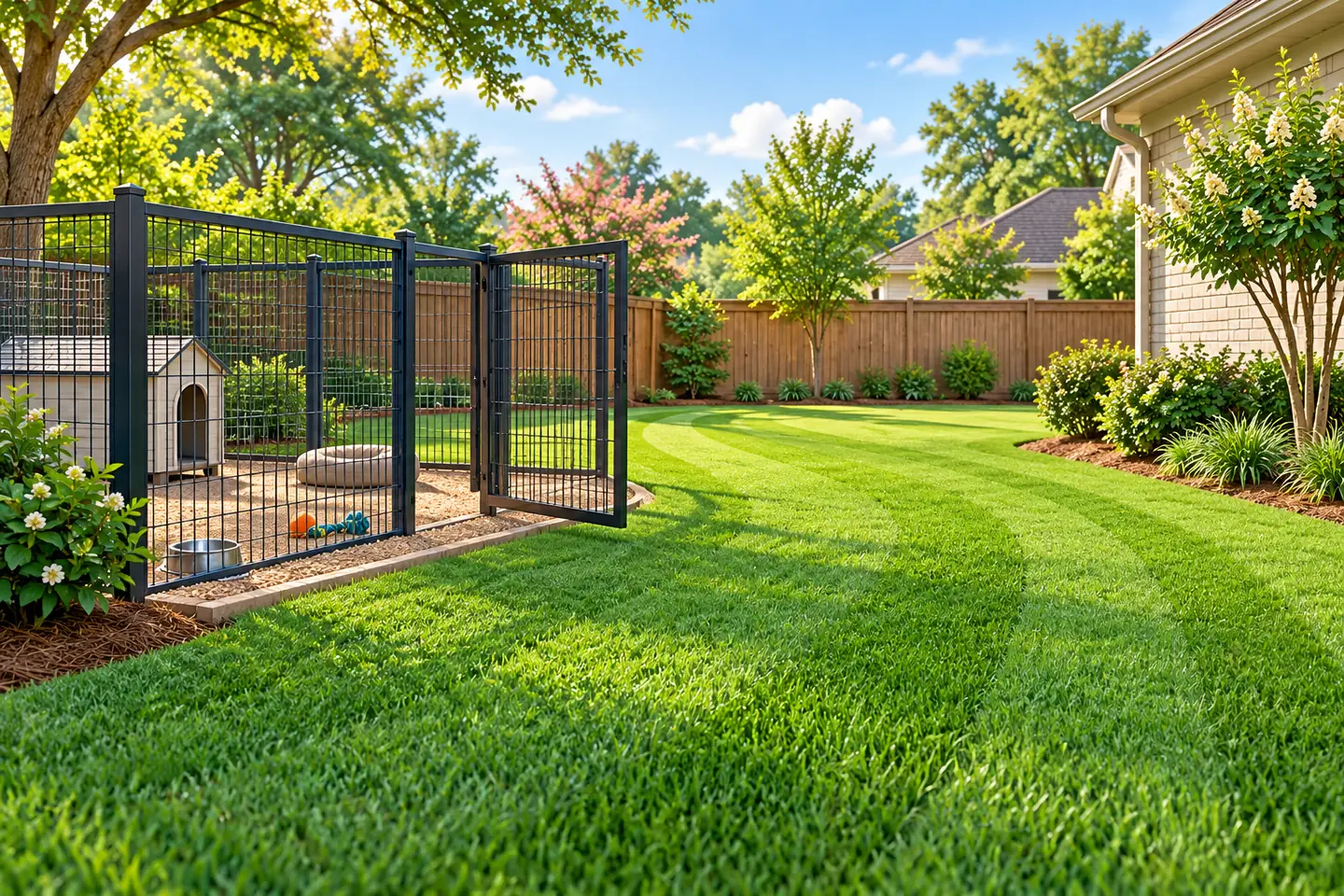
A closed house door is not an animal plan unless everyone knows the dog is behind it. Before arrival, place every pet in a secure location that does not depend on the lawn-service gate. Do not expect a crew member to hold a latch, watch a doorway or decide whether a dog is friendly. If the secure location changes, communicate that before equipment enters the yard.
The same rule helps households with more than one pet. Count the animals, confirm the containment area and keep the transition complete for the whole visit. A loose dog can run toward noise, an open gate or a moving wheel even if it normally ignores yard activity. Happy can pause when access is unclear, but lawn care is not pet handling, kennel supervision or behavior assessment.
Clear the threshold and the reachable strip
The gate opening deserves its own small checklist. Pick up leash clips, food scoops, chew toys, bowls and waste bags. Coil the hose on a wall hook or outside the travel lane. Move lightweight shade cloth only if the homeowner normally manages it; do not leave fabric where it can drag under equipment. Check that the gate opens to its normal stop without hitting a planter or stored bag.
Inside the run, define one continuous strip instead of several disconnected patches. A strip wide enough to enter, turn and leave safely is more useful than a promise to “get what you can.” Where the fence sits close to a doghouse, platform or concrete lip, the remaining grass may be hand-detail territory or intentionally excluded. Those decisions belong in the property notes, not in a guess made after the gate opens.
Handle waste before lawn work
Pet waste is a sanitation issue and a visibility problem. Complete a fresh pickup shortly before the visit, including along fence lines, behind the doghouse and near the gate where a quick glance can miss it. Bagged waste should leave the lawn route rather than sit beside the latch. Happy Grass does not provide pet-waste removal as part of mowing.
Rain can make an enclosure look clean while softening the heavily traveled soil. If the run is muddy, saturated or rutted, postponing the interior can protect both the surface and the route out. The open lawn may still be workable even when the enclosure is not. Treating the two zones independently avoids turning one wet corner into tracks across the rest of the yard.
Protect fence bottoms and hidden hardware
Chain-link tension wire, landscape staples, buried edging and kennel anchors can disappear under grass. Walk the perimeter from both sides and point out every visible fastener. Do not cover sharp hardware with leaves or mulch just to improve appearance. A damaged panel, loose wire or leaning post should be repaired by the appropriate owner or contractor before work occurs nearby.
Grass that grows through mesh needs a clear boundary. Trimming tight against a flexible fence can strike wire, throw debris through the enclosure or damage the bottom edge. A narrow maintained border may be a better long-term choice, but changing the surface or installing edging is outside Happy Grass’s mowing scope. The quote should describe the present condition rather than promise a future construction solution.
Keep water, food and bedding off the route
Bowls and automatic waterers create small wet zones even on dry mornings. Empty or relocate portable bowls before the visit and point out any fixed supply line. A leaking fitting, soft patch or hose connection needs owner attention; mowing around it does not diagnose or repair the problem. Food should be sealed and stored away from equipment, wildlife and grass clippings.
Bedding, mats and raised cots also change what is reachable. Put removable pieces in the homeowner’s chosen clean location. Leave fixed platforms in place and treat the shadow beneath them as inaccessible unless there is a safe, established method. The plan should not require anyone to lift a kennel panel, drag a heavy doghouse or reach under a structure with powered equipment.
Plan for heat, rain and fast growth
Westbank summers can make a dog run dry on top and soft beneath the surface. Shade slows evaporation, while repeated paw traffic compacts a narrow lane. After a heavy shower, test the threshold with a normal step and stop if water pumps around the shoe. The goal is a clean pass on suitable ground, not forcing a scheduled visit through a fragile enclosure.
During rapid growth, the grass outside the run may need a different approach from the worn interior. That contrast is normal. Keep the mowing height and frequency discussion focused on the turf that exists, not on making every enclosure surface look identical. Happy Grass does not offer fertilization, aeration, overseeding or pest-control services, and this guide does not imply those additions.
Build a simple service-day routine
Use the same order each time so nothing depends on memory. – Secure every pet in the confirmed location. – Remove waste from the enclosure and the path to it. – Pick up toys, bowls, leashes, mats and loose shade fabric. – Coil hoses and expose fixed lines, anchors and fence-bottom wire. – Open or unlock only the gates agreed for service. – Report mud, damage or a changed layout before work starts.
After service, inspect the enclosure before releasing the dog. The homeowner should close and test every latch, return bowls and bedding, and confirm that no personal item was left outside its normal place. Happy Grass can leave a neat lawn edge, but the household controls the secure pet environment from beginning to end.
What Happy can quote clearly
A useful request includes the run’s surface, approximate width, gate location, interior-scope choice and the secure-pet plan. Mention whether the doghouse is fixed, whether a hose crosses the entry and whether the route becomes soft after rain. Those details let Happy distinguish ordinary reachable lawn from a constrained enclosure without pretending to price fencing, pet care or repairs.
Photos should show the gate open, the full interior and the approach from the main yard. Avoid close-ups that hide the turning space. When the run changes, send an updated view. Clear information lets a friendly conversation produce a practical boundary: the grass Happy can reach, the enclosure items the homeowner manages and the conditions that call for a pause.
Distinguish the two gates in the handoff
If a dog run has an interior gate and the yard has a separate access gate, name both in the preparation note. “The gate will be open” can otherwise describe the wrong barrier. Identify which route is available and which enclosure remains secured under the household's animal plan. Do not rely on a photograph of an empty run as evidence that animals will be elsewhere when access is needed.
Keep the requested grass inside and outside the enclosure as separate scope items. One may be included while the other is excluded or awaiting preparation. A clear handoff connects the right gate to the right area without making animal handling an implied lawn service. Update that handoff if the household arrangement changes.