
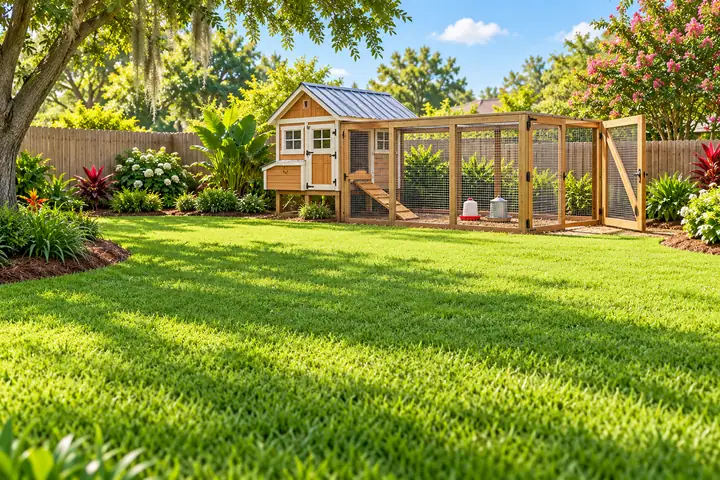
Treat the coop and the lawn as different work zones
A poultry enclosure is not simply another object sitting in the grass. It is a living-animal space with gates, mesh, bedding, feeders, waterers and a sanitation routine that belongs to the flock owner. The surrounding lawn is a separate maintenance zone. Naming those zones clearly keeps a friendly lawn visit from drifting into bird handling, coop cleaning or decisions about animal health.
Start with a wide photograph from the normal yard entrance. Show the coop, run, gate swing and the grass on every reachable side. A close-up of one corner cannot explain whether equipment can enter, turn and leave. Tell Happy whether the run interior contains turf, dirt, gravel or bedding and whether any interior grass is intentionally excluded.
Secure every bird before the gate route opens
Chickens can move quickly through a partly opened gate, and an unfamiliar mower can change their behavior. Put the flock in a secure enclosure before lawn equipment enters the property. The containment plan should not require a crew member to watch the doorway, count birds or hold a panel while someone searches for a latch.
Check the gate yourself after closing it. A loose hook, warped frame or temporary board is an owner repair, not a lawn-service adjustment. If birds normally free-range, allow enough time to bring them in without rushing. A clear message that the flock is secured is more useful than assuming the sound of equipment will keep them away.
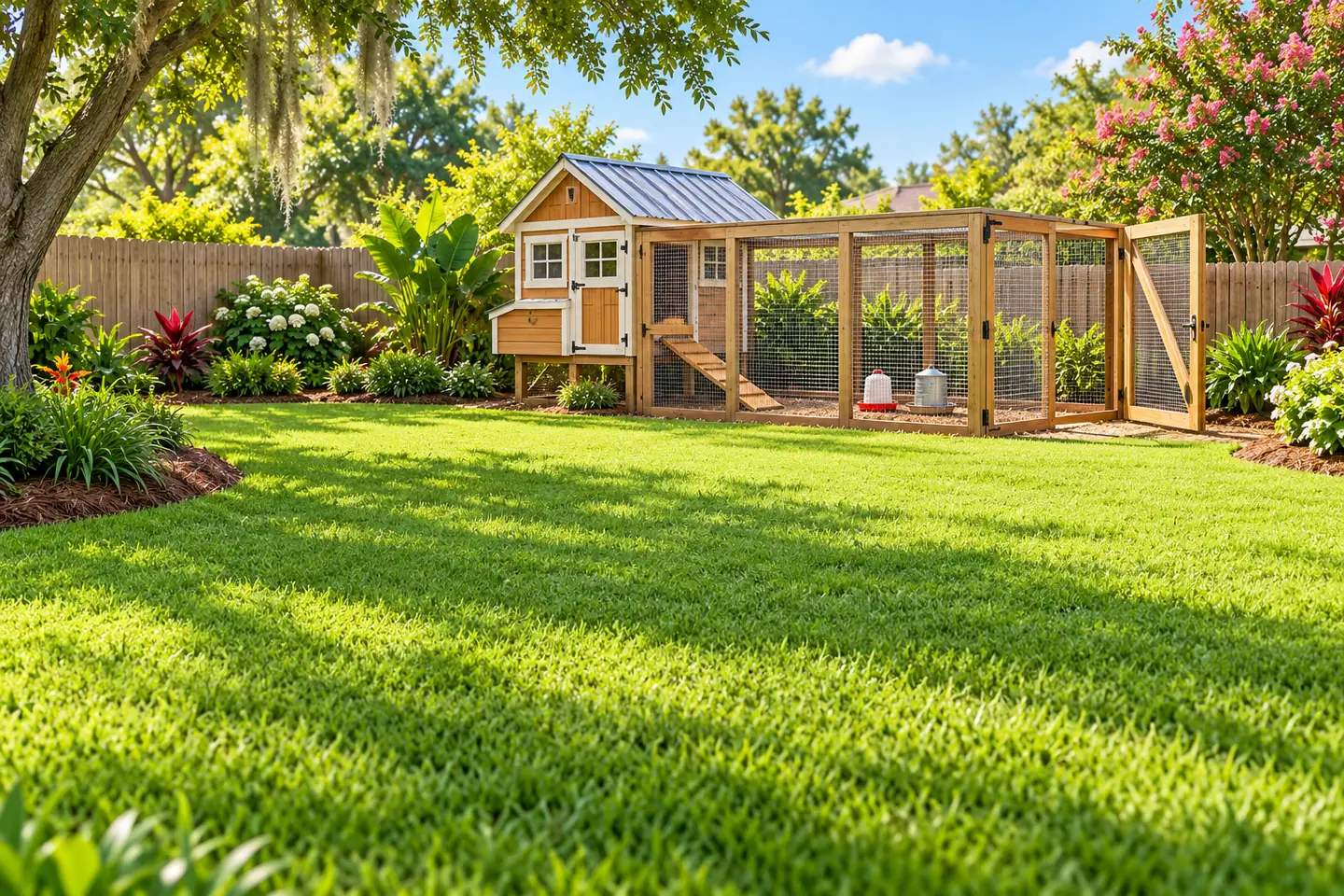
Decide whether grass inside the run is reachable
Many chicken runs have no mowable interior at all. Others contain a narrow strip that looks open until feeders, dust-bathing areas and low wire are considered. Measure the gate and the continuous route, not just the total square footage. An isolated green patch behind a coop is not automatically part of routine service.
If interior turf will be discussed, the run must be empty, clean, dry and intentionally unlocked. Happy Grass does not move coops, lift panels or relocate feeders to create access. When the route is too tight or the surface is worn and soft, the practical answer may be to keep that area outside the quoted mowing footprint.
Clean droppings and loose bedding before the visit
The CDC notes that healthy backyard poultry can carry germs. Complete the owner’s normal droppings pickup before service and keep used bedding, cleaning tools and waste bags away from the lawn route. Do not ask a lawn crew to identify, collect or dispose of poultry waste. Wash hands and manage coop equipment according to the owner’s animal-care routine.
Loose straw and shavings can hide wire, stones and uneven ground. They can also blow onto nearby grass and pavement. Contain the bedding within the enclosure rather than sweeping it into a strip that needs mowing. If cleaning leaves the threshold wet, allow it to dry or exclude the run for that visit.
Make wire, anchors and aprons easy to see
Hardware cloth, welded wire and predator aprons may extend beyond the visible wall. Grass can conceal their edges, especially where a mesh skirt lies flat on the soil. Walk the perimeter and identify every anchor, staple, buried edge and low brace. Bent or exposed metal should be repaired before powered equipment works nearby.
Do not cover sharp hardware with mulch or clippings just to improve appearance. A defined non-mow border can make the boundary easier to maintain, but installing one is separate from Happy Grass’s service. The quote should describe the existing edge honestly and state where trimming stops.
Keep feed, water and cords off the grass route
Feed bags, scoops and portable waterers should stay inside their clean storage area. Spilled grain can draw wildlife and create a messy strip under the fence. Empty or relocate movable containers before the visit without placing them on the grass that needs service. Fixed water lines should be visible and protected from the travel lane.
Some coops use extension cords, heat sources or automatic doors. Happy Grass does not inspect those systems. Secure all cords according to the manufacturer and keep them completely away from mowing and trimming. If a connection is wet, damaged or improvised, keep the surrounding zone out of service until the owner or qualified professional corrects it.
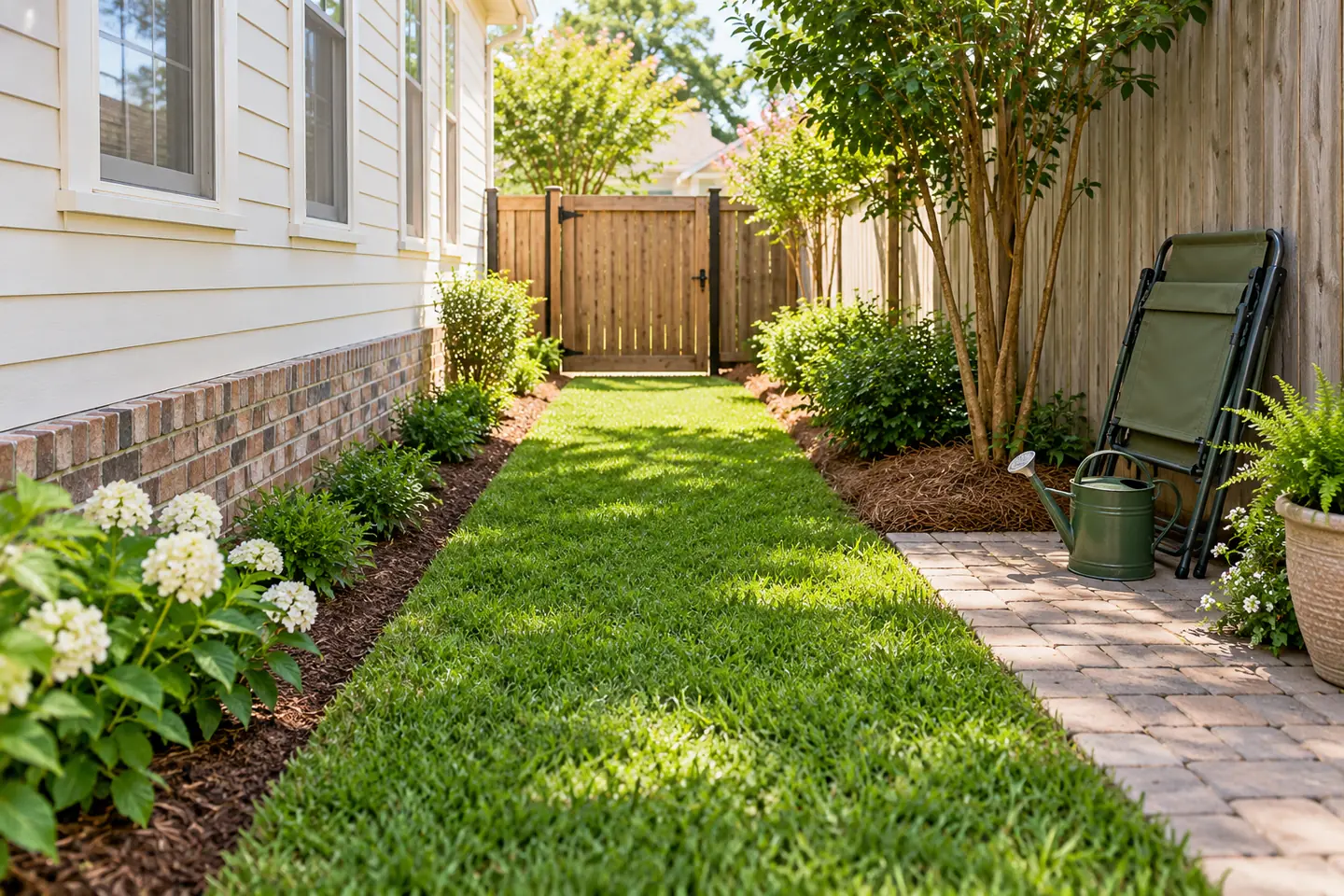
Watch the shaded and heavily traveled ground
The soil beside a coop often stays softer than the open yard. Roof runoff, waterers and repeated foot traffic can create a damp lane even after the sunny grass looks dry. Test the approach with an ordinary step. If the ground pumps, sinks or holds water, postpone that strip instead of tracking mud across the rest of the lawn.
Shade also changes the grass. A thin patch beneath the coop roofline should not be treated like a dense sunny section. The goal is not to force identical appearance across two different growing conditions. Happy can discuss reachable mowing, edging and trimming, not drainage reconstruction, poultry-yard surfacing or turf installation.
Protect the doorway and service-day path
Clear the route from the property gate to the coop without stacking items beside it. Move egg baskets, buckets, rakes, portable fencing and children’s shoes to the owner’s chosen storage location. Coil hoses completely. Make sure the coop gate can open to its normal stop without striking a planter or binding against tall grass.
The route should remain separate from the bird-care path. A crew member should never have to step through a feeding station or cleaning area to reach ordinary lawn. If the only passage crosses the run, describe that limitation during quoting so the boundary can be decided before service day.
Use a repeatable pre-visit check
A short routine prevents most surprises. – Secure the flock and test every latch. – Remove droppings from the run, gate and lawn approach. – Store feed, bedding, buckets, tools and portable waterers. – Expose wire skirts, anchors, cords and fixed water lines. – Check the threshold for mud, wash water and loose straw. – Confirm whether interior turf is included or excluded.
After service, the owner should inspect the enclosure before releasing birds. Close and test gates, return containers and confirm that the flock’s normal setup is restored. Happy Grass can maintain agreed grass, but the animal environment stays under the household’s control from start to finish.
Account for seasonal changes
Summer rain can soften the run while rapid lawn growth narrows the outside path. Winter bedding may spread farther than the warm-weather setup. A shade cloth, portable pen or new feeder can change access between visits. Send updated photos when the layout changes instead of relying on an old quote picture.
Storm preparation deserves a separate note. Panels, tarps and weights added before severe weather can block the route long after the forecast clears. Do not expect lawn service to dismantle them. Wait until the owner has safely returned the enclosure to its normal arrangement and the ground can support traffic.
Give Happy the details that affect a quote
Share the gate width, surface type, fixed-coop footprint and approximate grass area outside the run. Point out mesh aprons, low braces, hoses, electrical lines and any corner that stays damp. State plainly whether the run interior is never included, sometimes considered or expected to be open for every visit.
Useful photos show the whole approach, the threshold and both sides of the enclosure. They do not need to show the birds. With that information, Happy can define a practical lawn scope without promising coop cleaning, poultry handling, repairs, pest control, fertilization, aeration or overseeding.
Keep the plan understandable for anyone at home
Write the coop boundary in plain language that another household member can follow: for example, the open lawn outside the wire run is included, while the run interior and two feet around the mesh skirt are excluded. Avoid directions that depend on recognizing a favorite bird, a movable bucket or how the yard looked on one particular morning.
If someone else prepares the property, give that person the same checklist and contact information. Consistency matters because a secured flock, exposed wire edge and empty gate route are all required together. A note on the account should be updated when the coop expands, a portable pen appears or the birds begin using a different section of the yard.