
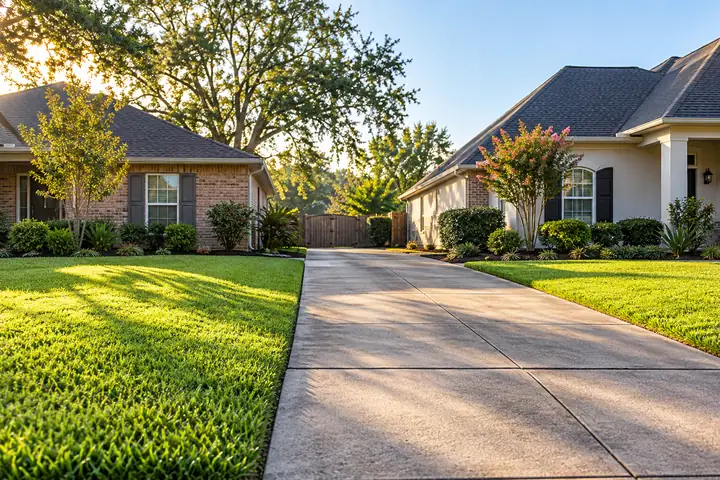
Define who may authorize each side of the driveway
Before service, identify the customer, the area they control and any access rights needed to reach it. A shared paved surface does not automatically authorize mowing an adjoining lawn, moving a neighbor’s vehicle or opening their gate. Happy Grass follows the work area provided by the customer and does not interpret deeds, servitudes or private agreements. If the grass boundary is uncertain, resolve it before the appointment and use a visible temporary stopping instruction that both sides understand. Do not ask the crew to continue until someone objects. Where two households hire separate services, decide how the narrow strip at the pavement edge will be divided so neither crew repeatedly scalps or skips it. A simple photo marked with the approved limit can prevent months of uneven results.
Keep the common travel lane open at the scheduled time
Mowers and support vehicles need safe entry and exit without blocking residents, deliveries or emergency access. Move cars, trailers, basketball goals and trash carts before the visit. Confirm whether the crew may briefly use the pavement to turn or stage small equipment. If the driveway is too narrow to pass a parked vehicle without touching grass or a structure, arrange a clear window rather than expecting a squeeze. Do not make the crew hunt for an owner to move a car. Happy Grass can text or coordinate through the normal scheduling channel, but the property should be ready when the visit begins. If access is blocked, reachable sections may be serviced while the enclosed rear lawn waits for a new plan.
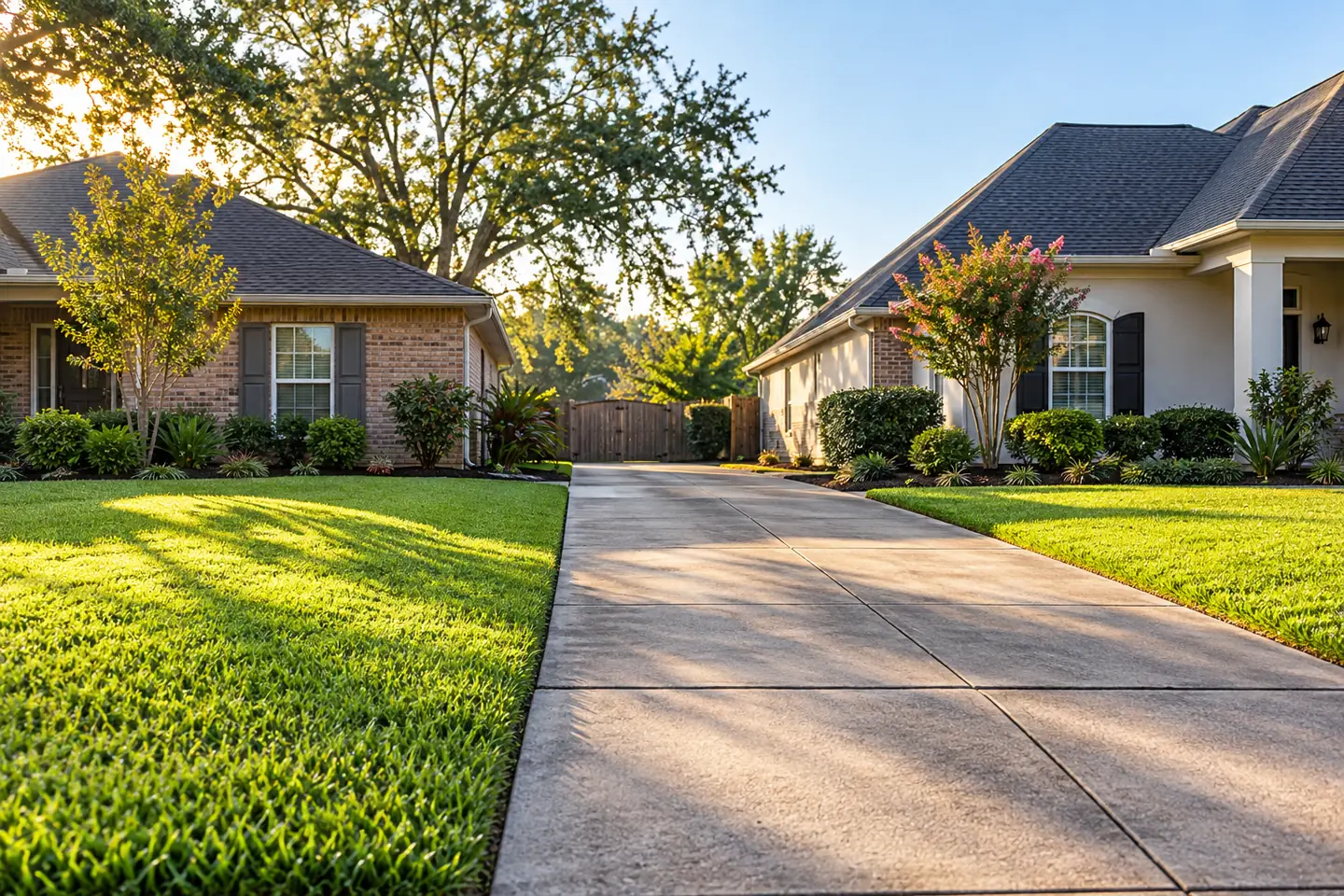
Agree on where clippings should go
Grass cut beside pavement can scatter across the shared surface, toward a neighbor’s door or into the street. The finish plan should return clippings to the lawn when practical and keep drains, walkways and the neighbor’s property clear. Conditions matter: wet or overgrown grass produces heavier clumps than a routine dry cut. Remove parked vehicles so cleanup can reach the full edge. Happy Grass does not blow debris into another parcel or public drainage. If wind makes the desired direction impractical, a slightly wider cleanup pass may be needed. Tell us about sensitive areas such as gravel, open garage doors, pools or freshly washed vehicles. The aim is a tidy common route, not simply moving material from one side to the other.
Use the pavement edge as a maintenance feature, not proof of ownership
Concrete may curve, widen or cross a recorded line. Its physical edge can provide a useful mowing guide only when the customer has authority over the adjacent turf. Keep the edge visible by removing loose mats, hoses and pots. Report broken concrete, raised slabs or crumbling shoulders because they affect equipment movement. Happy Grass does not repair paving or decide whether a crack belongs to one owner. Jefferson Parish requires review and permits for certain driveway work in public right-of-way; routine mowing should not be bundled with changes to an apron or curb. If construction is planned, complete the permitted work and site cleanup before asking the lawn crew to establish a new edge.
Protect narrow grass islands and corners from repeated turns
Shared drives often leave triangular turf pockets between two aprons, fences or mailboxes. These spots can receive more tire turning than grass cutting. Plan a route that enters and exits without pivoting repeatedly on the same wet corner. Keep decorative stones, address signs and irrigation heads visible. If the island is too small for the normal mower, it may need a different tool or a hand-maintained border. Do not direct the crew across a neighbor’s lawn to reach it. LSU AgCenter recommends mowing before removing more than about one-third of the grass height and keeping blades sharp; those turf principles still apply to small sections. A consistent, modest cut is better than an occasional severe cleanup caused by access confusion.
Coordinate gates, pets and household schedules
The rear gate may belong to one household even when the driveway is shared. Get permission and confirm the latch before the visit. Keep pets secured inside a separate closed area; a neighbor opening the shared drive should not release an animal into the work zone. Let residents know the approximate service window so they can avoid backing through equipment. Children’s toys, chalk, temporary nets and charging cords should be removed. If a home-care vehicle or contractor needs the lane, choose another lawn window. The crew should never be asked to control traffic between households. A few coordinated minutes make the work safer and reduce frustration for everyone using the driveway.
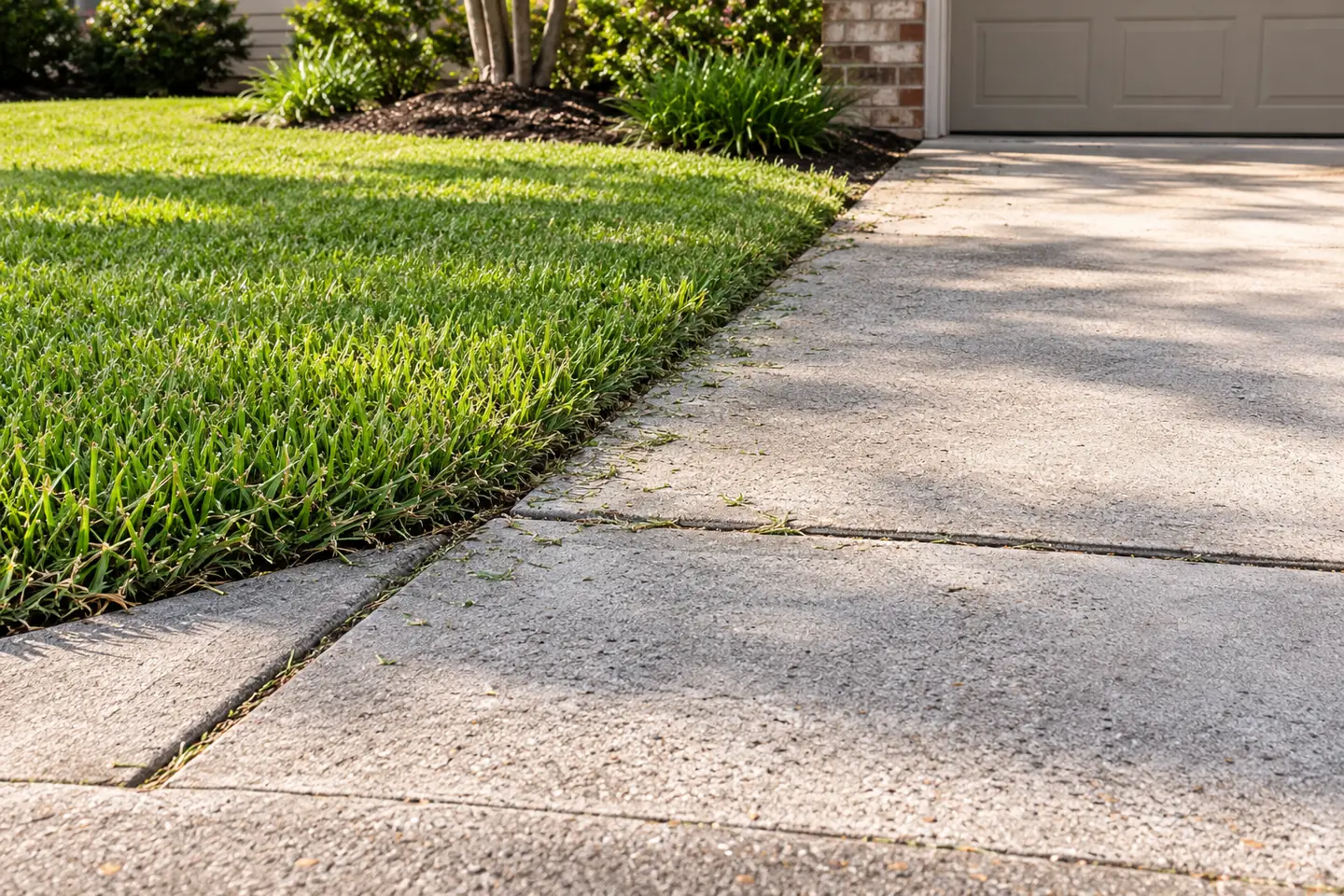
Handle drainage and culvert edges as separate hazards
The pavement may slope toward a ditch, catch basin or culvert. Keep those features clear and identify soft shoulders that cannot support equipment. Do not sweep or blow clippings into drainage structures. If water crosses the shared drive after rain, postpone work on saturated adjoining turf rather than rutting the edge. A broken culvert, undermined slab or washout needs the appropriate public or private repair professional. Happy Grass can maintain reachable grass beside a stable edge; we do not inspect drainage structures or determine who must repair them. When responsibility is shared, the owners should settle the repair and access plan before normal service resumes.
Communicate changes after paving or neighbor turnover
A resurfaced driveway may be wider, higher or bordered by fresh soil. New residents may park differently or understand the shared arrangement another way. Reconfirm the route instead of relying on last season’s pattern. Wait for new pavement and edge restoration to be released by the contractor, then remove construction scraps and mark soft fill. Update Happy Grass with current photos. If the work created a new public-right-of-way question, contact Jefferson Parish or the appropriate authority. Lawn crews should not drive on curing material or use fresh asphalt as an equipment staging surface. A short reset avoids damage and ensures the new grass edge is maintained as intended.
Write a one-sentence service instruction
Complex shared-property stories are easier to use when reduced to a clear operational line: “Enter on the right side after the blue car is moved; mow only the fenced rear and the grass left of the driveway joint.” Add a photo if the joint is subtle. Include a contact who can answer access questions without changing the authorized scope. Do not put the crew between conflicting neighbors. For Harvey, Marrero, Gretna, Algiers, Belle Chasse and Westwego properties, mention drainage, culverts and narrow gates in the initial quote request. Happy Grass can provide friendly recurring care when access, boundaries and cleanup expectations are settled before the mower arrives.
Set expectations for mismatched mowing schedules
One side may be cut weekly while the other grows longer between visits. That difference can make the boundary visible, but it should not invite the crew to blend several feet into the neighboring lawn. Maintain the authorized stopping line even when the adjacent height looks uneven. If both owners want one coordinated appearance, they should jointly arrange scope and permission before service. Happy Grass will not infer consent from a prior cut or a similar grass type. Where clippings from taller neighboring turf fall across the line, routine cleanup can clear the serviced pavement edge without mowing the other parcel.
Protect the driveway surface during hot or wet conditions
Fresh asphalt, sealcoat and some repaired surfaces can be vulnerable to turning tires, mower stands or fuel spills. Concrete can become slick when wet. Tell the crew about recent work and follow the contractor’s release time. We do not stage fuel containers or make tight powered turns on a shared surface when it risks marking the pavement. After rain, keep the lane clear so equipment can move slowly without forcing onto saturated shoulders. If the approved route requires crossing a surface that is not ready, postpone the rear lawn instead of creating damage that affects both households.
Record who can authorize each strip
Where two properties share an approach, distinguish the person who can discuss your lawn work from someone merely helping coordinate parking. A clear photograph should show the requested grass area without implying permission to maintain a neighbor’s strip or use their side of the drive. Keep any uncertain boundary labeled as uncertain until the responsible people clarify it.
Use separate notes for a one-day access arrangement and the recurring lawn scope. A neighbor allowing room for one visit does not automatically establish a permanent route. If the shared arrangement changes, update Happy before the old instruction is reused. This makes the request fair to everyone using the driveway and keeps a practical parking conversation from silently expanding the work area or granting authority that the person sending the message does not have.