

Read the whole crossing before naming the lawn
The driveway surface may be level while the grass drops quickly on each side. Look at both culvert openings, the upstream and downstream ditch, the driveway apron and the route from the street. A photograph taken only from the garage can hide the steepest portion.
Happy Grass can discuss dry reachable grass on the shoulders. Culvert inspection, ditch excavation, pipe cleaning and drainage design are separate responsibilities. The quote should not use a vague phrase such as “mow by the driveway” when the edge includes flowing water and an open pipe.
Keep the pipe opening out of the equipment path
A culvert mouth can have concrete, metal, plastic, stone or exposed soil around it. Grass may conceal a drop, sharp edge or void beside the pipe. Define a generous stopping line from stable ground and never place a mower wheel on an uncertain lip.
Happy does not reach into the opening or trim through debris packed against it. If the end treatment is broken, shifted or undermined, exclude the area until the responsible owner or drainage professional evaluates it.

Separate dry shoulders from the ditch bottom
The top shoulder may be firm enough to maintain while the ditch bottom remains wet. Treat them as different zones. A scheduled visit does not require entering standing water, mud or a steep channel to make the entire crossing look uniform.
Roadside ownership and maintenance responsibilities vary. Confirm what part of the grass belongs to the property and what permissions apply. Happy Grass provides only an agreed lawn service; it does not decide public right-of-way boundaries or drainage authority.
Look for erosion after heavy rain
Water can remove soil beside the apron, cut a narrow channel through turf or create a hidden cavity under thick grass. Walk from stable ground after storms and report any new depression, crack or washed-out section. Do not step on a suspect edge to test it.
Mowing cannot repair erosion. A neat cut may even make damage less obvious from the street, so safety comes first. Keep the affected strip excluded until the proper party restores a stable surface.
Remove ordinary lawn debris without clearing the culvert
Pick up cans, branches and loose yard items from the mowable shoulder before service. Material lodged inside the pipe or packed in flowing water is not routine lawn debris. Do not ask a crew member to enter the ditch, pull obstructions from the culvert or handle unknown waste.
If the opening is blocked, contact the responsible property owner, parish, municipality or drainage professional as appropriate. Happy Grass can leave the lawn route clear but does not provide culvert cleaning or stormwater maintenance.
Keep clippings out of the drainage path
The mowing pattern should direct the normal finish away from the ditch and culvert opening where practical. Visible clumps on the shoulder may need collection. This planning reduces avoidable material without claiming that lawn service can control everything carried by wind or runoff.
Never sweep clippings into the ditch. A short grass edge is not a disposal point. Tell Happy where water normally moves so the visit can preserve a clear channel boundary.
Account for slope, traction and turning room
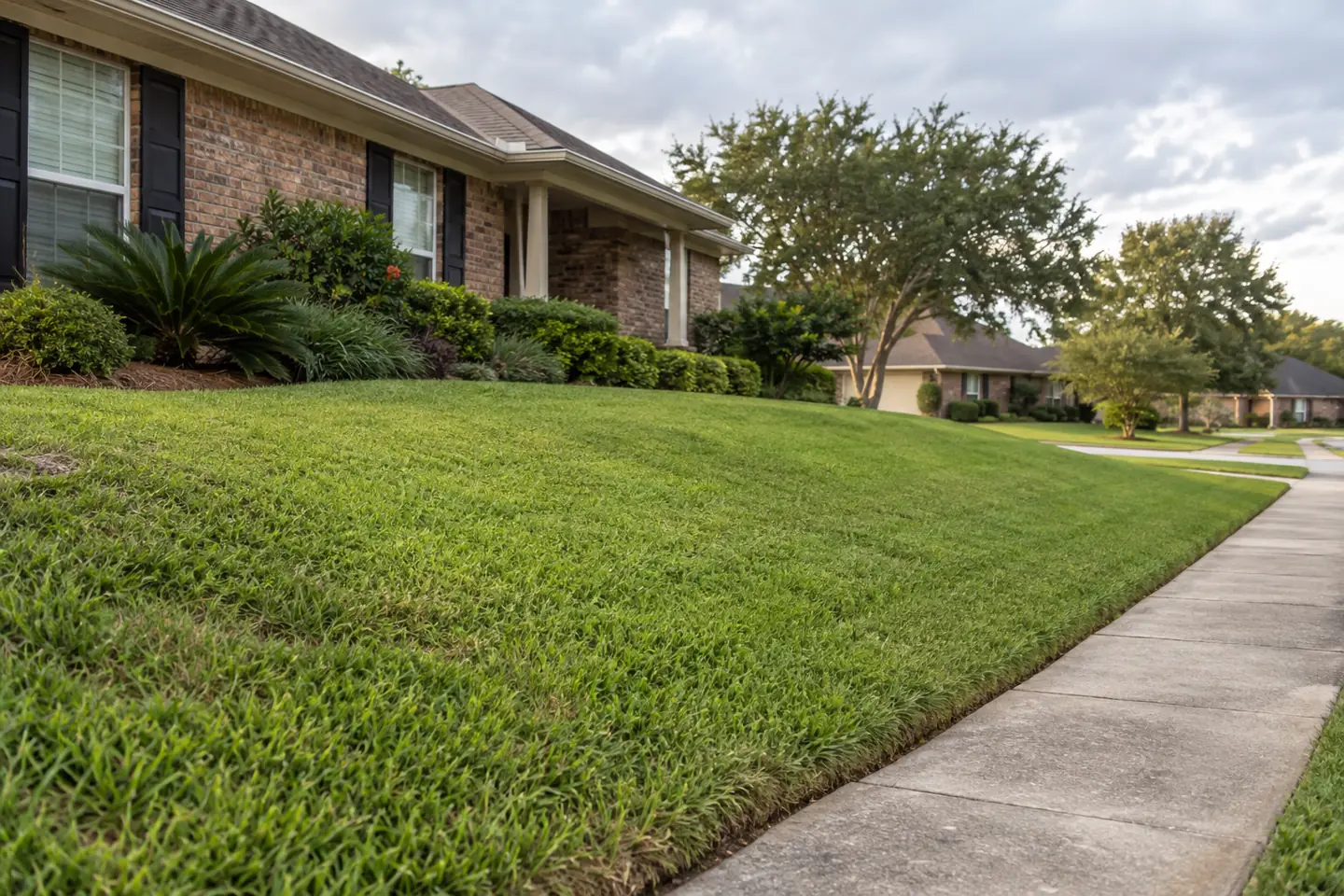
A culvert shoulder may be too narrow for a turn even when the grass itself is dry. The route needs room to approach and leave without backing toward the opening or crossing the pavement at an unsafe angle. Parked vehicles and trash carts can remove that room.
Keep the driveway clear on service day. Describe the steepest area and any section that becomes slippery after dew. Happy may use a different method, leave a hand-detail strip or exclude the lower bank based on actual conditions.
Make utility markers visible
Driveway crossings often share space with utility lines, boxes or recent locate marks. Preserve paint and flags associated with current work. A marker is not a target for trimming and should never be moved to create a cleaner lawn edge.
Tell Happy about planned digging or drainage construction before the visit. Open soil, stockpiled pipe and temporary ramps turn the area into a project site. Resume ordinary lawn service only after the owner confirms the route is restored and safe.
Distinguish maintenance from construction
Louisiana DOTD references show that roadside ditches and driveway side drains are part of a larger hydraulic system. Replacing pipe size, changing grades or reshaping a channel is engineering or construction work, not a mowing decision.
Happy Grass will not recommend a pipe diameter, alter a ditch or build headwalls. When water repeatedly overtops the driveway or backs onto the lawn, seek guidance from the responsible authority or qualified professional rather than trying to solve it with shorter grass.
Use weather-based service limits
After a downpour, wait for water to recede and the bank to firm. The open front lawn may be ready before the culvert shoulder. Treating the crossing separately prevents ruts and avoids forcing equipment onto saturated ground.
Dry-looking sediment can also be slick. Send a current photo if the ditch changed since the quote. A clear cancellation or partial-service note is better than assuming last season’s route still applies.
Build a repeatable driveway routine
Before service: – Move vehicles, carts and portable signs away from the crossing. – Pick up ordinary debris from stable dry grass. – Preserve utility flags and paint. – Report erosion, exposed pipe edges or new holes. – Identify the normal water direction and wettest bank. – Confirm the quoted line between lawn and ditch.
After service, inspect from stable ground and report drainage concerns to the appropriate party. Happy’s work ends with reachable grass. It does not include culvert entry, blockage removal, erosion repair or public drainage management.
Give Happy useful quote information
Share wide photos from both street directions and from the driveway. Include both openings, pavement edge, slope, typical water level and any known ownership boundary. State whether the ditch bottom is excluded.
With those details, Happy can define a practical shoulder and lawn scope. The service does not include drainage construction, culvert cleaning, utility work, fertilization, aeration, overseeding or pest control. A precise boundary keeps the lawn visit from becoming an unsafe drainage job.
Watch the pavement edge for hidden drop-offs
Grass can grow over a driveway slab and make the paved surface appear wider than it is. At a culvert crossing, that overhang may conceal a void or steep drop. Keep the true pavement edge visible and do not use the unsupported grass lip as turning space.
Cracked aprons and settled slabs need appropriate evaluation. Happy Grass will not place equipment on a questionable edge or use mower weight to test stability. If a vehicle crossing has changed since the quote, show both approaches before the next visit.
Coordinate with trash and delivery schedules
Carts, bulk pickup and delivery vehicles often stop directly over the only safe shoulder route. Move household carts to a stable location that does not block sight of the culvert opening. Large deliveries should finish before lawn service begins.
If a contractor parks across the ditch or places a temporary ramp, postpone that area. Happy will not move construction materials or direct traffic in the roadway. A clear driveway is part of access preparation, not an extra task added after arrival.
Keep the crossing visible in deep shade
Low light can make the opening and waterline difficult to judge. Plan lawn work when the crossing can be seen clearly and avoid relying on decorative lights or vehicle headlights as the only reference. Vegetation should not be cut beyond the agreed lawn scope merely to expose drainage structures.
Updated daylight photos are especially helpful after storms. They allow the service boundary to be reviewed without anyone stepping into an uncertain ditch.
Describe both approaches to the crossing
A driveway crossing can look straightforward from the house while the street-side view shows a different edge or approach. Use safe existing viewpoints to show both sides when they affect the lawn request. Name the grass areas separately and identify any portion you cannot see clearly rather than filling the gap with an assumed route.
Keep drainage condition questions distinct from the desired lawn finish. If an owner or responsible authority has raised a concern about the crossing, record that concern and the affected area without presenting mowing as a test of its condition. After work or weather changes the entrance, update the route view before relying on an older quote description. Two understandable approaches are more useful than one attractive photo that hides the edge where the practical access question actually sits.