
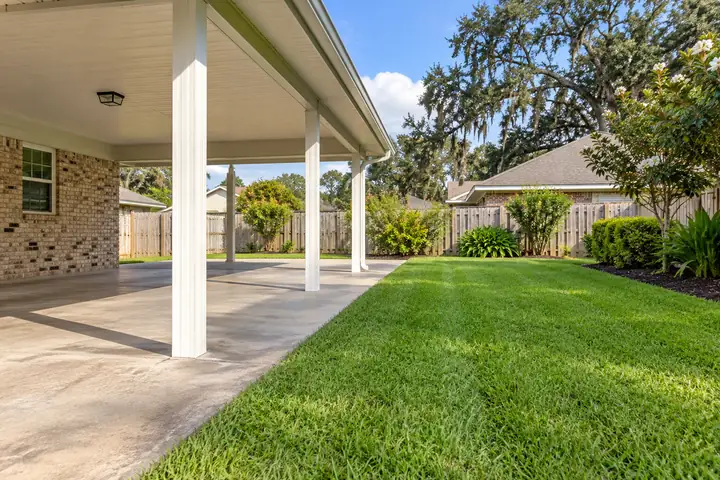
Decide whether the carport is a route or a boundary
Some West Bank yards are reached by passing beside or through an open carport. Others use the slab as the hard stopping edge of the lawn. Tell Happy Grass which condition applies and confirm that you have authority to provide access. A roofed slab is not automatically a safe equipment corridor. Measure the clear width between posts, vehicles, steps and walls, including mirrors and overhangs. Consider whether the mower can exit without backing toward a post. Happy Grass does not move vehicles or drive equipment through a space that could trap it. If the practical route is a side gate, open and clear that route instead of relying on a last-minute path under the carport.
Move vehicles before the service window
A parked car changes more than width. It hides toys and cords, prevents full cleanup and can be exposed to dust or thrown debris. Move cars, motorcycles, trailers and bicycles completely away from the lawn-side edge before the visit. Do not leave keys for the crew or ask us to move a vehicle. If an immovable vehicle blocks the only gate, reschedule or accept service of the reachable area. Let household members know the approximate mowing window so someone does not drive through the work zone. A predictable empty slab edge helps the operator see posts, drainage, low steps and grass boundaries.
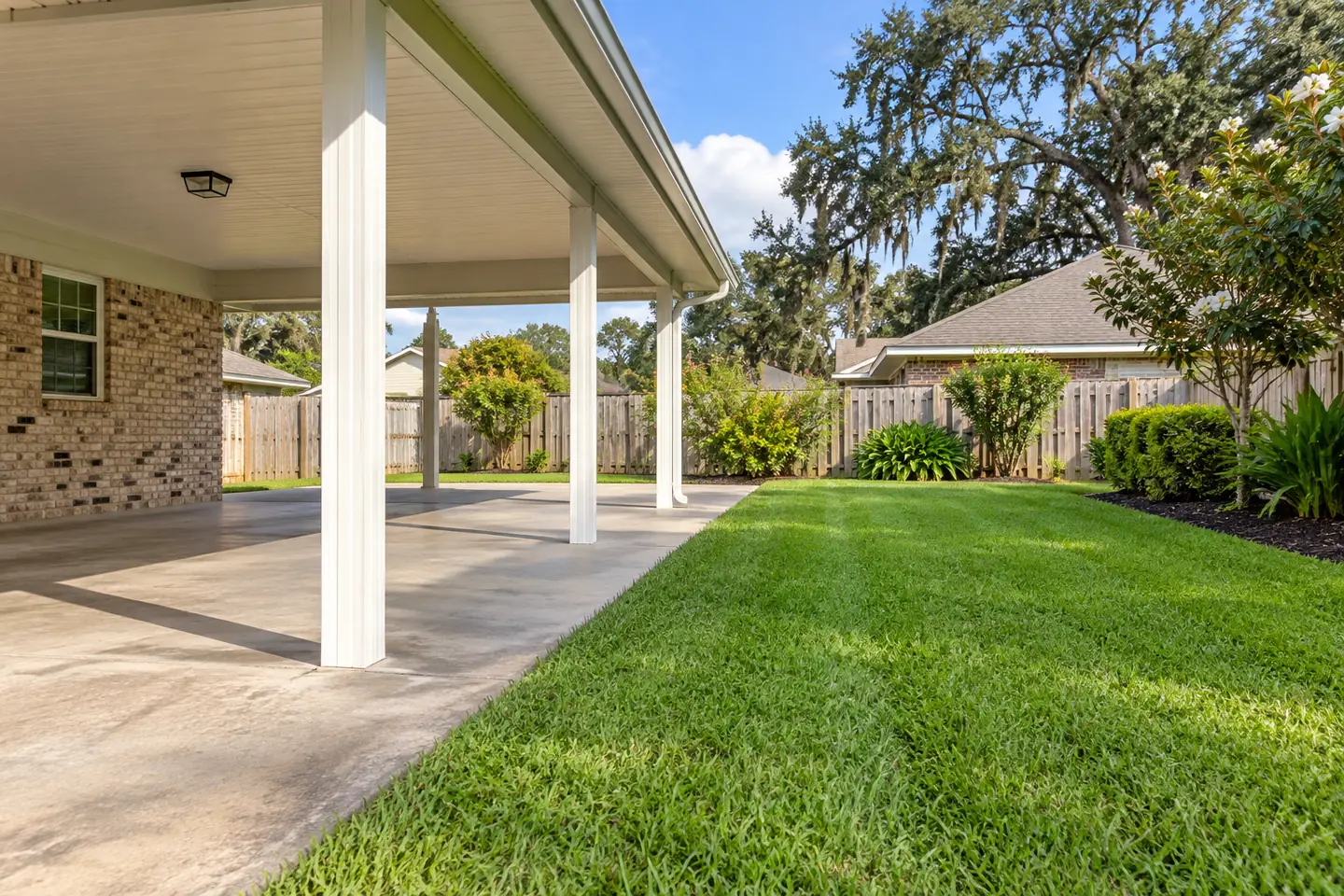
Keep every post base visible
Carport posts may be anchored with bolts, plates or masonry bases that extend into the grass. Tall growth can hide those hard points. Clear stored items and identify damaged or loose bases before service. Happy Grass does not test structural stability or trim close enough to strike fasteners. A small mulch or hand-trimmed ring can create a repeatable no-contact area, but do not pile material against the post or conceal hardware. If a post leans, a base is cracked or the roof appears unstable, keep people and equipment away and call the appropriate building professional. Lawn work should not continue beneath a questionable structure.
Treat the slab edge according to its actual condition
Concrete can be flush, raised, cracked or undermined. A raised corner can catch a mower deck; a broken shoulder can collapse under a wheel. Walk the edge and mark damage. The mower may stay parallel to the slab while a narrow grass strip is trimmed separately. Happy Grass does not repair concrete, fill voids or decide whether a slab is structurally sound. Remove loose chunks and gravel only when you can do so safely and are authorized. Do not cover a defect with a mat or board before the crew arrives. A visible problem can be avoided; a hidden one invites contact.
Remove stored items from the grass-side strip
Carports often collect ladders, toolboxes, fuel cans, garden chemicals, coolers, pet supplies and storm panels. Move these to a secured area that does not overlap the equipment route. Happy Grass will not handle fuels, chemicals, sharp tools or fragile property. Keep cords and hoses fully reeled and off the turf. Folded tarps can conceal metal stakes or standing water, so remove them rather than pushing them against a wall. After storm preparation or a home project, inspect for screws, straps and wire. The cleanest carport edge is one where the lawn is visible from end to end before equipment arrives.
Protect utilities and drains near the structure
Meters, disconnects, conduits, hose bibs and air-conditioning lines may run along the carport wall or posts. Keep them unobstructed and never use them to tie back a hose for mowing. If a cable crosses the grass, have the responsible provider or qualified trade address it; the crew will not lift it or mow over it. Floor drains, channels and downspout outlets should remain free of clippings. If you plan to drive stakes or install edging near the slab, follow Louisiana 811 and private-line precautions before digging. Routine lawn service is not a locate or utility inspection. A wide photo of the wall-side connections helps define a safe buffer.
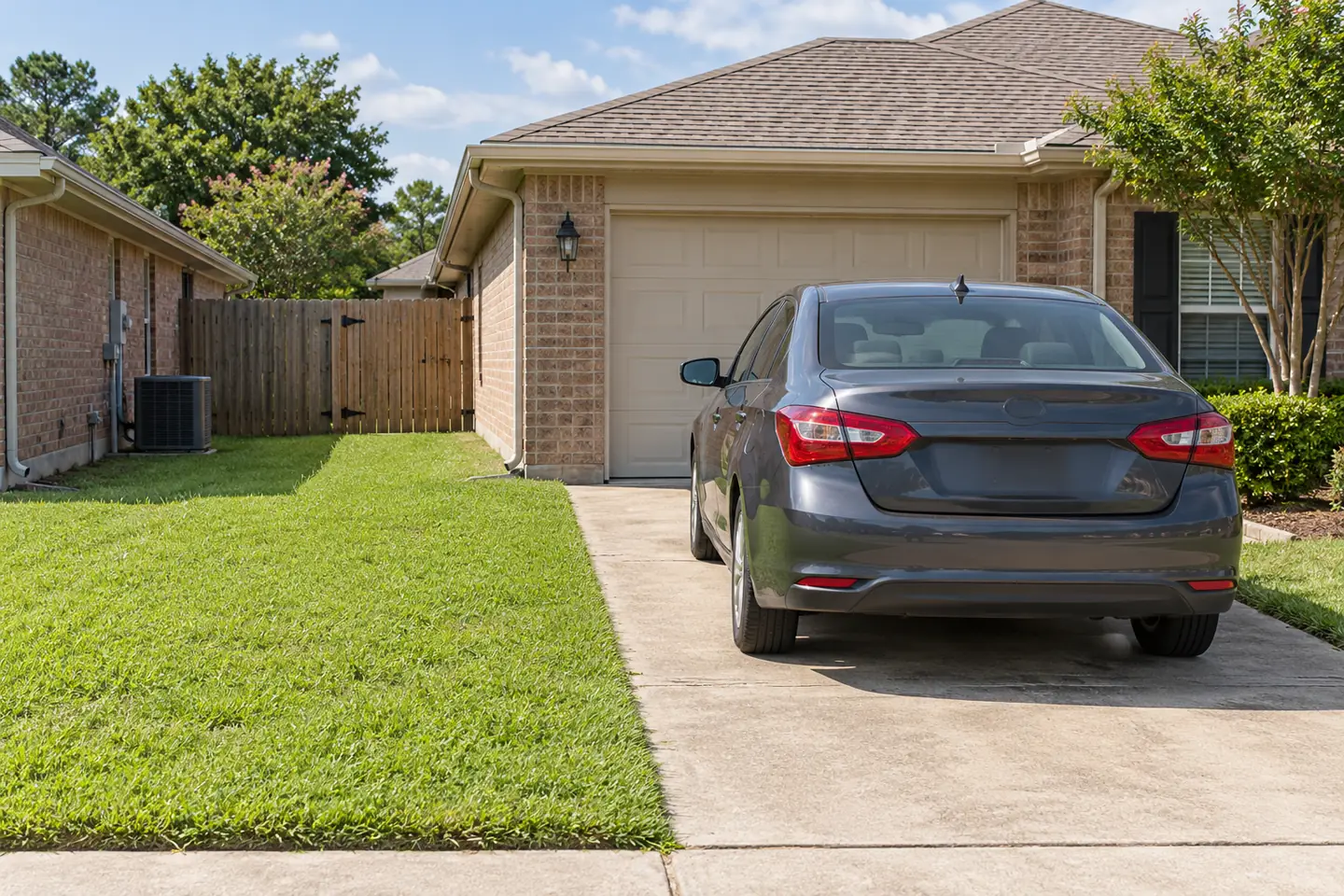
Watch shade, algae and wet transitions
The grass beside a roofed slab may stay wet longer, while the concrete can become slick with algae or rain. Mower tires should not use a slippery slab as a turning pad. Check the lawn-side soil after storms and mark soft areas. Redirecting roof runoff, repairing gutters or cleaning hazardous concrete may require other services. Happy Grass can skip the wet edge and return when conditions improve, but mowing cannot correct drainage. Where shade produces thin turf, set realistic expectations: a close cut will not create density and may expose mud. The service plan should protect the existing surface rather than chase a bright-sun appearance beneath the roofline.
Coordinate construction and permit questions separately
Jefferson Parish notes that carports and other structures may require permits and zoning compliance. Happy Grass does not determine whether a carport is permitted, code compliant or correctly located. If a structure is being built, enlarged or repaired, keep lawn equipment outside the active work zone. Wait until contractors remove materials, nails, forms and temporary braces, then confirm the soil is stable. A new post location may change the route permanently. Send updated photos before the next visit and agree on a new stopping point. Lawn service should follow completed, released work—not operate around scaffolding or fresh concrete.
Prepare a five-minute mowing-day reset
Move vehicles and bicycles, clear the slab edge, reel hoses, remove cords, secure pets and unlock the correct gate. Check post bases and concrete corners for new damage. Look for oil, broken glass or hardware on the route and clean it using an appropriate method. Close nearby doors and windows if dust is a concern. Send a message about anything that changed since the last visit. For a quote, include views from the driveway, through the carport and toward the lawn, plus the narrowest measurement. This reset lets Happy Grass deliver a careful finish without moving private property or making structural judgments.
Give overhead features their own clearance
Even when the mower fits between posts, an operator may pass beneath low gutters, storage hooks, hanging plants, lights or door hardware. Remove hanging decorations from the route and raise only items designed to be adjusted by the owner. Do not ask the crew to duck under unsecured ladders or lift a cable while guiding equipment. Check that downspouts and splash blocks remain visible at ground level. If a roof edge or fixture has been damaged by wind, block the area until a qualified person repairs it. Happy Grass evaluates the practical travel space for lawn equipment but does not certify overhead clearance or the condition of the roof structure.
Plan for oil spots and other non-lawn residues
Vehicle fluids, cleaners and construction products can wash from a slab into adjacent grass. Do not direct the crew to mow through an unknown spill or blow residue into the yard. Contain and clean it using appropriate environmental and product guidance before service. If turf has been damaged, describe the affected area honestly; ordinary mowing will not restore contaminated soil or replace dead sod. Keep fuel containers upright in an approved storage location away from the route. Happy Grass brings lawn equipment for lawn work and should not have to navigate household chemicals or slick patches to reach the backyard.
Coordinate residents, tenants and shared parking
At rental or multi-household properties, the person scheduling service should notify everyone who uses the carport. A vehicle arriving mid-visit can block the exit or put a driver close to moving equipment. Establish a short no-parking window and identify one authorized contact. Do not rely on the crew to knock on multiple doors or decide which vehicle belongs to whom. If another household controls the gate or slab, obtain permission before representing it as the access route. Clear communication prevents a routine lawn appointment from becoming a parking dispute.
Protect the grass strip from repeated parking
Tires that regularly edge off the slab can compact soil and create ruts exactly where the mower needs to travel. Mark the intended parking limit and keep wheels on the approved hard surface. If a rut is deep, soft or holds water, exclude it from the route until it is repaired and firm. Do not fill it with loose rubble immediately before service. A stable grass shoulder supports a cleaner cut and reduces mud on the slab. Lawn mowing can maintain the vegetation that remains, but it cannot reverse compaction caused by vehicle traffic or redesign the parking layout.