
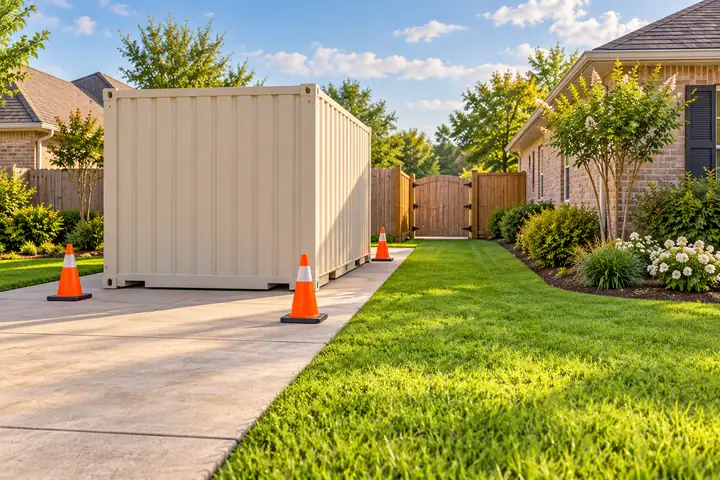
Begin before delivery day
A temporary container affects more than the rectangle where it sits. The delivery path, door swing, stabilizing blocks, protective boards and the homeowner’s walking route can all reach beyond its footprint. Before delivery, mark the recurring lawn zones and identify which paved area must remain open for maintenance.
Use the container provider’s placement requirements and the property owner’s authorization. Happy Grass does not direct delivery equipment or approve structural loading. The lawn conversation simply records the visible result: where the container will stand, which grass becomes unreachable and how long the temporary layout is expected to last.
Prefer an approved hard surface
When the provider and owner approve it, pavement usually makes the boundary easier to see than turf. Even on a driveway, confirm that corners, doors and ramps do not project over the grass. A container placed on lawn can compact or conceal the surface; that condition requires a separate property decision rather than an assumption that mowing continues underneath.
Do not promise that a driveway, slab or street position can carry the load. Those questions belong with the provider and responsible property professionals. For the service map, show only the approved placement and the remaining lawn approach.
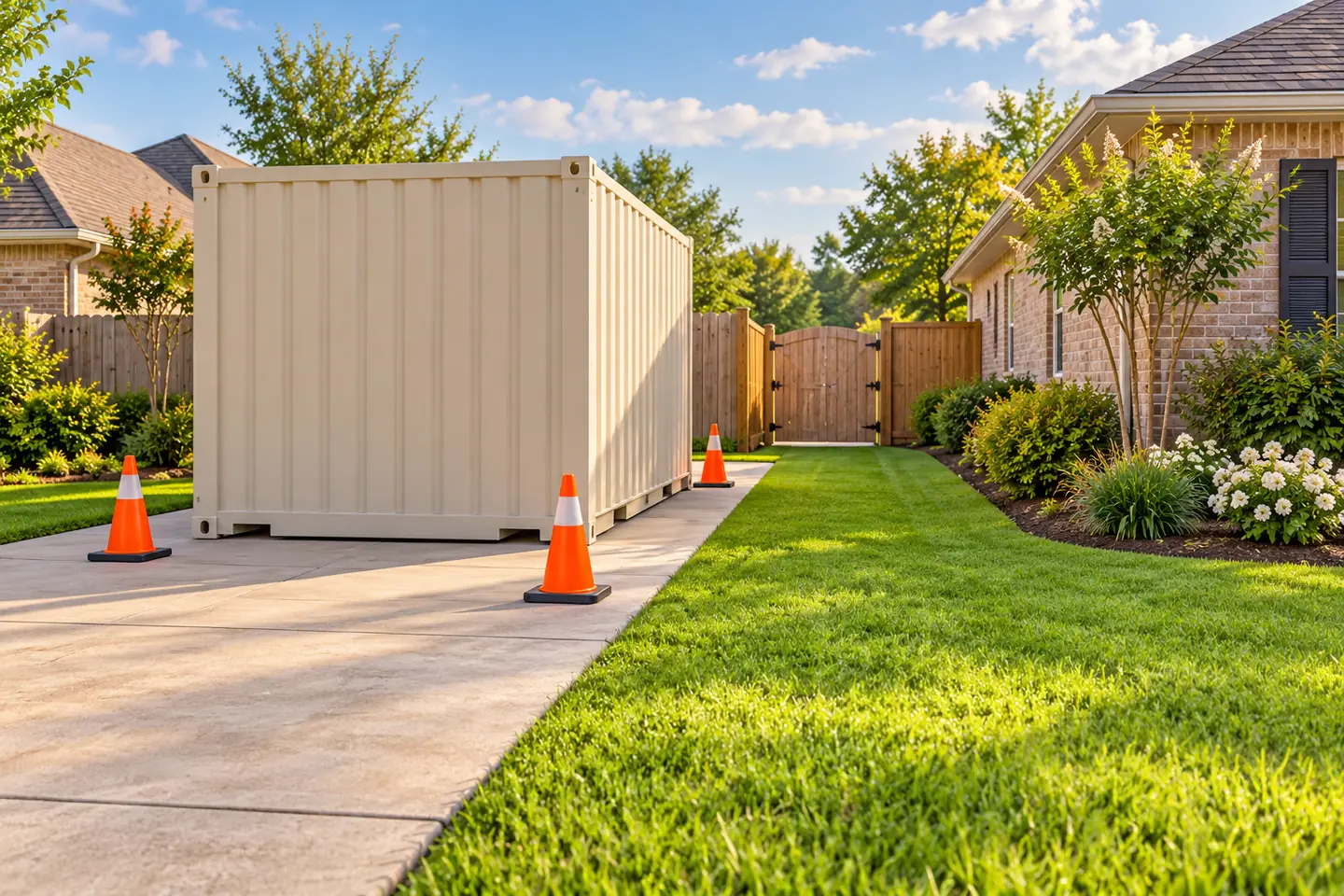
Draw the working footprint, not just the box
Stand at each corner and note doors, latches, loading space, cones, tie-downs and any protective material. Call that entire area the working footprint. A simple four-corner photo set prevents a narrow lawn strip from being mistaken for open access when a door or board regularly crosses it.
Keep measurements practical and tied to fixed references. Do not place stakes into unknown ground to create a boundary. If the provider changes the setup after delivery, update the photos and zone map before the next visit.
Keep one route for people
Construction traffic should not force residents, visitors or workers onto a newly mowed strip. Identify the safe walking route chosen by the owner and project team, then keep lawn equipment out of that corridor. An accessibility route or emergency exit must not become storage merely because the grass needs clearance.
Lawn service is not responsible for managing the project site. If the only access conflicts with active loading, skip the affected zone and arrange a later conversation. A clear pause is better than weaving around moving materials.
Protect the gate approach
A container may fit on the driveway yet block the angle needed to reach a backyard gate. Walk the full turn with the gate open and look for narrow corners, steps, hoses and temporary fencing. If equipment cannot pass without touching the container or project materials, record the rear zone as unavailable.
Do not ask a crew to move lumber, boxes, cords or ramps. Assign clearing to the authorized project contact. Confirm that pets remain secured even when contractors are using the gate.
Separate loose debris from grass
Packaging bands, screws, nails, plastic film and broken material are not ordinary lawn residue. Inspect the adjacent grass before mowing, especially after loading or windy weather. Unknown sharp items require project cleanup; do not shred or blow them across the property.
Routine blowing can address normal clippings on agreed hard surfaces after those surfaces are clear. It does not replace a construction sweep or waste-hauling service. Photograph significant debris and leave the patch untouched until the responsible party removes it.
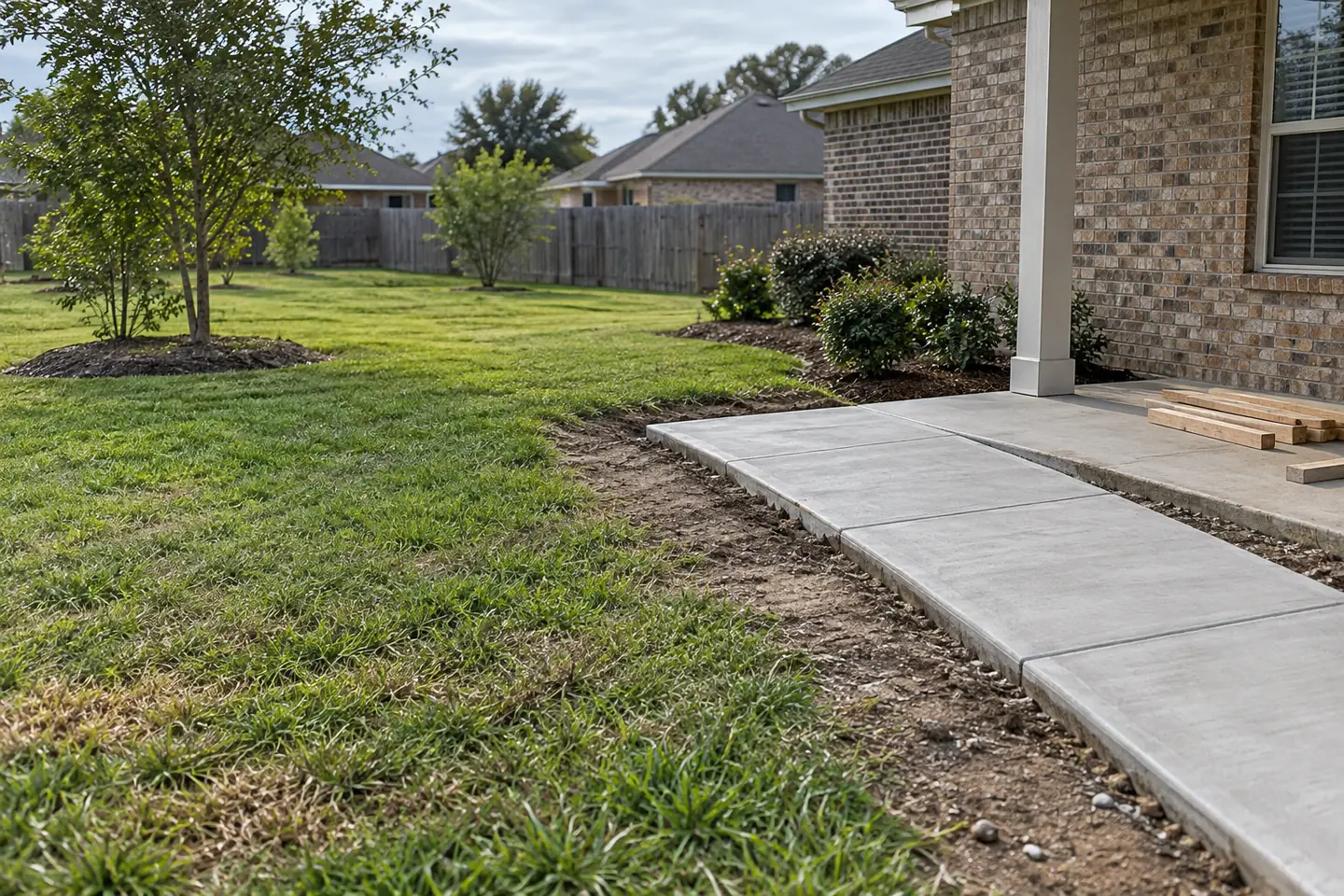
Watch for soft shoulders
Delivery tires or stabilizing blocks can disturb the driveway edge and nearby soil. Describe ruts, loose gravel or soft turf as visible conditions without diagnosing structural damage. A firm-looking top can still hide a depression beside the container.
If access is questionable, create a conservative no-mow strip using existing visible references. Do not fill, grade or compact it as part of lawn maintenance. The owner can obtain the appropriate evaluation and tell Happy when the zone is available again.
Plan around doors and ramps
Container doors may open only occasionally, but their swing space must stay clear. Loading ramps and steps can appear between visits. The project contact should either remove temporary pieces from the lawn or send a current message naming the blocked area.
Never close, latch or reposition a container to gain mowing access. Its contents and security are outside the lawn scope. Treat an open door or ramp as a fixed boundary for that visit.
Photograph without exposing contents
Take exterior wide views that show the lawn edge, driveway, gate and container corners. Avoid photographing open contents, shipping labels, locks, people or neighboring private areas. The record exists to explain access, not to document personal property.
Replace the images when the container moves even a short distance. Use dates and broad zone names. Do not publish or reuse the internal project record as a claimed customer job.
Agree on the temporary service zones
Name what remains available: front lawn, driveway-side strip, opposite side yard or backyard reached by another gate. Name the excluded area separately. This lets useful recurring work continue without pretending the layout is normal.
Avoid reducing the description to “work around it.” That phrase gives no answer for hidden debris, blocked turns or active loading. A zone list makes the decision understandable to the owner and crew.
Consider drainage and runoff
A large object can redirect rain or create a shaded wet edge. Observe standing water and sediment, but do not claim the container caused them. Keep clippings out of visible drains and water paths; EPA yard guidance discourages sending grass and leaves into storm drains and waterways.
Drainage repair, pumping and erosion control are separate work. If water makes the route unsuitable, leave that strip alone and report the visible condition.
Set an end-date check, not a promise
Projects change. Record an expected review date rather than assuming removal will occur on schedule. If the container remains, renew the temporary map. If it leaves early, inspect the entire footprint before restoring normal access.
The first post-removal visit may reveal hidden debris, depressed soil or taller grass. Discuss those facts honestly instead of promising an instant return to the old finish.
Inspect after removal
Walk the former corners, loading side and delivery path. Remove project debris through the responsible contractor or owner. Mark soft ground and any utility indicators that appeared during the work.
LSU AgCenter’s general one-third mowing guideline supports a conservative approach when grass was unreachable for several weeks. A staged return may be more appropriate than cutting an overgrown patch down to match the rest in one pass.
Keep the quote language narrow
State that mowing, edging, weed-eating and blowing apply only to named accessible zones. Do not fold hauling, material relocation, site cleanup or repair into “lawn service.” If weed control is discussed, identify the lawful target area and keep it away from unspecified project materials.
Happy Grass does not provide fertilization, aeration, overseeding or pest control. Construction-related landscape restoration also needs its own accurate scope.
Prepare the visit message
Send one current wide photo, the available zones, any active loading window and the contact who can answer access questions. Do not share lock codes or container inventories in a general lawn note. If nobody can confirm the route, choose the safe exclusion.
The message should describe today’s setup rather than repeat the delivery plan. A two-minute update prevents a month-old diagram from controlling a changed project.
Ask Happy about the workable yard
For properties in Harvey, Marrero, Gretna, Algiers, Belle Chasse and Westwego, call 504-339-3571 and ask for Happy. Explain the temporary footprint, gate route and zones that remain clear.
Happy Grass can build a lawn-maintenance conversation around the accessible property without claiming to manage the construction site. The aim is a friendly, realistic plan that pauses where the project takes over and resumes only after the ground is honestly ready.
Prevent the lawn from becoming overflow storage
Boxes and project supplies can migrate from the container onto grass when loading space gets tight. Set a firm rule that the named lawn route remains empty, even for items expected to stay only a few minutes. A tarp does not make a stack safe to mow around, and a cardboard box can conceal hardware after rain.
If overflow already occupies the route, photograph the overall footprint and ask the project contact to clear it. Do not sort, carry or consolidate contents. The service decision begins only after the grass is visible and the route can be judged on its own condition.