
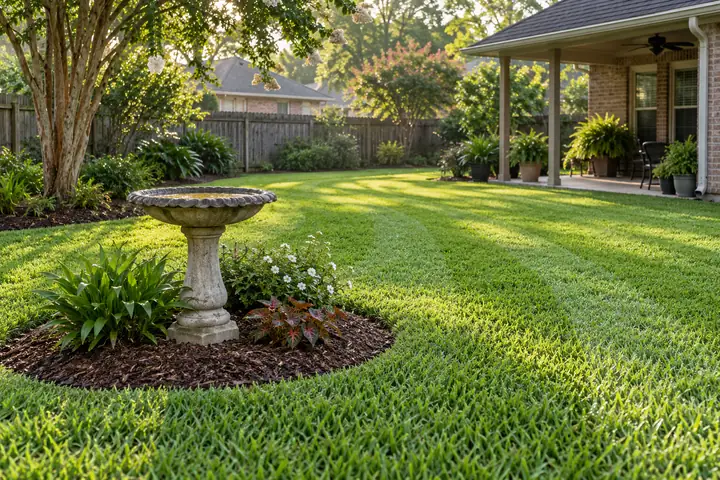
A small feature can change the whole route
A bird bath may occupy only a few square feet, yet it creates several decisions for a lawn visit. The pedestal can be easy to miss in tall grass. A wide basin may extend farther than the base. Water can spill when the stand is bumped, and repeated overflow may leave the soil softer than the surrounding yard. Nearby plants, stones or a mulch ring can turn one object into a cluster of narrow edges. Happy Grass treats the feature as a real boundary instead of trying to squeeze equipment against it. Before the first visit, show the full setup in one broad photograph and add a close view of the base. Tell us whether the bath is fixed, heavy but movable, or light enough to tip. That quick description helps us choose an approach without testing the object with a mower deck or trimmer line. The goal is a tidy lawn around the bird bath while leaving the water feature stable and exactly where you expect it.
Define what belongs in the grass
The easiest bird-bath area to maintain has an intentional border. A small mulched circle, a planted island or a firm decorative-stone pad gives the pedestal a home outside the active turf. The border does not need to be elaborate; it only needs to make the stopping point obvious. When grass grows tightly against a narrow base, the last inch may require more detailed trimming and the result can vary with wetness, pedestal shape and access. Loose bricks, thin plastic edging and scattered pebbles deserve special attention because they can shift into the lawn route. If the basin is centered in open turf with no border, mark its location before a first visit, especially when surrounding grass has grown high. Do not hide an extension cord, pump tube or solar-light wire beneath the leaves. A useful lawn boundary protects the feature, reduces guesswork and lets the mowing pattern continue smoothly around it.
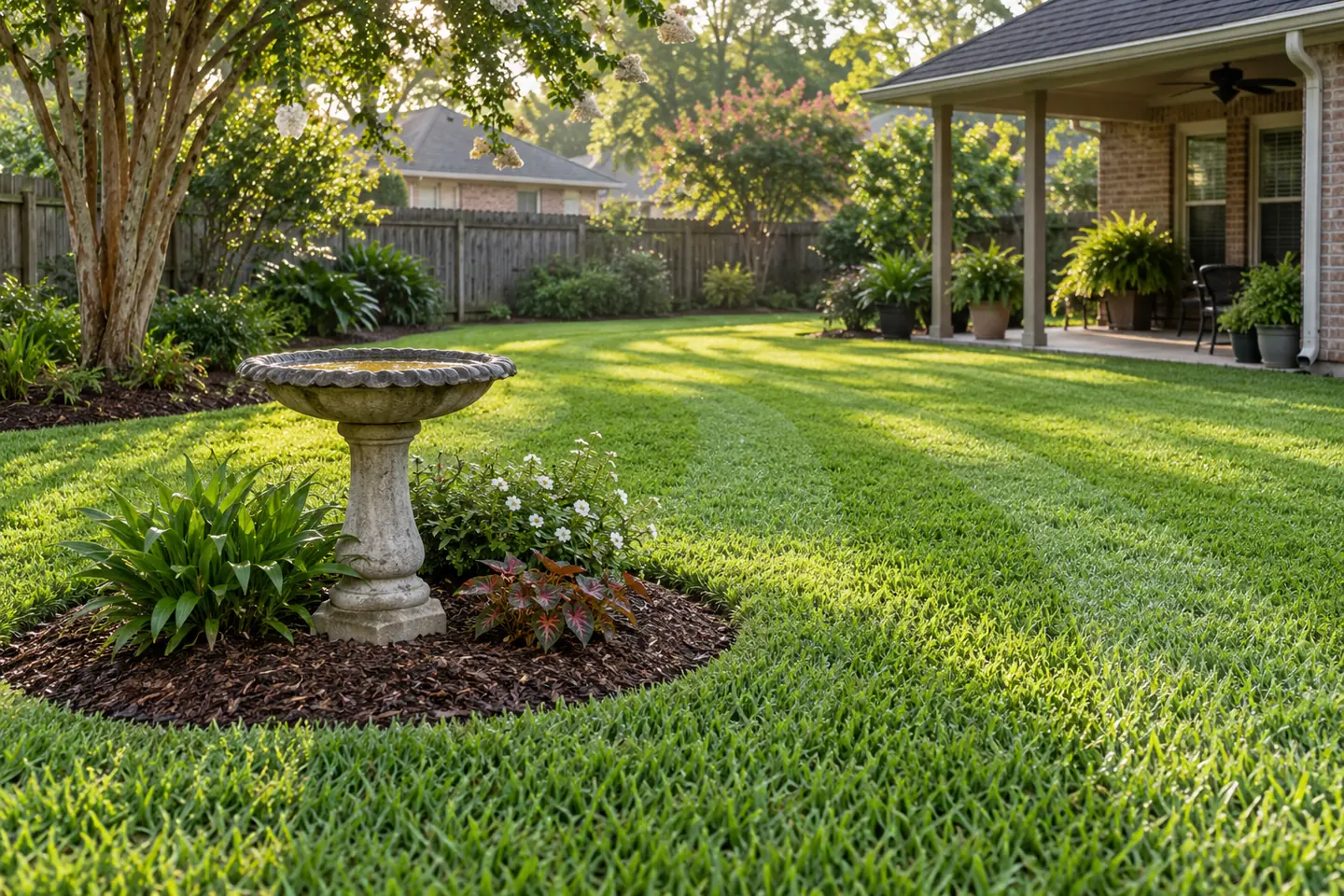
Check the footing after rain or refilling
Water around a bird bath comes from several places: rain, splashing birds, a garden hose and the homeowner tipping out an old basin. That moisture can create a soft halo even when the rest of the yard is ready. Walk the area before mowing day and press lightly with an ordinary shoe rather than driving equipment over it to test it. If the soil sinks, smears or holds a footprint, send a current photo and mention that the base is soft. A leaning pedestal is also a reason to pause. Lawn service does not include leveling the stand, repairing a cracked basin or correcting drainage, but knowing the condition prevents an avoidable surprise. When you refill the bath, aim excess water into a suitable planted area rather than across the normal equipment lane. A firm route around the feature matters more than forcing one damp corner to match the schedule of the entire lawn.
Empty loose items before the visit
A bird-bath setup often collects accessories: brushes, small pumps, heaters, stones, drippers, decorative branches and shallow dishes. Remove anything that is not permanently secured before Happy arrives. Coil hoses away from the grass, unplug powered accessories according to their instructions, and keep electrical connections out of the mowing area. If a decorative rock is intentionally placed inside the basin, it can stay there; loose pieces around the base should be returned to the bed or container. A light resin bath that normally stands in open grass is best moved by the homeowner before service if moving it is safe and part of the normal routine. Tell us where it will be during the visit so the service boundary stays consistent. Happy will not empty, clean, lift or relocate a filled bird bath as part of routine mowing. A prepared feature lets the visit focus on the lawn instead of handling personal yard décor.
Keep standing-water care separate from mowing
The water itself is the homeowner's responsibility. EPA mosquito guidance recommends regularly emptying and changing water in bird baths to reduce potential breeding habitat. That is a household water-management task, not a pesticide or pest-control service from Happy Grass. We do not add chemicals, larvicides or cleaners to the basin, and we do not make a mosquito diagnosis. Plan your cleaning on a day that does not leave the surrounding turf saturated immediately before mowing. If the basin has algae, wildlife activity or damaged glazing, handle those questions with an appropriate source and keep the lawn route closed until the footing is safe. This separation is useful: the bird bath can continue serving its purpose, while the mower follows a dry, predictable route outside the pedestal area. Tell Happy about unusual standing water beyond the basin because it may change access even when the bath itself is maintained.
Protect nearby plants and habitat
Bird baths are often placed among low flowers, groundcover or shrubs. Show the intended planting edge instead of expecting the operator to decide which volunteer stems belong in the bed. Temporary markers can help during a new planting, but remove or identify thin wires, plant supports and nearly invisible irrigation tubing. If birds are actively nesting in vegetation next to the bath, tell us before the visit and keep an appropriate quiet buffer around that area. Happy can adjust the ordinary mowing route; we do not handle nests or wildlife. Fallen seed, feathers and ordinary leaf litter may remain near the bath, but hard objects, glass and metal should be cleared. The best plan respects both sides of the boundary: living habitat stays undisturbed inside the defined bed, and the serviceable grass outside it remains accessible for a clean pass.
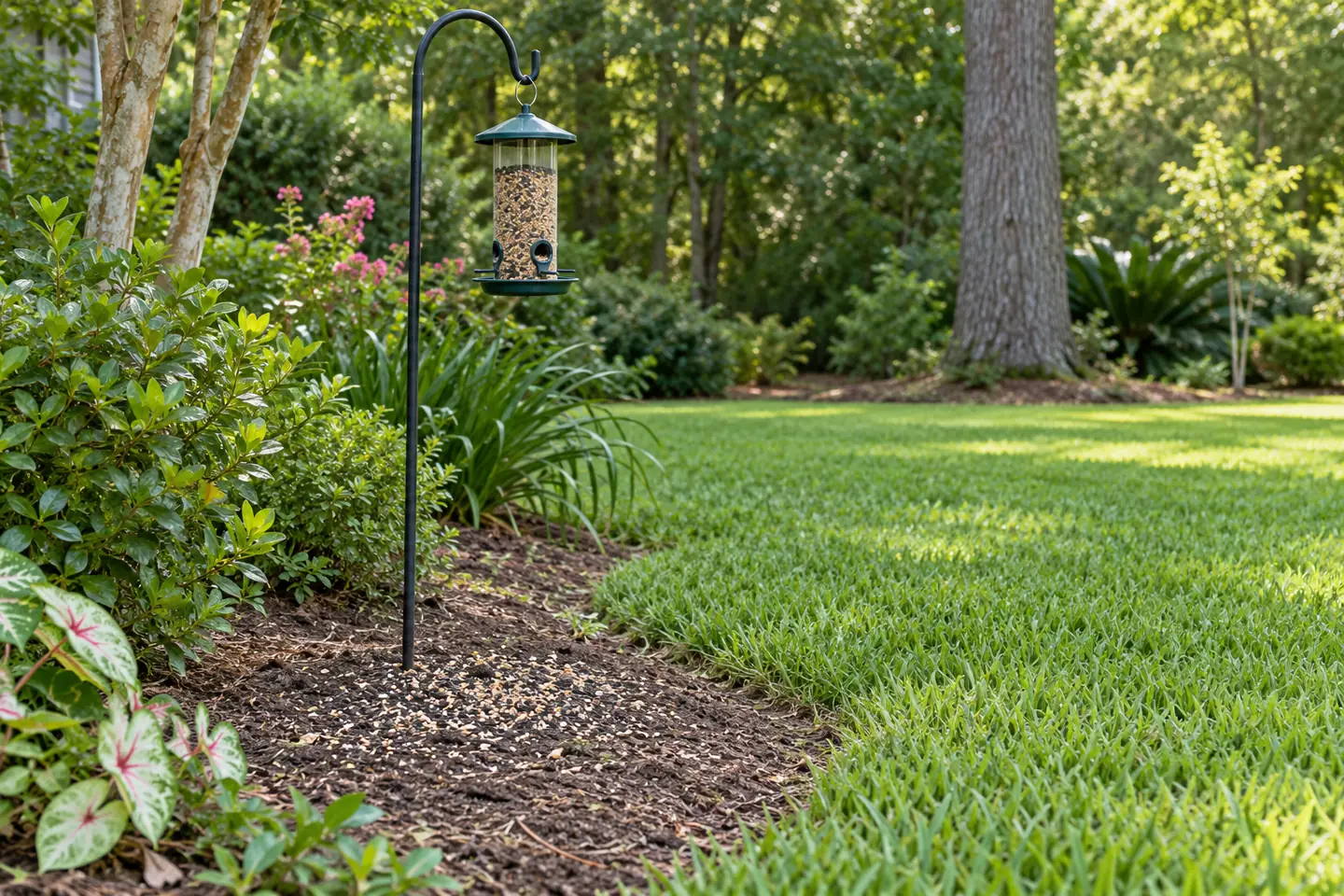
Decide how the finish should look
There are several reasonable finishes around a bird bath. Some owners want a crisp circular edge around a mulch island. Others prefer a softer planted transition with no exposed soil. A pedestal in open turf may simply receive a conservative trimmed clearance. Describe the look you want when requesting a quote, and mention any part of the setup that must not be touched. The practical result depends on the base width, surface stability, grass density and distance to nearby objects. A neat finish does not require trimmer line to strike the pedestal. In fact, leaving a small deliberate margin can look better than producing chips, scuffs or a ragged scalped ring. Review the area after the first visit and use a close photo if the boundary needs clarification. One specific correction is more useful than a broad request to “get closer.”
Build a repeatable routine
For recurring service, keep the same bird-bath location, border and access pattern whenever possible. If you relocate it for a season, add a new planter, run a drip line or install a pump, send an updated photo before the next visit. Check that the pedestal is upright, the route is firm and the basin does not overhang the mowing lane. Put cleaning tools away and remove hoses. A simple routine can be remembered as water, footing, border and loose items. Those four checks take only a minute and prevent most bird-bath surprises. They also keep the route consistent for every recurring visit. Happy Grass can then concentrate on mowing, edging, trimming and blowing the agreed lawn area. We do not promise wildlife results or diagnose drainage, but we can make the ordinary lawn work fit thoughtfully around a feature that brings life to your yard.
This small preparation also makes every recurring arrival calmer, faster and easier to understand.
Distinguish the object from its lawn footprint
Show the bird bath and the grass around it together so the request identifies the whole installed footprint. Explain which parts are fixed and which accessories the owner will prepare. A decorative bowl being removed does not necessarily mean the base or nearby items are gone, so describe the presented arrangement rather than using a general cleared label.
Keep water care and object maintenance with the responsible owner. For Happy, focus on the accessible grass, the boundary being discussed and any place that should be left out of ordinary work. When the display moves, date the change and review both the old location and the new one before carrying the earlier note forward. This provides a simple lawn reference without turning a familiar decorative feature into assumed moving, cleaning or wildlife-care work.