
Read the whole rock arrangement
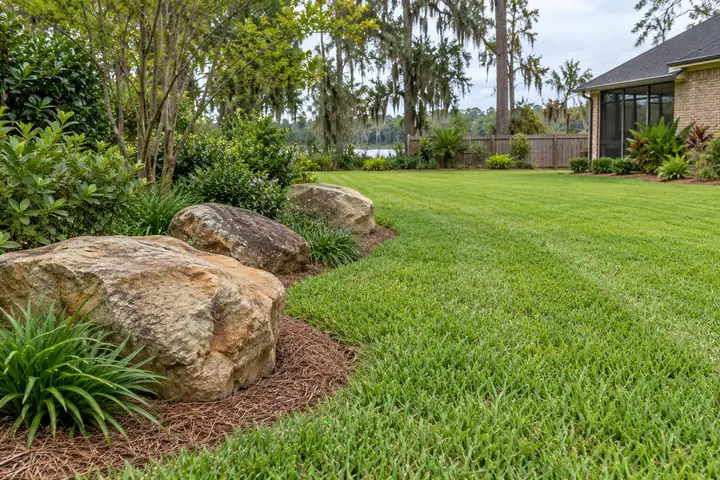
A landscape boulder may look like one solid obstacle, yet its relationship with the lawn is rarely simple. The visible face can lean over grass, the base can disappear into mulch, and smaller stones may sit loose around it. Rain can wash soil from one side and create a narrow pocket that catches a mower wheel. Before service, send a broad photo showing the complete arrangement and a lower view of the grass-to-rock transition. Tell Happy whether the boulders are fully inside a bed, isolated in turf or part of a retaining feature. We will maintain the agreed grass area around a visible boundary. We do not move, reset or stabilize landscape stone. Defining the feature accurately lets the crew choose a practical route without treating a heavy rock as a bumper.
Keep loose stone out of the turf
One of the most important preparations is removing gravel, chips and decorative pebbles that have migrated into the lawn. A small hard fragment can become a projectile or damage equipment even when the large boulder itself is obvious. After rain, pets, play or bed maintenance, sweep or hand-return loose material to the stone area. Do not use the mower to push gravel back. If the border routinely spills, a more stable edging solution may be needed outside the mowing service. Tell Happy when the transition contains shell, crushed limestone or angular rock rather than mulch. The material affects how close ordinary equipment can safely work. A tidy, contained bed gives a better finish than chasing scattered stone across the turf.
Watch the hidden side and undercut edges
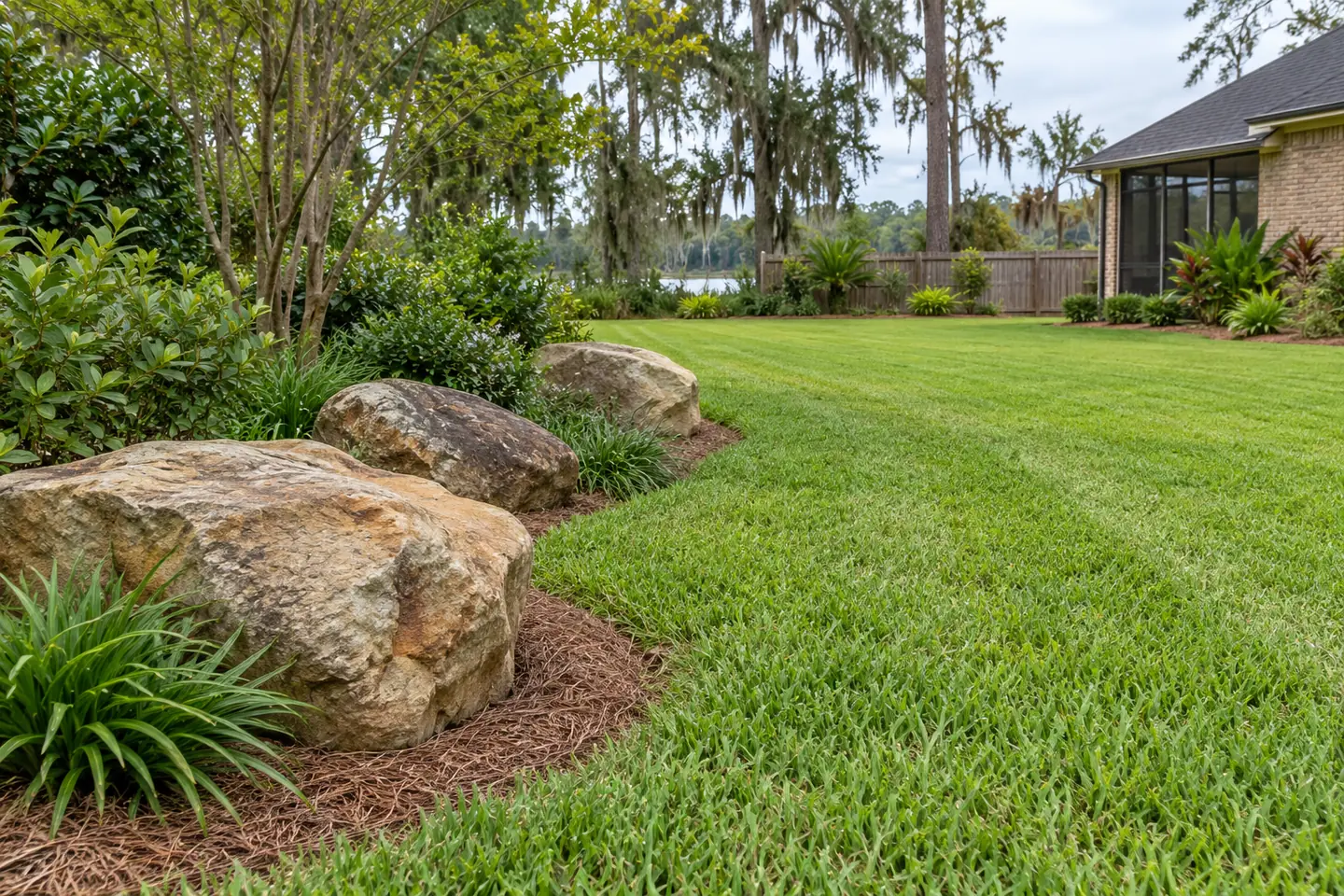
Boulders often have irregular bottoms. A rounded face may create a shaded cavity where grass, vines or debris collect. An undercut can catch a wheel, while a thin projection can be difficult to see from above. Walk the perimeter and note any opening large enough for a shoe or mower wheel. Clear leaves so the ground level is visible, but do not reach beneath an unstable rock. If erosion has exposed a new gap, keep the area out of the route and consult the appropriate landscape professional. Happy can trim conservatively around a stable feature; we do not evaluate structural stability. The safest boundary follows the outside of the irregular shape, not an imaginary straight line through the hidden base.
Separate intentional stone from debris
Not every rock in the grass is part of the design. Construction fragments, broken brick, concrete chips and stones uncovered by soil movement should be picked up before mowing. If a small rock is an intentional marker or meaningful object, move it into a visible bed or flag it clearly. A naturalistic arrangement can still have a maintenance logic: permanent boulders remain grouped, while loose debris stays out of the work area. When sending quote photos, point out any flush stone that disappears under grass. Happy Grass will not decide which unmarked pieces are decorative and which are waste. Clear classification protects both the yard design and the equipment route.
Make the bed edge wide enough to maintain
A narrow ribbon of turf trapped between two boulders or between rock and fence may be impossible to mow normally. Decide whether that strip belongs in the lawn, the planting bed or a no-service pocket. If it remains turf, provide a route wide enough for the agreed equipment and keep it free of protruding branches and loose stone. If it becomes part of the bed, maintain a continuous visible boundary. Avoid creating tiny grass islands that require repeated tight turns. The most attractive result often comes from a simple curve around the entire boulder group. Happy can follow an established edge; design changes, excavation and new edging installation are separate projects.
Account for shade, heat and moisture
Rock changes the small environment beside the grass. A sunny face can radiate heat, while a shaded underside can stay damp. Water may run around the boulder and settle on the downhill side. These differences can produce uneven growth at the same border. Describe the actual condition instead of asking for one lower cutting height to make everything match. If the soil is soft, the route may need to wait. If the grass is thin under an overhang, repeated close trimming will not create a fuller lawn. Happy's role is routine mowing, edging, trimming and blowing within the agreed scope, not diagnosing irrigation, soil or plant health. A conservative edge preserves the visible turf without pretending the rock has no effect on its surroundings.
Keep plant material from hiding the hazard
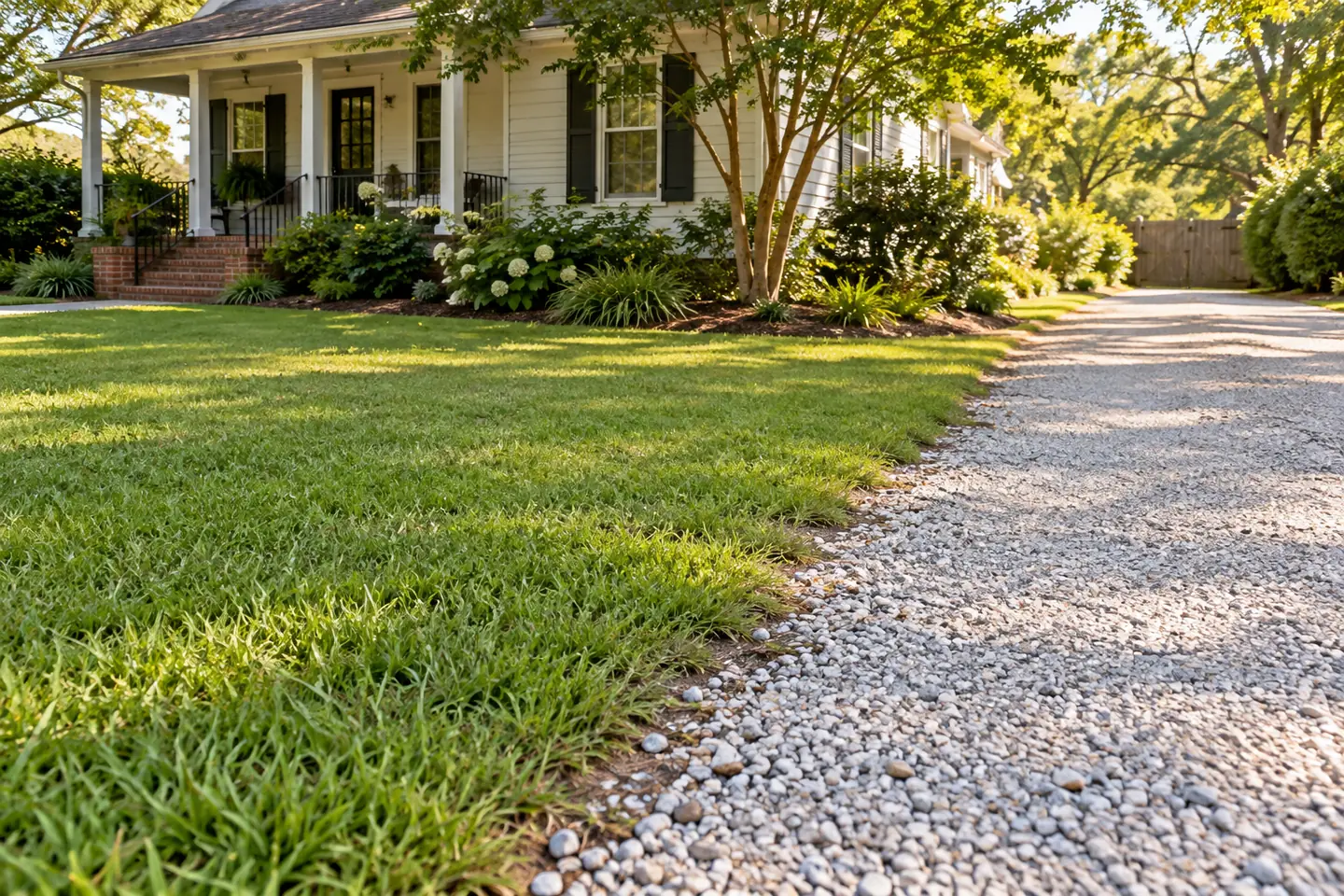
Groundcover, ornamental grass and vines can soften a rock arrangement, but they can also conceal smaller stones and the true bed line. Before mowing day, keep the outer edge readable. Tie back or maintain plants that spill into the route if that garden work is your responsibility. Identify desirable stems that resemble volunteer growth. Do not run irrigation tubing loosely beneath leaves and across turf. When plant growth changes the usable passage, send a new photo. The crew should not have to probe a hidden edge with trimmer line. A visible border respects the planting and lets the lawn finish look intentional.
Plan the cleanup direction
Grass clippings and dust can collect on flat rock surfaces. Tell Happy if a nearby pond, door, pool or delicate display changes the normal blowing direction. We can direct ordinary lawn debris away from identified sensitive areas when access permits, but rock washing and detailed hand cleaning are not part of routine service. Remove cushions, tools and decorative items from the boulders before the visit. If a stone surface is loose or flaking, mention it. The finishing plan should move lawn debris back toward the maintained turf without scattering bed material. A defined direction is especially helpful when several hard surfaces meet in one corner.
Review the border after weather and projects
Heavy rain, drainage work and new planting can change the grade around boulders. Inspect the transition after any yard project. Look for washouts, exposed fabric, loose edging and newly uncovered stone. Keep a changed area closed until it is stable and send Happy an updated photo. For recurring service, preserve the same boundary whenever possible so the mowing pattern remains repeatable. A large boulder should be a fixed landmark, not a monthly puzzle. With contained rock, visible footing and an honest route, the lawn can look clean around a strong landscape feature without forcing equipment into gaps where it does not belong.
Give utility markings priority over appearance
If excavation, new planting or stone work is planned, contact Louisiana 811 as required before anyone digs. Temporary utility flags or paint near a boulder are not decorations to move for a cleaner photograph. Tell Happy what the markings indicate and keep the marked area outside ordinary lawn work until the project is complete. A newly placed rock can also hide a utility cover that was previously visible, so confirm that all covers and service points remain accessible. Happy does not interpret marks, move them or decide whether heavy stone placement is safe over buried facilities. This utility check belongs to the property project, but it directly affects the future mowing boundary.
Avoid using boulders as storage shelves
Flat stones often become convenient places for toys, plant pots, hoses and hand tools. Clear those items before service, including anything tucked behind the rock. A metal hand rake can disappear against a shaded face, while a hose loop can slide into the grass. Keep seasonal lights and extension cords off the boulders unless they are fully outside the lawn route and installed for outdoor use. The permanent stone should be the only hard object the crew needs to plan around. When the feature is uncluttered, its irregular shape is easier to read and the finish can follow one deliberate edge.
Check the small material around the large rock
The large boulder is usually easy to recognize; the surrounding small stones, edging pieces or decorative gravel may be less obvious in grass. Describe those materials separately in the quote photographs. A close border view and a wider approach view can show whether the lawn meets a single fixed rock or a broader mixed-material island.
When another landscaping task changes that island, update the lawn boundary rather than relying on the boulder as proof that nothing moved. Name any scattered material still awaiting owner cleanup and leave the affected strip outside a ready-for-service description. After the arrangement is settled, use the same border reference for follow-up. This focuses the discussion on the actual grass-to-material transition instead of asking for a tidy finish around an object whose smaller surroundings have never been explained.