
A cleanout is not just another lawn bump
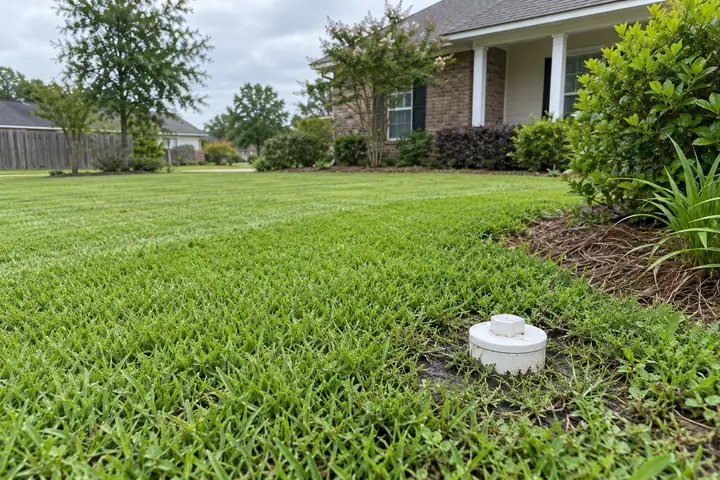
A sewer cleanout may look like a short white pipe, a square-topped cap or a covered access point near the house, driveway or property line. Its purpose is plumbing access, not decoration, and that makes it different from a stone or an ordinary patch of uneven soil. The cap can sit nearly flush when grass is short and disappear when growth gets ahead. Some are protected inside a box; others rise several inches above grade. Before Happy Grass starts recurring service, send one broad photo that shows the cleanout in relation to the house and one close photo that shows the cap and surrounding ground. Tell us whether it is rigid, loose, cracked, tilted or protected by a marked border. We will treat the visible feature as a fixed no-contact point. Routine lawn service does not include opening the cap, testing the line or deciding whether the cleanout is installed correctly.
Find every access point before the first visit
One property can have more than one cleanout, and they are not always grouped together. Walk the normal mowing footprint when the grass is dry and look beside exterior walls, utility corridors, driveway edges and fence lines. Do not probe the soil or open covers. Simply identify the access points you can already see and photograph each one from two directions. If a plumber recently worked on the line, ask the property owner or contractor whether a cap was added, raised or relocated. A new white fitting can blend into bright concrete, while a dark box can disappear in shade. Add a temporary visible marker several inches away if the cap is hard to spot, but never drive a stake where buried utilities may be present. A reliable inventory prevents an operator from discovering the feature with a mower deck and helps keep the route consistent from one visit to the next.
Keep the cap and surrounding soil stable
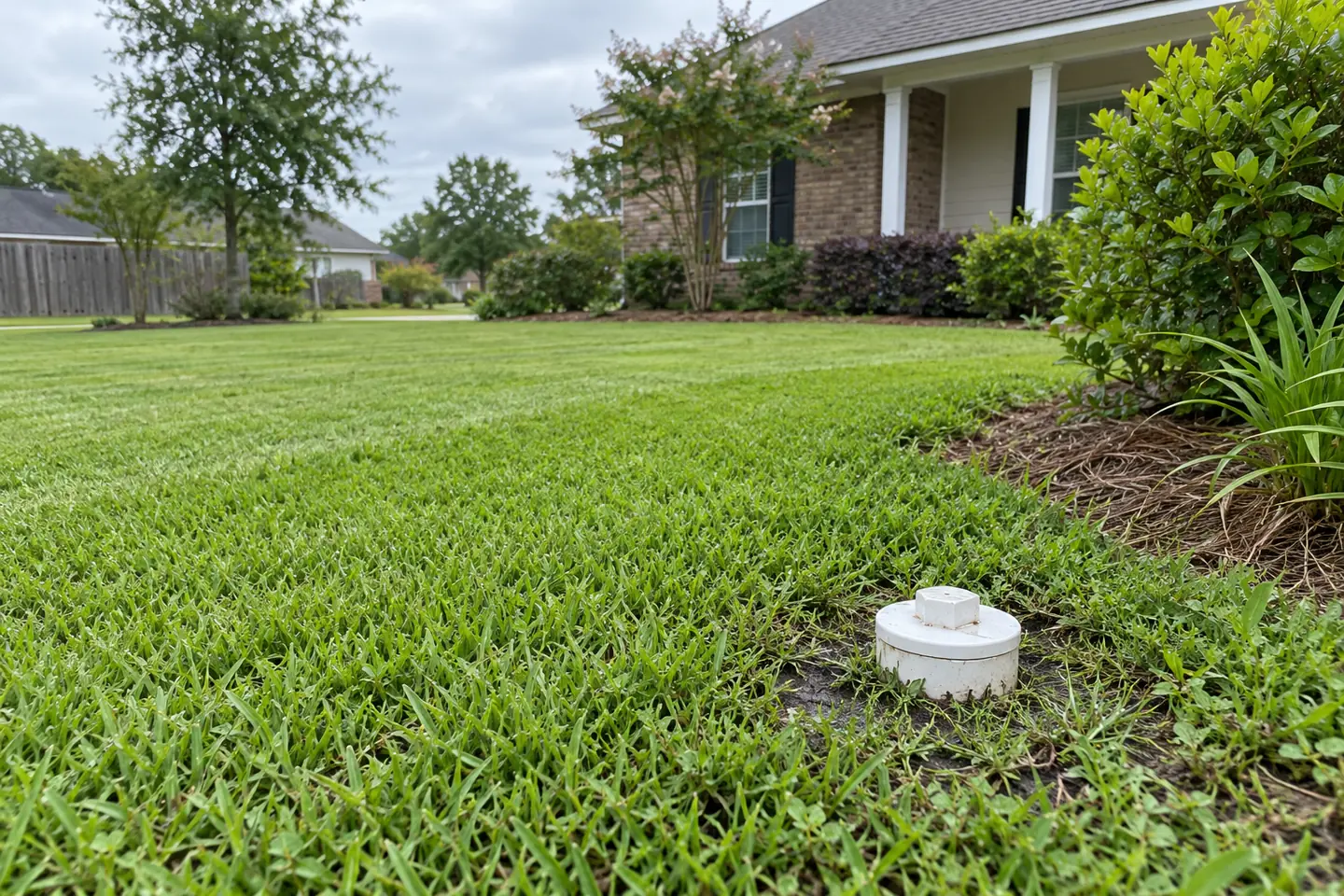
The mowing question is not only where the pipe sits; it is whether the ground around it can support an ordinary pass. Soil may settle after plumbing excavation, leaving a shallow ring, loose fill or a soft strip that holds water. Walk the area before service and note any sinking, cracking or fresh repair material. If a footprint presses deeply or water stands around the fitting, keep that portion out of the equipment route and send a current photo. Happy Grass does not pack soil, raise cleanouts or repair plumbing. Those are property and plumbing decisions. A firm, visible border around the access point is easier to maintain than grass growing into a collapsing pocket. Do not pile mulch over the cap or hide it with a planter. Keeping access readable protects the lawn visit today and preserves the cleanout for the qualified person who may need it later.
Use a deliberate lawn boundary
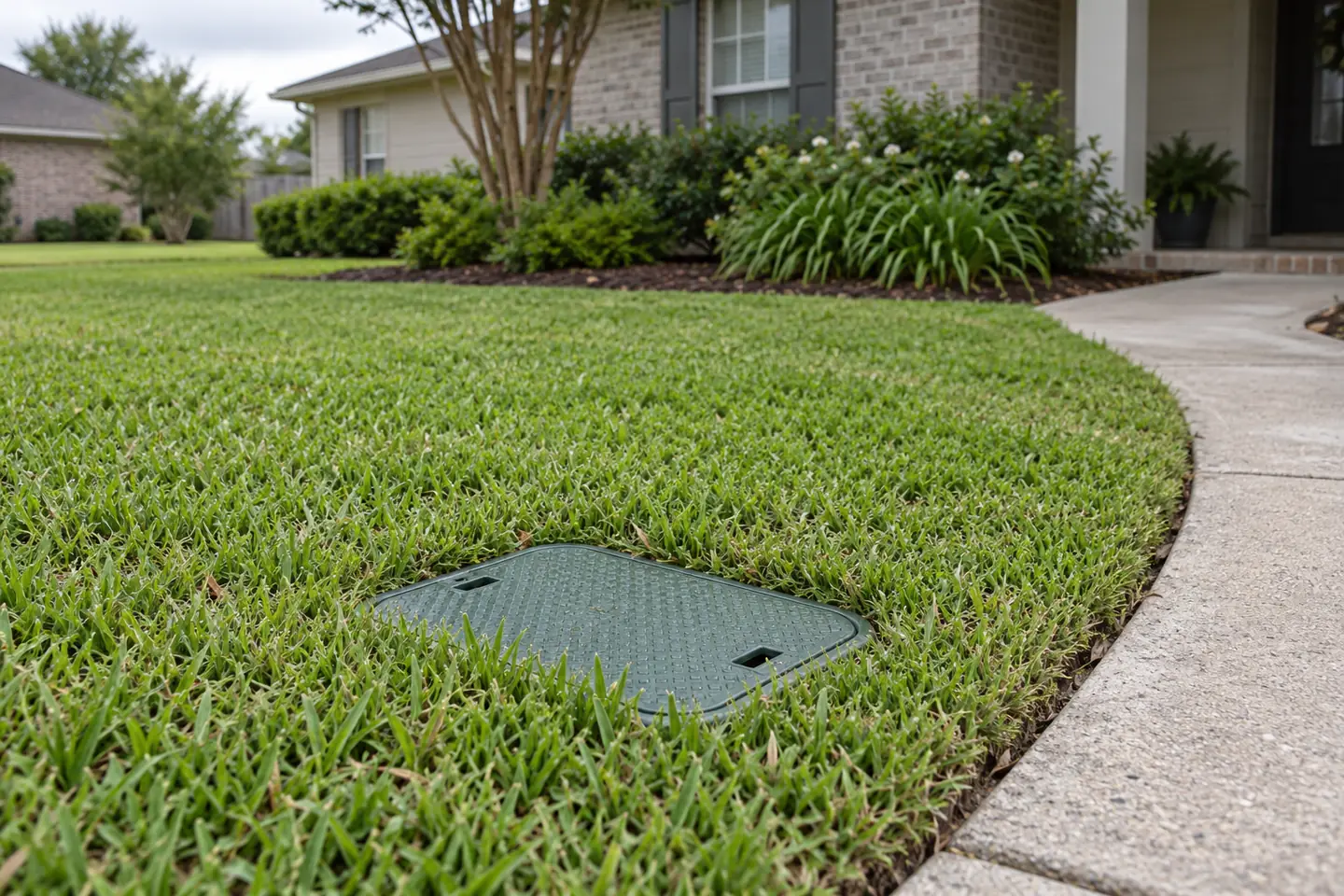
There are several reasonable ways to define the grass around a cleanout. A cap that sits well above grade may belong inside a small mulched or stone-free no-mow circle. A properly protected box that is level with the lawn may remain in turf, provided its lid is intact, stable and clearly visible. A narrow cap beside a bed can be included within the bed boundary instead of forcing a tiny grass strip between two hard edges. The best option depends on the installed feature, property design and advice from the responsible plumbing professional. Happy Grass will not recommend burying, cutting or altering the access. Our part is simpler: follow the boundary you identify, keep equipment from striking the cap and use conservative trimming where visibility allows. A neat margin is better than a closer finish that damages the fitting or scalps disturbed soil.
Clear objects that make the cleanout harder to see
Trash carts, hoses, flowerpots, toys and temporary decorations often migrate toward a side wall or utility corner. Move them before the visit so the cleanout and route can be seen together. Do not lean tools against the pipe or loop a cord around it. If a cover normally sits under a removable mat, take the mat away and explain what is beneath it. Keep leaves and loose grass from forming a mound over a flush lid. If you use a brightly colored marker, place it beside the feature rather than through the lid or directly against the pipe. Happy will not move heavy storage or dismantle a temporary enclosure to find plumbing access. A prepared area lets the crew make one clear decision instead of guessing whether an object is hiding a fragile cap.
Treat fresh plumbing work as a changed yard
After a line repair, camera inspection or cleanout replacement, the lawn should be treated as newly changed even if the grass has begun growing again. Photograph the excavation limits, new cap height and any route that a contractor used. Remove leftover pipe pieces, wire, marking flags and sharp debris only when it is safe and the contractor has finished. Do not erase active utility markings or assume a colored flag is abandoned. Louisiana 811 markings and contractor flags can be part of an unfinished project, so tell Happy what work remains and keep that zone out of the service footprint until the project owner releases it. Fresh fill may settle differently after rain. A brief pause around one repaired strip is more sensible than pressing lawn equipment over a route that has not stabilized.
Know when a plumbing issue stops the lawn visit
An open pipe, missing cap, sewage odor, overflow, backup or active excavation is not an ordinary mowing obstacle. Keep people and equipment away, contact the appropriate utility or licensed plumbing professional, and update Happy before the scheduled visit. We do not inspect wastewater systems, diagnose backups or wash contaminated material from grass. If the main lawn is otherwise accessible, a revised service boundary may be possible, but it must be clear before arrival. Do not replace a missing cap with a loose household object or ask a lawn crew to tighten plumbing fittings. The EPA wastewater material cited below describes cleanouts as access points used for maintenance; preserving that access is one reason not to conceal or damage them. The happiest lawn plan respects that separate plumbing purpose.
Explain the feature in a quote request
A useful quote note identifies the number of cleanouts, their approximate positions within the yard, cap height and nearby surface. Mention whether each one is in open turf, beside concrete, inside a utility box or near a narrow side passage. Include a broad photo, a close base photo and a low side view that shows how far the cap rises above grass. Note soft soil, active flags or a recent repair. You do not need to diagnose the plumbing or provide pipe dimensions unless a professional has already given you reliable information. Happy mainly needs the mowing footprint and the conditions immediately around it. That simple description helps separate a routine accessible lawn from a corner that requires hand-detail expectations or temporary exclusion.
Review the edge after the first service
After the first visit, look at the margin around the cleanout in daylight. The cap should remain intact and visible, with no fresh contact marks or buried edge. Decide whether the chosen boundary looks intentional and whether loose clippings collect against the fitting. If you want a different finish, send one close photo and describe the desired change without asking equipment to touch the cap. A cleanout that becomes looser, taller or more tilted between visits needs property attention before the mowing route continues unchanged. Weather and settling can change this small area even when the rest of the lawn looks the same. One careful review creates a repeatable standard for future service.
Keep a simple recurring routine
Before each visit, remove movable objects, check that the cap or box lid is present and confirm the ground is firm. Tell Happy about plumbing appointments, excavation, new flags or any change in access. Keep the same visible boundary whenever possible so the crew is not reinterpreting the feature every week. If tall grass has hidden the cleanout after a service gap, mark it and send a fresh photo rather than relying on an old description. The goal is not to make plumbing part of lawn care. It is to keep an important access point protected while the surrounding serviceable grass receives a tidy, predictable finish.