
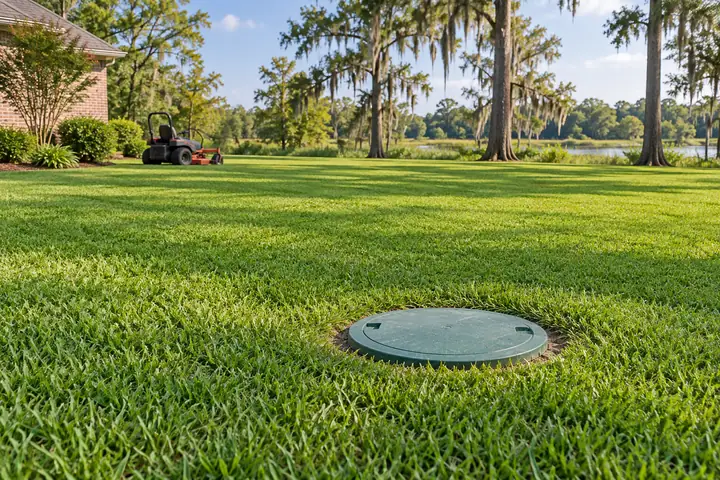
Identify the system before treating the lawn as open ground
If a property uses an onsite septic system, the owner should know the general locations of the tank, access risers, drainfield and any additional treatment components. Happy Grass does not locate, inspect, pump, repair or certify septic systems. We also do not probe the soil to find a buried lid. EPA homeowner information explains that the system includes a tank and a drainfield that treats liquid leaving the tank, and that the owner is responsible for its operation and upkeep. Start with records, a qualified septic professional and visible features—not assumptions based on where the grass looks different. Share a simple site sketch or photos before service. A clearly identified area lets the crew plan a conservative route; an unknown system means the safest choice may be to keep heavy equipment out of a larger portion of the yard. Never ask a mower operator to “find the tank” by driving until a tire feels a depression.
Keep lids and risers visible, secure and outside the wheel track
An access lid may be green, black, concrete or another material, and it may sit flush, slightly raised or below the grass. Its condition and fastening belong to the septic owner and service professional. Before mowing, confirm that visible covers are intact and secure without opening them. Mark low-profile lids with a method that will not be mistaken for loose debris. The route should pass around the cover rather than directly over it, even when the surface seems strong. Grass can be trimmed from a stable position with enough clearance to avoid striking edges, handles or fasteners. If a lid is cracked, displaced, soft underfoot or surrounded by subsidence, block access and contact a septic professional. Keep children and pets away. Happy Grass will not lift a cover or work over an opening. A neat ring of slightly taller grass is an acceptable temporary boundary when the alternative is risking a system component.
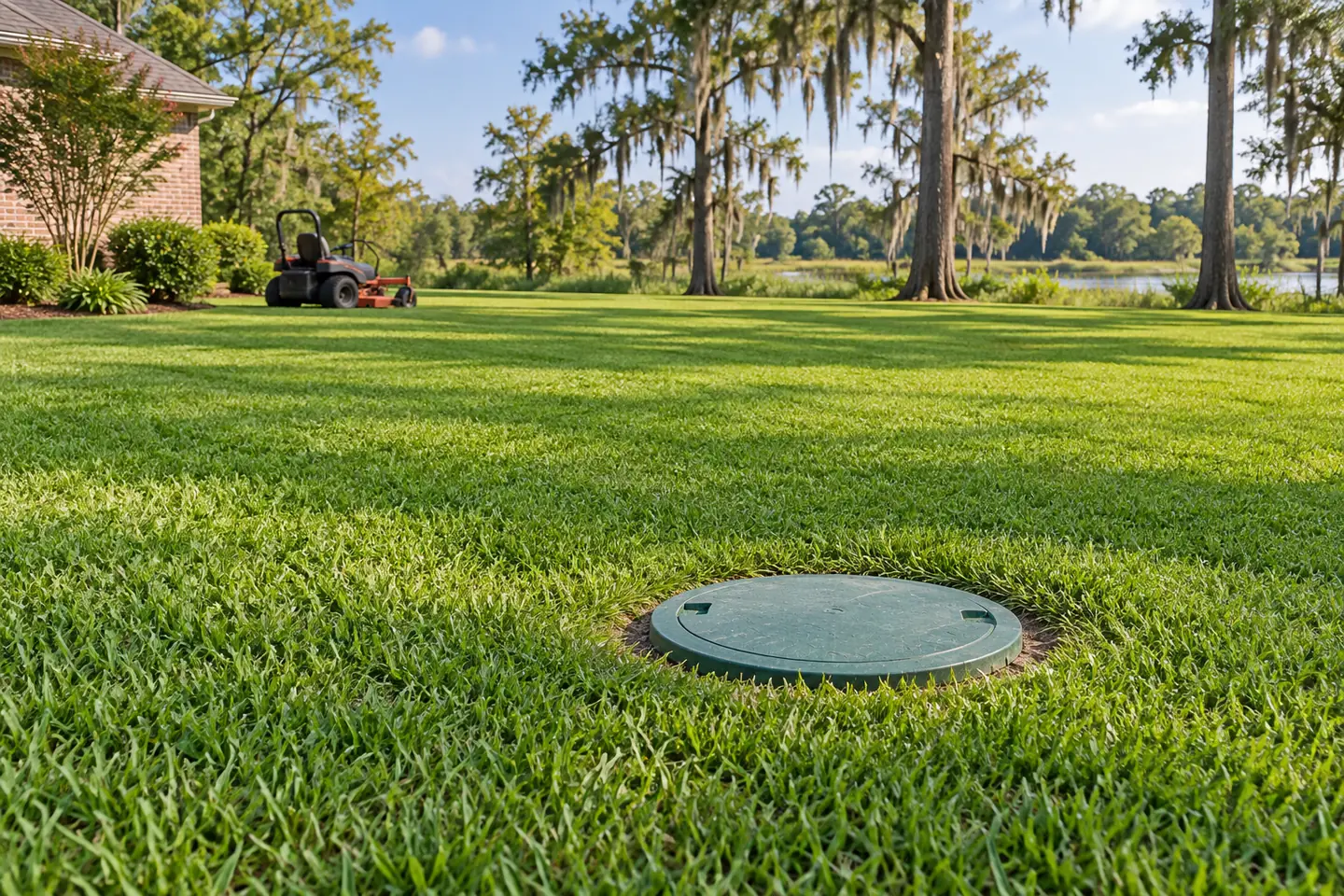
Treat the drainfield as a protected soil area
EPA guidance says not to park or drive on a drainfield. That warning matters because weight can compact soil or damage buried components, while excess water can interfere with treatment. A commercial lawn mower is not the same as a highway vehicle, but the crew still needs an owner-approved, firm route and should avoid unnecessary passes or turns over a known field. Do not use the drainfield as a staging area for trailers, materials, inflatable pools or event equipment. Keep roof drains, sump discharges and other concentrated water sources away as EPA recommends. If the field is saturated, smells strongly, shows surfacing liquid or has unusually lush stripes paired with wetness, stop lawn traffic and call a septic professional. Mowing does not diagnose system performance. The owner decides, with professional guidance, which equipment is appropriate for the site.
Read the lawn for access conditions, not for a diagnosis
Changes in color, height or moisture can have many causes: shade, rainfall, compaction, soil variation, irrigation or septic trouble. Happy Grass can report an observable condition such as “the ground was too soft to cross,” but that is not a system diagnosis. Before each visit, walk the route and check for depressions, new wet spots, settlement around a riser or evidence of recent excavation. A spot that supports foot traffic may still rut under equipment during a turn. Mark the full soft area rather than placing a flag at its center. If repairs were recently completed, ask the septic contractor when normal surface traffic may resume and whether special protection is needed. Freshly backfilled trenches can settle for months. Keep all service records and system questions with the qualified provider, while using lawn observations only to decide whether the visit can proceed safely.
Plan an entry route that does not cross the unknown
Many backyards can be reached only through a side gate, and the straight line from that gate may cross the septic area. If so, identify an alternate firm route or discuss a smaller equipment option before the appointment. Do not improvise by laying plywood over a lid or saturated ground. Boards can shift, concentrate weight and conceal the very feature the crew needs to avoid. Move vehicles, trailers, hoses and toys away from the chosen path. Secure pets and unlock the correct gate. Where no suitable route exists, Happy Grass may be able to maintain a reachable front or side section while leaving the isolated area for another plan. A partial, honest service is better than pretending every green space is accessible.
Keep flags meaningful and current
Temporary flags can mark a septic boundary, but too many unrelated flags create confusion. Use a simple instruction such as “yellow flags outline the no-equipment area; do not move them.” Do not reuse utility-locate colors casually, and do not depend on faded paint as a permanent system map. Lawn crews do not decide whether a flag marks a pipe, a survey point, irrigation or a pet fence. After a septic professional completes work, ask which markings should remain and transfer the important information to your property records. Remove obsolete loose markers only when you know their purpose and have authorization. During service, the crew should leave designated markers in place and use a generous buffer. A marker is a communication aid, not proof that every buried component has been located.
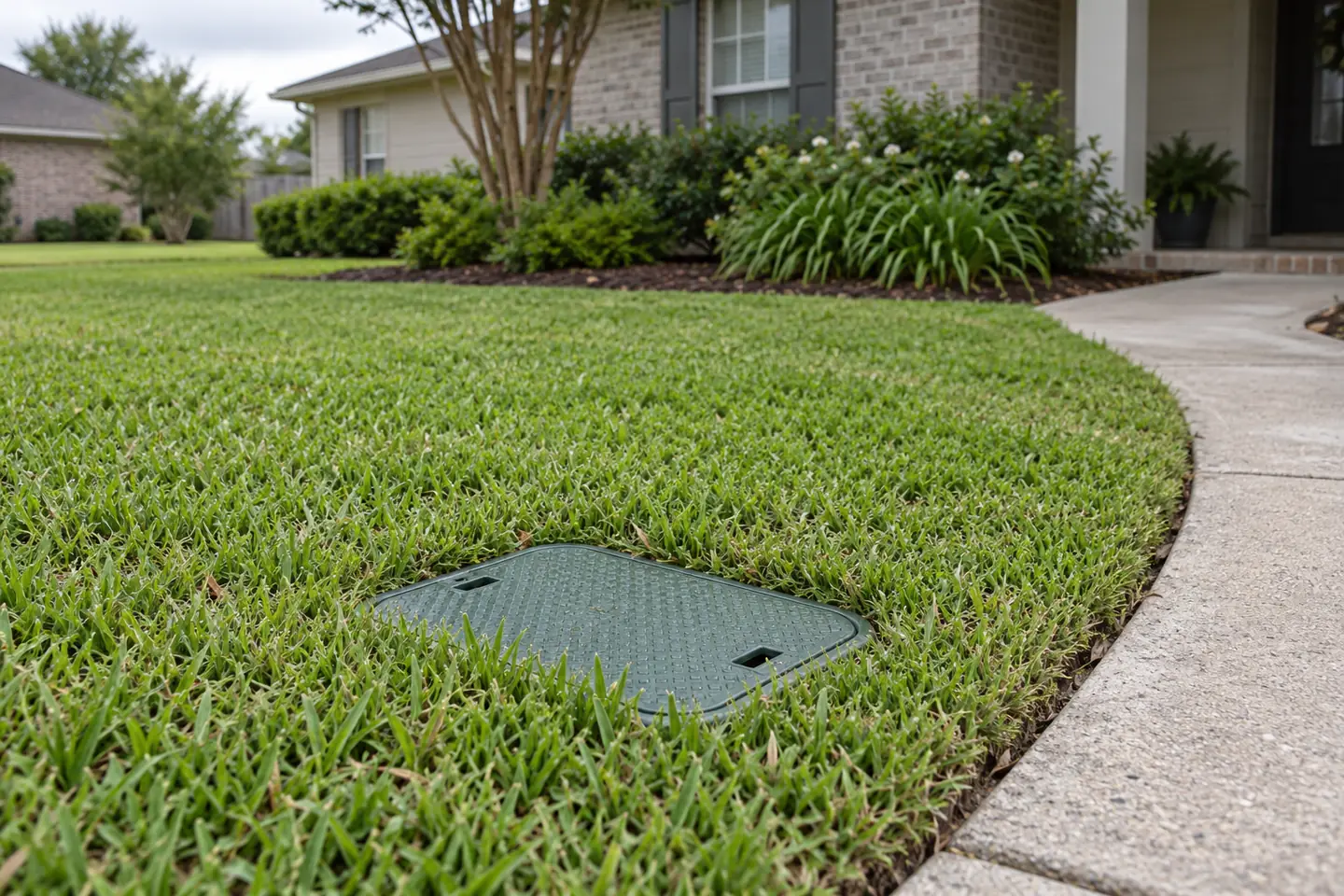
Coordinate pumping and repairs separately from mowing
Septic pumping trucks and repair crews need their own access and may use hoses, excavators or service vehicles. Do not schedule normal mowing through an active work zone. Wait until lids are closed, excavations are filled, tools are removed and the septic provider has released the surface. Then inspect for rocks, wire, plastic scraps or soil piles that could damage mowing equipment. Photograph the restored layout and note any new risers or changed boundaries. If the contractor instructs you to limit traffic, follow that direction even if the grass is ready to cut. Happy Grass can resume routine lawn work on the approved surface but cannot confirm that a repair was completed correctly. The cleanest sequence is professional septic work first, site cleanup second and lawn service last.
Avoid burying components under a cosmetic lawn finish
Trying to hide a riser with thick sod, mulch, a planter or decorative cover can make future access harder and create a mowing obstacle. Keep required components accessible according to the septic professional’s instructions. Do not add soil over the drainfield to level a dip without expert guidance, and do not plant woody landscaping where roots could affect the system. Ordinary grass may be an appropriate surface, but the maintenance plan must respect the actual design. Trim around visible items without filling vent holes, handles or seams with clippings. If a component sits higher than the surrounding grade, a defined hand-trimmed ring may be safer and more attractive than repeatedly scalping the mound.
Review the plan after heavy rain or flooding
South Louisiana storms can saturate soil, conceal lids under debris and change the stability of a route. EPA provides separate guidance for septic systems after flooding; owners should follow qualified public-health and septic advice rather than restarting normal traffic automatically. After heavy rain, postpone service in any area that feels unstable or shows standing water. Keep people away from surfacing wastewater and contact the proper authority or service professional. Once the site is safe, clear storm debris by hand only if it can be done without entering a hazardous area. Send Happy Grass an update before the next visit. We would rather reschedule or skip a protected section than add ruts, compaction or exposure risk to an already stressed system.
Keep system records with the responsible owner
Use reliable owner records or guidance from the appropriate system professional to establish which areas require a particular access arrangement. Keep the detailed system paperwork private and create a simple lawn-facing note that identifies the owner-confirmed boundary and any route still in question. Do not turn an approximate memory into a precise map.
If service or repairs have changed the property, ask for a fresh handoff before describing the affected grass as available. The lawn note should distinguish an open question from a released area and identify who can resolve it. Keep a later photograph with its date so it does not silently replace the source of the original boundary information. That gives Happy a practical scope discussion while system condition, underground layout and professional release decisions remain with the appropriate responsible source.