
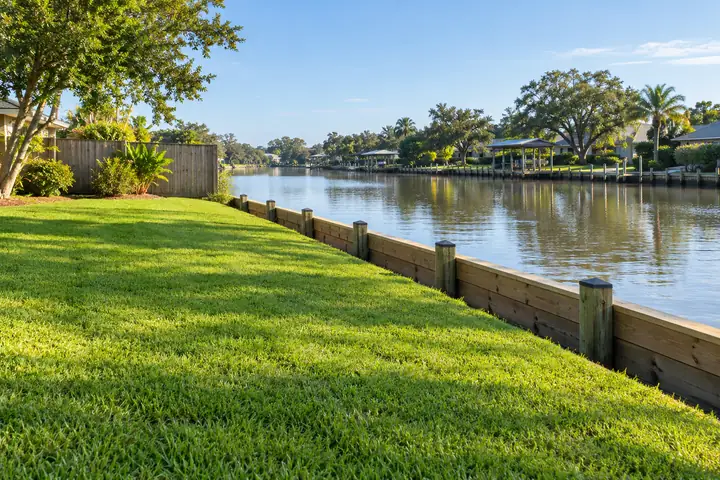
Water changes the meaning of an edge
A backyard canal or drainage waterway creates a boundary that deserves more care than a fence line. The visible grass may end at a timber, vinyl, concrete or sheet-pile bulkhead, or it may slope into an unprotected bank. Water level, soil saturation and erosion can change the safe route between visits. Happy Grass does not assume that every green strip near water is serviceable. Before the first visit, send a broad photo from the house toward the water, a side view along the edge and close views of any low, soft or damaged section. Tell us whether there is a fence, curb, planting strip or other permanent setback. Lawn service does not include bulkhead inspection, shoreline engineering, aquatic work or erosion repair. Our task is to maintain grass only where a stable, clearly defined route exists.
Set a boundary well back from uncertainty
The neatest visual line is not always the safest mowing line. If the ground narrows, slopes or becomes soft near a bulkhead, establish a conservative no-equipment setback rather than trying to cut to the last blade. A fence or planted strip can make that boundary obvious, but a temporary row of stakes near buried or shoreline structures should not be installed without appropriate review. Do not use loose rope where it can fall into grass. Mark the serviceable area in photos and describe it with fixed landmarks. Happy may use a different finish along the last accessible strip than across the open yard. A deliberate margin can still look tidy, especially when it follows a consistent curve or straight line.
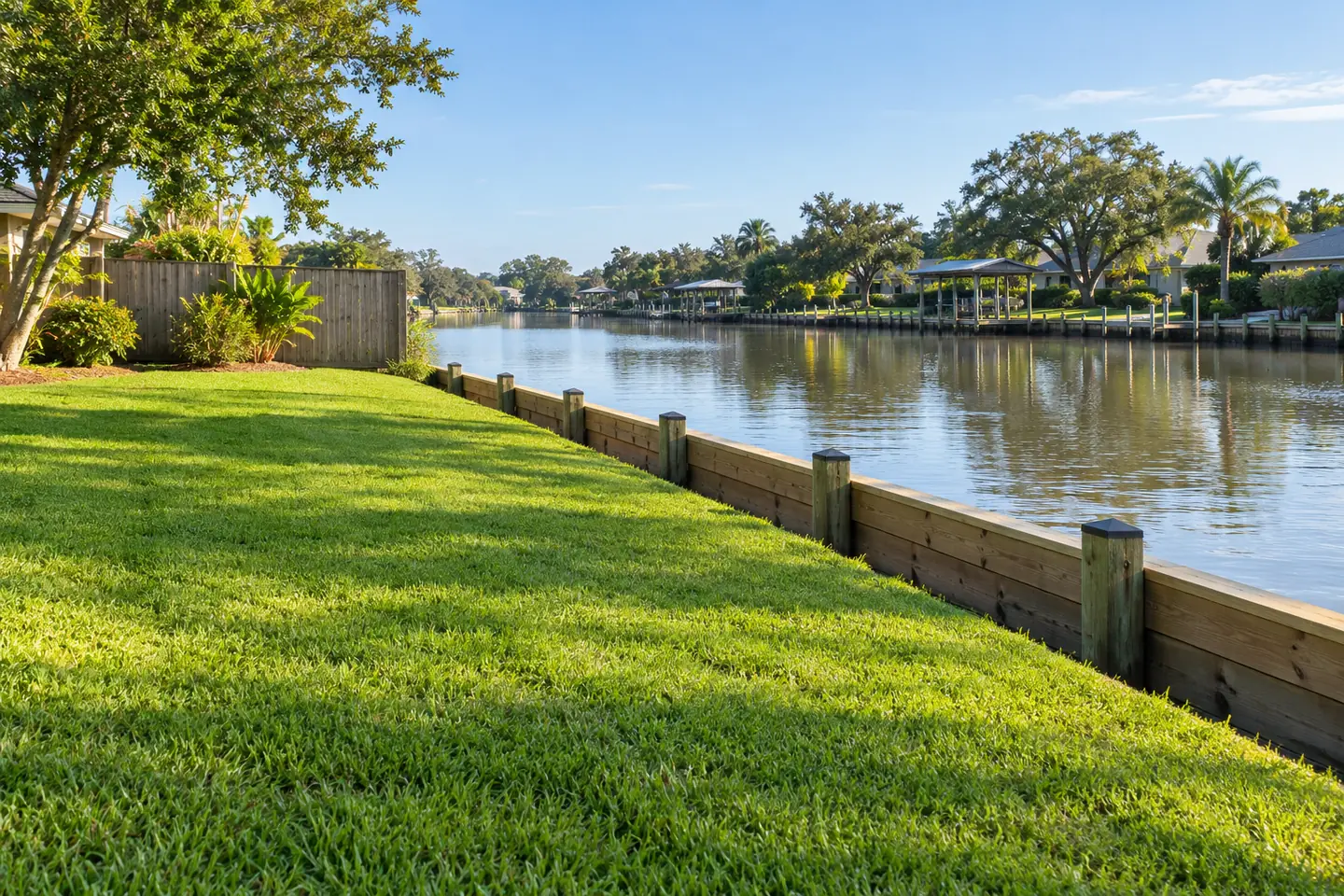
Look for changes after rain and high water
Heavy rain, high water and boat wake can change soil firmness even when the bulkhead appears unchanged. Before mowing day, walk only the area you normally use and look for saturated turf, fresh cracks, small drop-offs or soil pulling away from the wall. Do not lean over the edge or step onto a questionable cap board. If a footprint sinks or water squeezes from the turf, photograph the area and keep equipment back. Happy does not test bank stability. One wet corner can be excluded while a larger firm lawn remains serviceable, but the revised boundary must be communicated before arrival. Old photos are not enough after a significant weather event.
Keep the bulkhead top out of the route
Cap boards, tie rods, cleats, posts and fasteners may project above or behind a bulkhead. Do not ask lawn equipment to pass over them or use the top as a wheel guide. Keep fishing line, hoses, dock cords and garden tools off the lawn. A broken board, exposed metal or missing section changes the property condition and should be addressed by an appropriate professional before service near it. Happy will not remove hardware, step onto docks or blow clippings toward open water. The lawn boundary should stay on the yard side where equipment can turn without contacting the structure.
Protect the water from yard debris
LSU AgCenter yard-waste guidance emphasizes keeping grass clippings out of water. Plan the mowing direction and final blowing so loose material stays on the property and away from the canal. Remove hard debris before the visit and keep bagged waste on a stable surface outside the route. Happy does not clean water, retrieve floating objects or manage aquatic vegetation. If wind makes it difficult to keep clippings landward at a particular moment, a conservative uncut margin or adjusted timing may be more appropriate than forcing the edge. A tidy waterside lawn should not depend on sending the finish into the canal.
Separate lawn care from shoreline vegetation
Plants at the water's edge may serve landscaping, habitat or erosion-control purposes. Identify intentional vegetation and keep it inside the no-service zone. Do not expect the crew to decide which reeds, vines or volunteer plants should remain. Happy does not apply herbicide, remove aquatic plants or trim trees as part of routine mowing. If the shoreline planting has expanded into the lawn, send updated photos and define the current boundary. A clear planting edge allows the open turf to be maintained without turning a lawn visit into an ecological or construction decision.
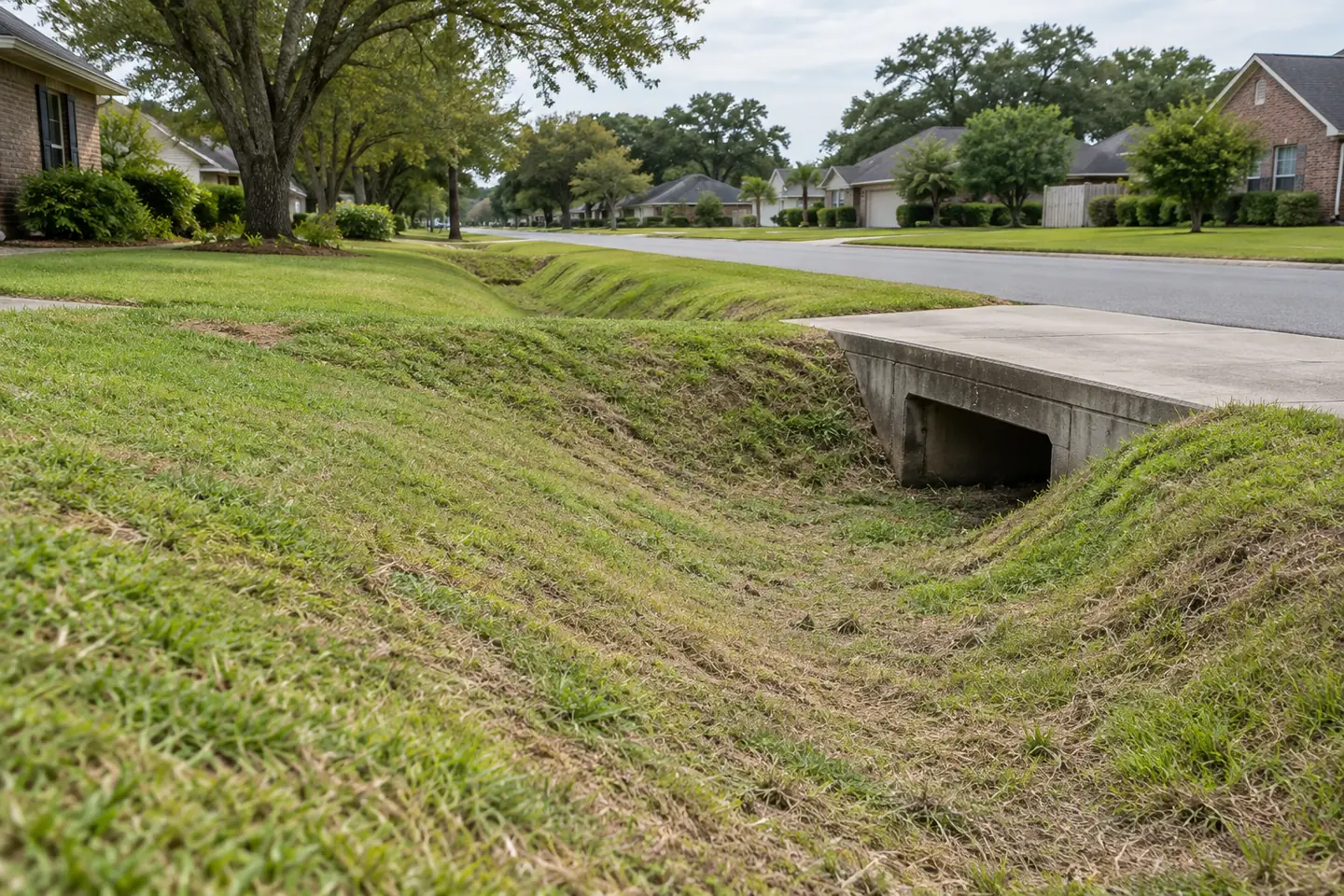
Plan safe access and turning space
A mower route needs room to approach, turn and leave without backing toward water. Narrow wedges between a house, fence and canal may be unsuitable even when their square footage is small. Show the narrowest point and any gate width in your quote photos. Keep boats, trailers, chairs and fishing equipment out of the route. If the only way to reach a strip is across a dock, unstable bridge or steep bank, exclude it. Happy does not transport equipment over unapproved waterside structures. The accessible footprint should be continuous from the property entrance to the work area.
Treat damage as a property issue first
Leaning walls, washed-out soil, voids, sinkholes and loose cap boards require attention beyond lawn care. Do not fill a void with clippings or hide it under mulch. Keep people and equipment away and contact an appropriate shoreline, drainage or structural professional. If a local permit or waterway rule applies to repair, the property owner is responsible for following it. Happy will not diagnose the cause or recommend construction. Once the work is complete and the ground stabilizes, send new photos so the lawn boundary can be reconsidered. The service plan should follow verified property conditions, not conceal them.
Quote the waterside lawn honestly
For a quote, estimate the open grass area and identify the water-side length separately. Include photos at normal water conditions and note recent flooding, repair work or soft spots. Show fences, gates and the equipment route from the driveway. Describe which strip is intentionally excluded and whether hand-detail expectations differ there. Avoid giving a precise water depth or structural rating unless it comes from a reliable professional record. Happy needs a visible, stable mowing footprint. A clear scope prevents the last few feet of lawn from dominating the price or creating an unsafe expectation.
Review the boundary throughout the year
Waterside conditions are not permanent. Compare the edge after major rain, seasonal water changes and contractor work. Keep the same conservative setback until there is a good reason and appropriate evidence to change it. Before each visit, remove gear, check firmness and report damage. After service, confirm clippings stayed landward and the boundary remains readable. A happy canal-side lawn is not one cut to the brink; it is one maintained consistently on solid ground while the water, structure and vegetation keep their separate roles.
Treat docks, ladders and mooring hardware separately
Canal-side yards may include dock approaches, ladders, cleats, ropes, utility pedestals or boat equipment near the grass. These features create their own access limits even when the bulkhead looks sound. Coil and secure loose lines outside the lawn route, but do not move active mooring equipment merely for mowing. Mark low cleats, brackets or anchors that are not obvious from the inland approach. Happy does not enter a dock, handle a vessel or maintain marine hardware. The quote should show where ordinary turf ends and the dock or working waterfront begins. Keeping that transition explicit prevents a narrow strip of grass from drawing equipment into a space designed for people or boats.
Use an inland turnaround point
Equipment needs a place to slow, turn and leave without backing toward water. Identify that point well inland from the agreed exclusion line and keep it free of chairs, fishing gear, planters and stored materials. A pass that could be cut only by turning on a cap, deck or soft bank should be excluded. If the yard narrows between the house and canal, measure and photograph the usable route rather than assuming the open view means there is room. The service plan should favor a simple forward path and conservative turns. Appearance at the last few inches of an edge never outweighs stable footing and a reliable exit.