
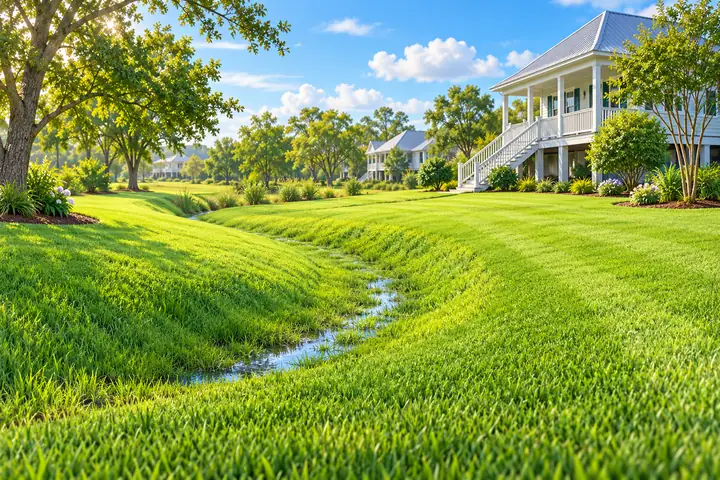
Read the low line before choosing the route
A drainage swale is a broad, shallow dip intended to guide surface water. On a dry afternoon it may look like an ordinary sweep of grass; after rain it can reveal a damp center, flattened blades or a narrow line of sediment. Walk the area before the first service and photograph it from both ends so the direction and width are visible. Note where it begins, where it leaves the property and whether a driveway, fence or bed interrupts it. Happy Grass needs the serviceable turf boundary, not an engineering diagnosis. We do not reshape grades, approve drainage construction or promise that a channel is sized correctly. Our practical goal is to recognize the feature, avoid turning it into an accidental rut and keep its path understandable while the surrounding lawn is maintained.
Separate a grassed swale from a roadside ditch
Some West Bank properties have a gentle lawn swale inside the yard, a roadside ditch near the street or both. The distinction matters because side slopes, public rights of way, culverts and traffic exposure can change access. A lawn swale may be shallow enough to cross when dry, while a roadside ditch may require a conservative edge that never places equipment in the bottom. Do not describe either feature only as “the low spot.” Show Happy a broad photo with the house or driveway for orientation, then a side view that shows the slope. If you are uncertain who controls the area near the road, check with the responsible local authority or property professional. Routine mowing does not establish ownership, drainage responsibility or a safe crossing for every condition.
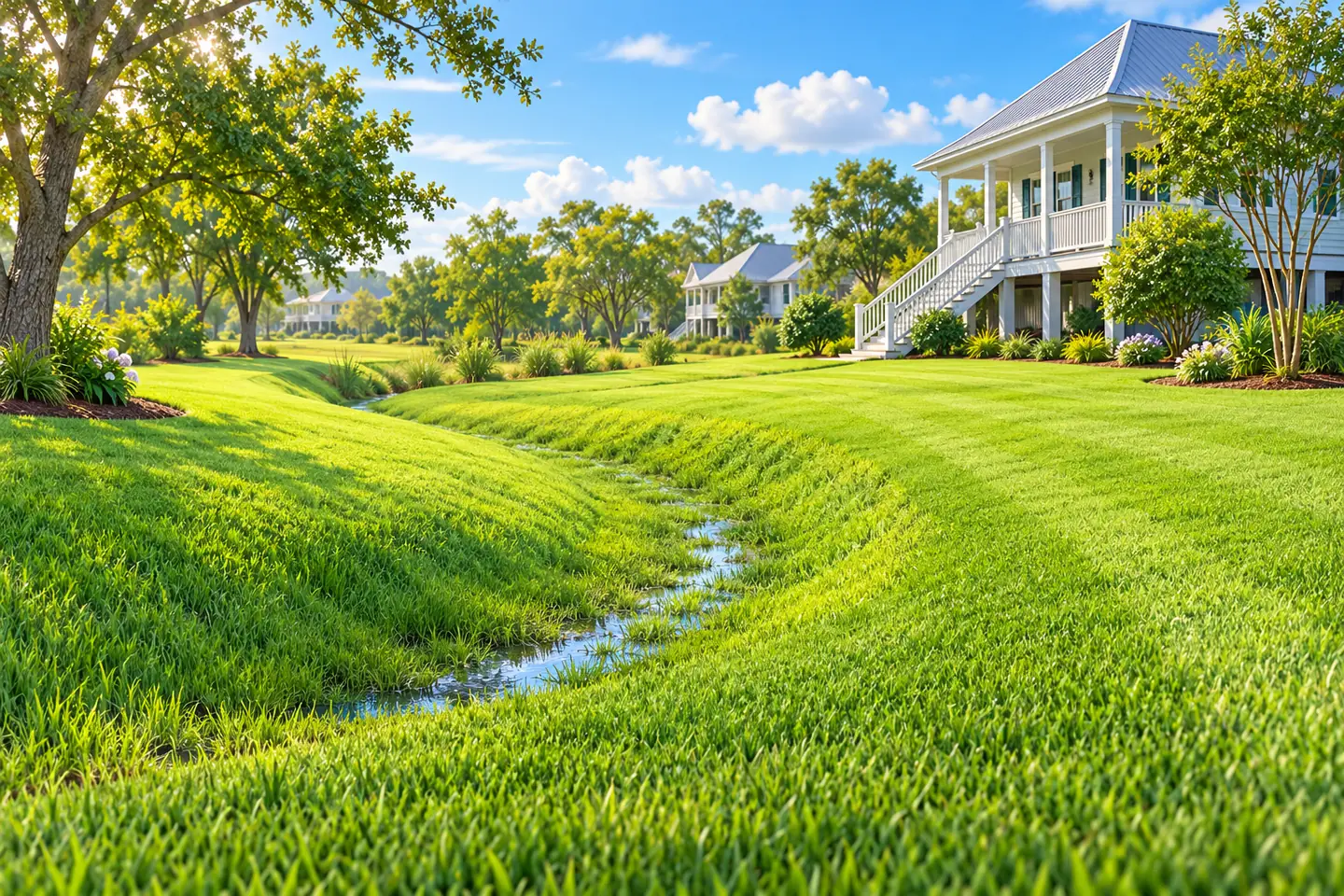
Let recent rain change the decision
Firm turf at breakfast can become soft after an afternoon shower, especially where runoff collects from roofs, patios or neighboring lots. Check the swale close to service time rather than relying on last week’s condition. A useful check is visual and gentle: look for standing water, glossy mud, fresh footprints or soil pressing up around a shoe. Do not drive a mower into the channel just to test it. If the center is wet, send a current photo and keep that band out of the equipment route. The higher lawn may still be serviceable with a revised boundary. Waiting on one soft channel is different from declaring the entire yard too wet, and that distinction helps Happy make a clear, property-specific plan.
Keep the outlet visible and open
The end of a swale may meet a curb opening, grassed ditch, drain inlet, canal-side buffer or another low area. Leaves, toys, bags, pots and loose branches can hide that transition. Before the visit, remove ordinary movable objects you own and point out fixed structures. Do not clear an unknown grate, enter water or alter a public outlet for lawn-service convenience. If storm debris, erosion or a collapsed edge has changed the path, photograph the condition and contact the responsible authority or qualified drainage professional as appropriate. Happy Grass can follow a defined mowing boundary, but we do not restore outlets or certify water flow. A visible ending helps the crew avoid pushing clippings or equipment into a place that needs a different kind of attention.
Protect the swale’s smooth grass cover
Healthy turf can help hold soil and slow surface flow, which is why scalped ridges and repeated wheel tracks are unhelpful in a grassed channel. The LSU AgCenter notes that swales can divert runoff and that dense turf or groundcover can help capture rain and reduce erosion. In lawn-service terms, that supports a simple approach: avoid cutting the low center too short, avoid tight turns on tender slopes and do not force a pass when traction is uncertain. Existing bare patches, wash lines or thin grass should be photographed before work. Happy does not seed, sod, fertilize or reconstruct the channel. We can maintain accessible grass around the condition and keep a conservative edge until the owner’s drainage or landscape plan addresses the vulnerable spot.
Mark hidden transitions without creating another hazard
A swale can flatten near a driveway and deepen again behind a fence, making the route hard to read from mower height. Temporary markers can help if they are placed on firm ground beside the feature, remain visible and do not interfere with utilities or traffic. Never drive stakes into an unknown corridor. If 811 flags, survey markers or contractor stakes are already present, leave them alone and tell Happy what project they support. Bright cones placed outside the grass path may work for a one-time change, while a consistent bed edge or photograph may suit a recurring route. The marker is a communication tool, not permission to cross. The actual decision still depends on slope, moisture, obstructions and the equipment appropriate to the accessible lawn.
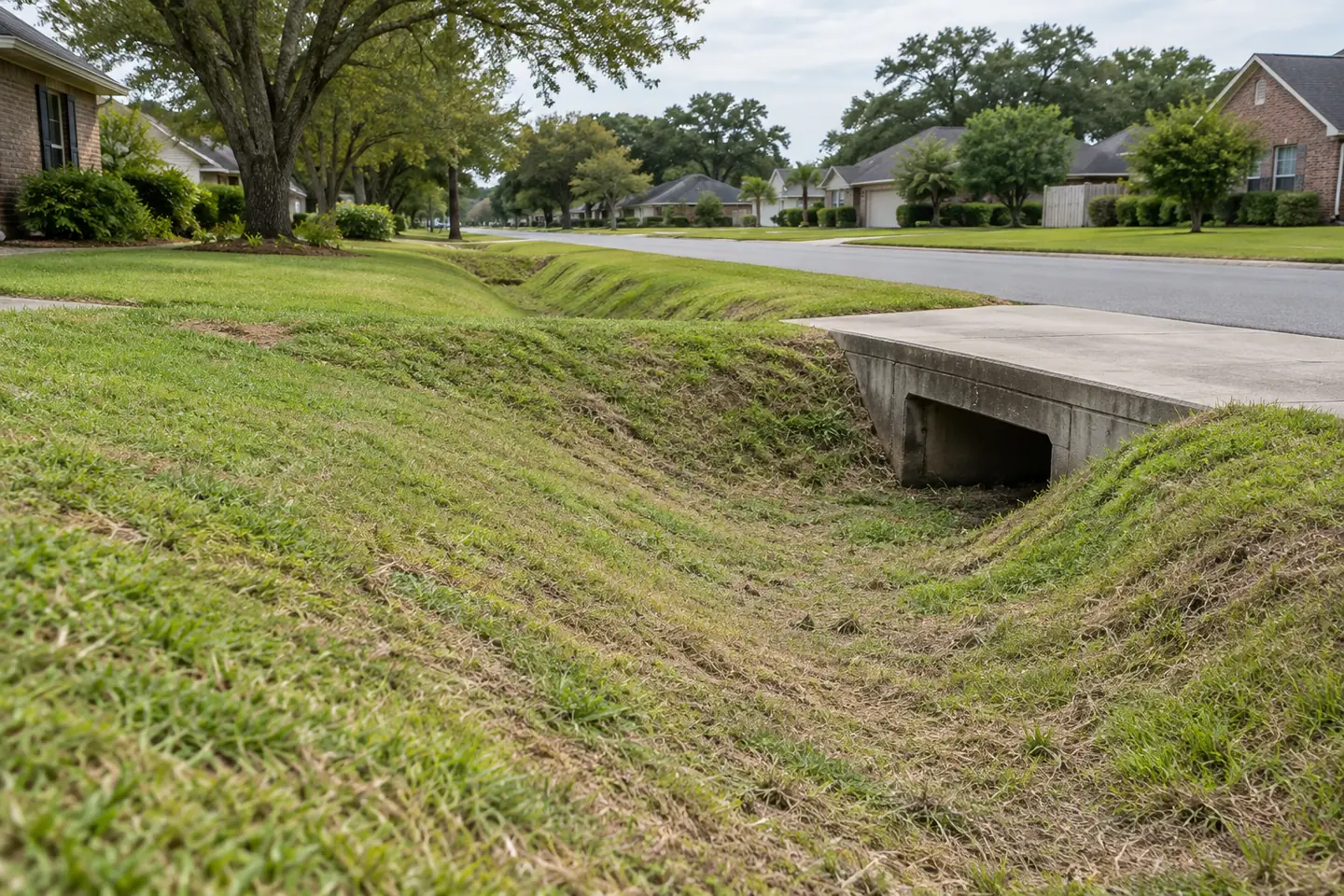
Watch for crossings and small bridges
Stepping stones, pipe crossings, footbridges and culvert ends sometimes span a low channel. Their presence does not automatically make them equipment routes. Record the width, surface, railings, soft approaches and any drop beside them. Do not assume a lawn mower belongs on a decorative bridge or narrow slab because a person can walk across it. Happy will not test load capacity, repair a crossing or move heavy bridge sections. If the only backyard access depends on an uncertain crossing, that needs to be discussed before a quote. A safer plan may use a gate from another side, divide the service footprint or exclude the far section until the property owner provides a reliable route. Clear access is part of the lawn, not an afterthought.
Explain what changed after earthwork
New drainage work can leave fresh fill, sod seams, erosion blankets, pipe outlets or temporary wattles in and beside the swale. Treat the entire disturbed strip as changed ground even when new grass looks green. Send photos of the work limits and identify the contractor’s no-traffic instructions. Do not remove blanket mesh, staples, flags or sediment controls to make mowing easier. Happy Grass does not provide overseeding, grading or drainage installation. We will keep ordinary equipment out of protected ground until the property owner or responsible contractor releases it and the footing is visibly stable. A short written note such as “new swale from the back corner to the driveway, no equipment inside the flagged band” is more useful than asking a crew to interpret active construction on arrival.
Build a quote request around the actual channel
For a useful quote, include one photo looking along the swale, one across it and one at each outlet or crossing. Note whether water remains after normal rain, whether the center feels soft, and which gate leads to the higher ground. Mention culverts, grates, utility marks, exposed soil and recurring debris. You do not need exact elevations or technical drainage terms. Happy mainly needs to see where mowable turf ends, whether the route changes with weather and how the crew can reach each section without improvising. If a local authority, drainage contractor or property manager has given you instructions, summarize the parts that affect access. This information supports a repeatable maintenance scope without turning lawn service into a drainage evaluation.
Review the finish after the first dry-weather visit
After the first service, inspect the swale in daylight. Look for fresh ruts, scalped high shoulders, clippings piled at the outlet or a boundary that feels too close to soft ground. Also notice whether the higher grass was reached without crossing the lowest point. Send one focused photo if you want the recurring edge adjusted. The next rain is another useful review: water should not be judged by lawn appearance alone, but you can see whether ordinary clippings or moved objects are obscuring the route. Conditions can change through settling, storms and neighboring projects. A happy recurring plan keeps the channel visible, respects wet days and treats new erosion or obstructions as a fresh conversation rather than quietly expanding the mowing path.