
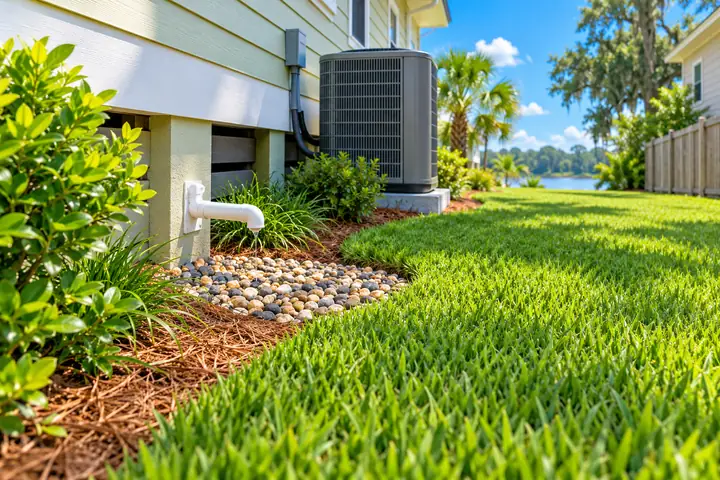
Identify the outlet without handling it
An HVAC condensate outlet may be a short PVC pipe near the foundation, a line beside the outdoor unit or a termination above gravel, concrete or a drain. It can resemble irrigation pipe or an unfinished stub, especially behind shrubs. Before the first visit, ask the property owner or HVAC professional which visible outlet serves the cooling system. Photograph it from the lawn and from the side so height and landing surface are clear. Do not pull, cap, cut or reposition the pipe. Happy Grass treats an identified condensate line as fixed mechanical infrastructure. We maintain accessible grass around a conservative boundary; we do not determine whether the installation is correct, clear clogs, test equipment or redirect discharge.
Expect more water in humid weather
Cooling equipment removes moisture from indoor air, and the U.S. Department of Energy notes that significant condensate can form in hot, humid climates. That makes the outlet condition change with weather and system use. A spot that is dry during a mild week may stay damp when air conditioning runs longer. Tell Happy whether the line drips occasionally, flows steadily or leaves a consistently soft patch. This is observation, not diagnosis. If the amount changes suddenly, water backs toward the building or you suspect a system problem, contact a qualified HVAC professional. Lawn service should not be used as a test of drainage performance. Our decision concerns only whether the nearby turf and access route are firm and visible at service time.

Give the water a readable landing area
A stable gravel splash zone, drain inlet or other owner-approved termination can make the boundary obvious. Grass growing directly over the outlet can hide the opening and leave the discharge point hard to find. Do not pile mulch, soil or decorative stone against the pipe without guidance from the responsible professional. Move pots, hoses and toys that block the view. If loose pebbles have scattered into the mowable turf, collect them before service when it is safe to do so; hard objects in grass can be struck and thrown by lawn equipment. Happy will not rebuild the splash area, but a clean, visible transition between pipe, landing surface and grass allows a more predictable route.
Keep damp footing out of the equipment path
Condensate can create a narrow soft strip even when the rest of the yard is dry. Look for dark soil, flattened grass, algae on hard surfaces or footprints that remain. A mower should not be driven through the patch simply because it is small. Mark the boundary beside the damp ground and send a current photo. If the higher turf can be reached from another direction, Happy may be able to service it without crossing the outlet area. Where the only access passes through saturated soil, the visit or that section may need adjustment. We do not promise that avoiding one pass will solve the moisture condition; the property owner and HVAC or drainage professional remain responsible for the discharge arrangement.
Distinguish the line from downspouts and irrigation
Several water features can meet along one side wall: roof downspouts, rain-barrel overflow, irrigation valves, hose bibs and condensate drains. Each has a different purpose and may behave differently after rain. Label them in your own service notes instead of telling the crew only that “the pipe is by the AC.” A broad photo can show all fixed features, while close views clarify which outlet matters. If you are unsure, ask the professional who installed or services the equipment. Happy does not trace buried lines or open boxes to identify them. Accurate identification prevents a movable downspout extension from being mistaken for a mechanical drain and keeps the true condensate outlet from disappearing behind routine yard items.
Preserve clearance around outdoor equipment
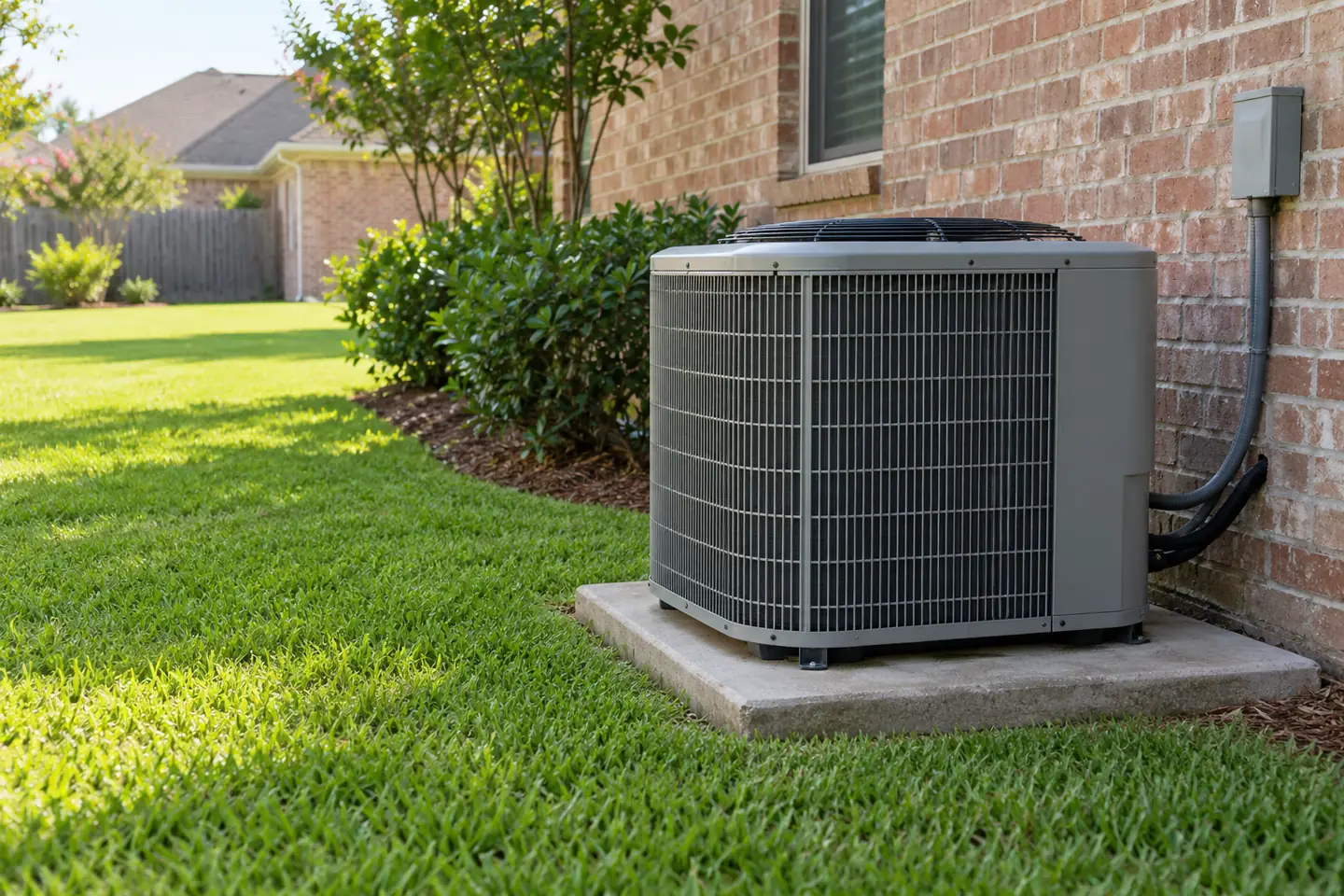
The condensate outlet may sit beside an outdoor condenser, disconnect box or refrigerant lines. Those components need their own protected space. Keep clippings, storage, vines and decorative panels from crowding the equipment, and follow manufacturer or HVAC guidance for required clearance. Happy Grass will not lean tools on the unit, trim attached wires or move mechanical lines. If grass extends into a narrow pocket behind the equipment, decide with the property owner whether that area belongs in the serviceable lawn or in a defined non-mow border. A close finish is never worth contact with a line set, drain, wiring or cabinet. The quote should show the entire mechanical corner, not only the open grass in front of it.
Treat a damaged or blocked outlet as a stop point
A cracked fitting, disconnected line, missing support, overflowing pan indication or water entering the building is not a lawn obstacle to work around casually. Keep the area clear, contact a qualified HVAC professional and update Happy before the visit. Do not ask a lawn crew to tape the pipe, push a rod through it or choose a new discharge direction. DOE installation material describes routing condensate to a suitable termination away from places where it causes a nuisance; evaluating that arrangement requires mechanical and site knowledge beyond mowing. If the rest of the lawn remains accessible, Happy can discuss a temporary exclusion. The damaged corner stays outside the route until the responsible professional addresses it and the footing is stable.
Note underground or pumped sections
Some systems use a condensate pump or route piping into a drain, and only a short section may be visible outdoors. That does not make the line a step, handle or edging guide. Record exposed supports, covers and any power cord without moving them. If a pump discharge hose crosses grass temporarily, remove it only if it is your movable item and the HVAC professional says that is appropriate; otherwise exclude the crossing and explain it. Happy does not operate pumps or unplug equipment. If the route changes seasonally, send an updated photo before the next service. A recurring lawn plan works best when mechanical components stay in a consistent, protected position.
Write a quote note that separates responsibilities
A helpful note might say: “White condensate outlet on the east wall, two inches above a gravel bed; grass begins beyond the stone; area stays damp during heavy AC use.” Add a broad photo, a close outlet view and a ground-level photo of the landing area. Mention whether the side yard has another entrance and whether the pipe location changed after HVAC service. You do not need to estimate flow or name equipment models. Happy needs a stable no-contact boundary and a route to the mowable turf. State plainly that any drain cleaning, extension or repair belongs to the property owner’s HVAC professional. This keeps expectations friendly and prevents a routine lawn quote from absorbing mechanical work it cannot responsibly include.
Recheck after HVAC service or a weather shift
An HVAC appointment can replace a line, add supports or move the outlet. A long humid spell can also expose a soft area that was not obvious during the initial quote. Review the corner after either change. Remove only ordinary movable objects, preserve professional tags and photograph new piping before the next lawn visit. After service, look for contact marks, displaced stone or clippings packed against the opening. If the boundary needs adjustment, send a close photo rather than waiting for the next arrival. The simplest recurring routine is to keep the outlet visible, the landing free of loose hard debris and the grass route firm. Happy handles the lawn; the HVAC professional handles the system.
Account for a second-floor or attic overflow line
Some homes have more than one condensate-related outlet, including a secondary line positioned where dripping can signal that professional attention is needed. Do not assume every pipe near the eave serves the same purpose or route water toward it from the lawn. Photograph each visible termination and ask the HVAC professional which one is expected to operate. Happy should know if water can fall onto a side-yard passage, but we will not interpret the signal or climb to inspect it. Keep the landing clear, report unexpected discharge to the responsible professional and adjust the surface route only after the mechanical issue is understood.