
Walk the full bed edge before mowing day
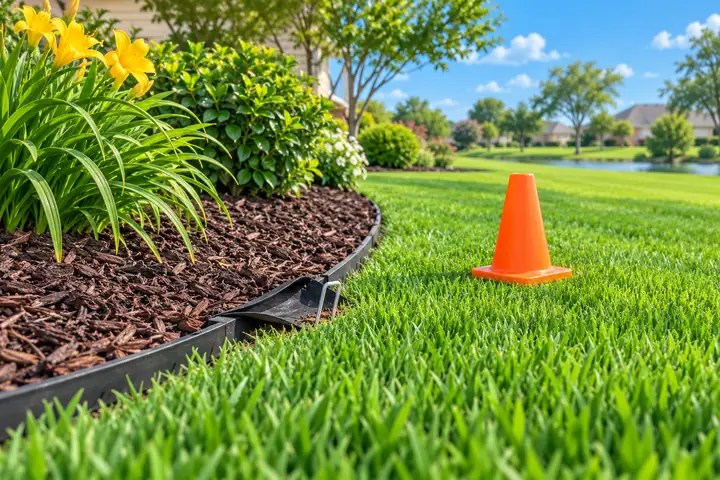
Lifted fabric rarely appears in only one place. Follow the border around the entire bed and look for curled corners, torn mesh, exposed staples, loose plastic edging and rocks that have rolled into the turf. Photograph each issue from above and from mower height. Do not push a pin back with your shoe unless you own the installation and know the correct repair. Happy Grass will treat loose material as a no-contact area. Routine lawn service includes the agreed grass work, not fabric replacement, edging installation or bed renovation. A careful inventory prevents a dark strip from disappearing in shade and being discovered by moving equipment.
Understand why thin material is hard to see
Landscape fabric can blend into wet soil, dark mulch and shadows. Narrow wire staples can sit almost flush and still catch a wheel, trimmer line or blade. The CPSC advises removing wire, metal and other objects from a mowing area because struck debris can cause serious injury. That principle applies even when the object began as landscape hardware. Keep children and pets away from exposed pins, place a visible marker on firm ground beside the spot and tell Happy before the visit. Do not cover the hardware with mulch or clippings to make the bed look finished.
Create a temporary lawn boundary
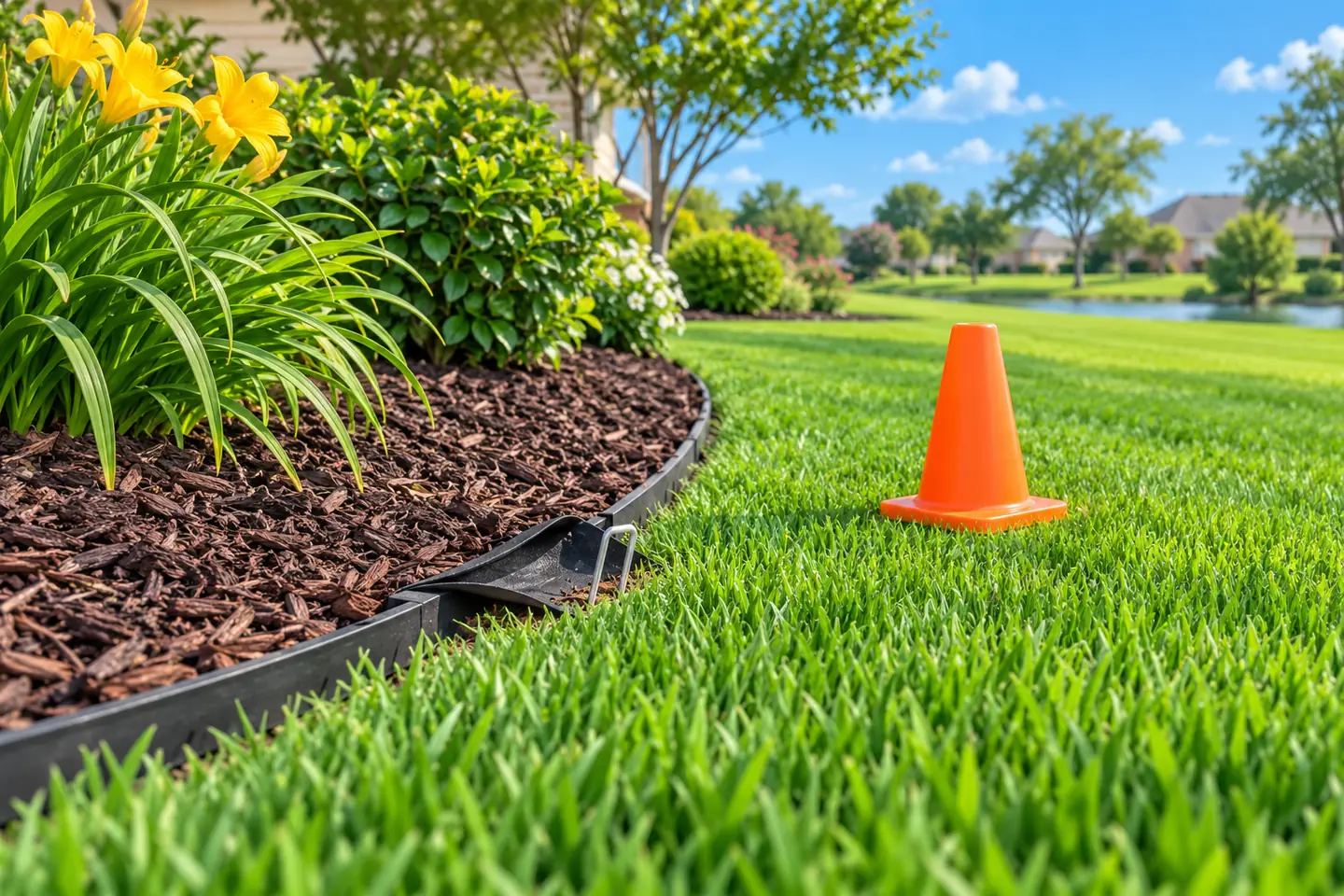
Until the border is repaired, use a simple exclusion that keeps equipment away from every loose edge. A small cone or bright pot placed outside the affected strip can work if it does not block access, but the photo and written note are still important. Do not drive a marker stake near unknown utilities. If fabric has blown several feet into the lawn, secure or remove it through the property owner’s landscape plan before service. Happy will not hold material aside while passing machinery. A wider unfinished grass margin for one visit is safer and more honest than trimming directly against hidden metal.
Separate mulch movement from fabric failure
Heavy rain, pets, birds and foot traffic can move mulch without damaging the fabric underneath. Conversely, a bed may look full while a torn sheet protrudes beneath the edge. Rake or reposition mulch only if that is part of your own property care and you can see the hardware. Do not ask the blower to send scattered mulch back across an uncertain border; stones and hard pieces need to be removed from mowable grass. Happy’s finish can keep ordinary clippings off the bed where practical, but detailed mulch placement and fabric inspection remain separate. Tell us whether the border contains wood chips, rock, shell or another material because loose hard pieces change the route.
Watch plastic and metal edging too
Landscape edging may heave, crack or separate from its connectors. A raised metal strip can be sharp, while brittle plastic can leave pointed fragments. Mark the entire damaged section, not just the highest point. Do not hammer, cut or straighten it during the lawn visit. Arrange repair with the owner or landscape professional, and keep the surrounding grass excluded until the edge is stable and visible. If the bed boundary shifts every season, consider a property-level redesign rather than relying on repeated close trimming around failing hardware. Happy can follow a sound edge; we do not make the edge sound.
Treat erosion blankets as a different system
Not every exposed mesh is weed-control fabric. New slopes and disturbed soil may use erosion-control blankets with staples, and those materials can be part of a contractor’s active stabilization plan. Do not pull them or assume they are disposable. Identify who installed the material and preserve the entire protected zone. Happy Grass does not mow over blanket mesh or remove its anchors. A permanent garden bed and a temporary erosion project need different handoffs even if both show black or tan netting. When uncertain, photograph the full area and exclude it until the responsible professional identifies the system.
Keep roots and irrigation parts in view
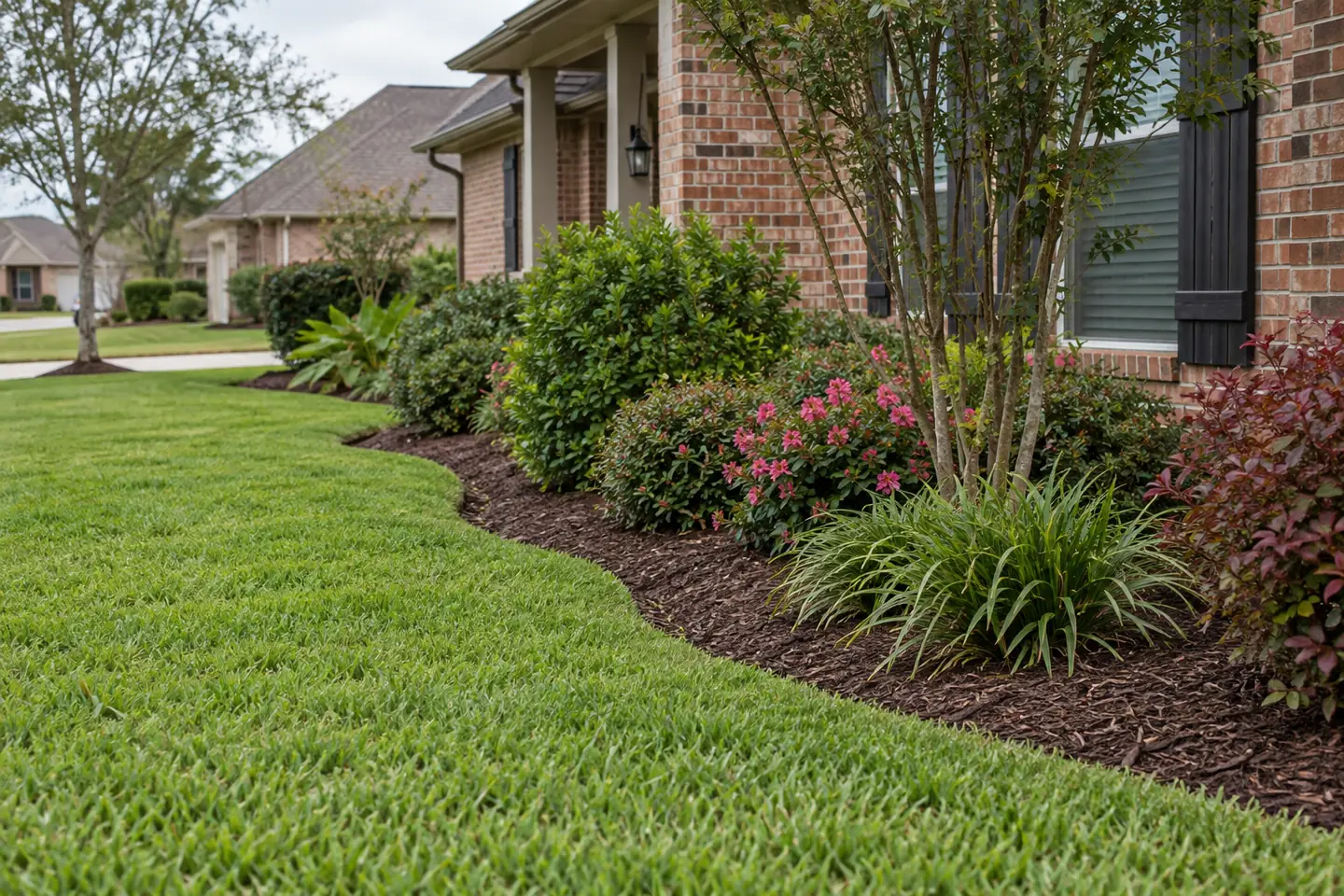
Fabric often surrounds shrubs, drip tubing, lighting wire or irrigation emitters. A lifted corner may expose more than a staple. Do not tug it free or cut through unknown lines. Show Happy the visible components and keep the bed side of the boundary out of routine mowing. If roots have pushed the edge upward, that may require an arborist or landscape decision rather than a quick pin. We do not diagnose plant roots, adjust irrigation or move lighting cable. The service route should use only the open turf, with enough room to avoid every visible and suspected component.
Repair before the problem grows
Wind and mower airflow can enlarge a small lifted corner. Schedule proper repair rather than expecting the lawn crew to remember an invisible pin indefinitely. The repair should secure or remove loose hardware, restore the intended edge and clear hard debris from grass. Follow product guidance and check for buried utilities before any work that penetrates soil. Once finished, photograph the border in daylight and note whether new pins remain close to turf. Happy can then review the recurring trim line. A documented handoff is better than telling the crew that “someone fixed it” without showing what changed.
Prepare a quote with close and wide views
Include one photo of the entire bed, close views of each loose edge and an image showing the gate-to-lawn route. Mention the border material, whether stone or shell has scattered, and who will handle repair. If several beds have the same condition, count and label them. You do not need to identify a fabric brand or guess how long it has been exposed. Happy mainly needs the mowable boundary and any section that remains excluded. This also keeps landscape repair expectations out of the quote while giving the accessible grass a clear scope.
Recheck borders after storms and bed work
Mulch delivery, planting, pressure washing and heavy rain can disturb a previously stable edge. Walk the beds before the next service and look for new pins, plastic scraps or fabric tails. Remove only ordinary loose debris that is safe and yours to handle. If a landscaper is still working, preserve their markings and wait for a release. After mowing, look for displaced material or a finish that needs a wider margin. A happy recurring routine keeps the edge visible, repairs hardware promptly and never uses grass height to conceal a sharp or entangling object.
Pay attention at corners and narrow side yards
Fabric often lifts first where a bed turns sharply, a downspout crosses the border or a gate forces foot traffic onto the edge. These are also places where equipment has less room to adjust. Photograph each corner from the approach, not only straight down, so Happy can see whether the route narrows before the loose material. Move ordinary pots and hoses off the passage. If the only entrance requires crossing a damaged border, repair it before service rather than expecting a wheel to bridge the fabric.
Keep discarded material out of the service area
A removed sheet, roll of edging or bucket of used staples should not wait on the lawn for later disposal. Bag or store pieces according to the owner’s cleanup plan, keeping sharp hardware contained. Do not burn landscape fabric or leave scraps where wind can spread them. Happy does not haul landscape-renovation waste. If a contractor is responsible, ask them to clear the route and confirm completion. The lawn is ready only when the mowable surface is visible and free of loose construction material.
Record repairs that leave hardware near the surface
After a border is repaired, ask the installer whether pins, connectors or overlap seams remain close to the grass. Take a low side photo before mulch hides them. The new edge may look smooth from above while still requiring a wider trim margin. Happy will follow the documented boundary but will not verify installation depth or product suitability. If a later storm exposes hardware, treat it as a new defect rather than assuming the recent repair makes contact safe.