
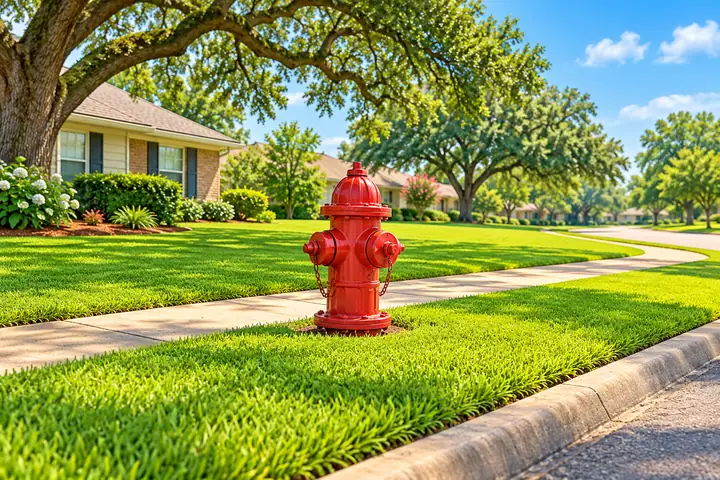
Confirm who controls the hydrant area
Hydrants may sit in a public right of way, utility easement, private development or other controlled space. Ask the property owner, water provider or fire authority who is responsible for vegetation and maintenance before adding the area to a lawn quote. Happy Grass does not inspect hydrants, authorize work on them or determine ownership. Photograph the hydrant in relation to the curb, sidewalk, driveway and property line. We can maintain only the grass that the responsible party allows and that is safely accessible. Do not paint, open, test or attach anything to the hydrant.
Keep the approach open from every direction
Fire crews need to see and reach a hydrant quickly. The U.S. Fire Administration’s water-supply guidance emphasizes unobstructed space and visible outlets, though exact local requirements can vary. Do not place shrubs, fences, planters, decorations, trash carts or parked vehicles in the approach. Move ordinary personal items before service. Happy will not relocate utility barriers or trim unauthorized vegetation to create code clearance. If the area is already obstructed, contact the responsible authority for instructions. Lawn care should preserve an open route, not define emergency-access standards on its own.
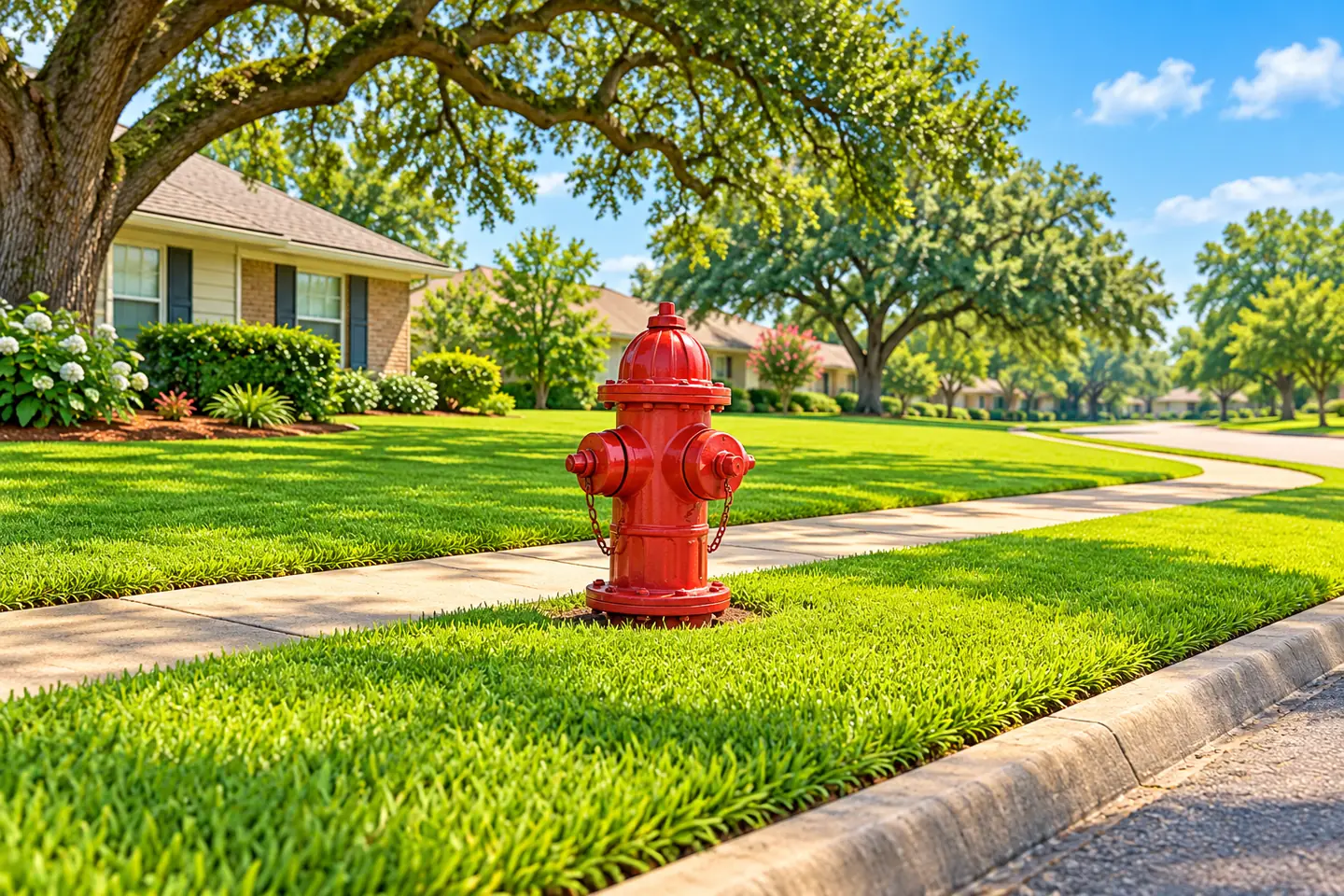
Never use the hydrant as a tie point
Do not wrap hoses, dog leashes, extension cords, holiday lights or plant supports around a hydrant. Remove personal items and keep them stored elsewhere. Happy Grass will not detach equipment from emergency infrastructure or work while a line remains connected. Even a lightweight decoration can obscure fittings or create a trip hazard. If someone else has attached a tag, lock or official device, leave it in place and notify the responsible utility if you have concerns. The simplest lawn plan treats the hydrant and all official accessories as a protected island with clear grass around it.
Protect caps, outlets and operating parts
Grass and clippings should not cover caps, chains, operating nuts or identification markings. At the same time, trimming equipment should never contact the hydrant body. Define a conservative edge that leaves all fittings visible. Do not ask the crew to cut vines off the hydrant, scrape paint or remove an official marker. If corrosion, leakage, damage or a missing cap is visible, keep away and report it to the water provider or fire authority. Happy does not diagnose or repair hydrants. We can adjust the lawn route while the responsible agency handles the equipment.
Notice grade changes around the base
Soil can settle, wash away or build up around a hydrant, changing both footing and the height of its lower outlets. Photograph any depression, exposed concrete, loose stone or standing water. Do not fill or excavate around the base without authority. A mower should not ride onto unstable soil just to reach a narrow ring of grass. Mark soft ground and tell Happy whether the sidewalk or curb offers another approach. The U.S. Fire Administration guide discusses outlet height and drainage as installation concerns; those are reasons to leave grade decisions with the responsible utility, not solve them through lawn work.
Coordinate corner lots and roadside exposure
Hydrants often sit on corner lots or near a road where traffic, pedestrians and multiple street edges affect service. Show where the crew can park without blocking the hydrant and which side of the sidewalk belongs in the approved lawn scope. Do not position a trailer, mower or debris bag in the emergency approach. If the grass strip is in a busy right of way, access may require a different schedule or method. Happy does not direct traffic or assume authority over public land. The quote should distinguish the private yard, sidewalk strip and any excluded roadside zone.
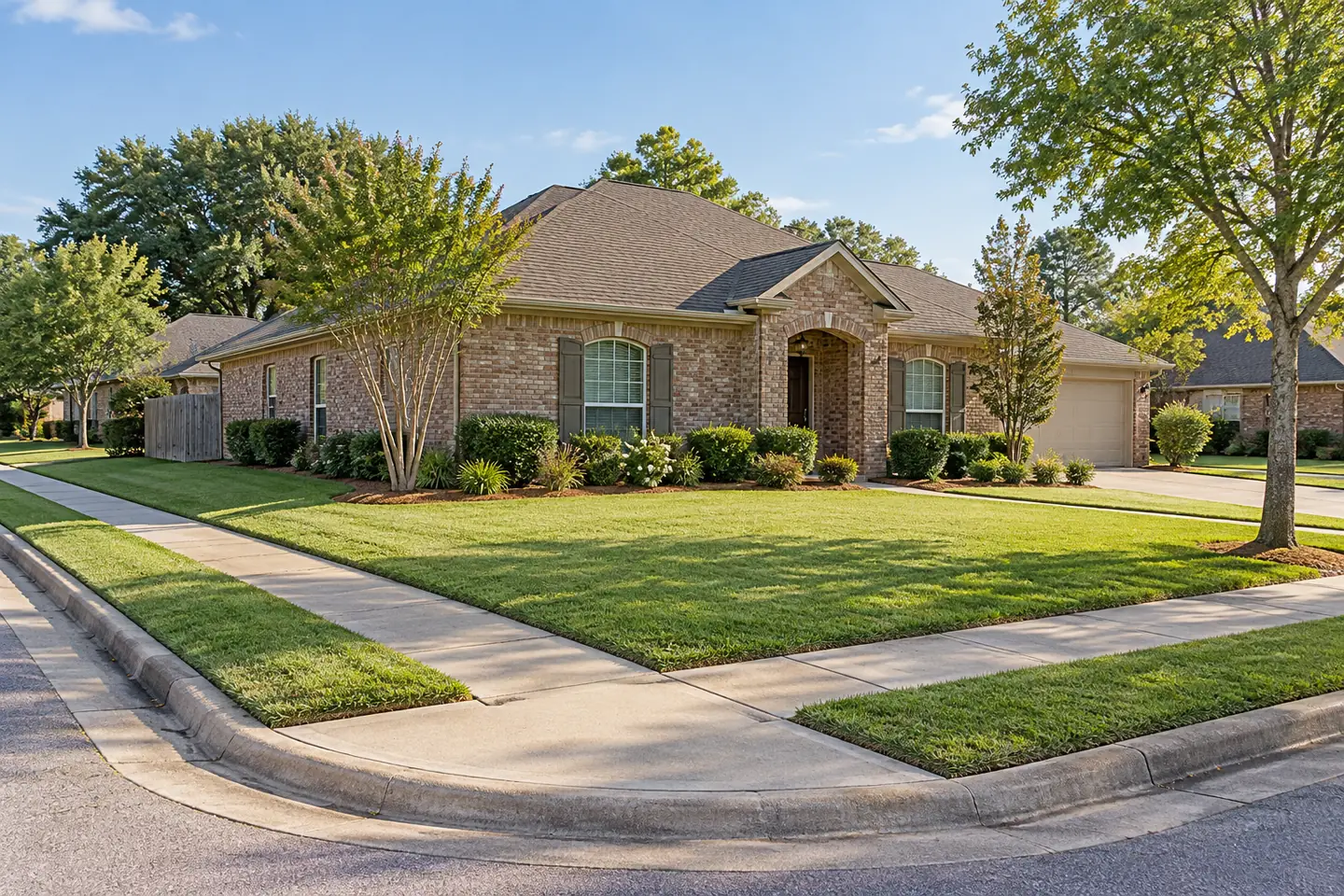
Keep hard debris out of the grass
Reflective markers, concrete collars, valve boxes and curb stones can surround a hydrant. Loose gravel, broken pavement or metal pieces must remain visible and outside the equipment path. The CPSC advises clearing rocks, wire and debris before mowing because blades can throw objects. Remove only ordinary litter that is safe and permitted; do not move official markers or utility hardware. If debris comes from hydrant work, ask the responsible crew to complete cleanup. Happy can follow a clear boundary, but utility-site restoration is not part of routine lawn service.
Respond to utility work as a changed site
Flushing, painting, testing or repair may leave cones, wet ground, temporary hoses, excavation or fresh markings. Treat the area as active until the utility releases it. Do not cross hoses, move cones or mow over fresh paint. Send updated photos and identify an alternate route to the rest of the lawn. Water can soften soil beyond the immediate base, so check footing after work even when all equipment is gone. Happy will not backfill, seed or restore the utility site. The recurring lawn boundary returns only after the responsible party finishes and the ground is stable.
Write a quote note that respects authority
A useful note says where the hydrant sits, who controls the area if known, which grass is included, and how the crew reaches it without blocking access. Include broad street and close base photos, but do not post serial numbers or sensitive project details publicly. Mention official clearance instructions you received without inventing a universal distance. Happy will follow the approved service boundary and keep equipment off the hydrant. If ownership or permission is unresolved, exclude the strip until the responsible authority clarifies it. This protects both emergency access and an honest lawn-care scope.
Review visibility after every visit and season
After service, confirm the hydrant remains easy to see from the street, all outlets are unobstructed and no clippings or objects gathered at the base. Through the growing season, watch shrubs, vines and tall ornamental grass nearby. Arrange authorized vegetation work before visibility is reduced. Update Happy after utility service, storms, sidewalk repairs or any grade change. The recurring goal is simple: accessible turf gets a tidy finish while emergency infrastructure stays untouched and open. Local water and fire authorities—not a lawn crew—remain the source for specific hydrant requirements.
Plan around fences, mailboxes and signs nearby
A hydrant corridor can overlap with a fence corner, mailbox, street sign or utility pole. Show all of these fixed items together because each can narrow the grass strip and the turning space. Do not create a tiny island of turf that requires equipment to weave between emergency and utility infrastructure. The responsible property or public authority can determine whether a different landscape treatment is appropriate. Happy will maintain only the accessible approved grass and will not move signs, posts or barriers. A broader photo often reveals access limits that a close hydrant picture misses.
Keep snow-free advice out of a Louisiana quote
National hydrant guidance sometimes includes winter clearing that does not describe West Bank conditions. Use local water and fire instructions for the property rather than copying a checklist from another climate. Here, heavy rain, fast growth, storm debris and soft roadside footing may be the more relevant changes. Happy’s lawn note should record what is actually present without claiming a universal emergency standard. This local, evidence-based approach keeps the page useful while respecting the authority that owns and services the hydrant.
Handle storm debris before the next visit
After strong weather, branches, fencing pieces or household debris can land in the hydrant approach. Do not use the hydrant as a brace while moving heavy material. Keep people away from downed lines, unstable trees or floodwater and contact the appropriate emergency or utility service. Happy Grass does not perform storm-debris removal. Once the area is cleared by the responsible party, send updated photos showing the base and street route. Ordinary mowing resumes only when emergency access is open and the ground is firm.
Avoid changing color or visibility with yard products
Do not spray paint, wrap, mulch over or decorate a hydrant to match landscaping. Even temporary coverings can obscure official color, caps or identification. If overspray from another project reaches the equipment, report it to the responsible authority rather than cleaning it with lawn chemicals or abrasive tools. Happy will keep mowing products and routine clippings away from the body. Emergency visibility remains more important than blending the hydrant into the yard design.