
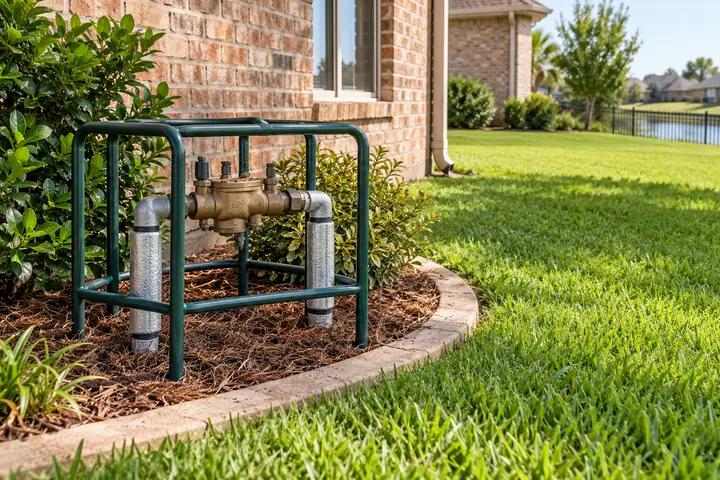
Identify the protected equipment
Backflow assemblies may stand above ground near a wall, meter or planting bed, sometimes inside a protective cage or insulated cover. Happy does not open, test or identify valves by function. The owner should point out the complete assembly, any cage door and the route a tester needs. Lawn service is limited to accessible grass around a stable installation. Testing, certification, freeze protection and repairs stay with the responsible utility, licensed professional and local requirements.
Preserve a clear service approach
A plumber or certified tester may need room around test ports and shutoff handles. Keep stored items, vines and landscape debris out of that approach. Do not place a mower, trash cart or hose against the cage. Happy can maintain the surrounding lawn without promising regulatory clearance dimensions. The owner should confirm required access with the authority responsible for the device.
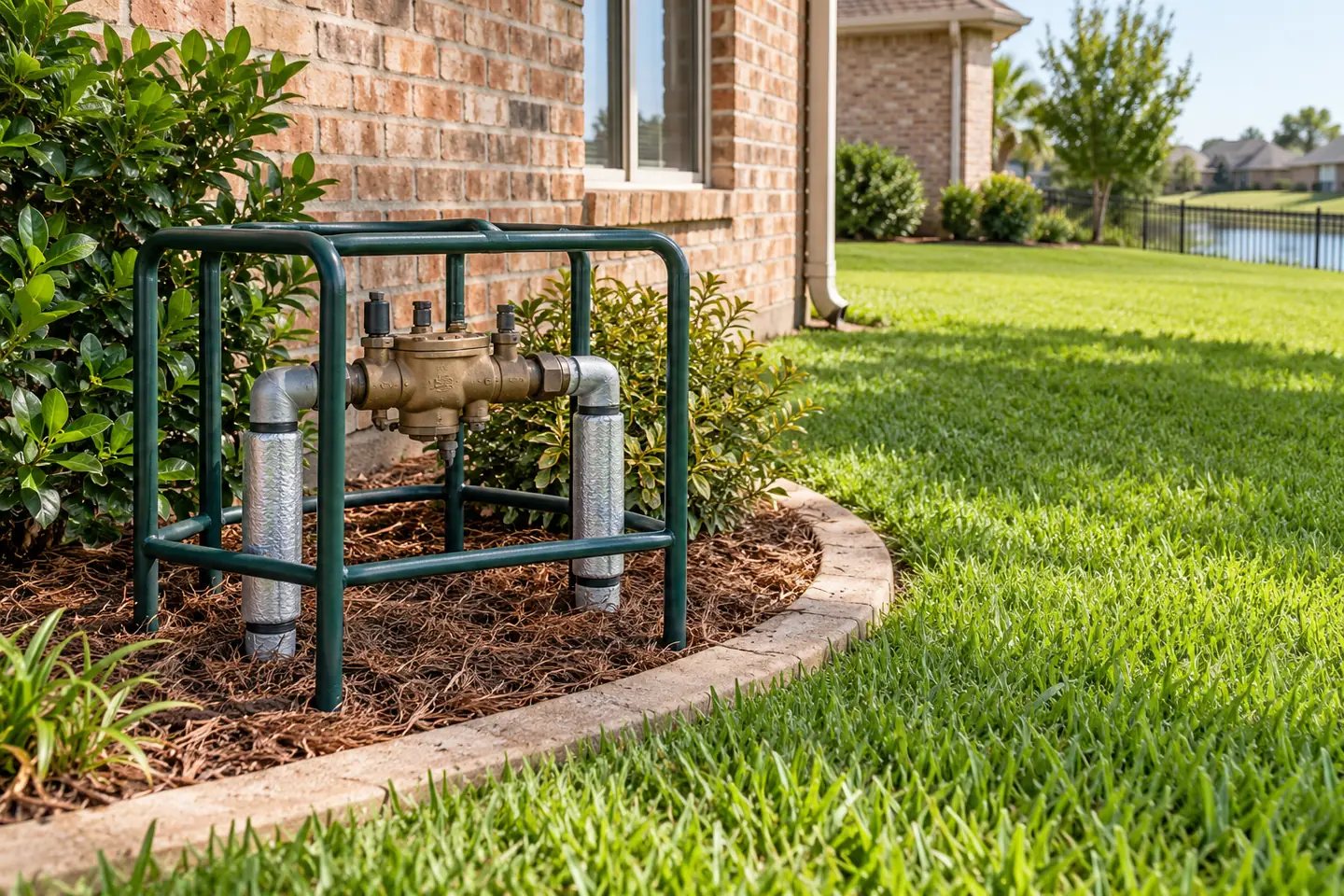
See every low pipe and brace
The obvious valve body may sit above knee height while short pipes, cage feet or anchors hide in grass. Walk the perimeter and mark anything below the main assembly. A trimmer line can damage insulation, labels or small components even when the metal valve seems sturdy. Maintain a visible border and stop before hardware. If the cage is bent or a pipe is exposed near grade, isolate it for professional attention.
Do not use the cage as a gate or tie point
Protective frames are not meant to hold hoses, pet tethers, extension cords or temporary fencing. Remove those items before service. Pulling on the cage can stress anchors or narrow the technician’s access. If the cage locks, the owner maintains keys and coordinates required testing. Happy should never climb, open or move the enclosure to finish grass inside it.
Wet soil can signal a reason to pause
Moisture may come from rain, irrigation overspray or a leak; the lawn crew should not diagnose the source. If soil around the pipes is unusually soft, bubbling or eroded, keep equipment away and notify the owner. Driving over saturated ground can strain shallow connections or rut the service approach. The responsible professional can determine whether the water is normal or requires repair.
Insulation and covers are not lawn obstacles to move
Cold-weather covers, bags or insulated enclosures may extend into the grass. Do not remove them for access unless the owner and appropriate professional have established a safe routine. Loose foam, tape or fabric should be secured before mowing so it cannot wrap around equipment. If a cover blocks the only route, plan another path instead of compressing it with a tire.
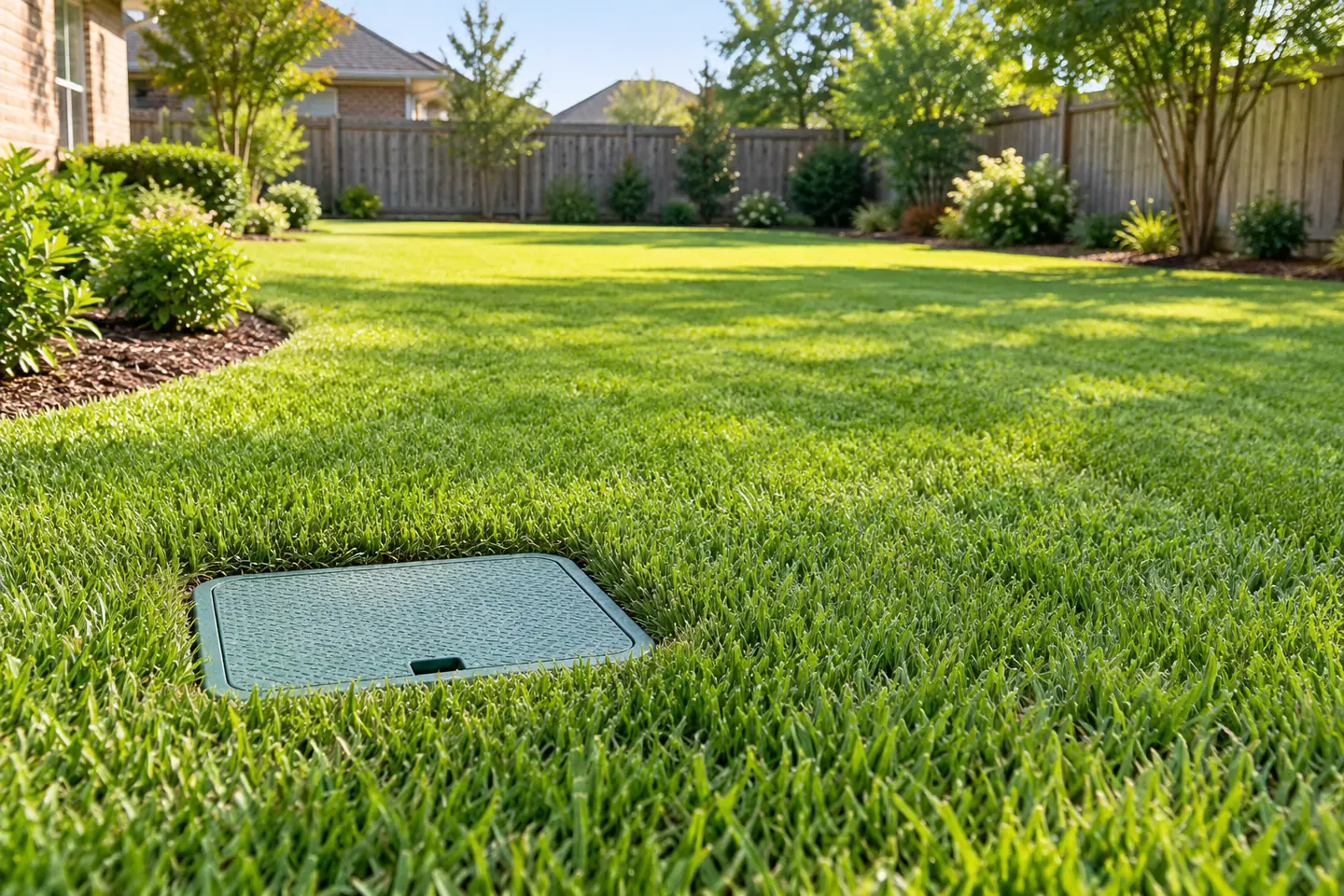
Coordinate irrigation timing
Avoid scheduling a watering cycle immediately before mowing near the assembly. Dry turf improves traction and makes unusual moisture easier to notice. If irrigation starts unexpectedly, pause and let the owner use normal controls. Happy does not operate valves on the backflow device or troubleshoot zones. EPA WaterSense recommends regular irrigation inspection; that owner maintenance complements, but remains separate from, the lawn route.
A backflow-area checklist
- Show the entire assembly, cage and low anchors.
- Keep the tester’s approach free of storage and vines.
- Remove hoses, pet lines and cords from the enclosure.
- Secure loose insulation before equipment enters the area.
- Report wet soil, damage or exposed connections.
- Leave valves, testing and repairs to the qualified professional.
Trimming should stop at the hardware boundary
Grass at the cage feet can be finished with controlled technique only when every anchor is visible and footing is firm. Do not feed line through cage bars or against pipe wrap. The owner may choose a stable mulched or hard border installed by others, but loose gravel can create projectile risk. Happy works to the presented safe edge rather than reaching through plumbing equipment for a perfectly bare base.
New testing tags and repairs change the map
After annual testing or plumbing work, labels, insulation and cage alignment may change. Send an updated photo before the next visit. Do not remove tags or publish identifying utility information. The property note needs only enough detail to show the safe lawn route and the fact that hardware must remain untouched.
Know when access should stop completely
Spraying water, a broken pipe, exposed wiring for heat protection, a strong odor, a leaning assembly or an open excavation are not routine lawn conditions. Isolate the area and contact the appropriate utility or professional. Happy can return to accessible grass after the property owner confirms the setup is stable. No mowing schedule overrides an active plumbing or electrical concern.
A neat lawn should not hide critical equipment
The finished area can look tidy while the backflow assembly remains obvious and reachable. Appropriate grass height, a controlled border and a clean service path accomplish more than aggressive trimming. Happy’s promise is careful lawn work around visible stable equipment—not certification of the device. That honest boundary protects drinking-water safeguards, property plumbing and the crew.
Covers, cages and freeze protection
A cover can improve weather protection while also changing the mowing boundary. It should fit securely, stay clear of hot engine parts and leave the professional access required for testing. Lightweight bags, improvised blankets and loose tape are poor lawn-day neighbors because they can fall into the grass or snag equipment. If temporary freeze protection is present, the owner should secure it and describe the safe clearance before the crew arrives.
Protective cages need their own check. Confirm the gate is latched, the base is not leaning and no padlock or chain hangs into the turf. Rusted wire ends, sharp corners and low anchor plates are hand and tire hazards. Happy will work around a stable visible assembly within the agreed route; welding, plumbing, testing and cage repair belong to the appropriate professional.
After testing, repairs or landscaping
The route should be reviewed whenever a tester, plumber, irrigation contractor or landscaper has worked near the assembly. Soil may be disturbed, valve-box lids may sit differently, and insulation scraps or cut wire can hide below the grass. A quick photo after the work is complete gives the lawn crew a current reference and helps the owner catch cleanup items before mowing day.
New shrubs or decorative screening should not trade appearance for access. Leave a direct walking path, readable shutoffs and sufficient room for the specialist who tests the device. Keep thorny growth away from the service side. A tidy buffer of stable ground is usually easier to maintain than grass forced into every narrow gap around pipes and anchors.
A simple arrival-day check
Before service, walk the route from the gate to the assembly. Pick up hoses, toys and insulation scraps; stop irrigation early enough for firm footing; and unlock any route the crew is authorized to use. If the unit is leaking, leaning, newly damaged or surrounded by soft soil, send a photo and arrange the appropriate repair rather than expecting mowing to solve the condition.
Grass height is not the only clearance
An assembly can remain visible while still being hard to approach. Check shoulder room, overhead branches and the space needed to walk tools to the test side. Do not store hoses, chemicals, pots or spare pipe inside a protective cage or behind the unit. Those items complicate both professional testing and careful lawn work.
If the equipment sits on a slope, plan the mower turn on level ground rather than beside the pipes. A tidy hand-finished buffer is preferable to a wheel track that repeatedly presses soil toward the base. The appropriate plumbing or irrigation professional should decide whether settling or exposed support needs correction.
Separate the testing record from the lawn access card
Keep the full testing or installation record with the responsible owner and use a simpler card for the lawn visit. The card can name the location, show the current outside footprint and identify the owner-confirmed route around it. It should not copy private serial numbers, account details or technical instructions that the crew has not been asked to interpret.
Date the card after a professional visit changes the visible assembly or its protective arrangement. State whether the surrounding area is actually prepared or whether another owner task remains pending. A completed test does not itself describe the grass condition, storage layout or route on a later service day. Those are separate observations to update. This separation makes both records more useful: equipment documentation stays with its proper purpose, and Happy receives a concise description of accessible lawn around an untouched fixed feature.