
A training tool, not a mowing target
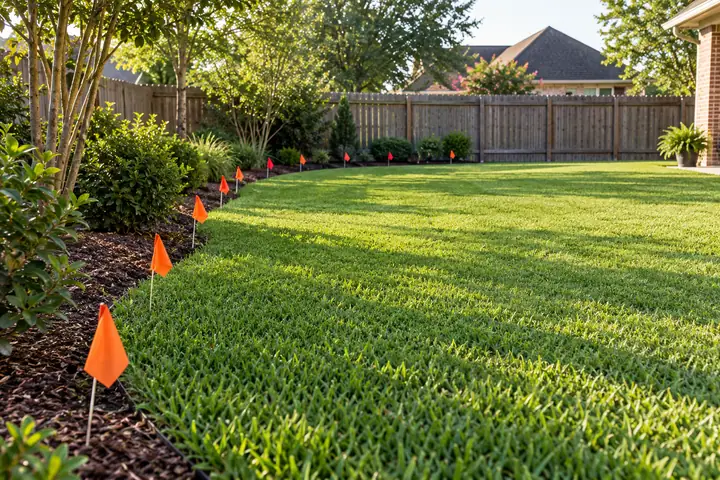
Small boundary flags help people and pets see the approximate edge of an underground containment system. They are temporary visual cues, not proof of the buried wire's exact depth or location. In a Westbank yard, fast-growing grass, leaf litter and soft soil can make a flag disappear quickly. A mower operator should never be expected to discover the line by clipping flags as they appear.
Before a lawn visit, the owner and containment-system provider should decide which markers must remain and how the crew will work around them. Happy Grass provides mowing and related lawn maintenance within an agreed safe route. Happy does not install, test, energize, repair or locate underground pet-fence wiring, and does not train pets to use a containment system.
Map the visible route before equipment enters
Walk the entire marked boundary from a fixed starting point such as a gate. Look for flags that have leaned, broken or vanished; exposed wire; splices; transmitter leads; and shallow trenches that have not settled. Take wide photos that show curves and corners rather than relying only on close-ups. A simple sketch can identify areas where the marked line passes close to a driveway, tree, drainage edge or utility corridor.
If the wire's location is uncertain, ask the system provider to locate it. Louisiana 811 marks participating public utility lines, but a private pet-containment wire is typically the property owner's responsibility and should not be confused with public utility locate marks. Never move official utility flags to make mowing easier. When different flag systems share a yard, explain their colors and purposes before service.

Choose a boundary treatment for the training period
There are three practical approaches. The first is a temporary no-mow strip wide enough to keep equipment away from every flag. The second is removing and replacing flags in a documented sequence, but only when the owner or containment provider takes responsibility for exact placement. The third is a reduced set of well-spaced markers after the pet has advanced in training, again following the provider's instructions.
Happy should not pull and reset training flags by guesswork. Moving a marker a few inches can confuse the visual lesson even if the buried wire has not changed. If mowing must occur near the line, use a route that preserves the flags in place or have the authorized person handle them before and after the visit.
Keep pets and people away from operating equipment
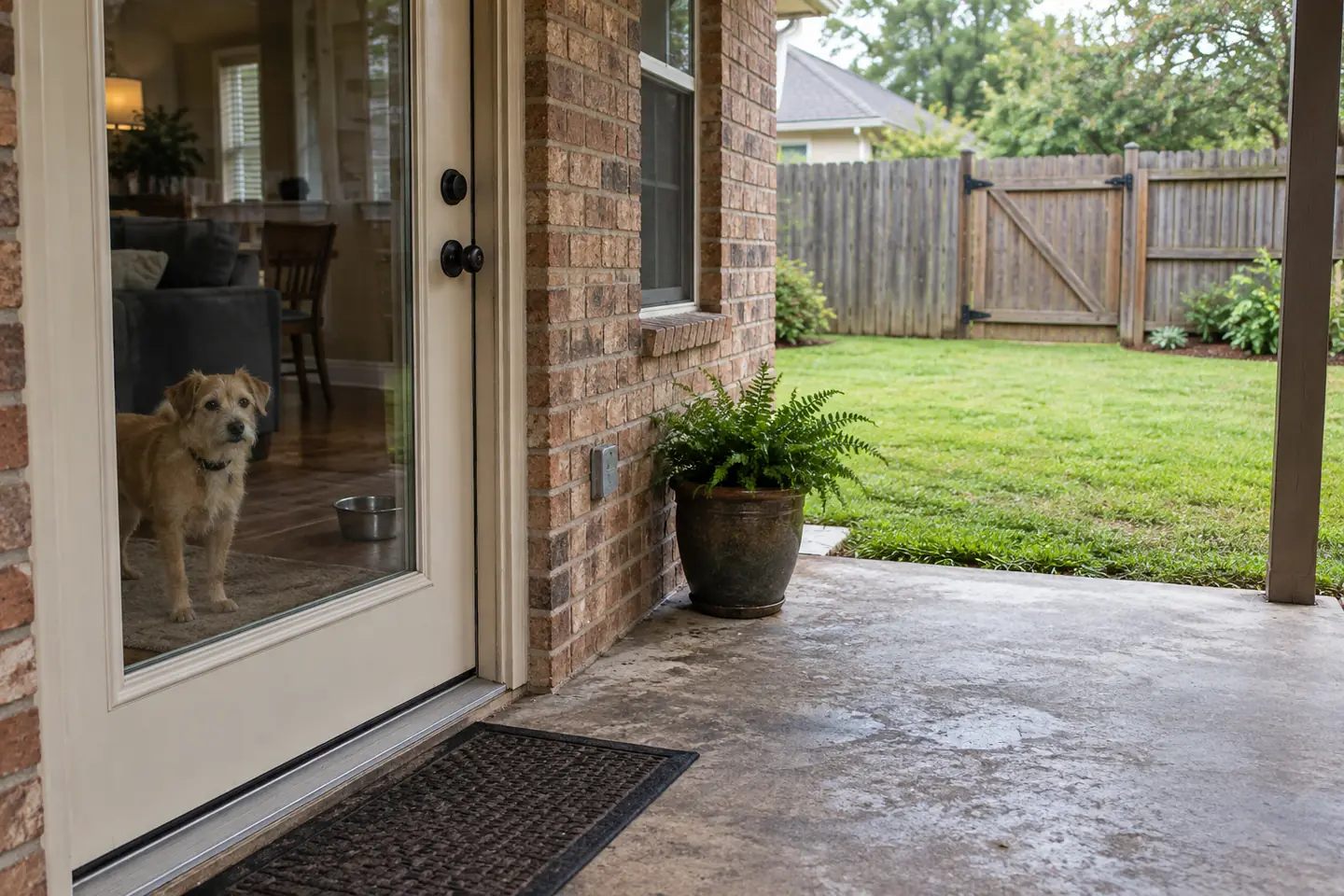
An underground system is not a substitute for securing a pet during lawn service. Noise, an open gate, a depleted collar battery or a training setback can change behavior without warning. Place pets indoors or in a secure area separate from every mower, trimmer and blower. Tell the crew before arrival if a gate must remain closed or if a pet has access to an adjacent zone.
Children should also stay away from equipment and the marked boundary while work is underway. Flags can attract attention, but approaching an operator to point one out creates a greater risk. Send route information beforehand and let the crew stop equipment before any in-person conversation.
Prevent flags from becoming projectiles
A plastic staff or metal pin struck by a blade can break, bend or be thrown. Inspect the grass immediately outside the marked line for fallen flags and loose pieces. Upright markers should be tall enough to see above the current turf and placed firmly enough that normal wind does not lay them down. Replace brittle or damaged flags through the system provider rather than leaving fragments in the lawn.
Do not tie string, wire or ribbon between flags. Those materials can wrap around a spindle or trimmer head. Painted lines also fade and may be confused with utility marks. A clear documented boundary with intact individual markers is safer than an improvised continuous barrier.
Corners, narrow gates and shared edges
Corners often contain more flags because the signal path changes direction. Give them extra clearance and avoid turning a mower directly over the cluster. At a narrow gate, confirm whether the wire crosses the opening and where transmitter leads run. If there is no safe equipment route that avoids marked or suspected wiring, use a different access point or postpone that portion.
Along a fence, leave enough room to see both the flags and the fence base. Vines, toys and fallen branches can hide markers. Near sidewalks or driveways, watch for pins that have worked loose into the hard surface. A marked boundary beside a drainage swale may remain too soft for equipment even when the rest of the yard is ready.
Changes that require a fresh handoff
Update the lawn plan after a wire repair, new transmitter, boundary redesign, landscaping project, utility work or training-stage change. Send one current wide photo and note the date. Old photos should not be treated as an exact locate because soil, roots and repairs can change what is visible.
If a flag is missing after service, do not assume the wire moved or failed. Stop using the area as directed by the system provider, inspect safely and ask the provider to verify the boundary. Happy can report an observed damaged marker, but electrical diagnosis and containment assurance remain outside lawn-service scope.
A calm mowing-day checklist
- Secure pets and keep children away from the work area.
- Confirm the current flag layout with the containment provider.
- Pick up fallen flags, toys, leashes and loose wire fragments.
- Identify utility marks separately and leave every official marker untouched.
- Share gate rules and any temporary no-mow strip before arrival.
- Pause work near exposed wire, unsettled trenches or uncertain corners.
- Recheck the visible markers after the lawn visit.
Clear communication protects the training routine without asking a mower operator to act as a wire locator. If the marked path is visible and the access route is firm, Happy can plan a careful lawn visit around it. Call 504-339-3571 and ask for Happy when you describe the yard.
Reduce markers only through the training plan
Many containment programs gradually reduce visible flags as a pet learns the boundary. That timing should come from the system provider or the owner's documented training plan, not from lawn convenience. Removing a row early can weaken the visual lesson; leaving broken markers indefinitely creates a different hazard. Agree on who counts, removes and stores them.
When markers are reduced, keep reference photos from fixed viewpoints. A gatepost, corner of the house or driveway joint makes a better reference than a movable lawn ornament. Photos do not locate buried wire, but they help everyone recognize the intended no-mow strip and notice when a remaining flag has shifted.
Repairs and shallow soil disturbance
Wire repairs may leave a narrow trench, fresh plugs or hand-dug patches. Those areas can look firm on top while remaining soft below. Give them time to settle according to the provider's instructions and avoid zero-turn pivots over the repair path. If a splice enclosure, connector or wire loop is visible, protect the area and request correction before mowing.
Do not drive stakes for a new garden border, sign or holiday decoration near a suspected boundary. Locating private lines and planning excavation belong to the property owner and relevant provider. This is especially important when official utility marks are also present; separate the systems instead of assuming one set of flags accounts for every buried line.
Weather can change the visual cues
Wind may lean flags, heavy rain can soften the pin holes, and a mower-free week can let grass overtake shorter markers. After a storm, walk the line before releasing a pet or scheduling lawn work. Restore only the markers whose correct placement is known. A flag found loose in another part of the yard should not be pushed into the nearest gap by guesswork.
During drought, hard soil can also prevent a marker from standing securely. Ask the provider for an approved replacement method rather than using long improvised metal stakes. The marker must remain visible without creating a new puncture or projectile hazard.
Keep the owner's confirmed marker plan current
Temporary pet-fence flags can change position or number during a training plan. Ask the responsible owner which visible arrangement is current and describe that arrangement in the lawn handoff. Do not reconstruct a boundary from memory or assume a missing flag means the underlying system has moved. The lawn record should preserve what is known, including any uncertainty that still needs the owner's attention.
Keep the animal arrangement separate from the marker arrangement. A photograph of flags does not establish where a pet will be during the visit, and a secured pet does not answer how the grass beside the markers is to be handled. Confirm both parts without turning device operation, collar testing or training decisions into implied lawn tasks.