

Ask why the marks are present before service
811 locators mark the approximate position of buried utilities with paint, flags or both. The colors correspond to utility types, while white commonly outlines proposed excavation. If new marks appear, ask the property owner, tenant, utility or project contractor what work is planned and whether the ticket remains active. Share that status with Happy before the lawn visit. Do not guess that flags are abandoned because no crew arrived that day. Happy Grass does not interpret utility locations, confirm ticket validity or authorize digging. We treat an active marked corridor as protected and build the serviceable grass boundary around it.
Preserve the marks instead of tidying them away
A neat lawn is not more important than a visible utility locate. Do not pull flags, repaint lines, move stakes or mow so closely that markers disappear. The national 811 guidance tells people to wait for the marks and confirm that utilities have responded before digging. Lawn care is not excavation, but damaging the marks can still complicate the project and leave later workers without the visual information they requested. Tell Happy which person owns the ticket and when the work is expected to finish. If you believe marks are no longer needed, contact that ticket owner or local 811 center for the proper next step rather than assigning removal to a lawn crew.

Show the entire corridor in photos
One close picture of a red flag does not explain the route. Take a series from the street, gate and house so the line of flags and paint is visible. Include corners where markings turn, cross a driveway or enter a side yard. Note any unmarked gap you are concerned about, but do not fill it with your own utility color. If the marked band divides the yard, identify alternate access to each side. Happy needs to know whether ordinary equipment can reach serviceable grass without contacting flags or crossing open excavation. We do not use the photos to locate utilities; we use them only to understand the temporary lawn boundary.
Keep paint visible without promising a perfect finish
Locate paint is designed to communicate through a project, and grass growth can make it harder to see. The lawn finish around it may need to stay higher or wider than the normal edge so the line remains legible. Ask the ticket owner whether mowing is permitted in the marked area and tell Happy the answer. Even if mowing is allowed, flags themselves stay protected and equipment should not erase or bury the route with clippings. A temporary difference in grass height is more honest than claiming the entire lawn can receive its usual finish while markers remain active. Once the project closes, the recurring scope can be reviewed.
Distinguish locate flags from survey stakes
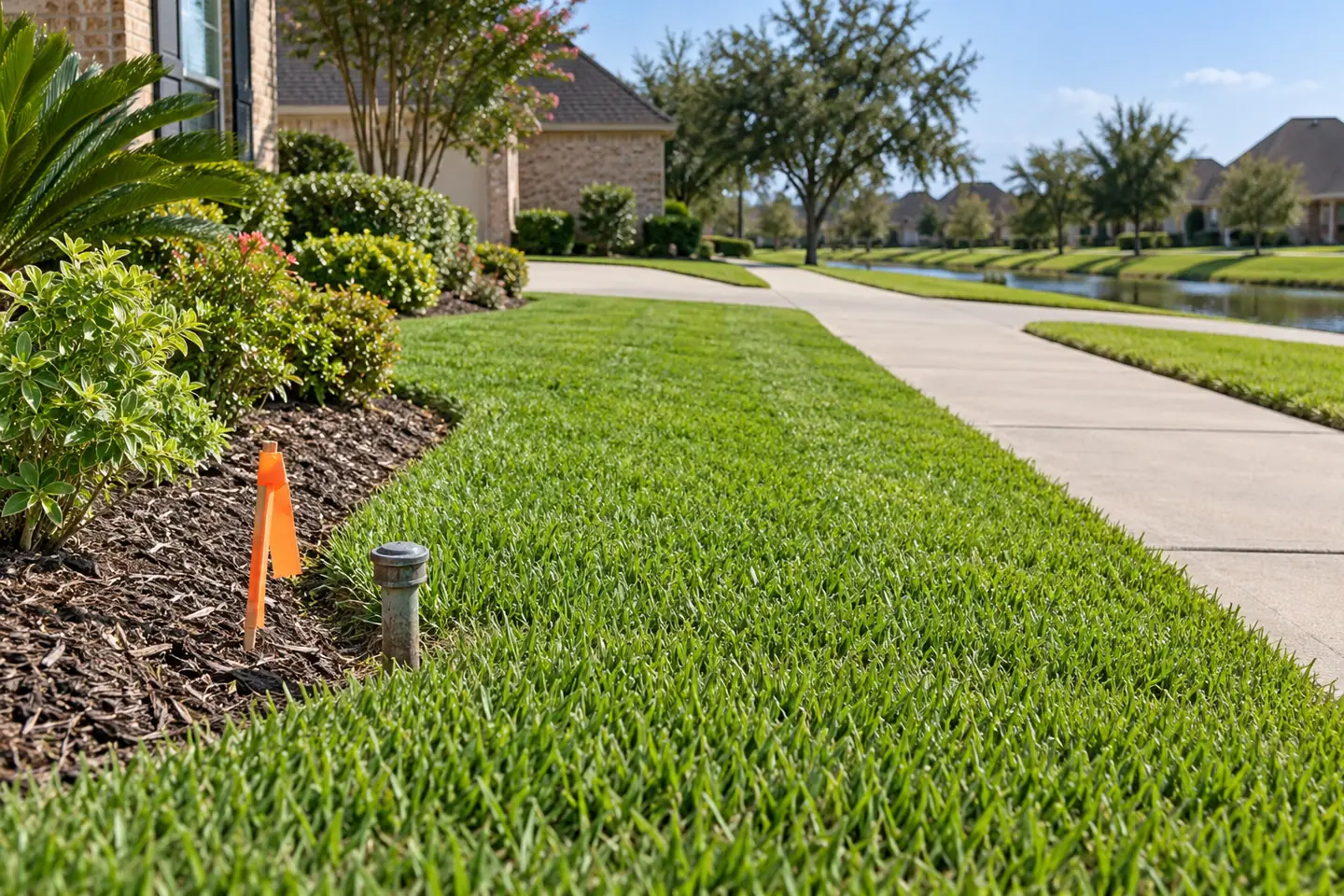
Utility flags, survey stakes, irrigation markers and contractor layout pins can share a yard. Colors alone do not prove who placed them. Do not combine them into one note saying “the flags can go.” Photograph any labels without publishing private project information and ask the responsible party what each set means. Survey and property markers can affect boundaries; utility marks concern buried facilities. Happy Grass will not decide property lines or remove either type. A clear inventory prevents a lawn crew from preserving one group while accidentally displacing another. When in doubt, include the whole marked zone in the temporary exclusion.
Plan around digging and open ground
Once excavation begins, the condition changes from marked grass to an active project. Trenches, test holes, spoil piles, plates, conduit and temporary fencing must remain outside lawn service. Do not ask Happy to move barriers, level soil or mow across a filled trench because the surface looks closed. Obtain the contractor’s release and wait for firm footing. If the remaining lawn can be reached from another gate, send an updated diagram. Happy does not backfill, seed, sod or restore utility trenches. The contractor or property owner manages the work; we can resume accessible mowing after the site is released and hazards are gone.
Leave enough room for locators and project crews
A mower, trailer or lawn debris pile should not block access to the marked area while utilities or contractors are expected. Tell Happy the project schedule so the lawn visit does not conflict with active work. Move personal vehicles and ordinary yard items if the project owner requests it, but do not relocate utility equipment. If a locked gate or pet prevents locator access, handle that with the locate request before the lawn appointment. Coordinating the two schedules avoids a rushed decision in the yard and protects the reason the marks were placed.
Respond correctly when marks fade or are damaged
Rain, traffic and mowing can fade paint or knock down flags. Do not recreate a line from memory. Contact the ticket owner or local 811 center about remarking according to the active request. Keep Happy out of the uncertain corridor until the responsible party clarifies it. A faded mark is not proof that the underlying project ended. Likewise, if a flag is already loose on arrival, photograph it in place and notify the project contact instead of pushing it elsewhere. Lawn service cannot restore utility-location accuracy and should never pretend to.
Write a practical temporary service note
A useful note says who requested the locate, what project is planned, the approximate marked corridor, the expected work window and which lawn sections remain available. Include photos from several directions and identify the accessible gate. If the work is delayed, update the note rather than leaving Happy to infer status from aging paint. You do not need to list utility depths or expose ticket details that are not relevant to service. The objective is a visible no-contact boundary around flags, paint and any new ground disturbance while the ordinary open turf receives only the work that can be completed safely.
Close the loop after the project
When digging and restoration are finished, ask the ticket or project owner whether the marks can be treated as expired. Then inspect the ground for soft fill, wire, pipe scraps, stones and remaining stakes. Remove debris only when it is yours and safe to handle. Send new photos before returning the strip to the recurring route. Freshly restored soil may settle after rain, so a project can be complete while the lawn still needs a temporary exclusion. Happy will not backdate a release or assume the old scope returned automatically. The best finish comes from a deliberate handoff from project corridor to stable lawn.
Coordinate recurring service during a delayed project
Utility projects can be postponed while flags and paint remain. If several lawn visits occur during the delay, confirm the protected corridor each time rather than allowing the boundary to shrink gradually. Growth may hide low flags, and a tenant or family member may move a marker without realizing its purpose. Send a current wide photo on mowing day and tell Happy whether the ticket owner requested preservation. We can keep the released portion of the lawn on schedule while leaving one band higher. Consistency is more useful than trying to reclaim another inch of grass around every flag.
Avoid public assumptions about depth or accuracy
Locate marks show approximate horizontal location; they do not give a lawn crew permission to probe or state how deep a line is. Do not ask Happy to confirm that shallow trimming or an edging pass is safe because paint appears several feet away. Buried facilities and tolerance rules belong to the utility-locate and excavation process. Our scope stays at the surface: preserve the marks, avoid active ground disturbance and maintain only the clearly released grass. This distinction keeps a maintenance conversation from becoming an unsafe utility representation.
Keep household notes separate from official colors
If you want to mark a sprinkler head, pet boundary or damaged patch for Happy, do not copy the standardized utility colors in the active corridor. Use a clearly different removable cone outside the marked band and explain it in a photo. Homemade paint can confuse the project team or make an official route harder to read. When several contractors share the yard, designate one person to combine the access notes. Happy follows the service boundary you provide but never treats a household marker as utility-location evidence.