
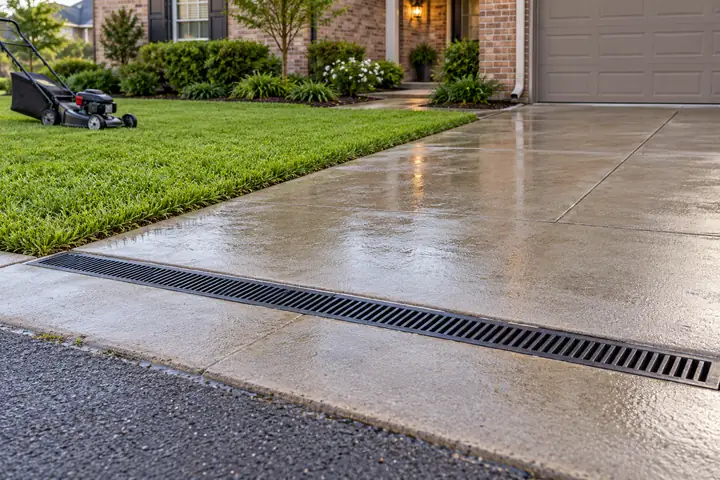
Why the long grate deserves a route of its own
A trench drain is a narrow channel covered by a series of grates, often placed across or beside a driveway to intercept surface water. Its length makes it easy to treat as ordinary pavement, yet one loose section, missing fastener or sunken edge can catch a wheel. Grass may also grow tight against the channel, hiding where stable concrete ends and the drainage assembly begins.
Happy Grass can mow and trim the surrounding lawn when the approach is visible, firm and within the agreed service scope. Happy does not install, open, clean, repair or certify trench drains. Structural questions, blocked channels, displaced grates and drainage performance belong to the owner and an appropriate drainage or concrete professional.
Inspect every section before mowing day
Walk the grate from end to end. Press only from stable ground and look for rocking sections, cracks, corrosion, missing screws, warped slots and gaps at the end caps. Note any place where soil has washed away beside the channel or pavement has settled. A grate that looks flat from a distance can still move when a small wheel loads one corner.
Remove surface litter by hand only when it is safe and within the owner's maintenance plan. Do not push fingers through grate openings. If leaves or sediment obscure the channel, arrange cleaning with the responsible provider before lawn service. A mower route should not depend on crossing a grate whose support cannot be seen or trusted.
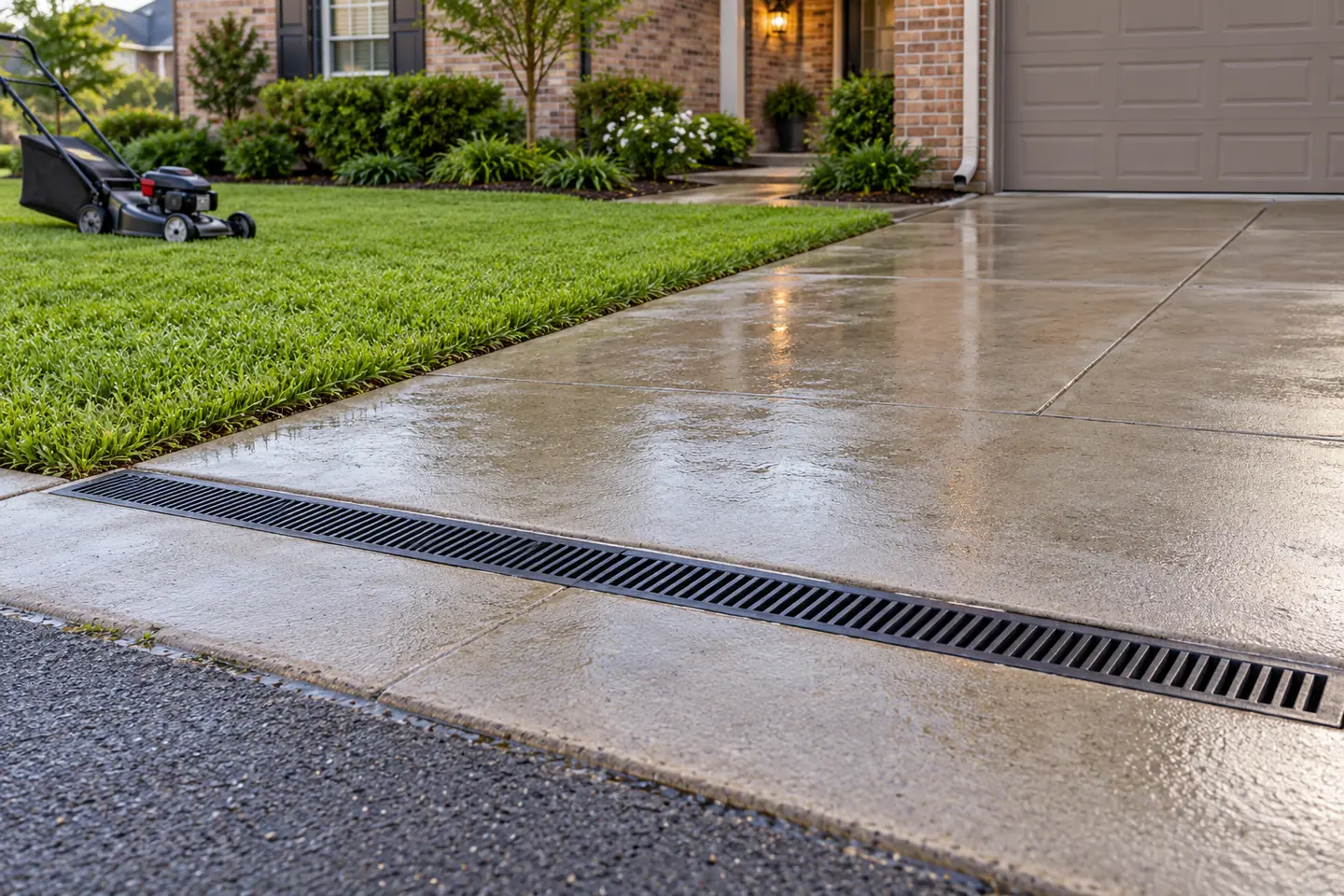
Keep clippings out of the drainage path
Aim mower discharge away from the drain and adjacent pavement. Grass packed into the slots can restrict flow and wash into downstream systems. After trimming the lawn edge, direct light debris back onto the turf for collection or dispersal rather than blowing it into the channel, street or storm inlet.
Wet clippings are especially sticky. If the driveway or grass is damp, postpone detail work that would smear debris across the grate. EPA stormwater guidance emphasizes keeping yard waste and pollutants out of storm drains. The same habit helps a private trench drain remain visible for inspection.
Decide whether equipment should cross
Do not assume a grate is rated for a mower simply because vehicles use the driveway. Load ratings, installation quality and support conditions vary. The owner should provide the manufacturer's or installer's guidance if crossing is necessary. Otherwise, plan two mowing zones and use a stable route around the drain with the machine off between areas.
When a small mower is authorized to cross, approach squarely at low speed after confirming every section is secure and dry. Avoid turning, braking hard or placing one wheel along the grate seam. Never cross a missing, rocking or damaged panel. A riding mower's concentrated wheel load can act very differently from a vehicle tire.
Shape a readable grass boundary
The safest edge is visible without being scalped. Keep turf from arching over the frame, but avoid cutting soil away from the channel support. A narrow hand-finished strip may be more appropriate than forcing a mower deck against metal or polymer edging. If erosion exposes the sidewall, pause detail work and have the installation assessed.
Landscape fabric, loose rock and flexible edging near the drain can migrate into the grass. Return loose material to its bed before service and repair failed containment separately. Do not use trimmer line to “clean” inside grate slots; it can throw debris, damage components and conceal a blockage rather than remove it.
Driveway traffic and arrival planning
Park vehicles away from the drain and leave the agreed access route open. Tell household members not to drive across the work zone while equipment is nearby. If the grate sits behind an automatic gate, provide safe access instructions without asking the crew to stand in a moving gate path.
Garbage bins, basketball goals, hoses and extension cords often collect at driveway edges. Move them before arrival so the operator can see the entire drain and turn on firm turf. Keep children and pets indoors or in a separate secure area throughout service.
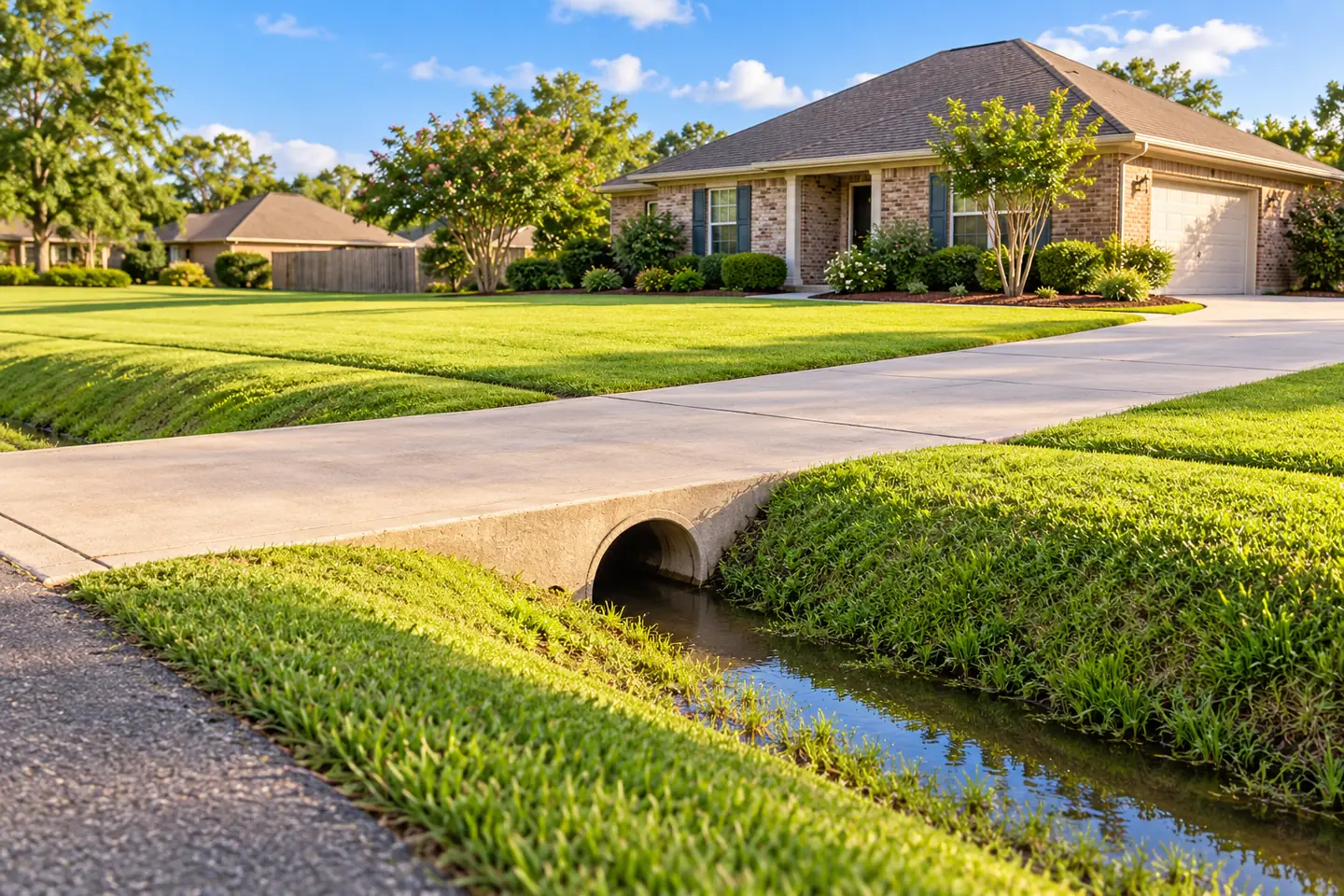
After storms, construction or pressure washing
A heavy storm can deposit sticks, roof granules or mulch along the grate. Construction may add sand, screws or concrete chips. Pressure washing can move sediment into the channel while making the pavement temporarily slick. Reinspect the full length after any of these events and send a new photo if the route has changed.
Standing water on the upstream side may indicate a blockage or grade issue, but lawn appearance alone cannot diagnose the cause. Keep equipment out of ponded or undermined areas and contact the responsible drainage professional. Happy may report what is visible during a visit; that report is not a drainage inspection.
End points and nearby storm inlets
Pay special attention where the trench terminates. End caps, outlet pipes or catch points may be hidden by grass or mulch. Preserve access to them, and do not pack soil against an outlet to make the edge look level. If the drain connects to another private structure, the owner should document who maintains it.
Where water ultimately reaches a public street or inlet, keep yard debris on the property. Do not blow clippings down the driveway and assume rain will carry them away. A finished visit should leave the grate visible, the lawn edge controlled and the downstream route free of newly added lawn waste.
A repeatable visit checklist
- Park vehicles and move bins, hoses and toys away from the drain.
- Inspect every grate section for movement, damage and missing hardware.
- Confirm whether any equipment crossing is authorized and necessary.
- Keep discharge, clippings and trimming debris away from slots.
- Avoid soft soil, ponded water and undermined channel edges.
- Photograph changes after storms, repairs or pavement work.
- Refer cleaning, repair and performance concerns to the appropriate provider.
That routine protects the drain without turning a lawn visit into structural work. For a route discussion in Harvey, Marrero, Gretna, Algiers, Belle Chasse or Westwego, call 504-339-3571 and ask for Happy.
Grate materials call for different caution
Trench grates may be metal, polymer, concrete or a combination, and appearance alone does not reveal their capacity. Sun can make a dark grate hot, corrosion can thin metal at contact points, and ultraviolet exposure can make some older polymer parts brittle. Treat any discoloration, crack or distortion as a reason to inspect rather than a cosmetic detail.
Do not paint, coat or lubricate the grate during lawn service. Those tasks can change traction or conceal hardware. When replacement is needed, the owner should use components specified for the channel and expected loads. A mismatched panel that fits the opening is not automatically safe to cross.
Keep the ends from disappearing
The last few inches of a long drain are easy to lose under turf, decorative rock or mulch. Mark both ends in the route photo and keep vegetation from covering the transition. Where an end sits beside a wall or gatepost, confirm that a mower can turn without pinching the operator between fixed objects.
If an outlet pipe leaves the trench, protect that connection from trimmer impact. A cracked adapter or separated joint requires drainage repair, not a closer cut. Never pack clippings or soil around a joint to hold it in place.
Cold fronts and dry debris
Westbank lawns may stay green while a cold front drops leaves and small twigs across the driveway. Dry material can bridge grate openings and hide a missing screw. Sweep or collect it through the owner's normal surface-maintenance plan before the lawn crew arrives. Do not depend on a blower to force debris through the slots.
In prolonged dry weather, sediment can harden along the frame. That buildup can make the grass edge look higher and encourage a wheel to ride the seam. Have the channel cleaned appropriately, then reassess the route on a dry day.
Keep surface cleanup and channel concerns on different lines
A driveway-drain photograph can show loose lawn material on the paving and a separate concern inside or beneath the grate. Describe those as different observations. The desired pavement finish can be discussed as part of the lawn request, while the condition or operation of the channel may need the responsible owner or another appropriate provider.
Use a location reference for the start and end of the drain so a later update points to the same section. If other work changes the grate arrangement or nearby lawn edge, replace the current photograph instead of assuming the earlier boundary remains obvious. Keep any unresolved section outside a general ready-for-service description. This lets Happy understand the accessible grass-to-pavement transition without turning ordinary blowing or edging into an implied inspection, opening or servicing of the drainage system.