
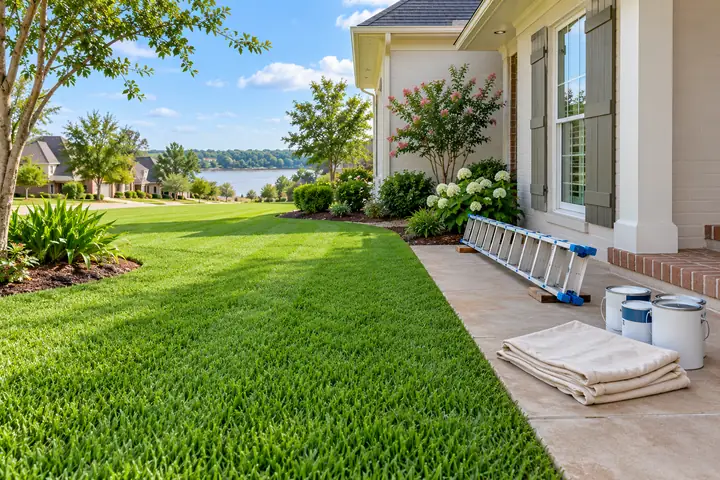
Set two work calendars before either crew arrives
Painting often moves around the house by elevation and shade, while lawn service moves by gates and equipment lanes. Ask the owner or painting lead which walls are active, when coatings will be wet and where tools will be staged. Do not schedule both crews on opposite sides of the same narrow yard and hope they stay apart. A simple daily zone map lets Happy serve a released section or move the visit without interfering with ladders, spray, prep dust or drying finishes.
Ladders require a clear base and clear surroundings
OSHA ladder guidance emphasizes keeping the area around the top and bottom clear and keeping ladders free of slippery material. Lawn equipment, flying clippings and uneven turf do not belong beside a ladder in use. No mowing, edging or blowing should occur inside the ladder's working footprint or beneath overhead work. The painter controls ladder placement and removal. Happy does not move, fold, stabilize or climb another contractor's ladder, even when it appears to block only one pass.
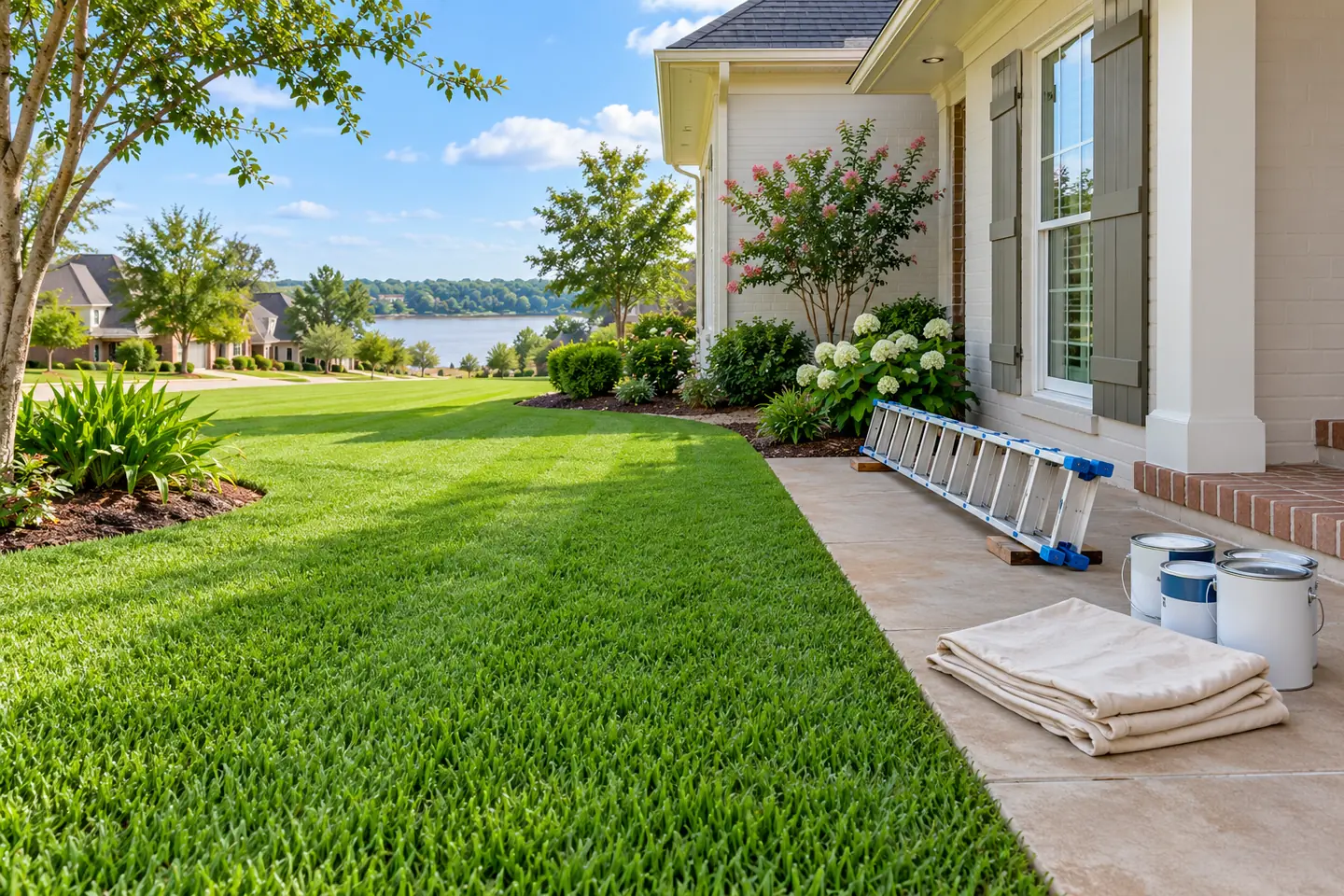
Remove ladders rather than mowing around them
An unattended ladder lying in grass can hide rungs, braces, paint tools or a cord. A standing ladder can shift from vibration or a clipped foot. Before a lawn zone is released, the painting crew should move ladders to a stable approved storage location off the route. Do not lean them against a fence gate Happy needs to open. If a ladder must remain for the day, close that entire strip and document the alternate plan instead of weaving equipment around it.
Drop cloths and plastic can hide more than grass
A tarp may cover wet paint chips, scraping debris, nails, rocks, sprinkler heads or a soft patch. It can also wrap around a mower shaft or wheel. The painter should lift, fold and remove every ground covering before the area is considered ready. Happy should not pull a cloth out from under supplies or shake debris onto the lawn. After removal, inspect the uncovered surface in daylight and decide whether it needs cleanup or more drying time before blades enter.
Keep paint and solvents on protected hardscape
Closed containers, trays and wash buckets should not be staged in grass or beside a discharge path. Lawn crews should never relocate, open or dispose of coating products. If a can leaks or a spill reaches soil, stop and notify the owner and painting contractor. Cleanup must follow the product instructions and applicable rules; mowing over a spill only spreads the problem. The safe lawn route begins beyond the entire material station, not just beyond the visible can.
Cords, hoses and sprayer lines need a complete reset
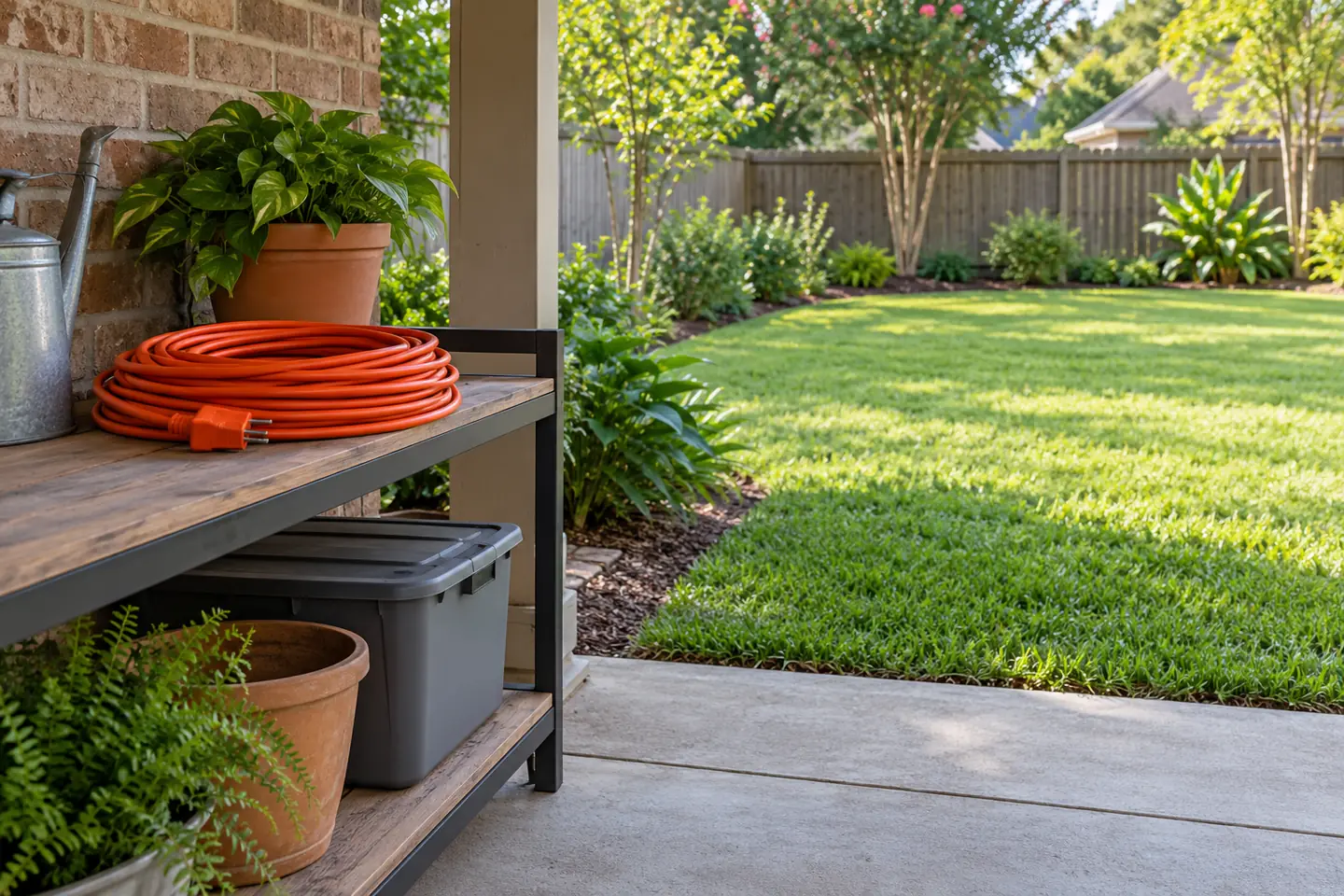
Exterior work may use extension cords, pressure-washer hoses or spray lines that cross a gate and disappear behind shrubs. The painting crew should disconnect and store them before the visit. Do not drive over a line because it looks flat, and do not unplug unfamiliar equipment. Trace the route visually from source to tool. A loose connector in wet grass is a stop condition. Happy can work after the authorized crew has removed the temporary system and the owner confirms the lane is clear.
Protect wet surfaces from clippings and blower dust
Even when equipment fits, discharge can mark uncured paint or carry grit into a wet finish. Ask the painter when the coating is ready for nearby lawn work; drying time varies with product, weather and surface. Direct clippings and blower air away from the building, covered openings and material staging. Do not test dryness by touching a wall. If there is doubt, leave a wider grass margin and return after the painting contractor releases the area.
Use a clear release checklist
- Painter identifies walls and access points still in active use.
- Ladders, planks and scaffolding are removed from the lawn route.
- Drop cloths, plastic, masking and scraping debris are collected.
- Cords, hoses, sprayers and open containers leave the grass.
- Owner confirms the nearby finish can tolerate ordinary lawn work.
- Happy records any excluded strip and the next safe review date.
Surface preparation can leave sharp debris
Scraping may produce paint flakes, caulk pieces, fasteners, broken trim or wire-brush fragments. These are not ordinary clippings. The painting contractor should collect and dispose of them under its project plan, especially where older coatings or regulated materials may be involved. Happy will not vacuum, bag or identify paint debris. If flakes remain in the turf, keep people and equipment away and ask the owner to obtain appropriate cleanup before mowing.
Watch gates, windows and temporary coverings
A freshly painted gate may need to stay open or untouched, while plastic over a window may extend into a shrub or grass edge. Confirm how Happy should enter without contacting wet surfaces. Do not tie back coverings or force a sticky latch. If the only gate is unavailable, reschedule or use an owner-approved alternate entrance that actually fits the equipment. Access convenience never justifies brushing a mower, hose or clothing against an unfinished coating.
Rain changes both paint and turf decisions
An unexpected shower can move masking, soften soil and extend curing time. Tarps placed quickly may cover the route or collect water. Recheck the work zone after weather rather than relying on the previous day's release. A painting delay does not automatically mean mowing can move in; wet equipment and hurried storage can create more obstacles. Let the contractor stabilize its materials, then assess the lawn independently for footing and access.
Separate cosmetic touch-ups from service damage claims
Before lawn work near a recently painted wall, take a wide condition photo showing the released route and existing finish. This is not a paint inspection. It simply gives both providers a shared reference if clippings, smudges or old defects are discussed later. Avoid unsupported blame. If an issue appears, stop work, document it and let the owner coordinate the correct repair rather than wiping, scraping or applying a mystery product.
Resume normal patterns only after the project closes
Once painting is complete, update property notes for any permanent change: new gate hardware, moved planters, repaired trim, altered bed lines or relocated outlets. Remove temporary no-mow markers that the owner authorizes, but do not discard contractor property. The first full visit may need a careful perimeter pass to confirm every covering and fastener is gone. After that, the lawn can return to its normal sequence without carrying construction habits forward.
Keep spray zones wider than brush zones
Spray application can place fine coating beyond the wall itself, and wind can move it toward grass, vehicles or equipment. The painting lead should define the active exclusion distance for that day's method and weather. Happy should not work downwind of spraying or attempt to protect a mower with an improvised sheet. If spray work begins unexpectedly, stop, shut down and leave by the clear route. Resume only after the painter releases the area and any temporary masking or overspray-control material is removed from the lawn.
Account for tools placed in shrubs and beds
Brushes, scrapers, caulk tubes and small trays sometimes move off the main staging pad as work advances. A tool resting inside a foundation shrub can fall into the grass when blower air reaches it. The painting crew should conduct its own tool count before releasing a wall. Happy can visually check the accessible edge but should not reach through plants to retrieve unknown items. Photograph anything left behind, keep discharge away and let the owner or painter collect it safely.
Good boundaries protect the finish and the lawn
Painters need clean, stable work zones; lawn crews need clear, debris-free routes. The owner connects those needs by releasing areas deliberately. Happy can adjust timing, protect a narrow wet-paint margin and keep clippings pointed away, but does not handle ladders or paint materials. A short coordination message before the visit prevents much longer cleanup afterward and lets both jobs finish looking intentional.
Use a three-part painting closeout note
Separate the project note into remaining equipment, surfaces still under the painter’s instructions and grass areas the owner considers prepared for review. This makes partial completion understandable. One side of the house may be clear while another still depends on the painting crew returning, even when the central lawn looks open.
Keep each area named with a current photograph and do not interpret the painter’s product or surface instructions on their behalf. If the lawn visit needs a revised scope or timing discussion, connect that request to the affected area instead of announcing that the whole yard is ready. After the painting project is fully closed, replace the temporary note with the normal property arrangement. This helps two services coordinate without turning Happy’s arrival into a decision about whether painting equipment or a new finish can be disturbed.