
Make pickup a separate part of the visit plan
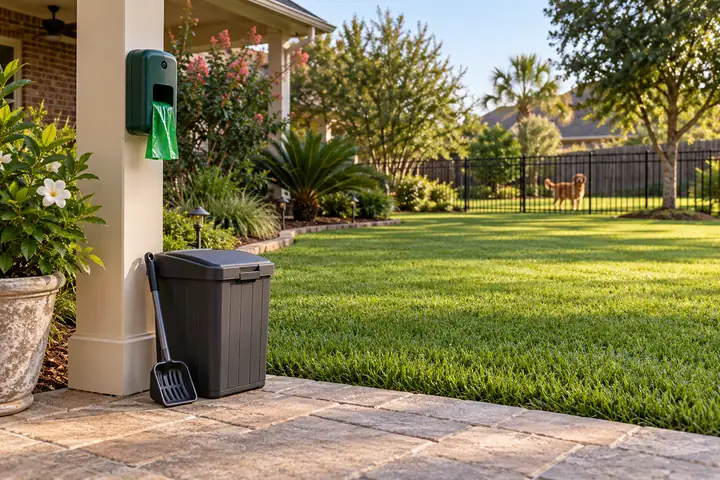
Tell Happy who handles pet-waste pickup and when that person will finish. Routine mowing does not automatically include a sanitation service. If you use a separate pickup company, schedule it ahead of the lawn visit with enough time to verify the yard. If someone in the household handles the task, walk the full maintained area rather than only the dog's favorite corner. The service agreement should say what happens when waste remains: a limited area may be skipped or the visit may need to move. Clear expectations protect the finish and avoid an uncomfortable surprise at the gate.
Why mowing over it is a poor shortcut
A mower can spread waste onto tires, the deck, shoes and nearby grass. A blower can move contaminated particles onto patios or play areas. Cutting the grass shorter does not remove the material or make the surface ready for use. EPA identifies pet waste as a source of nutrients and pathogens in runoff. Keep the practical response simple: collect waste before equipment enters and use the disposal method allowed by your local waste provider. Do not hose it toward a gutter, ditch or storm drain, where rain can carry it into nearby waterways.
Walk a pattern that covers the whole lawn
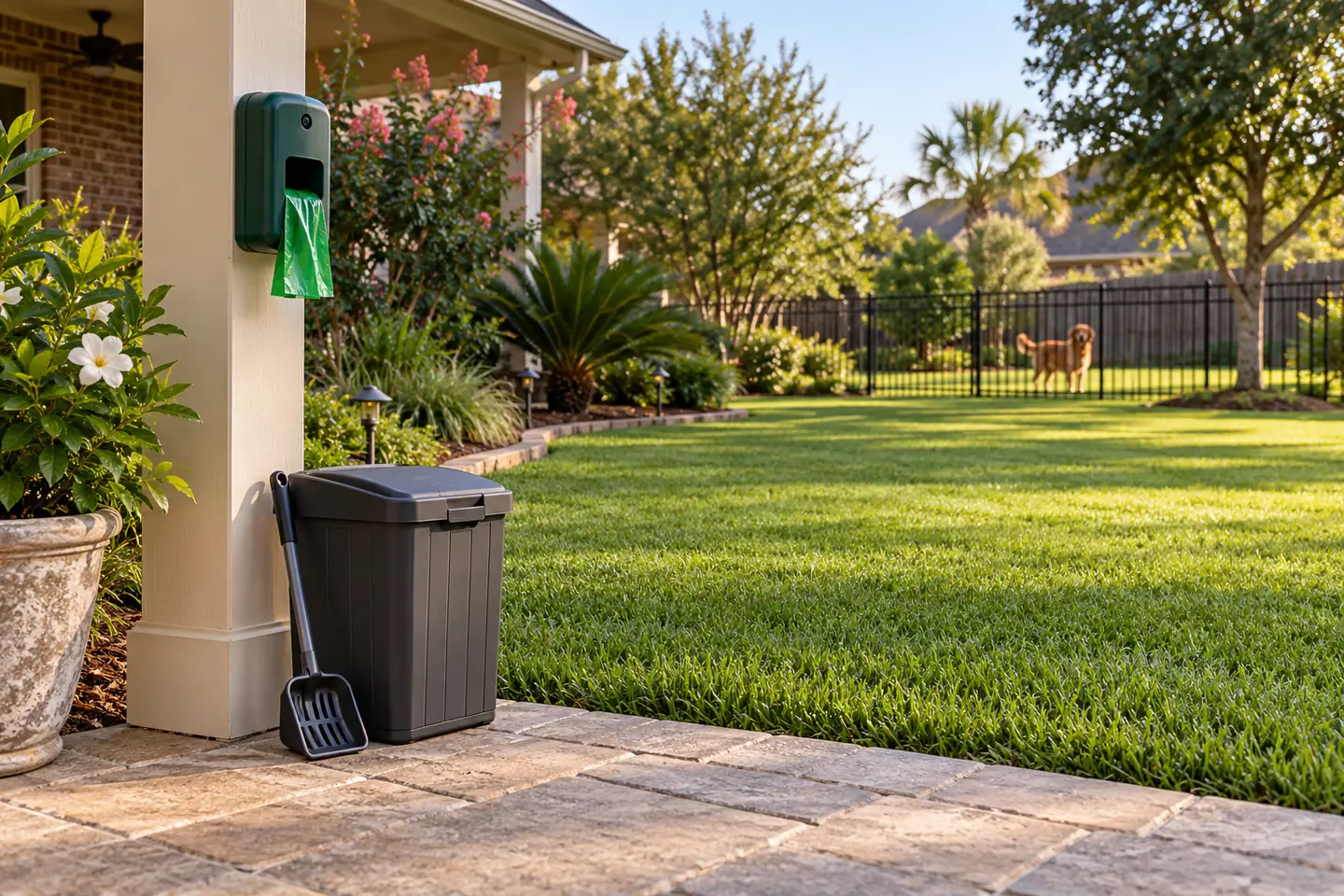
Start at one boundary and move in overlapping lanes, looking back from a second direction when grass is tall. Check behind planters, near fence corners, under low shrubs at the turf edge and beside the route from the back door. Dogs do not always use the same area, especially after rain or a change in routine. A quick glance from the patio can miss material hidden by broad grass blades. Complete the pickup before opening the yard to the lawn crew, then put the scoop, bags and bucket away from the equipment lane.
Keep the dog secure after preparation
Once pickup is complete, move the pet to a secure indoor room or another enclosure agreed with the owner. A dog can add fresh waste, move a toy or push a gate open in the minutes before arrival. Tell the crew which gate will be used and how it should latch after service. Do not rely on an underground fence to separate a pet from moving equipment. Happy needs a physically clear work area; pet supervision stays with the household. Return the dog to the lawn only after equipment and cleanup are finished and the owner has checked the gate.
Use tools without leaving new obstacles
Place a bag dispenser and lidded container on a stable hard surface outside the mower route. Store scoops with handles secured so they cannot fall into grass. Loose plastic bags can wrap around equipment, and an open bucket can spill when a gate swings. If the pickup person uses a rake or collection pan, account for both before leaving. A designated storage place near the door makes the routine easier without turning the lawn edge into a tool rack. Keep all supplies away from children and pets according to their instructions.
Rain does not count as cleanup
Rain can soften or disperse waste, making it harder to see while moving it toward low areas. Inspect the lawn after weather when it is safe to walk, especially along swales, downspout outlets and fence lines. If the ground remains saturated, the mowing decision may already need to wait. Do not add a hose rinse to make the yard appear clear. That can increase runoff and leave a wetter, less suitable route. Describe the actual condition to Happy so the service window reflects both sanitation and soil firmness.
Distinguish waste from lawn damage
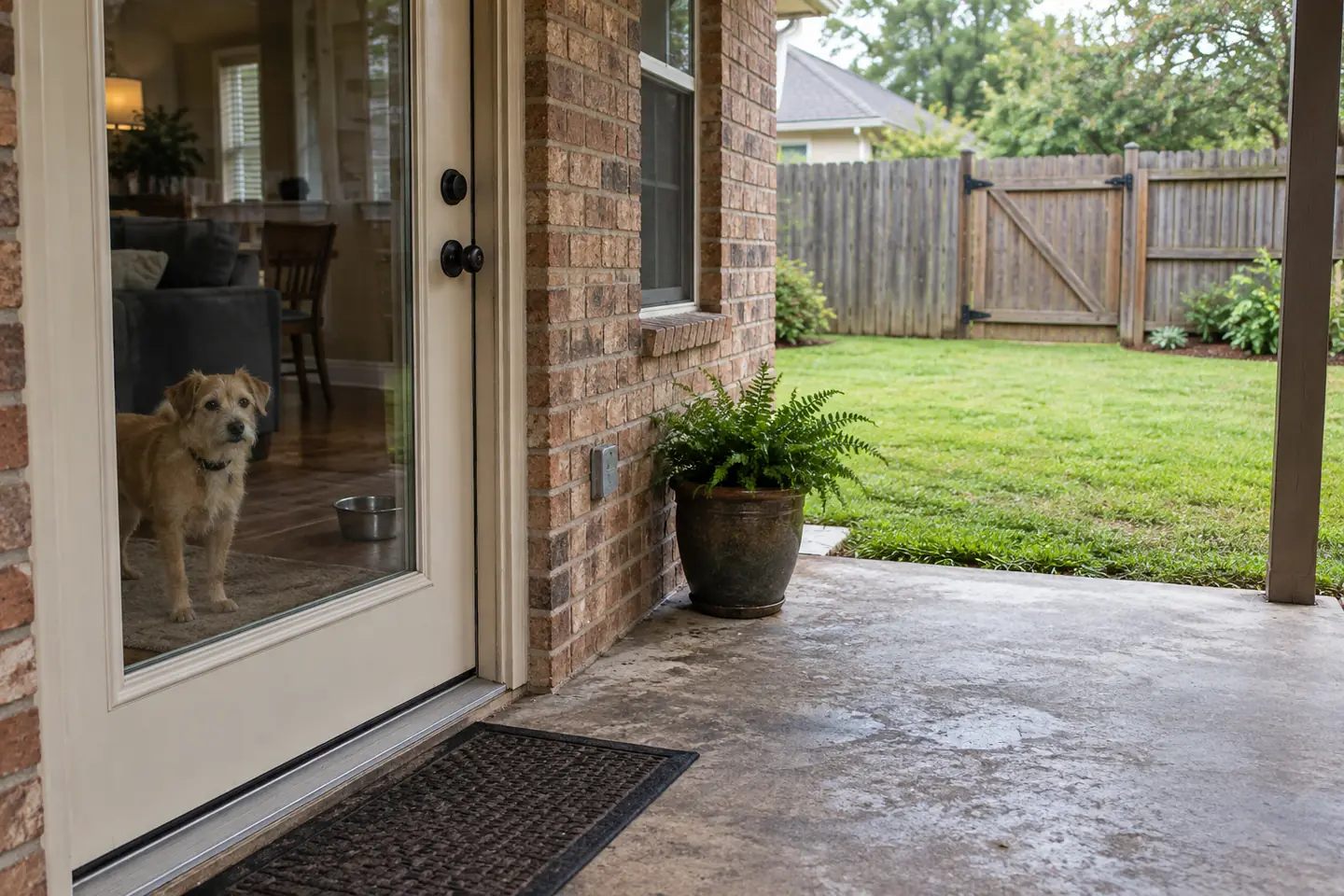
Brown patches, worn paths and digging can remain after waste has been collected. Photograph those separately so they are not mistaken for unfinished pickup. Happy can review how mowing fits the visible grass condition, but does not diagnose a pet's health or promise to repair every discolored spot. A veterinarian handles animal-health concerns, while turf recovery may require a separate landscape conversation. Keep the service note factual: collected waste, bare corner near the gate, or soft patch beside the water bowl. This makes the lawn request easier to assess.
Prepare shared yards with one responsible person
In a duplex or shared pet area, several households may assume someone else is handling pickup. Name one coordinator who confirms readiness before the lawn visit. Mark the maintained boundary and explain whether tenants have separate dog runs. A calendar or short message can prevent missed preparation without publishing personal details. Happy should not enter an occupied pet enclosure to discover who owns the animal or waste. If the shared area is not ready, the coordinator can arrange cleanup and a revised service plan.
Check more than the visible solids
Remove pet toys, chews, bowls, tie-out cables and small training accessories from the same route. A cleaned lawn can still be unsafe if a rope toy is hidden near the fence. Move bowls to a stable place so they do not spill over the working area. Do not leave a bagged collection on the grass for the mower operator to carry away. Finish the entire preparation sequence, including disposal and tool storage, before considering the yard released. This keeps pickup from solving one problem while creating another.
A useful preparation checklist
- Pick up the entire maintained lawn in overlapping lanes.
- Dispose of collected material through the locally allowed method.
- Store bags, scoops and containers outside the mower route.
- Remove toys, bowls, cables and loose pet accessories.
- Secure the pet and confirm the gate arrangement.
- Tell Happy about any area that remains unavailable.
Discuss repeated problems before changing frequency
If waste repeatedly remains on service day, a shorter mowing interval will not solve the preparation gap. Review the pickup schedule, who confirms it and whether the dog can use a smaller temporary area before arrival. The owner may prefer a dedicated pet-waste provider. Happy can adjust the lawn route or visit timing when practical, but should not silently expand the service into sanitation work. A dependable handoff is easier for everyone than rushed cleanup while equipment waits at the curb.
Keep cleanup claims modest and accurate
A visually cleared lawn is ready for a mowing assessment; it is not certified disinfected, pathogen-free or safe for every activity. Avoid applying household cleaners, bleach or deodorizing products to grass as an improvised fix. If a professional treatment was used, tell Happy what was applied and provide any relevant access directions from that provider. The lawn crew should follow the released work window, not guess from smell or color. Families can make their own decisions about play and pet access after the visit.
Send a useful update instead of an awkward explanation
A brief message is enough: pickup is complete, the dog is inside, the side gate opens normally, and one muddy corner should be skipped. A wide photo can show the released route without close images of waste or personal activity. If preparation cannot be finished, say so before arrival. Happy can then discuss what work is possible. The point is a lawn plan that respects the crew's equipment, the household's pets and the place everyone wants to enjoy afterward.
Make the first visit after a trip easier
If a sitter cared for the dog while the household was away, confirm whether pickup was part of that arrangement. A yard can look ready from the door even when several days of use accumulated behind the shed. Complete a full walk before sending the lawn-ready message. The same applies after guests bring pets or a temporary dog run moves to a new corner. Happy only needs the current released area and pet-security plan; personal travel details are unnecessary. Updating those two facts keeps a routine change from surprising the crew.
Keep the collection point out of runoff
A lidded bin should sit where it can be used and serviced without blocking the gate or allowing spilled material to wash toward a drain. Follow the container and local collection instructions, and clean the surrounding hard surface through an appropriate household routine. Happy should not empty an unknown waste bin or move it into a flower bed for convenience. If its location narrows the mower turn, choose a permanent storage spot with the owner before the visit. This small layout decision makes repeated preparation much easier.