
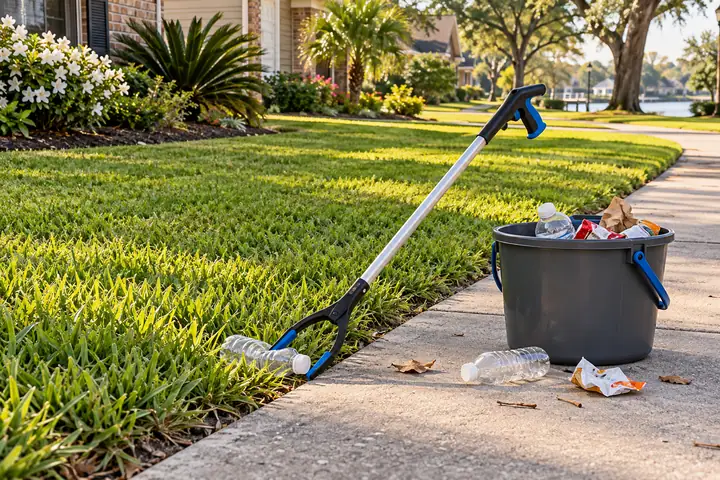
Begin with the likely source of the debris
Ask what happened: windblown trash, a dropped glass, a vehicle incident, a tipped cart or construction work. The answer helps define the search area. A broken container can scatter beyond the place where the largest piece landed, while roadside litter may collect along an entire curb. Happy does not investigate incidents or certify cleanup. The owner should arrange the appropriate collection before lawn service and show which areas have been released. If the source is unknown, preserve a wider exclusion rather than assuming one quick pass is enough.
A mower is not a litter shredder
CPSC warns that objects struck by mower blades can be thrown with enough force to cause serious injuries. Plastic may wrap around a shaft, metal may damage equipment and glass may scatter into smaller pieces. Do not expect a bagging mower to collect an unsafe debris field. Keep blades off until the surface is cleared. The operator's normal visual walk is a useful final check, but it cannot replace deliberate cleanup of a known incident hidden in tall turf.
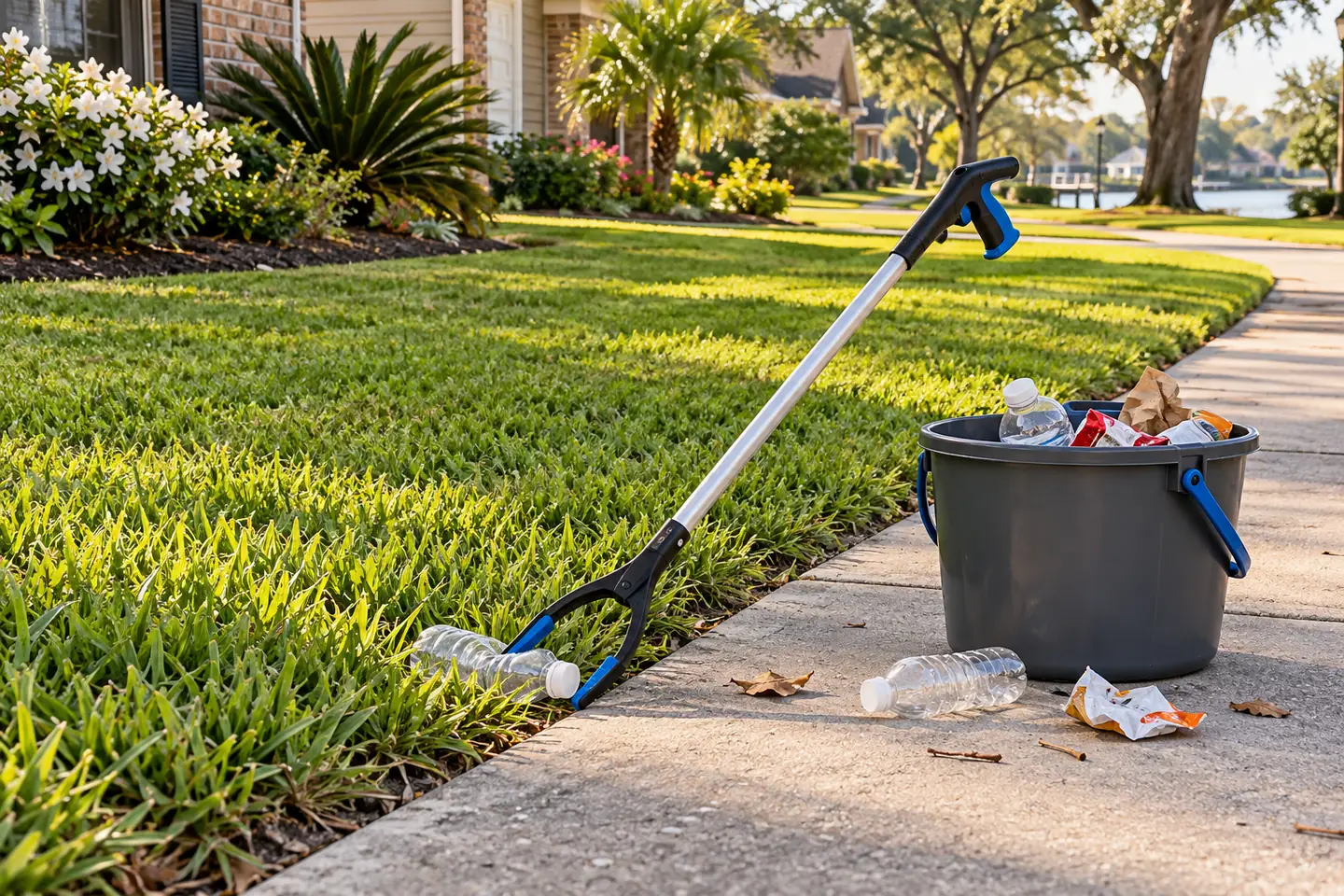
Keep sharp and unknown materials separate
Broken glass, needles, chemical containers, batteries and suspicious material require an appropriate cleanup method and protective equipment. Do not pick them up barehanded or place sharp items in a thin bag that can puncture. Contact the local waste authority or a qualified cleanup provider for the material involved. Happy's routine lawn scope does not include hazardous-waste handling. Mark the area from outside it and prevent people and pets from walking through while the owner arranges the correct response.
Search in good light from more than one direction
Glare can reveal a shard from one angle and hide it from another. Walk safe adjacent ground and inspect the affected lawn in overlapping strips. Look beneath broad grass blades, at the sidewalk seam, under the lip of a curb and beside fence posts. Do not kneel into an uncertain area to improve the view. If debris is embedded in soil, the owner may need specialist help or surface restoration. A photo of the broad location is useful for coordination even when individual fragments are too small to photograph clearly.
Do not blow the problem into a bed
A blower can move wrappers, glass and grit into mulch, shrubs or drains where cleanup becomes harder. Raking can also spread fragments if used without a suitable method. Ordinary leaf blowing should wait until the debris is addressed. EPA stormwater guidance advises keeping trash and yard debris out of drains. A clean sidewalk achieved by pushing unknown material toward the gutter is not a completed cleanup. The waste should leave through the appropriate disposal route, not become the next property's problem after rain.
Inspect after carts and bins are moved
Trash and recycling containers can hide loose glass or metal beneath their wheels. The owner should move them safely, then check the exposed hardscape and lawn edge. Do the same where bags were temporarily staged. If a cart tipped during collection, review the path between the cart and truck, including driveway crossings. Do not assume the collection vehicle removed every small item. A final daylight inspection after the containers are stored gives the lawn crew a clearer starting point.
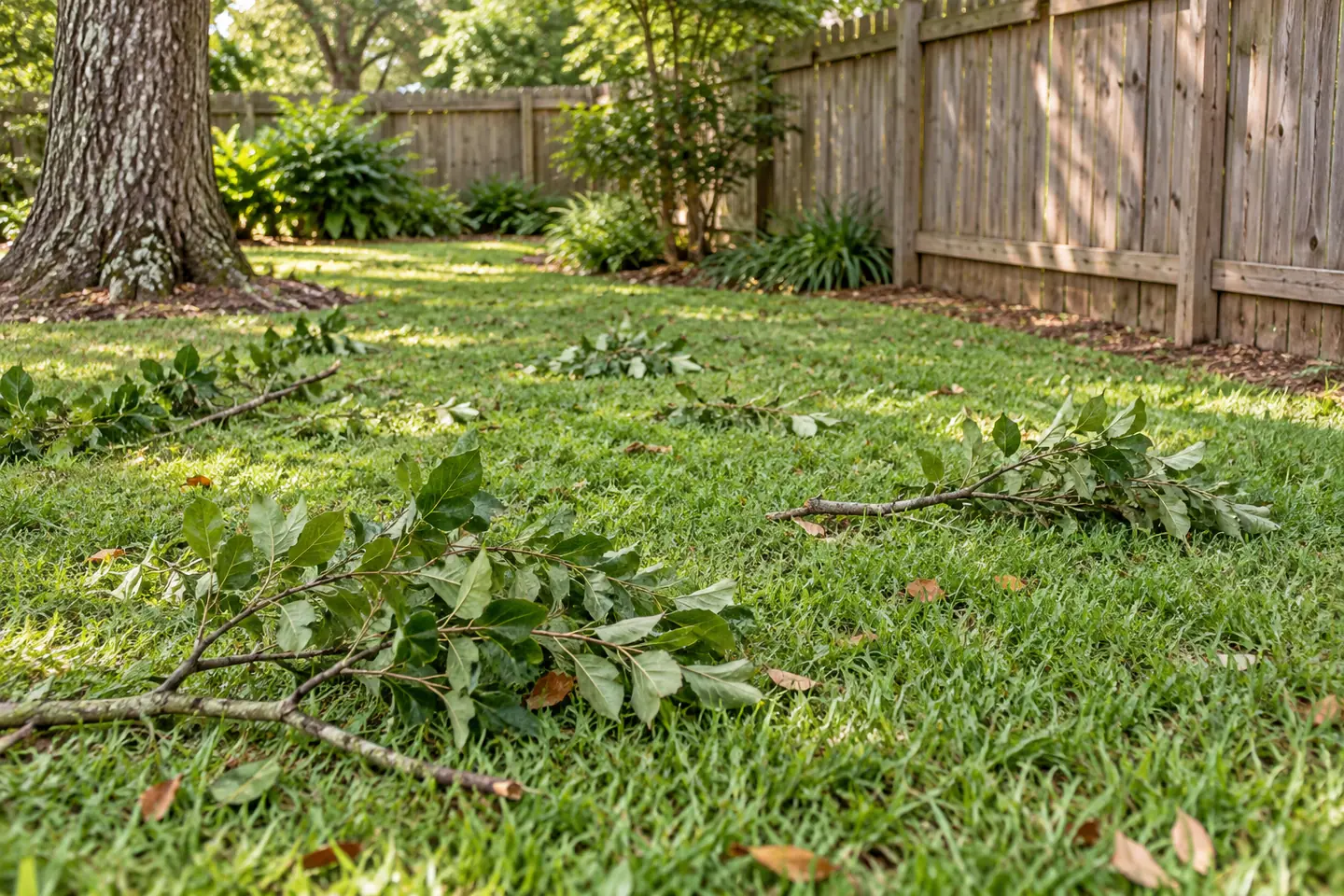
Roadside litter needs a traffic boundary
Stay out of the vehicle lane while inspecting curbside grass. The owner should not ask a mower operator to step into traffic to retrieve a bottle. If debris lies on a public roadway, use the appropriate public reporting or cleanup channel. For the grass strip under the service agreement, identify a safe approach from the sidewalk or yard. Parked cars can hide debris and restrict discharge direction. Service may need a quieter time or an excluded curb section until access is controlled.
Tall grass can require staged preparation
When litter is hidden in overgrowth, the safe response may be a cleanup assessment before any full cut. Send wide photos and describe known debris rather than requesting the lowest possible mowing height. Happy can evaluate the visible lawn and access, but should not promise to uncover a hazardous field with machinery. The owner may need to arrange controlled cleanup and then revisit the mowing scope. Two deliberate stages can prevent the first cut from creating a much larger scattered problem.
Use a release checklist
- Identify what was dropped or scattered and its likely extent.
- Arrange appropriate handling for sharp or unknown material.
- Check turf, hardscape seams, cart locations and bed edges.
- Keep children, pets and bystanders outside the affected area.
- Remove collected waste through an allowed disposal method.
- Tell Happy exactly which route is cleared and which remains closed.
Check the lawn again after weather
Rain can expose buried fragments, carry litter downhill or push pieces against a drain grate. Wind can bring a new round of wrappers even after successful pickup. Recheck the area before the service window, especially if cleanup occurred several days earlier. A newly visible piece does not establish who missed it; record the location and address it before blades run. Keep observations factual so the owner can decide whether another professional cleanup visit is needed.
Keep magnets in perspective
A magnetic sweeper can help find some ferrous fasteners, but it will not collect glass, aluminum, plastic or every buried object. Do not use a successful magnet pass as proof that a mixed debris field is safe. The type of material determines the method. Roofing cleanup, vehicle damage and ordinary windblown litter require different attention. Happy should be told which method was used and where, while the owner retains responsibility for the release decision.
Record exclusions so another crew understands
Use a stable landmark and a wide image to mark the affected rectangle or strip. Avoid vague instructions such as be careful near the street. A useful note identifies the sidewalk corner, the approximate lawn zone and whether it remains closed pending cleanup. Do not publish private incident details or exact coordinates. Once the owner confirms completion, update the note instead of silently removing the restriction. That gives every operator the same current information.
Know when a small cleanup becomes a separate job
A few safe wrappers visible on top of grass are different from repeated shards, dumped waste or material mixed into soil. Scope changes should be discussed before service. Happy may be able to mow the rest of the yard while the affected part waits, provided there is a safe independent route. The goal is a clean finish with an honest boundary around what has actually been inspected and released, not a promise that mowing can solve every kind of debris.
Review event and party cleanup separately
After a gathering, look for bottle caps, skewers, balloon ties, confetti packaging and plastic cutlery as well as obvious cups. Tables and coolers may have hidden the ground during the first pickup. Have the event organizer remove temporary equipment, then inspect the exposed grass before lawn service. Happy should not discover a metal tent pin beneath a paper plate. If cleanup remains underway, close that section and keep the crew's access separate from people carrying furniture. A final empty-lawn photograph is more useful than a picture taken while the party setup is still present.
Check artificial hiding places at the edge
Landscape edging, drain rims and the space beneath a portable planter can trap small debris that a broad lawn walk misses. Ask the owner or cleanup provider to review those points from safe footing. Do not reach into an uncertain gap or lift heavy objects during mowing preparation. Once a known debris incident is cleared, keep its affected boundary in the note for one follow-up check. This helps distinguish new windblown litter from a recurring cleanup problem without making unsupported claims about who left it.
Preserve cleanup access for the responsible provider
If a specialist must return, keep the affected lawn free of new storage or parked equipment so the inspection can be completed. Mowing the surrounding released area should not bury the boundary under a windrow. Direct clippings away from the excluded patch and keep its markers visible. The owner can then obtain a focused release instead of starting the search over after every maintenance visit.