
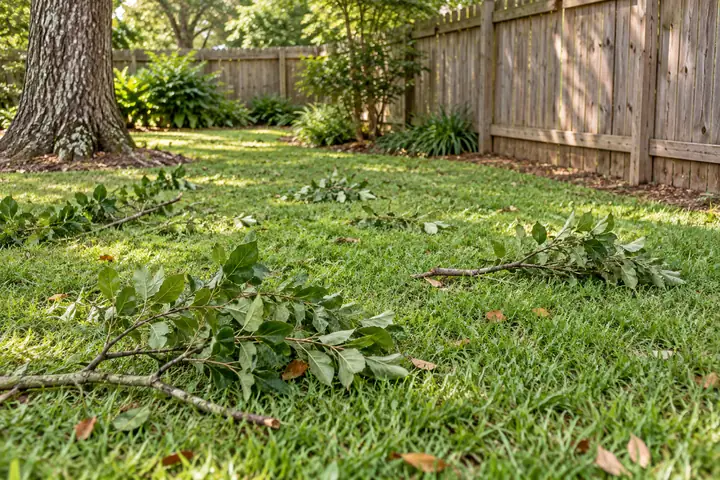
Look at the lawn before looking for a shortcut
A few small twigs and a lawn covered with fallen branches are different conditions. Show Happy Grass the current surface before requesting the usual cut, particularly after wind or other tree activity. Do not assume that woody material becomes part of ordinary clippings simply because grass has grown around it. The mower should not be used to discover which pieces can pass beneath the deck.
Take a wide view from accessible ground so the distribution is visible. Are pieces scattered across the open lawn, concentrated beside a fence or blocking the entrance? A photograph of one twig says little about the overall preparation needed. Explain the extent honestly and identify any section you cannot inspect appropriately. A clear record helps separate a normal grass-maintenance request from a property that first needs another kind of cleanup or assessment. The task can still be straightforward once everyone knows which surface is actually available for the proposed visit.
Keep overhead concerns outside the mowing decision
Before focusing on loose material, note any known concern above the work area. If a branch remains hanging, a tree has changed position or a utility line may be involved, keep people and equipment away and contact the appropriate qualified source. Do not approach or disturb a questionable limb to make a better photograph for a lawn quote. This guide does not assess trees, provide emergency advice for a particular site or offer tree-removal service.
Tell Happy that the area has a restriction and describe the lawn section affected from a suitable position. Do not present a cleared patch beneath an unresolved overhead concern as ready merely because the small debris has been removed. The ground task and the condition above it are separate questions. A partial lawn visit may be considered only where suitable independent access and an understood boundary exist. The mowing plan should never depend on a crew member deciding whether a damaged tree or line is safe while attempting to reach ordinary grass.
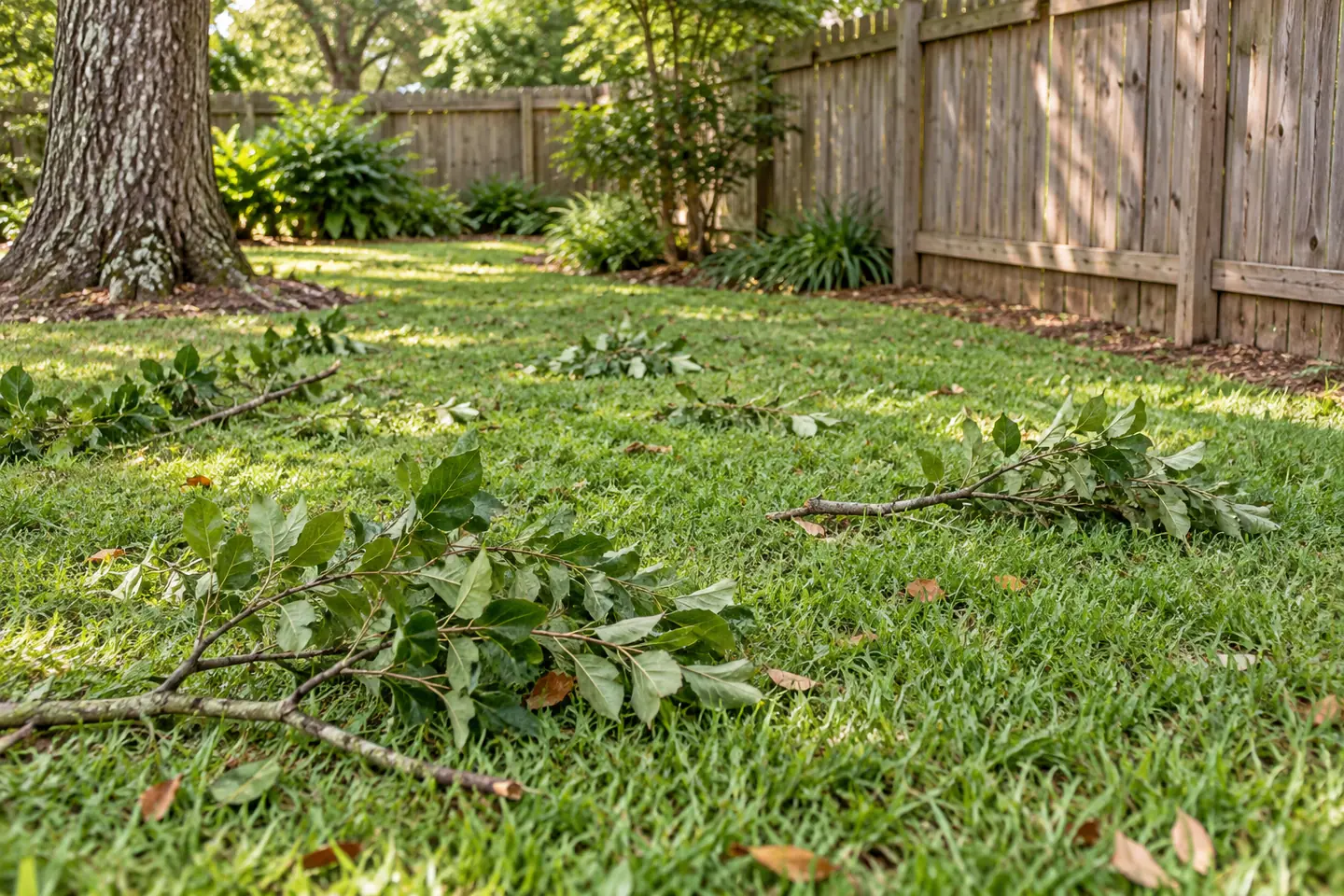
Identify what is actually on the ground
Leaves can conceal the thicker ends of branches, and a short visible piece may extend farther beneath the canopy than it first appears. Photograph the material without pulling on something whose condition or connection is uncertain. Explain any known mix of wire, broken household objects, construction scraps or other debris. Do not describe a mixed layer as ordinary twigs if you have not been able to see what it contains.
Toro's operator guidance calls for inspection of the operating area and removal of objects that machinery could throw. That principle supports proper preparation rather than deliberately mowing over woody debris. The actual equipment manual governs operation. For the household, the useful action is to identify the affected area, clear ordinary items only when it is appropriate to do so and disclose what remains. A request for the grass to be cut should not conceal a known obstacle simply because it is small, brown or partly hidden among leaves.
Confirm cleanup responsibilities before quoting the cut
Do not assume branch collection or removal is included in an ordinary mowing, edging, weed-eating and blowing visit. Explain what material is present and ask Happy to confirm the proposed scope. If another person will clear the lawn first, describe that preparation and whether the resulting pile will remain somewhere on the property. The mower route needs to reflect the condition after the cleanup, not only the promise that someone will handle it.
Avoid committing the crew to tree work or debris hauling that has not been confirmed. A separate cleanup provider or appropriate tree professional may be needed depending on the material and condition. The lawn quote can proceed from a defined surface once that responsibility is clear. Keep the record simple: the grass area to maintain, the debris or restriction that remains, who prepares it and the fallback if it is not ready. An honest limited scope is more useful than a broad lawn request that quietly relies on unplanned removal work.
Keep temporary piles out of the travel route
A pile at the side gate can block a much larger backyard even when the grass inside has been cleared. Show where collected material will be stored and confirm that it leaves the entrance, turning space and path back out usable. Do not place a pile over a utility cover, drainage opening or another feature merely because that corner appears convenient. The storage decision should account for the property and any separate restrictions.
If the pile remains beside grass you want maintained, identify the intended margin. A temporary pile can spread or settle between the photograph and the visit, so update the view when its outline changes. Do not expect equipment to push it aside to reach the last strip of turf. The visit can be reviewed around the actual available boundary. That distinction helps prevent confusion afterward about whether grass beside the pile was missed or intentionally left outside the area that could reasonably be reached under the agreed arrangement.
Review the surface after debris is cleared
Removing branches can reveal flattened grass, disturbed soil or an object that was not visible before. Look from an accessible edge and photograph the uncovered area if it differs from the surrounding lawn. Do not assume that every exposed mark was caused by mowing simply because it becomes obvious around the time service resumes. The debris and cleanup history belong in the maintenance conversation.
If a larger piece had rested in one place, the grass underneath may not immediately match the height or appearance of open turf. A suitable cut can maintain reachable leaves without promising instant recovery of a footprint. If the ground is soft, has an unfamiliar opening or contains remaining sharp material, identify that section rather than asking for a normal pass over it. The preparation process should make conditions clearer. It should not conceal a changed surface under loose clippings or a thin layer of soil just so the yard can be described as ready on the calendar.
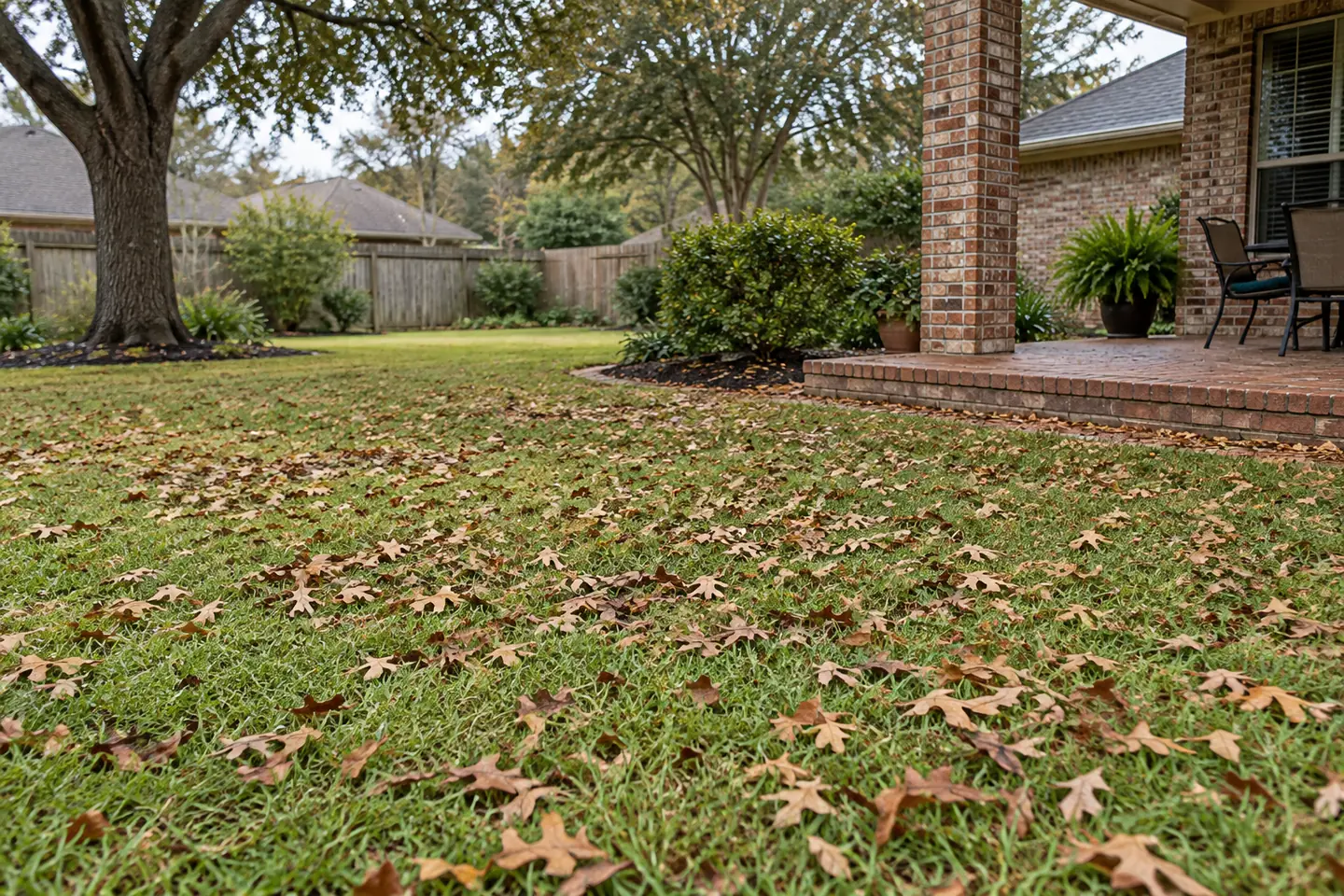
Record timing when material keeps appearing
Some yards receive occasional fallen twigs between regular visits. If you are seeing a repeated pattern, note where material accumulates and when you last checked the surface. Do not diagnose the tree's condition from the frequency of debris alone. Seek appropriate tree advice when there is a concern, and tell Happy about any resulting work restriction. Lawn maintenance can be coordinated around that information without pretending to provide an arborist's assessment.
A practical preparation check can include these points:
- View the distribution from accessible ground.
- Identify overhead or utility concerns separately.
- Confirm who clears the lawn and where material will remain.
- Update the access picture after cleanup has actually occurred.
For an unattended property, ask the person responsible for preparation to confirm the current state instead of forwarding an older picture. A clear surface yesterday may have changed again before the proposed visit. The service request should represent the yard that equipment will encounter rather than a past moment when it looked open.
Request a cut of an understood lawn area
Send the wide lawn view, any appropriate closer surface picture and the planned cleanup sequence. Explain whether the front and back have separate entrances so Happy can review any genuinely independent maintained area. Do not assume that a cleared front lawn establishes a suitable route past a restricted tree corner to reach the back. Access should be considered as part of the entire requested visit.
After service, photograph concerns before more material falls or the household rearranges the cleanup pile when practical. Explain the timing of any later change. A new branch on a finished lawn is a different observation from woody debris present before equipment entered. Call 504-339-3571 and ask for Happy to discuss the property. A known grass surface, clear responsibility for debris and an honest boundary around unresolved concerns make it possible to review ordinary lawn care without inventing a tree, storm-response or removal service that was never part of the quote.
Keep the ground review separate from the overhead view
After material falls, a wide photograph can show both the lawn surface and branches above it. Explain which part you are asking about. A detached twig on the grass belongs to the ground condition being described; a hanging or standing branch is a different concern. The fact that both appear in one image does not make them one maintenance task.
If someone clears ground material before the proposed visit, provide an updated view of the grass and the remaining route. Do not assume that the original photograph still represents the starting condition, or that removing visible material answers every question about the area.
Keep any separate tree assessment or cleanup arrangement clearly identified. The lawn conversation can resume from the current ground view without implying that ordinary mowing includes tree work or an unconfirmed debris-removal package. This gives everyone a clearer understanding of what changed and what remains outside the requested grass work.