
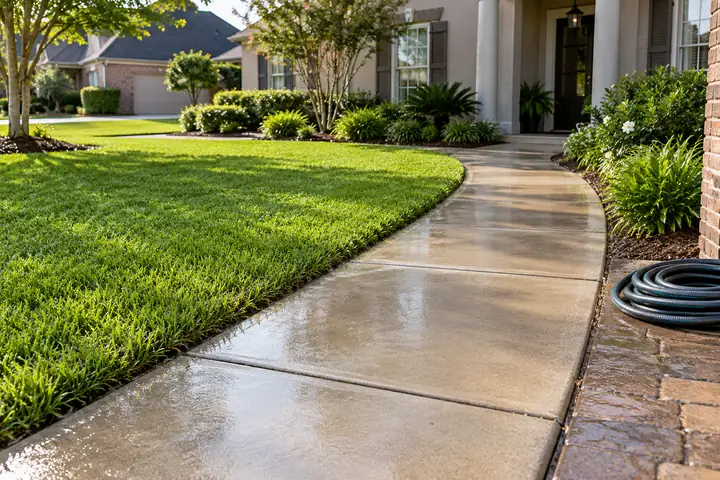
Coordinate the two service windows
Ask the cleaning provider when the area will be ready for ordinary foot traffic and lawn equipment. Water, cleaning products, coatings and surface condition all affect the answer. Do not assume a universal wait time. Tell Happy which surfaces were washed, whether a sealer was applied and which access points remain closed. If both visits are planned on the same day, one crew should finish and release the route before the other begins. Simultaneous work can put mower discharge near a cleaner or a pressure hose across the mower lane.
Separate clean paving from firm turf
A sidewalk may look dry while the grass beside it remains saturated from rinse water. Walk the lawn edge before equipment enters and look for footprints, standing water or soil that smears. CPSC advises against mowing wet grass. A damp fringe can also cause tires to carry mud onto the newly cleaned surface. Happy may leave that strip temporarily while maintaining a released section elsewhere. The decision should follow the actual footing and blade condition, not a calendar promise made before the washing occurred.
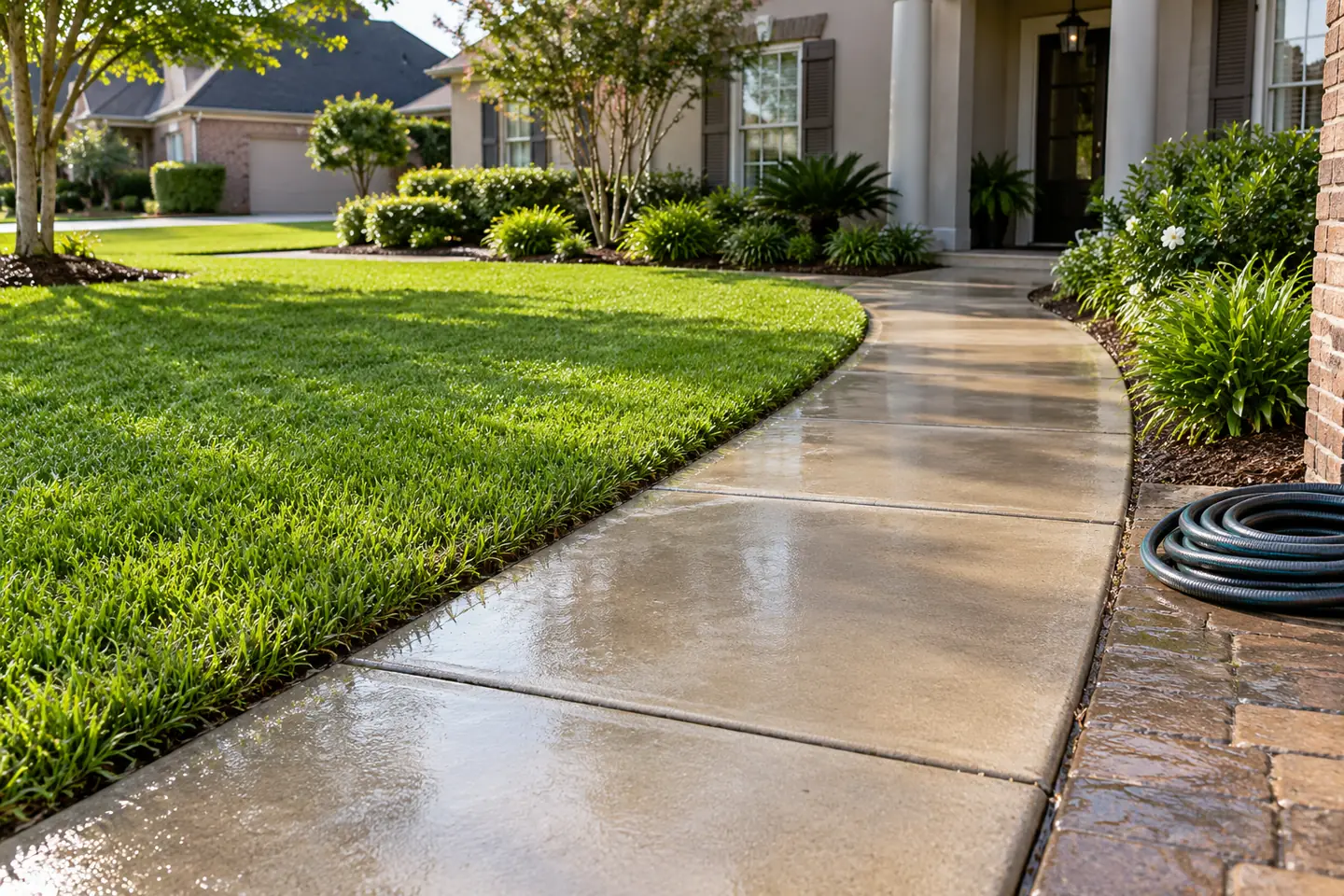
Identify what products were used
The owner should obtain any relevant access or reentry directions from the cleaning provider and product labels. Happy does not identify a residue by smell, neutralize chemicals or decide whether a cleaning mixture was safe for plants. If there is visible foam, discoloration, a spill or uncertainty, keep people and equipment out of the affected strip and contact the provider. A lawn crew should not mow through an unknown deposit to make it less visible. Clear product information supports a practical visit plan without turning the service into chemical cleanup.
Trace every hose before reopening the gate
Pressure hoses, garden hoses and power cords may run from the driveway around a corner or through a bed. The cleaning crew should disconnect and store them before the lawn visit. Do not assume the visible coil is the only line. Check behind planters, under a gate and beside the outdoor faucet. Happy will not disconnect unfamiliar equipment or drag a line out from beneath a machine. The released route should be physically empty, with no couplings or hose loops left where a tire or blade could catch them.
Return furniture with the mower route in mind
Cleaners often move chairs, planters, mats, bins and decorative objects onto grass. The owner or cleaning crew should return them to their approved places before service. A heavy wet planter should not become Happy's surprise lifting task. Check the grass underneath for small feet, broken pieces and soft impressions. If an object must remain on the lawn, mark its footprint as an exclusion and agree on the finish around it. Do not ask the mower operator to slide it a few inches at a time while blades are running.
Inspect the edge for displaced material
Washing can move sand, joint material, gravel, bark and dirt from paving into adjacent grass. Walk the transition and collect hard debris through the cleaning provider's completion process. A newly exposed paver edge may be uneven or have a washed-out support area. Happy should not rebuild joints or repair the base. Keep wheels away from a questionable lip and document it for the owner. A crisp lawn edge is easiest when the hardscape boundary is stable and visible before trimming starts.
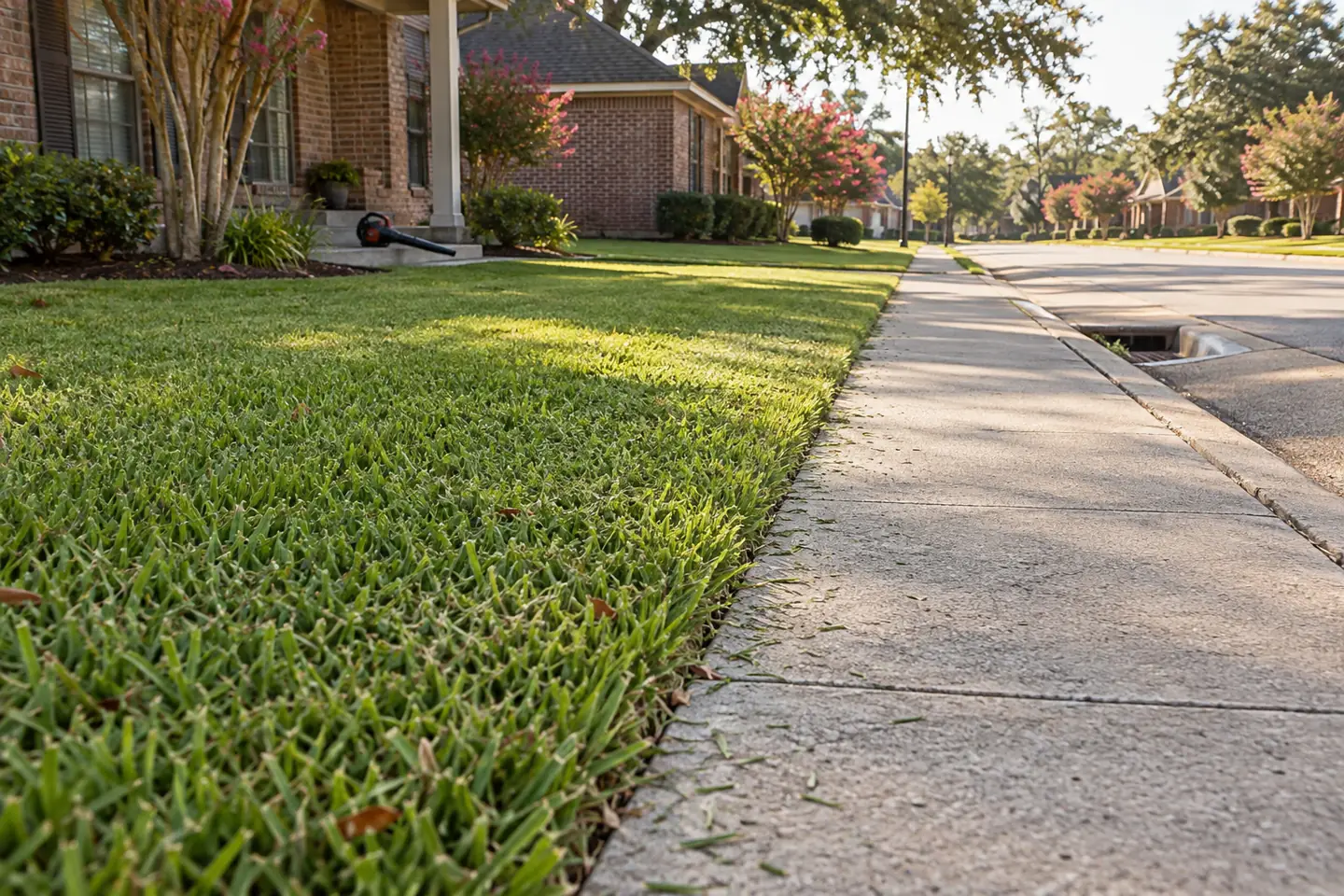
Keep the next discharge away from clean surfaces
Choose a mowing pattern that sends clippings into open turf where practical, then finish paving with controlled blowing. Avoid depositing dense wet grass onto porous concrete or a freshly treated surface. If a sealer or coating is still curing, the cleaning provider should define the no-contact window. Happy should not touch-test the surface or use blower air as a drying method. A brief delay can preserve a finish that took considerable work to achieve.
Do not wash lawn debris into a drain
EPA stormwater guidance explains that washwater and yard waste can contribute to runoff pollution. Leaves, grit and clippings should be collected or directed to their appropriate destination rather than flushed into a gutter. Happy's final blowing should leave the surface clear without pushing a concentrated pile into a storm inlet. If the washing project left sediment at a drain, notify the owner and cleaning provider. Drain cleaning and washwater management remain separate from ordinary mowing.
Use a post-washing handoff checklist
- Confirm the cleaning provider released surfaces for the next activity.
- Share relevant product or coating access instructions with Happy.
- Store every hose, cord, nozzle and temporary covering.
- Return movable objects and inspect their lawn footprints.
- Check grass firmness and hardscape transitions after rinsing.
- Identify any wet strip or surface that must remain closed.
Watch soft soil near downspouts and steps
Rinse water may concentrate at a downspout outlet, low stair corner or drainage swale. Those points can remain wet longer than the broad lawn. Mark them with a wide photo and a stable landmark. Do not cover the mud with clippings or move soil to redirect water during lawn service. If the condition repeats, the owner may need a drainage or landscape review. Happy can use a different turn or defer the patch while keeping the rest of the maintenance plan understandable.
Recheck plant protection and temporary ties
The cleaning provider may have covered plants, tied branches back or placed protective plastic around equipment. All temporary items should be removed or clearly identified before mowing. A loose sheet can wrap around a machine, and a tie on a low branch can be hard to see. Happy should not remove another provider's protection without owner confirmation. If a covered area must stay in place, exclude it and ensure the remaining route does not pull or blow against the material.
Describe damage without guessing at a cause
If turf appears pale, flattened or washed out after the project, take a photo and record when it became visible. Do not automatically label it chemical burn or blame equipment. The owner should discuss product exposure with the cleaning provider and plant concerns with an appropriate horticultural resource. Happy can adjust the next cut around the visible condition. Keeping the note factual helps the correct person evaluate the issue and avoids using mowing as an unproven repair treatment.
Put the normal lawn pattern back together
Once surfaces are released and turf supports equipment, restore the ordinary mowing route gradually. The first visit may use wider turns and a protected margin beside the freshly cleaned paving. After confirming there are no remaining hoses, displaced stones or wet pockets, update the property notes. A clean walkway should stay clean because the work is coordinated, not because the lawn is cut excessively short. Send Happy a current wide photo and the provider's release information so both jobs finish with a tidy result.
Check where protective mats rested
The washing crew may place equipment mats or temporary boards at a hose connection. Once those are removed, inspect their footprint for trapped hardware, compressed grass and wet soil. Do not assume a tidy rectangle is firm enough for a mower turn. If the mat sat beside a low cleanout or valve box, confirm the cover remains visible. Happy can preserve the area while the owner arranges any repair. This small follow-up is particularly useful when a cleaning machine remained in one spot for most of the day.
Give the clean surface a practical finish standard
Ordinary mowing can leave a few dry grass pieces that are removed during cleanup, but it should not be judged against a promise that no particle ever touches paving. Agree on controlled discharge, a clear walking surface and respect for fresh treatment restrictions. If the owner wants a special cleaning method after mowing, confirm that scope with the appropriate provider first. Happy should not add water, solvents or a pressure rinse to chase a mark. A realistic finish keeps the two services coordinated without making unverified surface-care promises.
Mention cleaning beside outdoor equipment
If washing occurred near an AC pad, generator, charging unit or low building opening, tell Happy whether any temporary protection remains. The cleaning provider should remove coverings and release those areas. Lawn crews should not peel plastic from equipment or judge whether water entered an enclosure. Work can continue around the clear released lawn while the owner resolves any remaining equipment concern.