

Confirm which parts of the project are released
Ask the concrete contractor whether forms are coming out, when the surface can accept the intended traffic and which edges remain under repair. Curing and loading depend on the mix, weather and project, so Happy should not invent a fixed waiting period. A slab can look hard before the contractor permits equipment nearby. Mark the approved lawn route and keep the new concrete closed as directed. The owner should connect the contractor's release with the mowing schedule instead of treating the truck's departure as project completion.
Keep washout completely outside lawn service
EPA describes concrete washout as caustic material that should be contained so it does not reach soil or water. A pale puddle or crust beside a pour is not ordinary lawn dirt. Do not mow, rake, dilute or neutralize it during a lawn visit. Keep people and pets away and contact the contractor for appropriate cleanup. Happy does not handle concrete slurry or certify the ground afterward. The affected footprint remains excluded until the responsible provider addresses it and the owner releases the area.
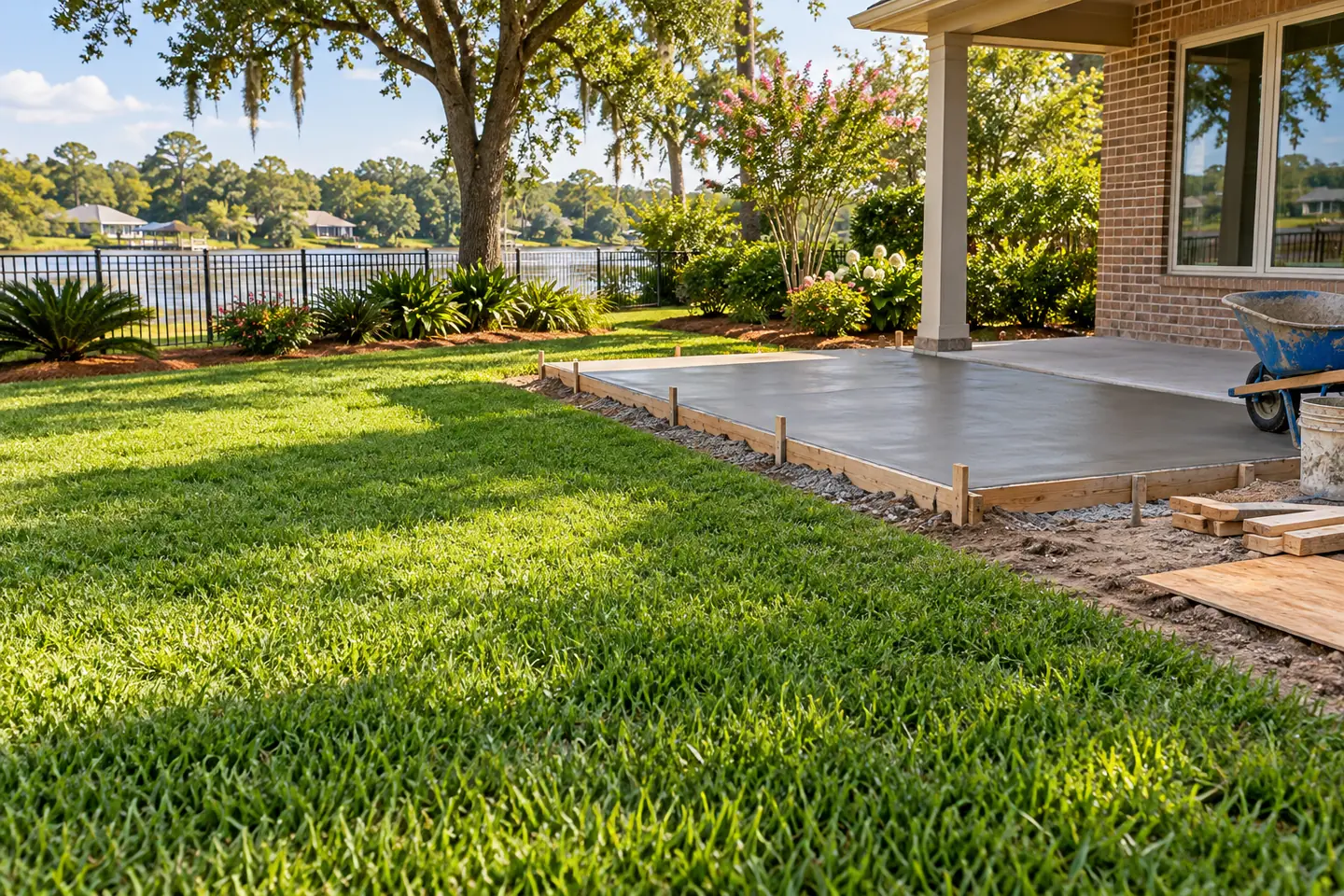
Account for form boards and every stake
Boards may be obvious while their nails, screws and metal pins disappear into grass. The contractor should remove forms and fasteners through its completion process. Happy should not pull stakes or kick a board aside to make one pass. Inspect the entire form line after removal, including corners and the route where boards were carried. CPSC mower guidance emphasizes clearing objects before cutting. A hidden fastener can turn a routine edging job into a thrown-object hazard, even when the slab itself is finished.
Inspect the aggregate apron
Small stones and concrete fragments often sit outside the finished edge. Collect them before mowing; do not rely on the deck to push them back. A blower can scatter aggregate farther into turf, and a sharp trimmer pass can strike it. The contractor or landscape provider should establish a clean transition with the appropriate surface material. Happy can then finish the grass from the lawn side. If a rough strip remains, document it as a separate repair zone rather than calling it an uneven cut.
Check backfill beside the slab
Soil placed against a new walkway or patio can settle, especially after rain. Walk the edge from stable ground and look for soft pockets, open seams or a sudden drop. Do not put a mower wheel directly on loose fill to see whether it holds. The project provider should confirm grade and restoration. Happy can maintain surrounding established turf while avoiding the fresh perimeter. A wider temporary margin is a sensible way to preserve the repair until the ground can support a regular pass.
Preserve drainage decisions made by the project team
A new slab can change where water moves, but mowing is not a drainage test. Record visible puddling or erosion without reshaping soil or cutting a trench beside concrete. The owner should ask the contractor or a qualified drainage provider to review the result. Keep clippings out of new channel drains, joints and low outlets. If the project includes a swale or planted basin, add its final boundary to the lawn map so the next visit does not flatten or fill it by accident.
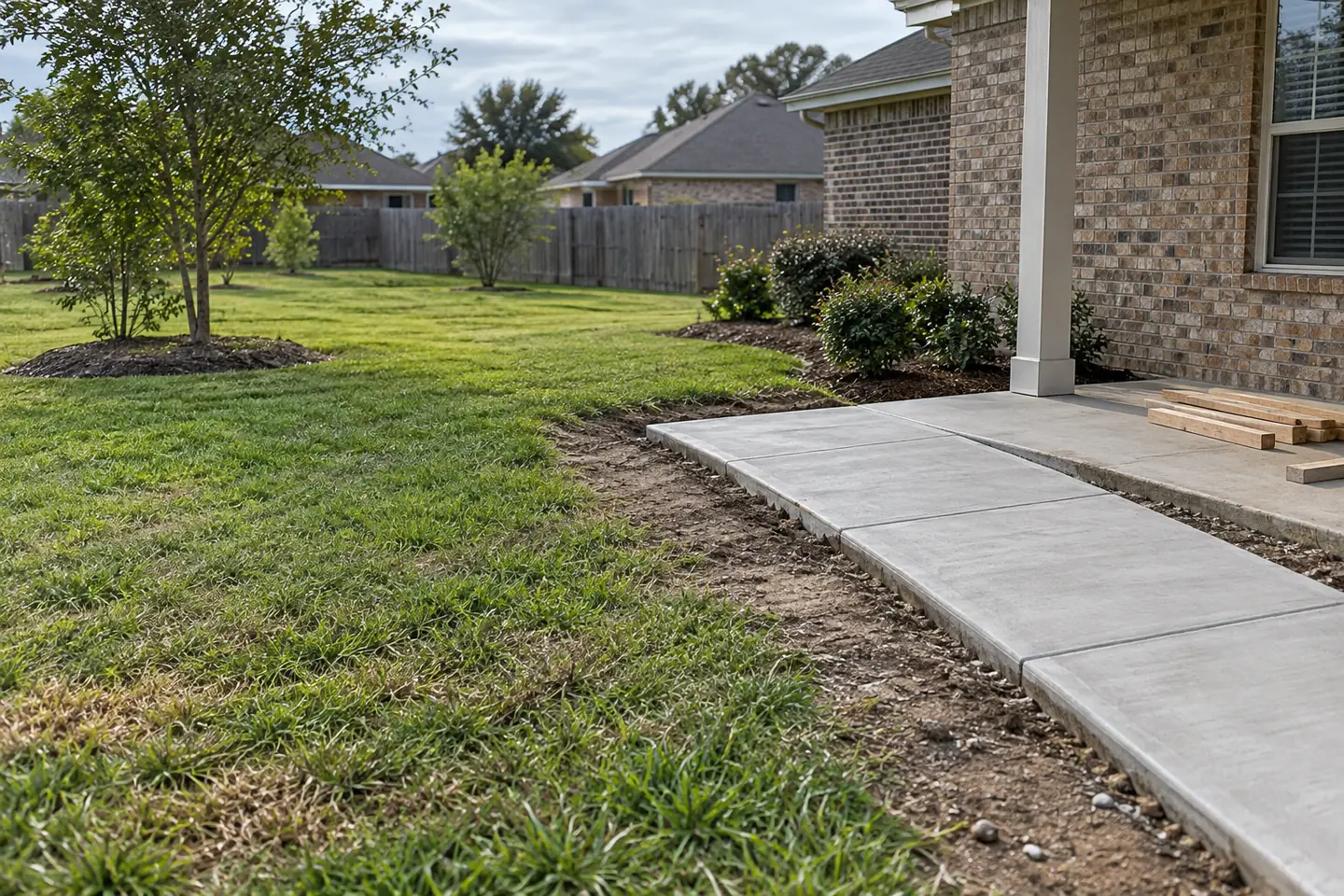
Separate access from surface appearance
The shortest mower route may cross the new pour, yet the approved route may need to go around the house for a while. Measure the alternate gate and turns before promising service. Do not remove contractor barricades or lay improvised boards over the slab. If no safe route reaches the backyard, the visit should wait or cover only an independent released area. A schedule adjustment is easier to manage than tire marks, chipped corners or a dispute over premature loading.
Keep tools and curing materials accounted for
Plastic sheeting, hoses, sprayers, buckets and blankets may remain as part of the contractor's curing plan. They should not be moved by the lawn crew. Ask the owner which items must stay and close that work zone clearly. Loose plastic at a lawn edge can wrap around equipment, while a hose can be hidden in shade. The contractor should remove or secure every temporary item before the perimeter is opened for routine grass maintenance.
Use a concrete-to-lawn checklist
- Obtain the contractor's surface and access release.
- Exclude washout, slurry and unknown residue for proper cleanup.
- Confirm forms, stakes and fasteners have been removed.
- Collect loose aggregate from grass and hardscape edges.
- Mark fresh backfill and any unstable transition.
- Update the lawn route around new drains, beds and slab corners.
Protect decorative finishes and expansion joints
Stamped, colored, coated or sealed surfaces may have special care directions. Happy should receive those directions before nearby blowing or equipment movement. Do not use an edger to scrape concrete off the lawn edge or a blower to clear uncured joint material. A sharp-looking border should follow the finished construction line without making contact. If the contractor left a protective strip, ask when it will be removed. The lawn crew can work to a temporary margin until the final detail is ready.
Watch the former equipment route
Ready-mix trucks, pumps and wheelbarrows may leave ruts far from the patio itself. Inspect the driveway shoulder, gate threshold and lawn turns used during the pour. Heavy tire tracks can hide broken sprinkler heads or displaced covers. Document those conditions before mowing resumes and ask the responsible provider to restore them. Happy should not press ruts flat or cut through exposed soil simply to make the yard look uniform. The access route is part of the project handoff, not an invisible exception.
Revisit after the first meaningful rain
Rain can reveal settlement, carry fines onto the lawn or expose a buried scrap. Once it is safe to walk, take a wide photo of the slab edge and low points. Compare with the pre-service note and decide whether the released zone remains usable. New washout-like residue or repeated sediment deserves contractor attention. Do not infer a structural defect from one wet patch, but do not hide it beneath clippings either. Keeping the surface visible supports a more useful review.
Make the first cut a careful transition
The first visit after concrete work may be lighter and more selective than normal. Maintain established grass at its appropriate height, keep turns away from fresh fill and leave a clear record of any excluded strip. Once the contractor closes the project and the owner confirms stable access, Happy can restore the regular pattern. A well-coordinated handoff gives the new hardscape a clean grass border while keeping construction cleanup, loading approval and repair with the people responsible for them.
Include saw-cutting and drilling in the handoff
Concrete work may continue after the main pour through cutting, coring or anchor installation. Dust, slurry and small fragments from that phase can reach grass that was previously cleared. Ask whether all follow-up work is complete before releasing the lawn. Happy should not mow beside active cutting or try to blow a dusty work zone clean. The contractor should contain and collect material using its appropriate process, then remove power leads and tools. A second release may be needed even if an earlier lawn-side inspection passed.
Keep temporary paths from becoming permanent shortcuts
Workers may bridge a soft patch with plywood or create a gravel lane to move material. Those routes were selected for the project and may not suit routine lawn equipment. Have the responsible crew remove temporary material and explain any intended permanent change. If a gravel strip remains by design, update the mowing boundary rather than repeatedly crossing it. Happy can maintain the resulting grass footprint once it is clearly defined, while the owner decides whether the construction path needs restoration.
Check corners where forms changed direction
Short stakes and offcuts often collect at slab corners, step returns and narrow spaces behind posts. Include those pockets in the contractor's cleanup request. A straight border that looks clear from the patio can hide one metal pin at the turn. Keep the immediate corner excluded until it can be inspected from stable footing.