
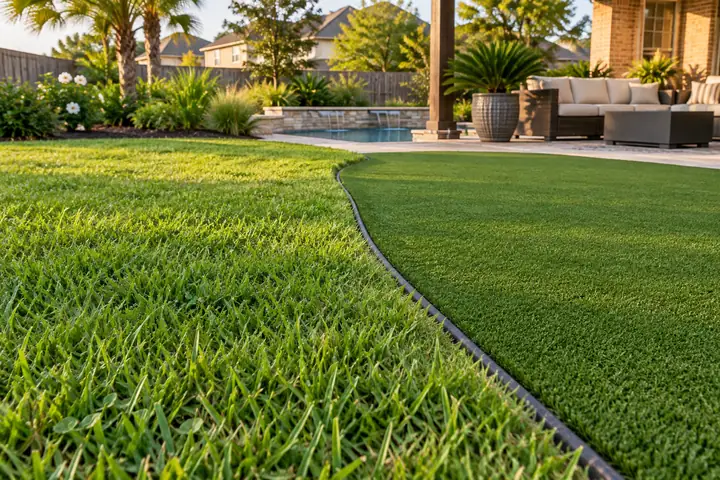
Identify the installed edge and its care instructions
Ask the owner for the artificial-turf installer's maintenance directions and a map of seams, anchors and edging. Products and installations differ, so Happy should not assume every synthetic surface tolerates the same equipment. Show where natural grass ends, whether the edge is raised and which areas are covered by a warranty. Happy maintains the agreed living lawn; it does not install, repair or certify synthetic turf. A clear division prevents a routine finish from becoming accidental work on another system.
Distinguish synthetic fibers from grass runners
Natural turf can creep over the border and hide the seam, while loose artificial fibers may resemble cut grass. Inspect before trimming. Do not use line or a metal blade directly against the synthetic edge to discover where it lies. The installer should restore a loose seam or damaged border. Happy can finish the natural grass with a visible margin and controlled direction once the boundary is understood. The goal is a readable join, not a cut that makes two different materials look identical.
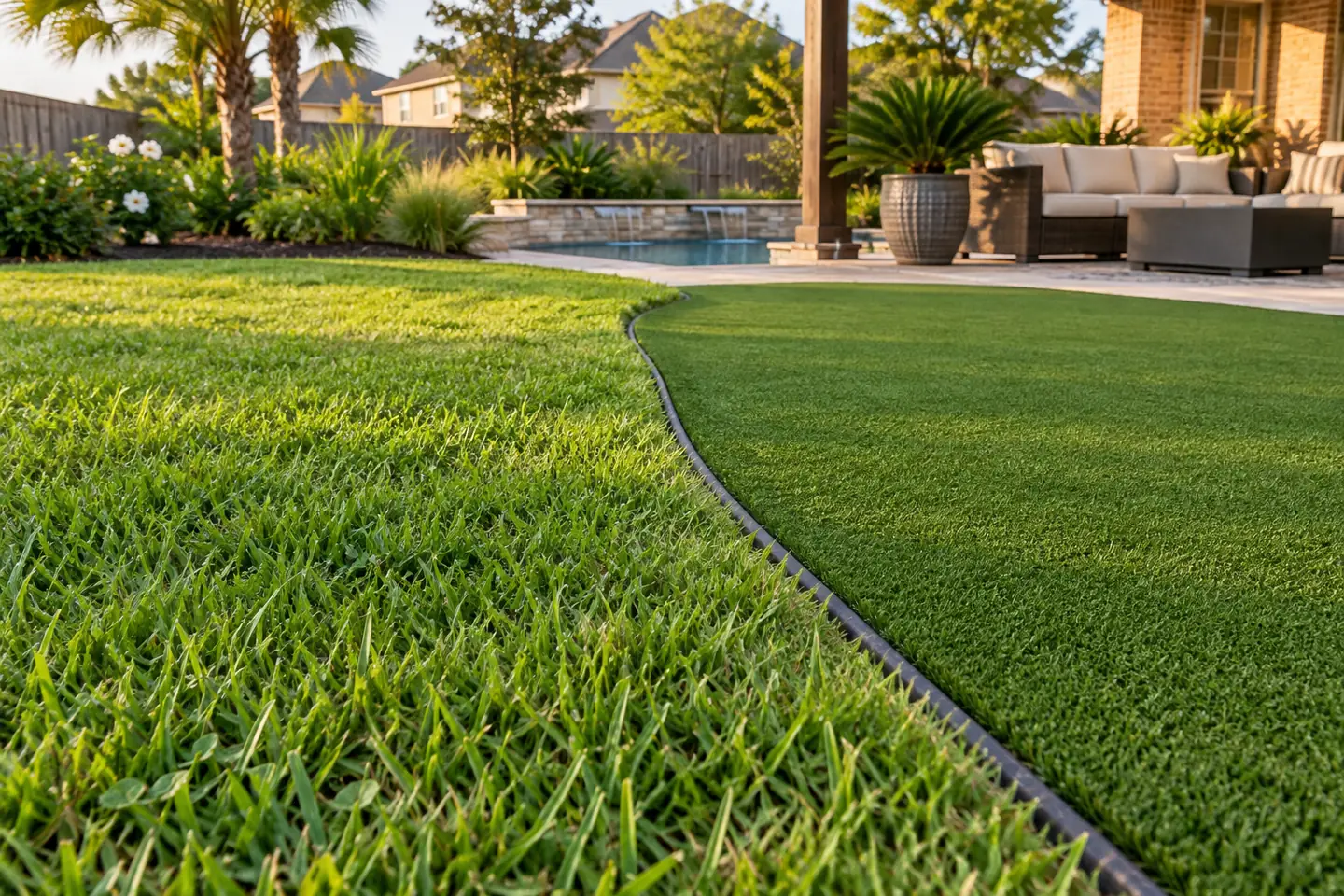
Keep mower tires on the approved route
Synthetic turf can have an infill, backing and base beneath the visible fibers. Its ability to support equipment is installation-specific. Avoid using it as a turning pad, shortcut or staging surface without explicit approved instructions. Tight tire pivots can move material or stress an edge. Plan turns deeper in the natural lawn where footing is firm, or use an alternate access route. If the only entrance crosses the installed area, review the route with the owner and installer before promising service.
Check for loose anchors and raised seams
Metal pins, edging fasteners or lifting corners can hide beneath grass at the transition. Walk the border and look for any change from the installation photos. Do not press a pin down with a mower tire or hammer it during a lawn visit. Mark the spot and ask the owner to obtain repair. CPSC advises clearing the mowing area of objects; exposed fasteners deserve attention before any cutting begins. A stable edge is a prerequisite for a neat grass finish.
Keep natural clippings off the installed surface
Direct discharge toward open living grass where practical. Clippings left on synthetic turf do not become part of the living lawn's normal nutrient cycle and may collect along seams or drains. Follow the installer's approved cleanup method for material that reaches the surface. Happy should not use aggressive blower settings, brushes or chemicals based on a guess. The service scope can specify a light surface finish while leaving specialized grooming and deep cleaning with the appropriate provider.
Separate irrigation from synthetic-area maintenance
Natural grass beside the seam may have sprinklers or drip tubing, while the installed surface may need a different care routine. Map water lines and keep them clear of wheels and cutting tools. Happy does not alter irrigation hardware to solve overspray or soft soil at the edge. If the lawn remains saturated, tell the owner before equipment enters. The installer or irrigation provider can review drainage and watering design while the lawn crew maintains a safe released boundary.
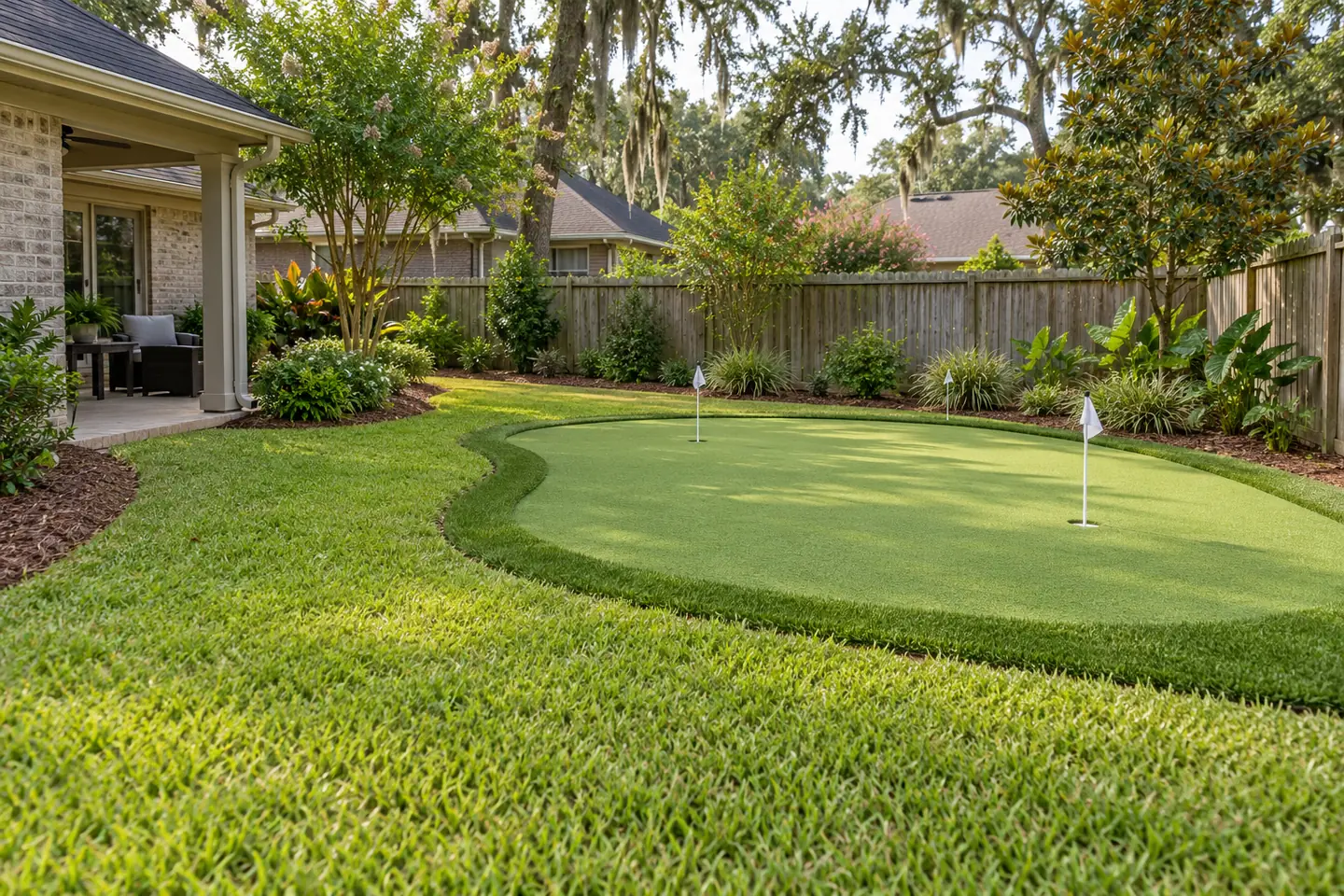
Review heat and equipment staging
Avoid parking hot engines, exhaust outlets, fuel containers or maintenance tools on the synthetic area. The product's instructions should govern heat exposure and cleaning. Use the approved hard staging surface instead. Happy should not test whether fibers can tolerate a warm mower by leaving it there briefly. A deliberate route keeps servicing tasks away from both the installed turf and the natural grass's fragile corners. This is especially useful in a small backyard where every square foot looks like convenient storage.
Use a mixed-surface checklist
- Obtain the installer's relevant care and access directions.
- Mark the natural-grass boundary, seams and low hardware.
- Keep tires and turns on approved stable surfaces.
- Direct natural clippings away from the synthetic area.
- Report lifting edges or exposed anchors before trimming.
- Agree on which provider handles specialized surface cleaning.
Protect recreation equipment near the seam
Goals, nets, chairs and portable play items can straddle both surfaces. The owner should move them before the visit and collect anchors, cords and stakes. Do not drag a goal across the seam or leave a metal foot hidden in grass. A clear surface lets Happy follow the true lawn border without weaving around temporary objects. If an item must remain, document its entire footprint and the accepted finish around it. The installer should advise on moving heavy equipment over the synthetic area.
Inspect after pets use the transition
Pet waste should be collected before lawn service on both surfaces. A hose rinse can leave the natural edge soft even if the artificial area drains quickly. Happy does not provide pet sanitation or evaluate odors from the installed system. Tell the crew which areas were cleaned and whether any relevant product directions limit access. Maintain physical separation for pets while equipment is running, then have the owner check gates and surfaces before reopening the yard.
Watch base settlement and edge height
A step between living grass and synthetic turf can change with soil movement or project work. Record a raised lip, low pocket or exposed base material without diagnosing installation quality. Keep mower wheels away from a sudden edge and ask the owner to engage the installer if repair is needed. Do not fill the seam with soil, mulch or clippings to hide the difference. The final grade and edge design belong to the installed system, while Happy follows the stable boundary presented for lawn care.
Keep weed treatment decisions specific
Plants growing at a seam do not authorize a blanket chemical application across both materials. Labels, backing materials, adjacent plants and the owner's warranty can affect the appropriate method. Happy's weed-control conversation must remain within its verified service scope. Synthetic-surface treatment and repair should be reviewed with the installer. If another provider works at the seam, record its access instructions and the new boundary before the next mowing visit.
Revisit the plan after installation changes
A new play strip, putting area or expanded patio can reduce the natural lawn and change how equipment reaches it. Update the quote footprint, turns and gate path from current photos. Do not keep charging or cutting based on a diagram from before the project. Happy can review the remaining grass and the access needed to maintain it. This also helps the owner decide whether a narrow leftover strip is practical or needs a design adjustment by a landscape provider.
A neat seam respects two different materials
The living lawn should keep its healthy height and the installed surface should receive its approved care. They do not need identical treatment to look connected. With a visible border, protected anchors, controlled clippings and a safe route, Happy can leave the natural grass finished without disturbing the synthetic system. Send the installer directions and a wide photo before the first mixed-surface visit so the crew can work from a real plan.
Inspect the transition after furniture moves
A chair leg, planter base or portable goal can pull at a synthetic edge when dragged across it. Ask the owner to move those items using the installer's approved method and then show any changed seam before mowing. Happy should not tuck a lifted corner back into place to make a pass. The installer can determine the repair, and the lawn crew can retain a temporary buffer around it. This protects the grass finish from becoming an accidental patch to the installed system.
Keep infill questions with the installer
Some systems use material within the fibers that may migrate toward the natural lawn. Do not assume a visible granular spill is ordinary soil or use a blower to redistribute it. The owner should ask the installer what the material is and how it should be collected. Happy can avoid the affected strip until the surface is released. The service record should name the visible condition without claiming the material's composition or safety from appearance alone.
Account for the remaining natural lawn's shape
An installed area can leave a narrow crescent of grass that no longer supports the old mower pattern. Review the real turning space and decide whether smaller equipment or a design change is appropriate. The quoted mowing footprint should match that usable area. A clear conversation before the first visit prevents repeated contact with the seam while preserving a consistent healthy cut on the living grass.