
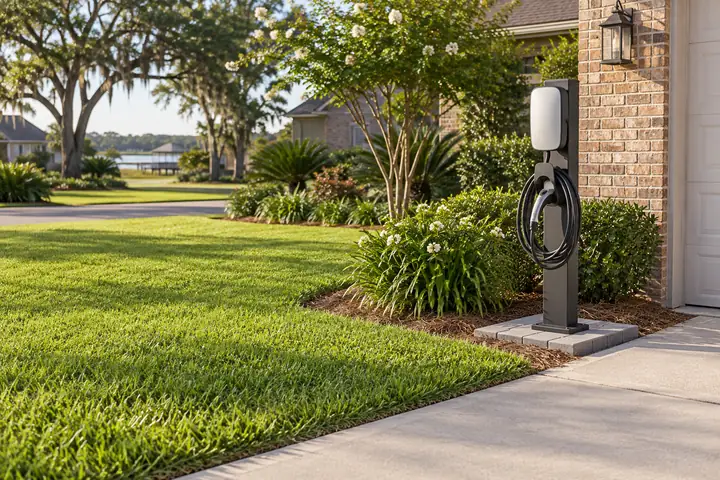
Identify the charging layout from the surface
Show Happy the wall unit or pedestal, cable holder, vehicle parking space and any visible conduit. The owner should provide the manufacturer's relevant care and clearance instructions. Equipment varies, and the lawn crew should not infer electrical details from the enclosure shape. Happy does not install, test, unplug, program or repair charging equipment. The purpose of the map is a safe lawn boundary, not an electrical inspection. A wide photo from the driveway usually explains the layout better than a close image of a connector.
Have the owner manage the charging cable
Before arrival, the authorized user should end or manage charging according to the equipment instructions and store the cable on its designed holder. Keep the connector off grass and out of standing water. Happy should not unplug a vehicle or lift a loose charging lead to make room. If a cable remains across the lawn, stop and notify the owner. A cable built for outdoor use still does not belong where mower blades, trimmer line or wheels can contact it.
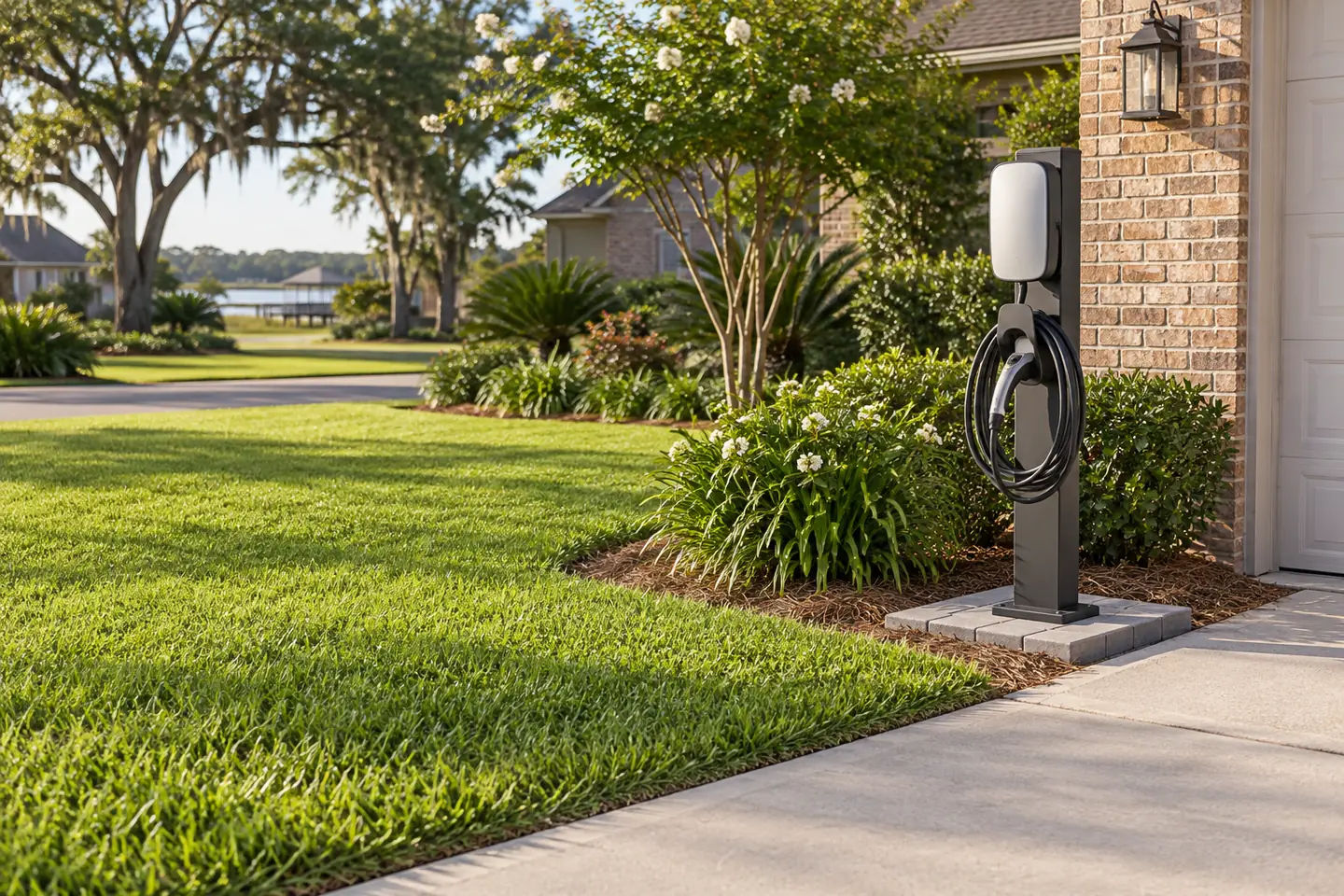
Keep the pedestal base visible
Grass runners, mulch and parked objects can hide mounting bolts, conduit bends and the edge of a small pad. Maintain a readable margin without scraping the enclosure or cutting a bare trench. If the base is cracked, loose or tilted, exclude the immediate area and ask the owner to arrange qualified service. Happy will not tighten anchors or test movement. The mower route should protect the visible installation as presented, while electrical and structural questions remain with the appropriate provider.
Do not treat a loose lead like a garden hose
Charging equipment carries electrical functions and specific connection procedures. A crew should not drag the cable across paving, hang it on a shrub or coil it beneath a vehicle. The owner should use the designed storage point and check for damage through the manufacturer process. If the connector, jacket or enclosure appears broken, avoid contact and report the visible condition. A lawn visit should not become improvised troubleshooting around an unfamiliar energized system.
Plan turns away from the installation
A mower needs room beyond its tire width for handles, deck corners and turning movement. Keep pivots on firm lawn outside the pedestal buffer. A narrow strip between charger and driveway may need smaller equipment or a limited finish. Do not squeeze behind the unit or use the pad as a turning point. The owner's parking arrangement should leave the service lane available without moving the charger or its cable. Clear geometry is more useful than a promise to be extra careful in a space that does not fit.
Coordinate vehicles before the service window
An EV parked close to grass can hide the cable path and restrict discharge direction. Ask the owner to position vehicles so the agreed lawn route is open when practical. Happy does not move or operate customer vehicles. If a car remains, maintain a safe buffer and record the inaccessible strip. Do not direct clippings toward paint, open windows, connectors or charging ports. A small schedule or parking adjustment can make the entire finish easier without touching the electrical setup.
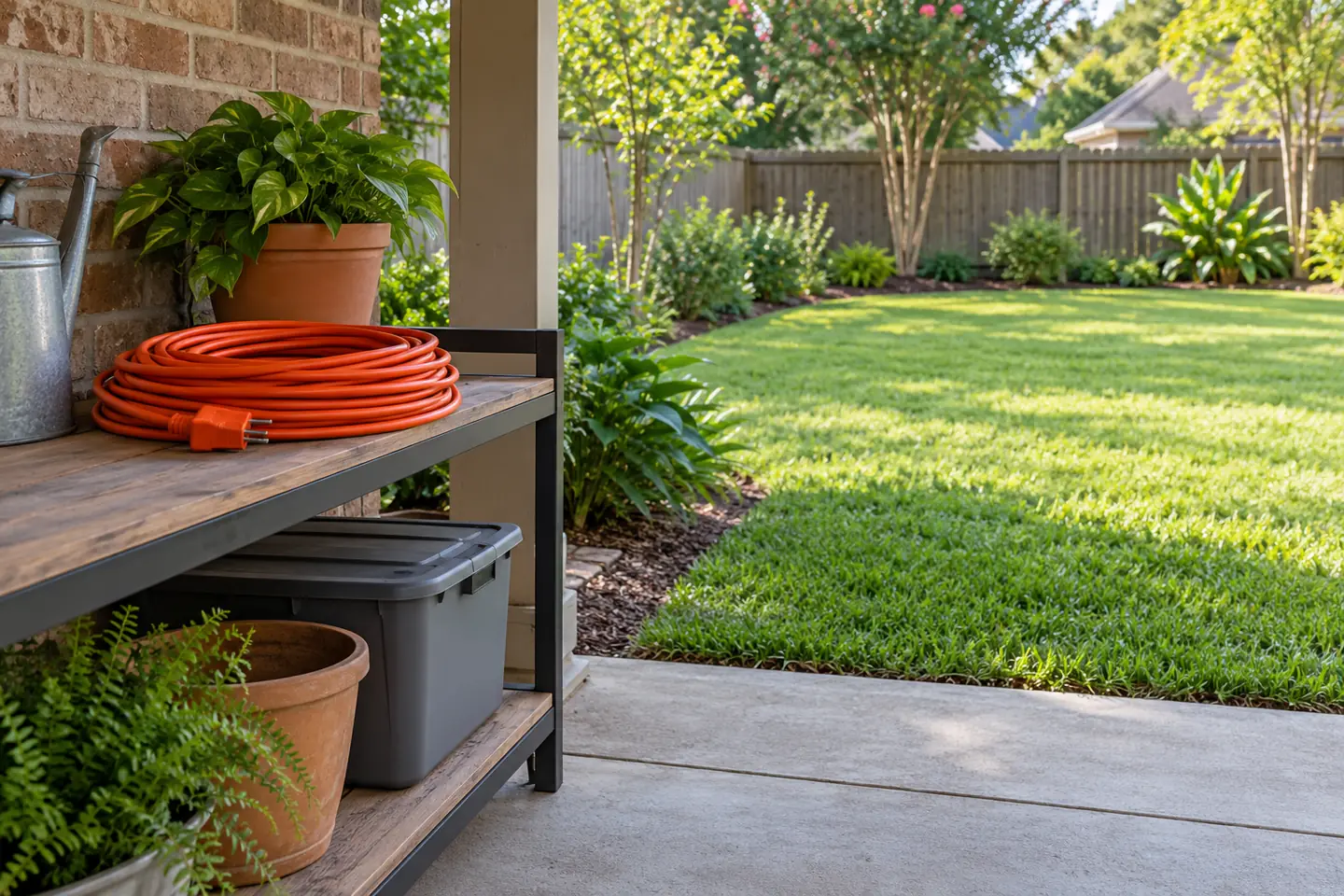
Separate rain suitability from mowing suitability
Some charging systems are designed for outdoor weather under their instructions, but that does not mean nearby wet grass is suitable for equipment. Assess turf firmness and visible standing water independently. Happy should not enter water around electrical equipment or decide whether a flooded connection is safe. Keep away and contact the owner and qualified provider. A dry-looking enclosure does not establish the condition of hidden components, so the lawn crew should avoid speculation and work only within the released surface route.
Use a charger-side checklist
- Owner manages charging and stores cable using its instructions.
- Keep connectors, portable units and adapters off the lawn route.
- Identify the pedestal pad, base hardware and visible conduit.
- Leave enough clearance for equipment turns and discharge.
- Move vehicles through the owner's approved parking plan.
- Report visible damage or water without touching the system.
Keep blowing and water away from openings
Do not aim a concentrated stream of grass, grit or water at the enclosure, cable holder or connection points. Happy's cleanup should clear adjacent released paving while respecting the manufacturer directions. It does not include washing the charger, opening a cover or removing debris from electrical contacts. If material is packed into an equipment opening, the owner should arrange appropriate service. Clean surrounding grass is the lawn result; equipment maintenance is a different responsibility.
Review protective posts and wheel stops
Chargers may share a pad with bollards or parking stops. Map those objects as a complete group rather than focusing only on the cable. Projecting bolts, chains and curb ends can hide beneath grass. Keep wheels and trimmer line away from hard hardware, and report damaged barriers to the property manager. Happy does not certify impact protection or accessibility. It can maintain the released grass edge while the owner controls the parking and equipment-safety plan.
Confirm temporary charging arrangements separately
A portable charging unit, extension arrangement or visiting vehicle can change a route that is normally clear. Do not assume last week's property note still applies. The owner should remove temporary leads from grass through the proper procedure before arrival. Happy should not recommend adapters or extension cords to solve access. DOE consumer guidance directs owners toward manufacturer compatibility and qualified installation considerations. Lawn service can wait for the authorized setup to be made safe rather than improvising around it.
Update the map after electrical work
New conduit, trench restoration, a relocated pedestal or a larger pad can change both grade and access. Preserve active utility marks and ask the owner for the contractor's release. Inspect backfill for softness before mowing and do not drive over unfinished trench work. The first visit after installation may need a wider margin than later visits. Once the owner confirms the final layout, replace outdated photos so a different operator does not follow the old route through new equipment.
Keep observations factual
A useful note says the cable crossed the side-yard lane or the pad edge was loose. It does not declare the charger defective or assign an electrical cause. Photograph from a safe distance and notify the owner. If there is an immediate hazard such as smoke, arcing or a damaged energized component, leave the area and use the appropriate emergency channel. Happy should never touch or test the system to decide whether routine mowing can continue.
Make the lawn boundary part of normal charging habits
Store the cable after each use and keep the grass-side pad edge visible between visits. That routine helps the household and lawn crew share the driveway without last-minute cable handling. Before the first service, send Happy the wide layout photo and the relevant equipment directions. With owner-controlled connections, adequate clearance and a clear surface lane, the grass can receive its normal care while the charging equipment remains under its proper operating plan.
Protect the connector's storage point
A cable holder near a grass edge can be bumped by a handle, branch or carried tool even when the cable itself is neatly coiled. Include the holder's full projection in the equipment buffer. Do not use it to hang a blower strap or rest a gate. If the owner relocates the holder, update the wide layout photo before the next visit. The point of storage is to keep the lead accounted for, not to create a new obstacle just above mower height.
Review shared or commercial charging spaces
At a small business or shared property, several drivers may use the charger during the service window. The manager should establish a clear closure or parking arrangement under the site's rules. Happy should not interrupt a customer connection or direct vehicles independently. If the space cannot be released, maintain an appropriate exclusion and finish the separate accessible lawn. A named site coordinator can confirm when cables are stored and the lane is open, reducing conflicting instructions from different users.
Keep landscaping away from equipment assumptions
Growing shrubs, decorative gravel and new planters can narrow access around a charger pad. The owner should preserve the clearances required by the installation and manufacturer. Happy can identify the mower space needed but does not approve electrical clearance. If the planting changes, have the relevant providers reconcile the layout before service. A lawn buffer is useful only when it fits the actual equipment and its operating instructions.