
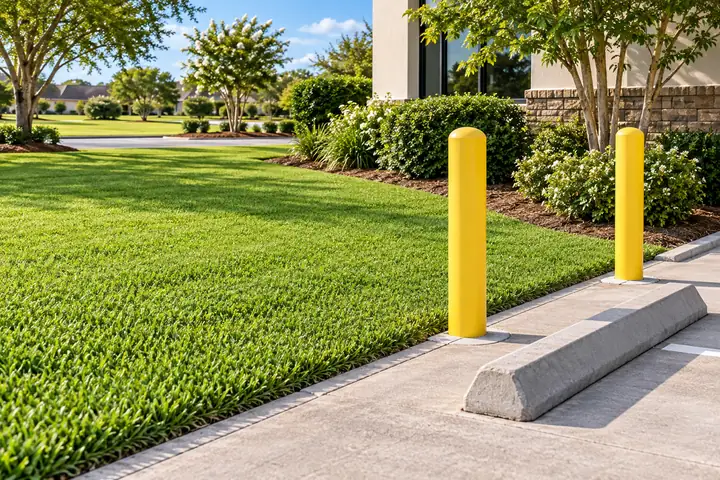
Map fixed barriers and active traffic separately
Begin with a sketch showing every bollard, wheel stop, curb opening, accessible route and grass island. Then record when vehicles occupy the adjacent spaces. A fixed object can be safe to trim around at dawn but impossible to reach once customers park. Do not use a vehicle lane as an equipment staging area without the property manager's plan. Happy's lawn map should identify where work occurs; the business remains responsible for traffic control, parking rules and structural barriers.
Inspect the grass side before the first pass
Trash, stones, glass, lost fasteners and pieces of wheel-stop hardware often collect where tires cannot reach. Walk the entire edge and remove only ordinary debris that can be handled safely. CPSC mower guidance stresses clearing objects that blades could throw. Sharp, chemical or unknown material requires the property manager's cleanup process. Never assume a painted bolt, chain or reflector is trash simply because it lies near the grass.
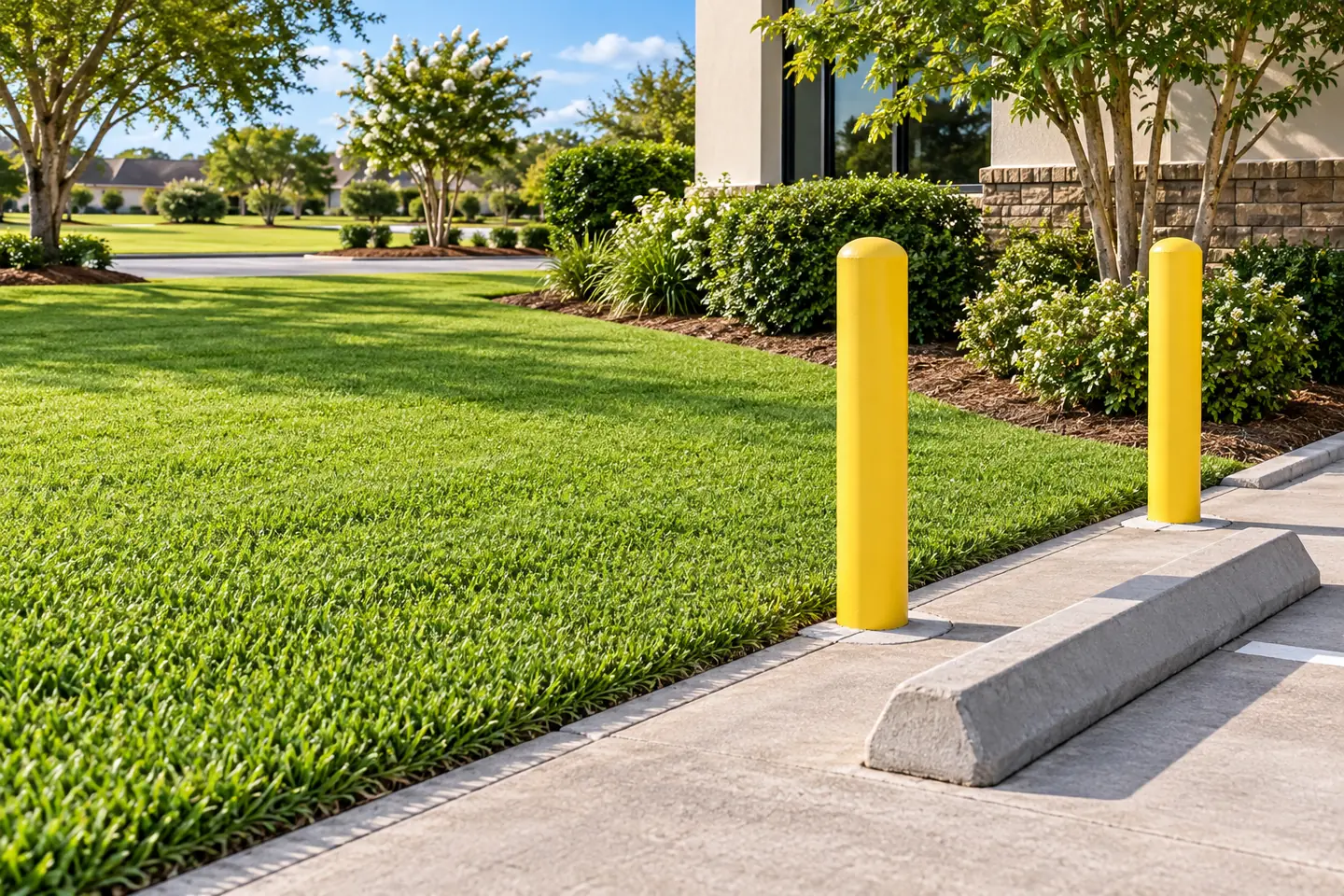
Keep wheels off anchors and concrete ends
Wheel stops may be pinned or bolted, and the anchor can rise as concrete shifts. Bollard base plates can have projecting fasteners hidden by runners. Keep a visible margin around these points and use controlled trimming instead of placing mower tires against them. If a stop is cracked, tilted or loose, close that spot and report it. Happy does not reset barriers, tighten anchors or certify that a bollard can resist impact.
Treat painted bollards as finished surfaces
Trimmer line, mower decks and blown grit can chip or mark coatings. Leave enough grass-side clearance to finish without wrapping line around the post. Direct discharge away from the building and parked cars. If a bollard was recently painted, the property manager should identify the cure window and exclude it until ready. Happy will not touch-test, repaint or mask the post during lawn service.
Decide how parked vehicles will be handled
The cleanest plan reserves adjacent spaces during the service window. A cone or temporary closure should come from the property manager and follow its site rules; Happy should not block customer access independently. If a vehicle remains, keep a wide no-work buffer rather than discharging clippings near paint or trying to squeeze between a bumper and stop. Record inaccessible grass for the manager instead of forcing a risky pass.
Preserve accessible routes and entrances
Do not stage mowers, bags or blowers on an accessible aisle, curb ramp, sidewalk or doorway. The business should maintain continuous pedestrian access or formally coordinate a brief closure. Grass islands beside ramps may require smaller equipment and a route from the nontraffic side. Happy does not evaluate ADA compliance, but ordinary lawn operations should not create a new obstruction for customers, employees or delivery workers.
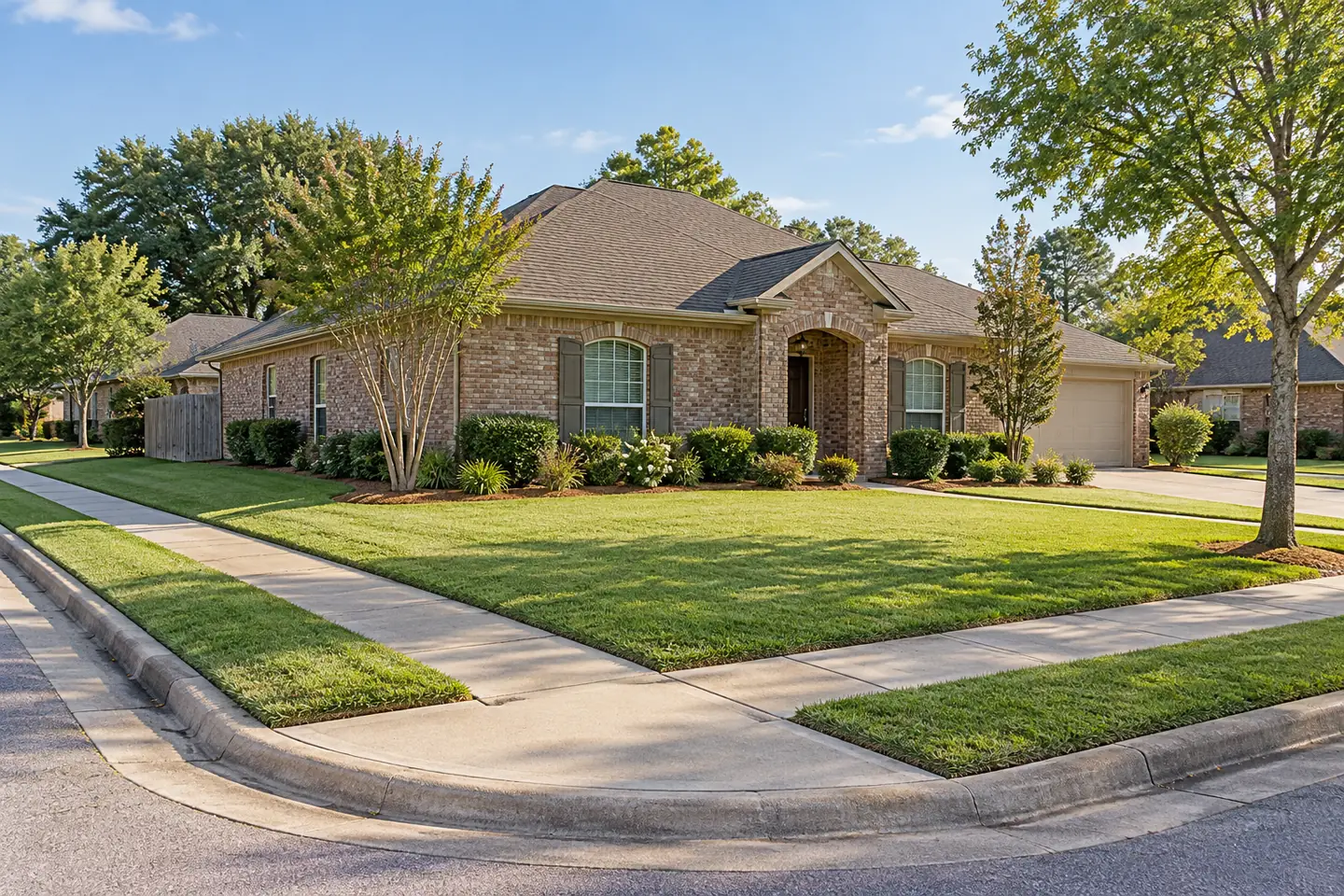
Plan turns away from the parking edge
Repeated pivots beside a curb or wheel stop tear turf and can swing equipment into traffic. Use a lengthwise pass with turns made deeper in the grass where space allows. For small islands, a perimeter-first pattern may reduce back-and-forth movement near vehicles. Keep discharge aimed inward. The operator should always have a clear view of approaching traffic and an escape direction that does not require stepping over a concrete stop.
Use a business-frontage checklist
- Property manager confirms the service window and parking plan.
- Adjacent spaces and pedestrian routes are clearly managed.
- Remove ordinary loose debris from behind wheel stops.
- Mark exposed anchors, cracked concrete and damaged bollards.
- Keep equipment and clippings away from vehicles and entrances.
- Reopen spaces only after tools and surface debris are cleared.
Watch drainage at curb and stop ends
Leaves and clippings can collect where a wheel stop approaches a curb or drain. EPA notes that stormwater flowing over parking surfaces can carry yard waste and pollutants. Blow loose lawn material back toward an appropriate collection area rather than into a drain or vehicle lane. If water regularly ponds behind a barrier, note the surface condition and exclude soft turf. Drainage design and concrete adjustment belong with the property manager's qualified provider.
Snowplow damage is rare here, vehicle damage is not
On the West Bank, a barrier is more likely to shift from vehicle contact, settlement or construction than snow equipment. Look for fresh scrape marks, displaced blocks, bent signs or soil heave at the base. Describe only what is visible. Do not conclude who caused damage or whether the barrier remains protective. A new position can change the mower route immediately even before repair, so update the site map and no-contact zone.
Chains and removable posts need owner control
Some bollards have chains, sleeves or removable inserts. The property manager should place them in the intended safe state before arrival. Happy will not unlock, remove or store security hardware. A slack chain in grass can wrap around a shaft, and an open sleeve can catch a wheel or foot. If the site cannot present a clear configuration, close that strip and use the next approved service window.
Coordinate deliveries and waste pickup
Delivery trucks and collection vehicles may use the same curb edge Happy needs. Confirm schedules so a lawn crew is not working behind a reversing vehicle or across a loading route. Stop equipment and yield when unexpected traffic enters. Do not rely on noise alone; operators inside vehicles may not hear a blower. A short pause is better than trying to complete one last pass in a moving work zone.
Finish the edge without chasing every blade
A few stems behind a loose stop are not worth contact with hardware or a parked bumper. Define the accepted finish with the manager: trimmed visible edge, cleared hardscape and documented inaccessible pockets. This avoids repeated risky reaches and keeps expectations consistent from visit to visit. When a barrier is repaired or parking is cleared, Happy can update the finish at the next safe opportunity.
Keep sight lines open at drive exits
Grass islands and bollards near an exit can sit inside a driver's view of pedestrians or approaching traffic. Lawn work should not add temporary blind spots with parked equipment, upright bags or a trailer. Stage outside the sight triangle chosen by the property manager and finish that corner during the lowest-traffic window. Happy does not perform a traffic-engineering review, but the crew can avoid making an already busy exit harder to read. Stop and relocate whenever vehicles queue around the work zone.
Account for signs mounted on posts
A bollard may support an accessible-parking sign, directional marker or protective sleeve. Low brackets, sign edges and mounting bolts can extend beyond the round post. Inspect from the grass side before trimming and keep line away from exposed hardware. Do not straighten, rotate or remove a sign to reach weeds. If vegetation obscures required information, report it to the manager and agree on a safe trimming boundary; regulatory placement and repair remain the manager's responsibility.
Check after resurfacing or striping work
Parking-lot projects can leave tape, stakes, cones, aggregate and fresh paint beside the lawn. The manager should release affected spaces only after the paving or striping contractor has removed temporary items and the surface can accept normal traffic. Happy should not blow grass onto uncured markings or move cones that protect them. Update the mower route if resurfacing changes curb height, wheel-stop position or drainage. A new parking layout deserves a fresh site walk rather than an automatic return to the old pattern.
A clear parking plan makes the lawn look professional
Commercial frontage is judged as one scene: grass, concrete, posts, vehicles and entrances. The best result comes from managing the whole route, not cutting closer to every obstacle. With reserved access, visible anchors, protected pedestrian paths and discharge aimed inward, Happy can leave a crisp grass boundary while the property manager controls parking and qualified contractors maintain the barriers.
Match the parking arrangement to the quote photograph
A parking-edge photo is most useful when it shows the arrangement expected for lawn service. Identify which spaces the responsible property contact will keep available and which fixed barriers remain in place. A photograph taken before opening hours may otherwise suggest access that does not exist during the ordinary business day.
Keep responsibility for moving vehicles and coordinating deliveries with the authorized property contact. If the arrangement changes, tell Happy which grass sections are affected rather than leaving the crew to negotiate parking on arrival. Distinguish a temporary access problem from a change in the recurring lawn scope. This gives the finish discussion a real working boundary around the visible posts and stops, while traffic control, property repairs and vehicle management remain outside the assumed mowing and edging task.