
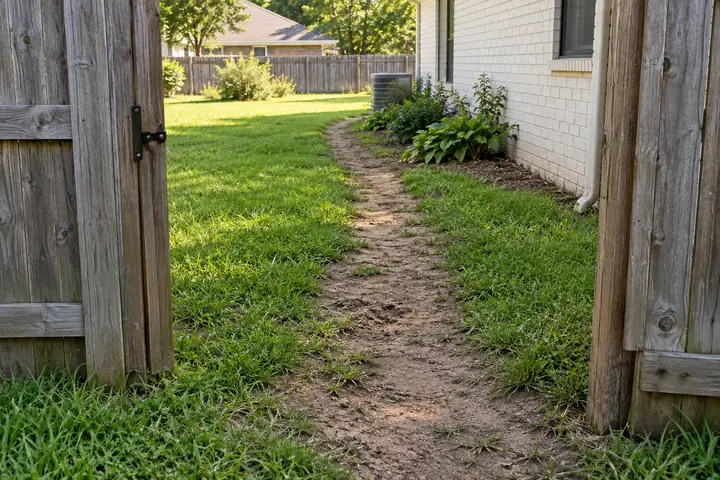
The issue is space between particles
Soil is not only solid material. The spaces between particles are part of the environment available to roots, water and air. LSU AgCenter describes compaction as a reduction in pore space under force such as repeated pedestrian or vehicle traffic. The important change is therefore in the soil's structure, not simply whether a bare patch looks brown or feels firm under a shoe.
That definition gives the homeowner a better starting question: what evidence suggests that the soil structure is limiting this lawn? A heavily used gate route may be worth reviewing, but use alone does not measure compaction. A firm section may also be unusually dry or contain a different material. Keep the suspected mechanism separate from the first impression. A useful assessment should explain the condition of the soil and roots, rather than assigning the label because the surface is difficult to push into on one afternoon.
Water movement and rooting can change together
LSU lists reduced water movement, reduced oxygen and a physical barrier to root growth among compaction effects. These can connect a below-ground condition with weak turf above. They do not make every puddle or shallow root a confirmation. Several soil and site conditions can affect those observations. The assessment needs to ask whether compaction explains the pattern sufficiently or whether another condition remains relevant.
For example, a low area holding runoff and a repeatedly traveled strip can both have thin grass. Their visible similarity does not prove they share the same soil structure or need the same corrective work. Describe the water behavior and the turf separately. Does water collect there from elsewhere, or does it appear to enter the surface slowly? Is living grass sparse, or is it merely flattened by use? These distinctions help the reviewer ask a specific soil question instead of treating every untidy strip as one problem.
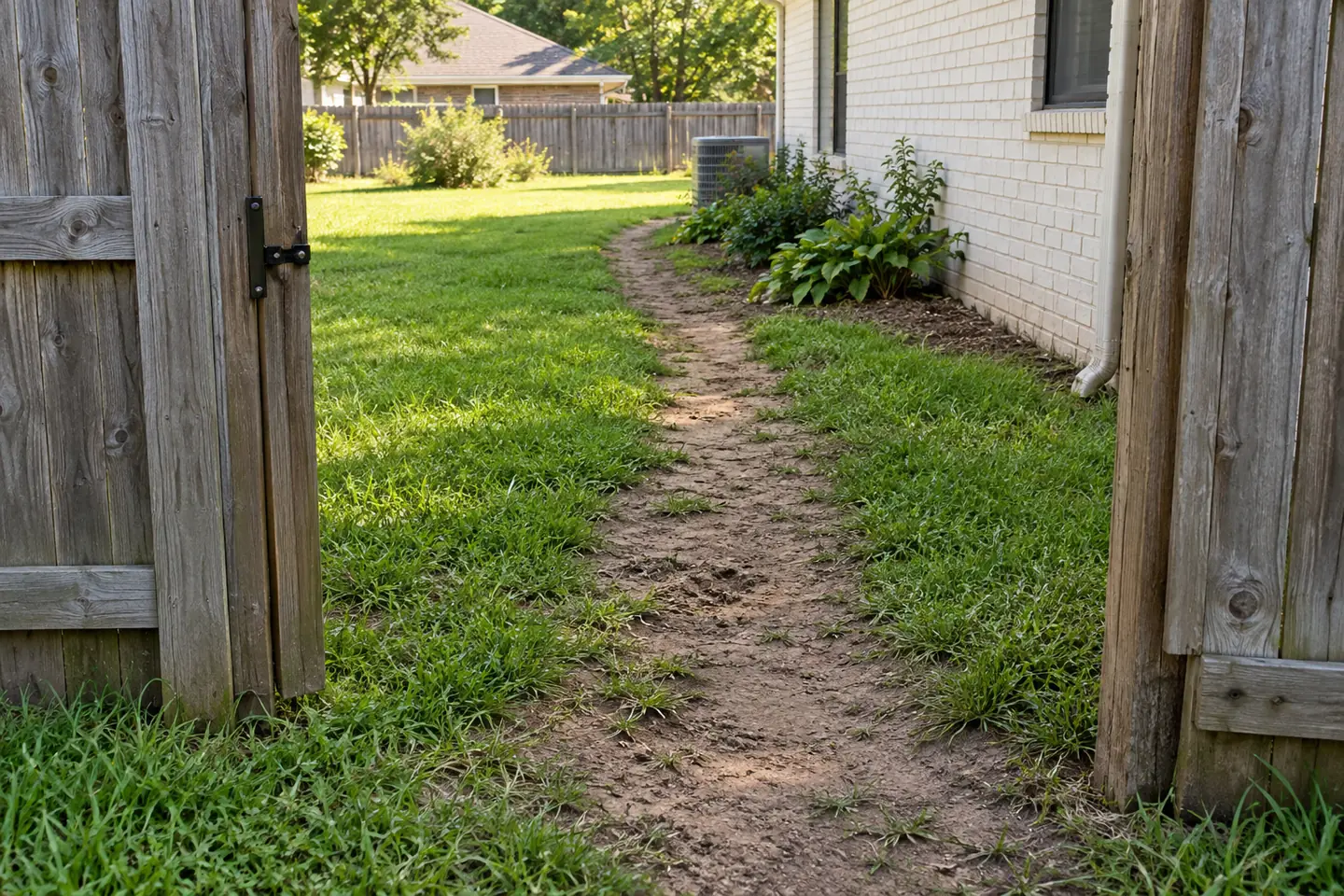
Soil moisture changes the meaning of resistance
A soil that is extremely dry can resist a probe differently from the same soil under more moderate moisture. Saturated conditions also complicate a simple comparison. LSU's discussion of informal resistance checks explicitly includes the condition of the soil at the time. This is why a screwdriver refusing to enter one patch is not a complete measurement of compaction. Nor should it become a reason to force an object into ground containing unknown services or irrigation parts.
If physical assessment is appropriate, ask the provider which method and conditions it requires. Keep a record of when the surface was observed and whether recent rain or irrigation had changed it. Compare similar moisture conditions where possible rather than calling one wet sample soft and one dry sample compacted. The purpose is to learn about the soil structure, not to prove a chosen diagnosis through an uncontrolled comparison.
Map the force, then compare the plant response
Repeated movement often concentrates in particular parts of a residential yard. The gate opening, the path to a shed or a place used for deliveries may receive more load than the open lawn. Cornell's turf guidance emphasizes avoiding traffic on moist soils as one way to limit a common cause of compaction. The practical lesson is to consider both where the force occurs and the condition of the soil when it occurs.
A useful site sketch distinguishes: – Regular pedestrian routes from occasional equipment access. – Places where wheels turn or movement funnels through a narrow opening. – Known heavy loads or temporary storage areas. – Areas that stay wet when the rest of the lawn is usable. – Comparable turf outside the suspected traffic zone.
Keep the sketch factual. Do not assume that every past crossing caused injury or that a visible thin line identifies a particular operator. The pattern can support the assessment without becoming an unsupported assignment of responsibility.
A worn canopy and compacted soil are not identical
Leaves can be worn or flattened by traffic without every underlying soil question being settled. Conversely, a compacted layer may extend beyond the most obvious worn route. Our footpath guide discusses how a yard is used; this guide concerns whether the soil beneath that use has changed in a way that limits turf. The two discussions belong together when both conditions are present, but one should not replace the other.
Ask which finding has actually been made. Was the assessment based on a visible route, root observations, a measured soil property or several kinds of evidence? Keep those findings distinct when passing the result to another provider. “Thin grass along the gate route” should not silently become “laboratory-confirmed compaction throughout the backyard.” A precise statement of what is known helps the next maintenance or corrective decision fit the actual area.
Surface layers deserve their own description
Thatch above the soil, a crust on exposed ground, deposited material and a compacted soil layer are different features. A root may encounter more than one of them, but they should not be bundled together merely because the lawn is thin. If a profile is examined, ask where the limiting layer lies and what supports that interpretation. The distinction affects which operation, if any, would address it.
Keep known changes to the surface in the history. A delivery, backfilled trench or added material can create a different profile from the original lawn. Do not assume the entire yard has the same condition as the spot selected for inspection. If contrasting sections exist, ask whether they require separate assessment. A small amount of clarity about the layers can prevent work intended for the upper surface from being mistaken for a correction of a deeper soil condition.
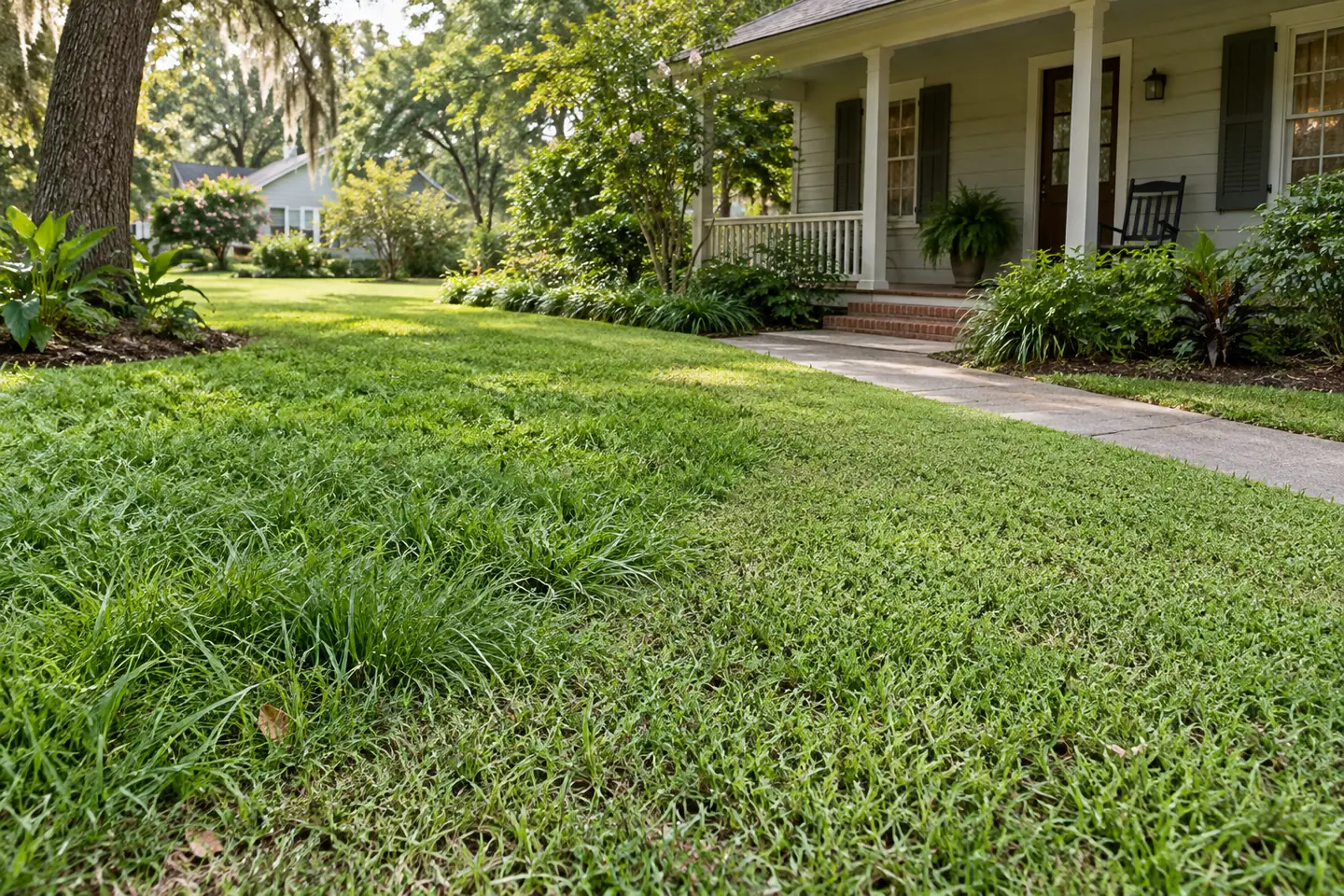
A nutrient report is not a physical soil diagnosis
A routine soil-fertility result can be useful, but it does not by itself measure every aspect of soil structure. LSU distinguishes bulk-density measurement from informal visual or resistance observations. Ask the testing service what the actual report covers and whether the sample method can answer the compaction question. The word soil on a report does not mean that every property of the soil was tested.
This matters when a recommendation to add a material is offered without a clear finding. Ask what condition it is supposed to change and how that effect will be evaluated. A product that alters a nutrient level is not automatically a physical solution for restricted pore space. Do not treat the lawn as an experiment with repeated additives while the structural question remains unanswered. Connect any separate corrective plan to the evidence it is intended to address.
Keep corrective work separate from mowing
Core cultivation and other specialist operations may be discussed in compaction guidance, but ordinary mowing does not perform the same job. A lower cut cannot create suitable pore space below the surface. Before arranging separate work, ask about the affected area, method, timing and expected disturbance. Identify buried or shallow features through the appropriate process rather than assuming the surface is clear because it is grass-covered.
Then coordinate the next maintenance visit with the supplied instructions. If part of the lawn needs to be left alone, identify the boundary before work starts. If access routes are changing, explain which route is actually available. Do not expect the maintenance crew to infer a corrective plan from holes, cores or an altered surface left by another provider. A clear handoff allows each task to be evaluated for its own result.
Revisit the use that created the concern
If a limiting soil condition is confirmed and addressed, the yard's use still deserves attention. A gate that channels every crossing through one narrow strip will continue to receive concentrated movement. Ask whether a practical route or timing change can reduce repeated loading, especially when the soil is wet. That is a discussion about how the yard functions, not a demand to stop using it altogether.
For Harvey, Marrero, Gretna, Algiers, Belle Chasse and Westwego homeowners, the useful outcome is a lawn plan connected to the soil and to everyday access. Review water entry, roots and living turf through the method supplied by the assessor. A smoother appearance alone does not prove the structural question has been resolved. Better evidence and a workable route help the lawn's next chapter begin with more than another guess about hard ground.
Ask Happy about confirmed maintenance
Call 504-339-3571 and ask for Happy to discuss available mowing and related lawn maintenance. Share any assessment or recovery instructions before the visit. Happy Grass does not provide aeration, fertilization, overseeding or pest control, and this guide does not add soil diagnosis or specialist cultivation to your agreement.