
A green middle can hide a dry edge
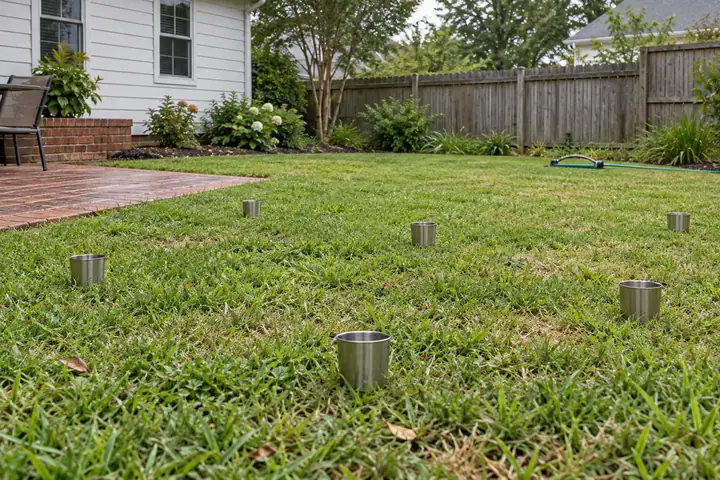
When one strip looks tired while the center stays green, extending the entire sprinkler run may feel like the obvious answer. First ask whether the water is reaching the strip at all. A catch-cup comparison places matching collection containers at several positions and compares the result of the same irrigation event. It is a way to investigate distribution. It is not a diagnosis of the pale patch or permission to change every controller setting. Begin by identifying the area one sprinkler or irrigation zone is intended to cover. If that area is unclear, have the layout reviewed before treating cups scattered across several unrelated spray patterns as one meaningful test. The comparison should answer a defined question about a defined space.
Match the containers before matching the numbers
Different containers can collect different depths even when the same amount of water falls on their openings. Use identical, stable, straight-sided catch cups or suitable purpose-made gauges. Check for leaks, residue and damaged rims. Set them upright so a tilted opening does not turn the reading into a comparison of angles. Follow the irrigation resource or professional's test instructions for arrangement and duration. A set of matching cups makes the results easier to interpret, but it does not remove every source of uncertainty. The point is to compare like with like. An assortment of bowls, narrow-neck bottles and deep buckets can look busy across a lawn while producing numbers that do not answer the original coverage question.
Map the positions in a way you can repeat
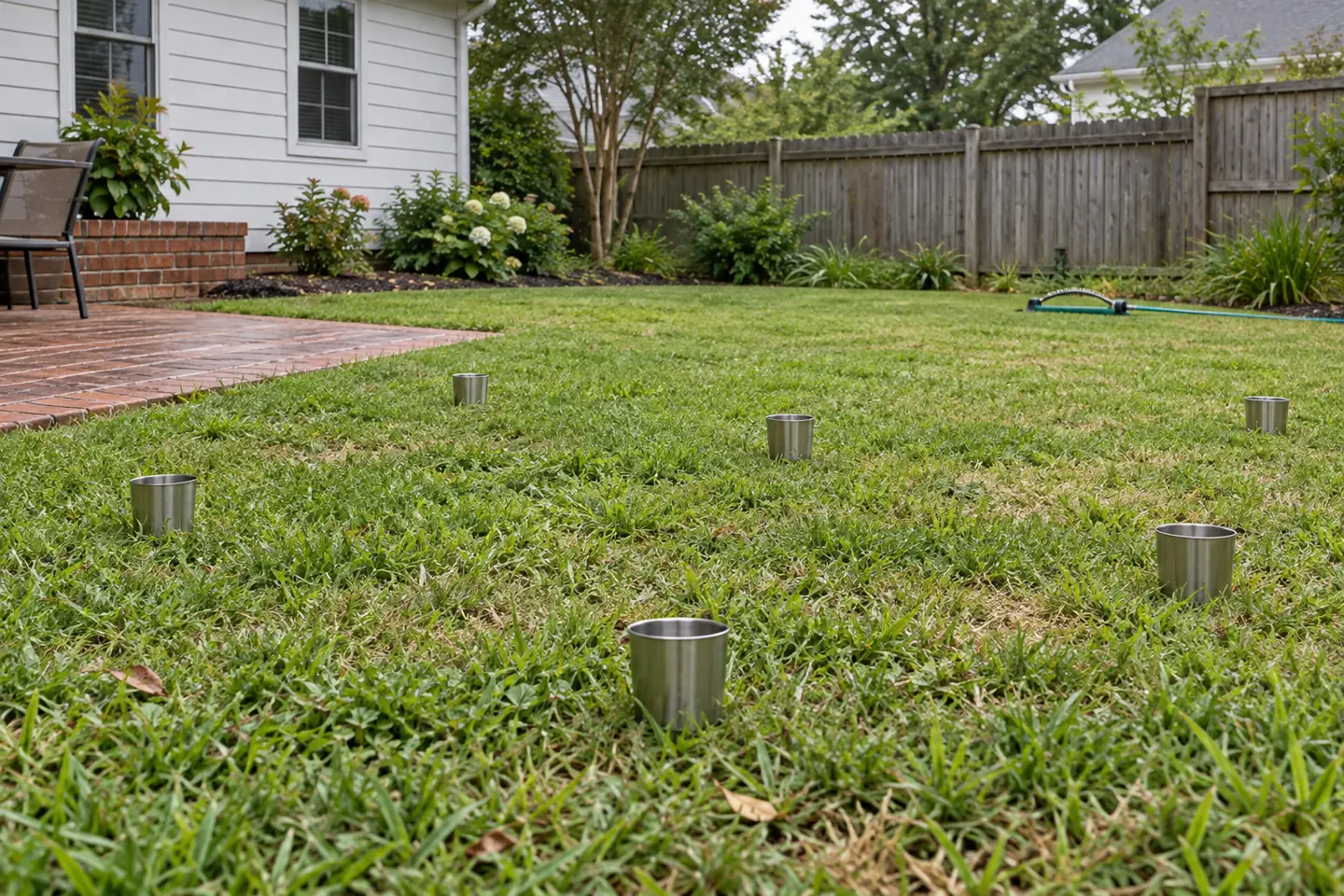
Give each location a simple name before turning on the water. Patio edge, center, back fence and side strip are more useful than a collection of unlabeled photographs. Include positions that represent the intended coverage area instead of selecting only spots you expect to look good. Keep the placement safe, follow the chosen procedure and avoid a route used by children, pets or other people during the check. Draw a rough map and mark the sprinkler position or zone being observed. The sketch need not be to scale to preserve the identity of each reading. If you later move the portable sprinkler, save a new sketch. Otherwise, comparisons between days can accidentally mix different layouts.
Observe one known watering event
The University of Florida describes catch-can testing as a way to investigate irrigation uniformity. For a household comparison, the essential record includes the particular zone or sprinkler arrangement, the collection period and any interruption. Do not mix the output of separate zones into a single result without an appropriate procedure. Note whether it rained or whether wind noticeably changed during the observation. Keep people away from operating equipment and do not reach into a moving sprinkler mechanism. You are collecting information about where water landed, not trying to repair a head while it is active. If the system operates unexpectedly or creates an unsafe situation, stop the observation and have the equipment reviewed by the appropriate professional.
Save the individual results before calculating an average
An average can be mathematically correct and still conceal the part of the yard you are worried about. Record each cup's amount with its location first. A low reading at the fence and a high reading in the middle deserve to remain visible even if a summary number seems reasonable. Use the same measuring method and unit for every container. Photograph the array before collecting it if that helps preserve the positions. Do not round an empty cup upward or substitute an expected value for a spilled one. Mark a spill as unusable. A short honest record with one missing observation is better than a tidy-looking set of invented numbers.
Separate low coverage from low water need
A cup collecting less water tells you about that event's distribution. It does not establish how much the grass beneath it needed. A shaded edge may receive less spray and also experience different growing conditions from the sunny center. Conversely, a dry-looking area may have a soil or plant problem that extra irrigation cannot solve. Use the collection pattern to frame a coverage question for someone qualified to assess the system. Compare the physical setting and turf symptoms separately. Keeping these two questions apart helps prevent an owner from solving a low collection reading by soaking areas already receiving plenty of water. Coverage and plant need belong in the same discussion, but they are not interchangeable measurements.
Look for an obstruction before changing a program
Sometimes the useful observation is a spray path meeting a planter, a shrub or a newly moved chair. Record what stood between the water source and the low-reading location during the comparison. Do not trim a plant, reposition permanent equipment or adjust a nozzle merely to make the numbers look more even. Those changes may have consequences beyond the small area being observed. A portable object you own can be discussed as a possible obstruction, but preserve the original setup in the notes before making a safe, authorized change. If a landscape feature has been added since the system was designed, mention the timing when seeking an irrigation assessment. The collection pattern can help explain the consequence without proving a particular repair.
Wind can change the story during the check
A spray that appears to cover an edge in still air can behave differently in a gust. Note obvious wind direction and whether the pattern drifted toward a driveway or away from the cups. Do not interpret a single windy event as a permanent measure of system performance. Likewise, a calm demonstration does not establish that every future watering will distribute water the same way. A repeat observation under comparable, suitable conditions may be useful when guided by an irrigation professional. Keep the earlier result rather than replacing it with the more convenient one. The difference between them may be exactly the information needed to understand why an edge is inconsistent between visits.
Convert a comparison into a focused request
Prepare a short description that preserves the pattern: the same six cups, one backyard zone, a known collection period and much lower collection near the gate. Add whether the low area was within the intended coverage boundary and whether obstacles or wind were present. That gives an irrigation professional something concrete to investigate. Avoid asking for a particular part replacement based solely on the cup arrangement. The cause could involve layout, pressure, equipment condition, obstruction or the way a portable sprinkler was positioned. A focused request asks why the distribution differs. It leaves room for the person assessing the system to choose the right checks instead of starting with a repair you guessed from the lawn's color.
Keep a water depth separate from a clock setting
A collection depth and a runtime describe different things. If someone records water collected over a known period, converting that observation into a rate requires both the amount and the elapsed time. A cup read after an interrupted run cannot be compared directly with one from an uninterrupted event without accounting for the difference. Preserve the raw measurements before asking anyone to calculate an irrigation setting. Also identify the boundary being watered: an average across a patio, a planted bed and a lawn is not automatically an appropriate value for the turf. These distinctions prevent a useful household observation from becoming an apparently precise instruction that the original information does not support.
Clear every cup before the next lawn visit
Small test containers are easy to overlook once the measurement is finished. Count them back in, remove loose markers and confirm that no lids or measuring tools remain in the grass. If you used a hose-fed sprinkler, put the hose and sprinkler back in their agreed safe storage positions. Keep the results on your phone rather than leaving the collection array outside as a reminder. A yard in Harvey, Marrero or Gretna can be ready for a routine cut while its watering layout still needs a separate review. Tell Happy about any unresolved wet patch or changed access, but do not leave an experiment scattered through the mowing footprint. The information should stay useful after the equipment is put away.
Keep the maintenance request practical
Happy Grass can discuss the mowing, edging, trimming and finish that fit your yard. Explain any coverage check that left a wet or soft area, and clear the cups before the visit. Ask for Happy at 504-339-3571. This page does not add irrigation testing or repair to a lawn-maintenance agreement.