
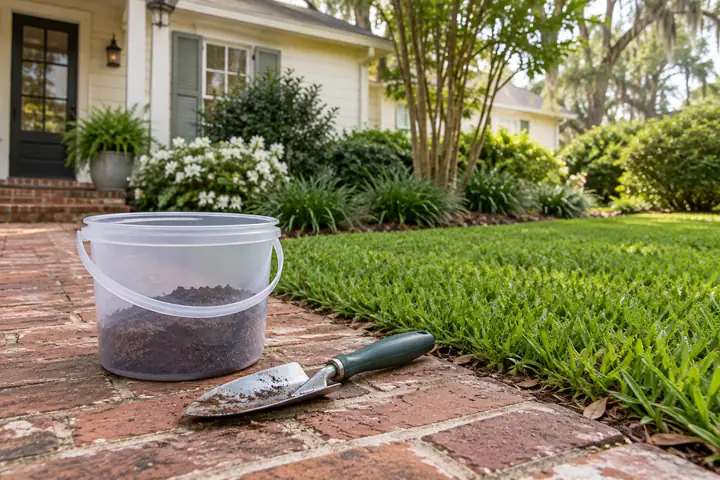
Choose the question before filling a container
A soil test can be useful when a lawn is performing poorly, but the sample needs a clear purpose. Are you trying to understand the ordinary lawn soil, compare a struggling patch with a better area or learn about ground changed by a recent project? Those questions may require different sampling decisions. Start by naming the area and the reason for testing. Do not collect the nearest loose soil and decide later what it represents. A careful sample does not have to be a complicated household project. It does need enough thought that the laboratory's result can be connected to a real part of the property rather than an undefined mix of lawn, bed and delivery pile.
Follow the laboratory's current turf instructions
LSU AgCenter's home-lawn guidance describes collecting soil from several locations within a selected lawn area, preparing a mixed sample and identifying the turfgrass for the laboratory. Use the instructions for the actual test and laboratory you select, including its sampling depth, amount, container and submission form. Different publications or test purposes can specify different procedures. Resolve a discrepancy with the laboratory rather than combining parts of several methods. Do not copy a vegetable-garden sampling procedure simply because its form is nearby. The aim is consistency between the question, the soil collected and the interpretation requested. Save the instructions with your record so a later comparison can use a compatible method.
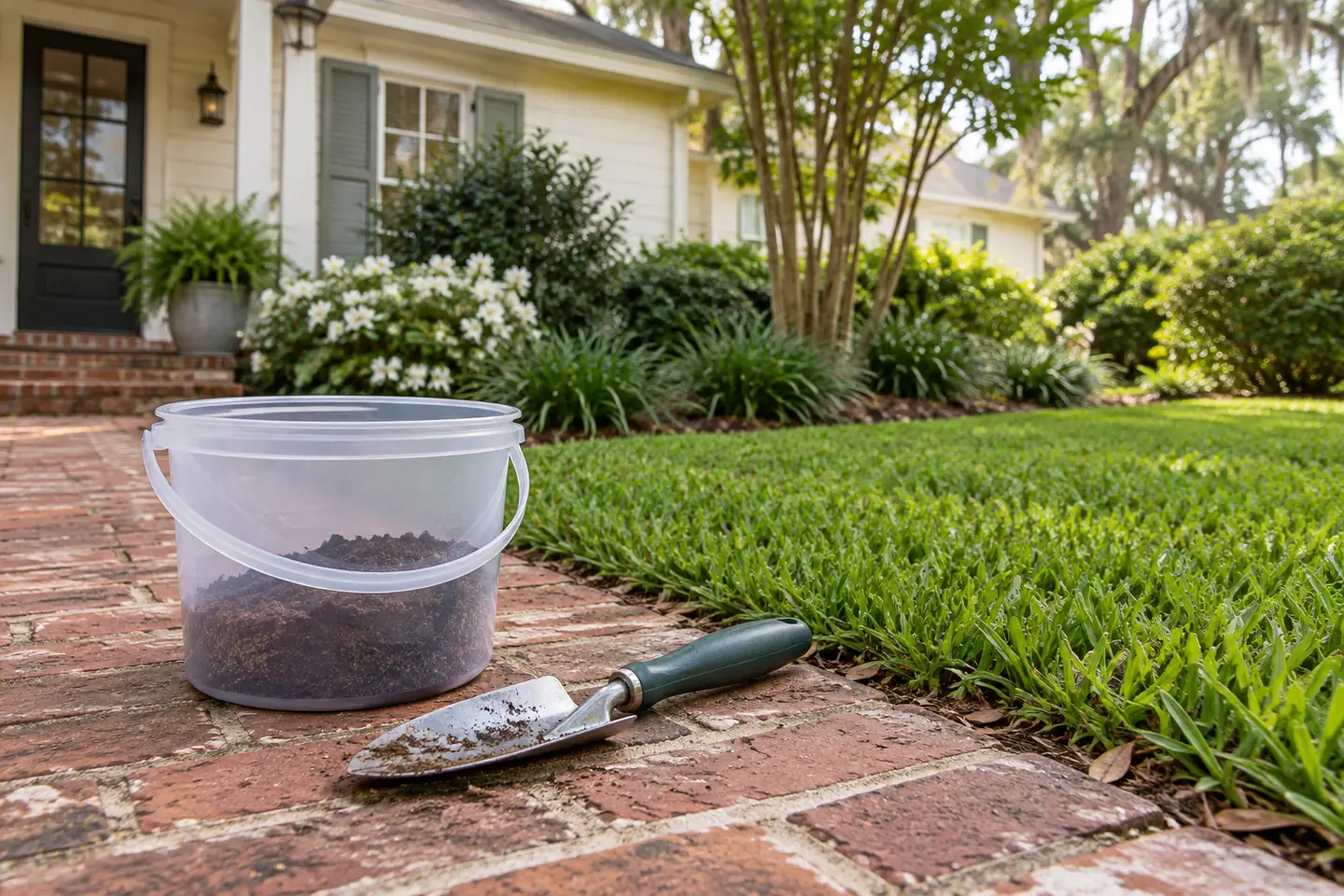
Draw boundaries that reflect meaningful differences
A front lawn and a backyard may have different histories even when they belong to the same address. A recently filled strip, a long-established lawn and a planted bed should not automatically become one container because mixing them is convenient. Ask the laboratory or Extension contact how to separate areas for the question being investigated. A simple sketch can identify the chosen sampling boundaries without claiming an exact soil map. Mark recent work, unusual deposits and areas you intentionally excluded. If the purpose is to investigate a specific patch, explain that before collection. Otherwise, a broad mixture may blur the difference you wanted the test to help understand.
Use a representative pattern within each selected area
One scoop from the gate path can describe that scoop without representing the entire lawn. Follow the recommended collection pattern and number of subsamples for the test. Keep the selected area and collection depth consistent. Avoid choosing only soil that looks easy to gather while skipping the rest of the agreed area. If a location cannot be sampled safely or appropriately, record the limitation and ask how to proceed. You are not expected to probe around unknown utilities, irrigation lines or other buried equipment to complete a pattern. A smaller clearly described sampling area is preferable to taking a risky shortcut or presenting an incomplete collection as fully representative.
Keep tools and containers from changing the sample
Use the clean tools and container type specified by the laboratory. Residue from another material can become part of the sample if a previously used bucket or tool is not suitable. Do not scoop soil into a container that recently held a lawn product, cleaning chemical or construction material. Keep labels and paperwork separate from loose soil until the packaging instructions call for them. If a container's history is uncertain, choose an appropriate clean one. These details may feel less interesting than the numbers on a future report, but they protect the connection between the yard and the laboratory result. The test should describe the selected soil, not the leftovers in the collection equipment.
Record recent inputs before interpreting the result
Recent amendments, treatments, topsoil deliveries or construction activity can matter to the sampling question. Tell the laboratory what you know and ask whether collection should be delayed or an area handled separately. Avoid guessing the identity of a product from an empty bag found near the shed. If the history is unknown, say unknown. A rental-property owner may have only part of the record; that limitation belongs with the sample rather than being filled in from memory. Photograph any available label or work description for your own file, keeping private information out of general maintenance messages. The history helps an appropriate adviser interpret the result within the site's actual circumstances.
Identify the lawn's intended use and grass
Laboratory interpretation can depend on the plant being grown. Give the requested turf identity and use information accurately. If the lawn contains mixed grasses or the species is uncertain, ask for help with identification rather than selecting a familiar name to complete the form. A result accompanied by the wrong plant information can lead the discussion in the wrong direction. Keep a broad lawn photograph and a suitable plant-detail photograph available for the relevant resource, but do not assume an illustrated guide proves the species. Separate the certainty of the laboratory measurement from the certainty of the grass identification. They are different parts of the information needed for an informed care decision.
Label the sample so the answer can find its way home
Use a clear area identifier on the form and container according to the submission instructions. Names such as front lawn or west side patch can work if they match a saved sketch. Avoid labels that will become ambiguous after you forget which gate you were facing. Record the collection date, the selected depth and any deviations from the procedure. Keep a copy of the submission information. If you send several samples, confirm that each label matches its own paperwork before packaging them. A laboratory can return accurate results that are difficult to use if the household cannot remember which bag represented which area. Good labeling preserves the value of the work already done.
Check the label against the sketch before sealing the package
Imagine two containers labeled front and side. If the sketch calls those areas street lawn and west gate strip, make the correspondence explicit before the samples leave the house. Do not rely on remembering which phrase another person used during collection. Place the intended area name in the saved submission record and verify that the laboratory form uses the matching identifier. If a container was already mixed or its identity is uncertain, ask how to proceed instead of assigning the label that seems most likely. This small check protects the connection between a future recommendation and the actual ground it is meant to address.
Packaging and timing are part of the procedure
Follow the laboratory's guidance for preparing and shipping the collected soil. Do not assume that a saturated sample in an unsuitable paper package will arrive in the condition you intended. Check the current submission method and any required information directly with the laboratory rather than relying on an old fee or address copied into a neighborhood message. If you are comparing results over time, keep the collection timing and method in the record. A future result is easier to interpret when you know whether the earlier sample represented the same area under a similar procedure. Consistency supports comparison; it does not promise that every later number should be identical.
Give a comparison sample a comparison purpose
When a struggling patch and a better-looking area are being compared, ask the adviser how each should be represented before mixing any soil. Keep their labels distinct through collection, shipping and the returned reports. A contrast only helps if the two results still correspond to the two places. Record obvious differences such as recent fill, shade or water collecting nearby without deciding that they explain the outcome. A laboratory comparison can contribute evidence, but it does not erase those site differences. The question remains why the areas perform differently, not simply which container produces the most reassuring number. Preserve both reports together with the original comparison question.
Know the questions a routine sample cannot settle
A routine fertility or pH report does not automatically identify a disease, explain every drainage problem or certify that a damaged lawn can safely receive equipment. Ask what the selected analysis includes. If a different concern is being investigated, an Extension or diagnostic resource can help identify the appropriate test rather than expecting one bag of soil to answer everything. Keep the laboratory's findings separate from assumptions added afterward. A low or high result may be relevant without proving the sole cause of a visible symptom. This distinction helps the owner choose a sensible next step instead of treating a report as a complete repair prescription for the entire yard.
- Save the sampling-area sketch and collection date.
- Follow the chosen laboratory's depth and preparation instructions.
- Identify the turf and known recent soil inputs honestly.
- Match every container label with its submission form.
- Keep test limits visible when discussing the results.
Preserve the lawn-maintenance handoff
If sampling leaves a disturbed spot or temporary marker, identify it and restore the area appropriately before a mowing visit. Happy Grass can discuss the maintenance scope and access for your lawn; laboratory collection, interpretation and soil amendments are separate questions. Ask for Happy at 504-339-3571 when arranging the grass work.