
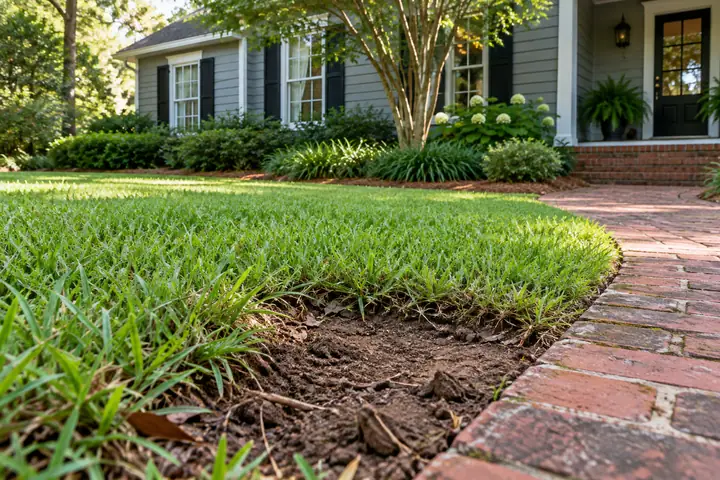
Begin with the soil property you mean
Homeowners often use clay as a shorthand for any lawn ground that feels hard. The word has a more specific meaning in soil description. LSU AgCenter explains texture through the proportions of sand, silt and clay mineral particles. Those proportions help explain differences in water movement and retention, but they are not the same thing as whether yesterday's walking route felt firm. A dry patch can feel hard without proving a particular texture. A wet patch can feel sticky without describing every layer beneath it. Start by separating a useful observation from the classification you are trying to establish. That makes the next question clearer and prevents one familiar soil word from becoming an explanation for every problem in the yard.
Texture and compaction describe different things
Texture concerns the mineral particle mixture. Compaction concerns the arrangement and condition of the soil, including the spaces through which air and water move. The two can interact, but they should not be used as interchangeable diagnoses. A path worn by repeated traffic may need an assessment of its condition even when the soil texture matches the rest of the lawn. Conversely, two areas with different textures may respond differently without either being diagnosed as compacted. Tell an adviser which property you know and which you are inferring. If the only evidence is difficulty pushing a tool into dry ground, preserve that observation without claiming it establishes both texture and compaction at the same time.
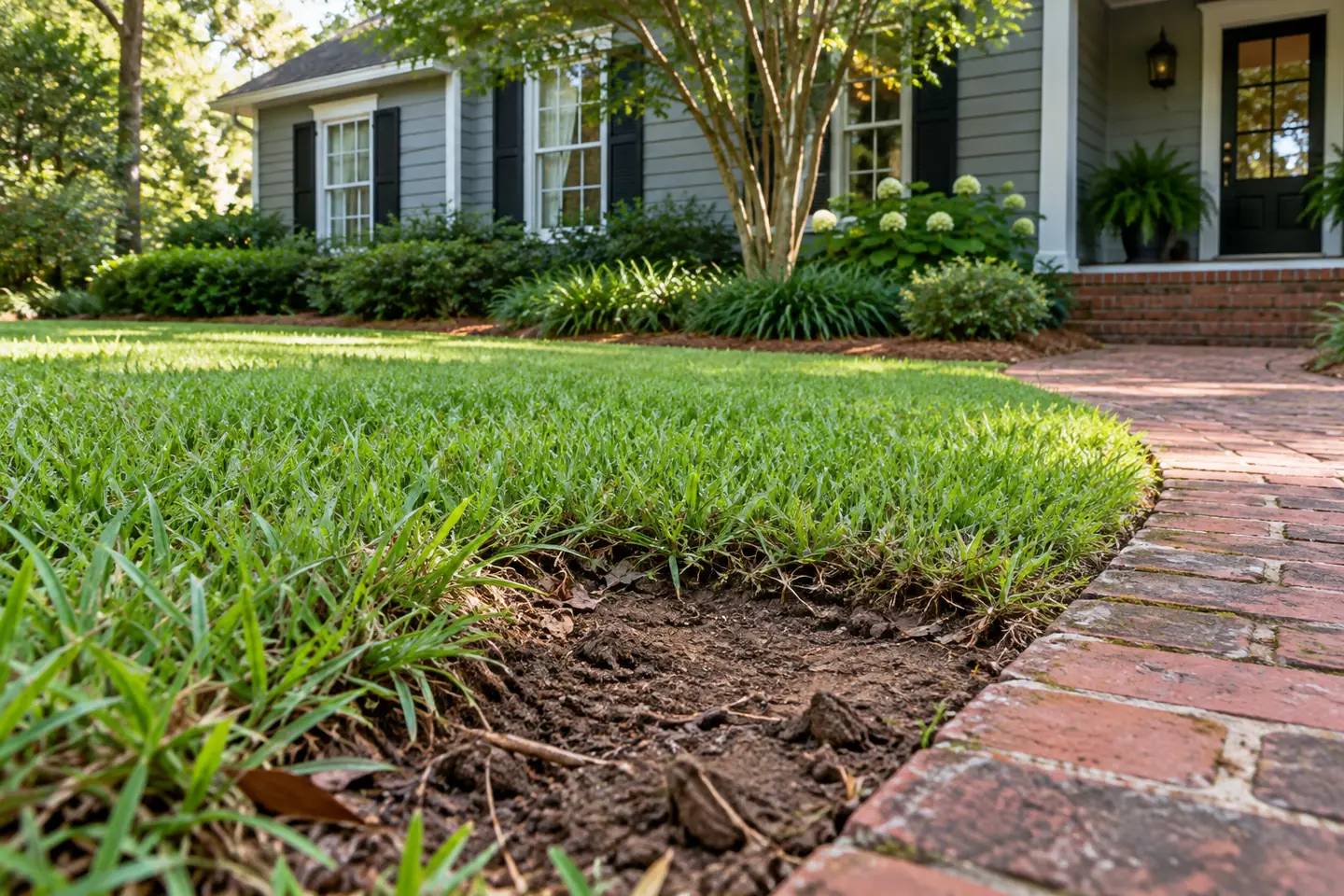
Moisture changes the impression in your hand
A handful collected after rain may behave differently from one taken during a dry interval. If you make a simple texture-by-feel observation under appropriate guidance, record the condition and source of the sample. Do not compare an air-dry clod from one corner with wet soil from another and treat the difference entirely as texture. Use a consistent method suitable for the question. Informal observations can help you describe a concern to Extension, but they do not automatically produce a laboratory classification. The useful outcome may be a better description of what needs confirmation. Keep the uncertainty visible instead of assigning an exact soil class from an improvised household exercise that was never carried out consistently.
A soil layer can differ from the one above it
The surface where grass grows may not match the material below, especially after construction or soil deliveries. A small amount of loose material at the top should not be assumed to describe the whole root zone. If a professional examines a profile, ask that the layer depths and locations be recorded clearly. Do not dig a deep inspection hole around unknown utilities, drainage lines or equipment to answer the question yourself. A safe observation from already exposed ground can be documented without enlarging the disturbance. The important point is that one surface sample and a whole soil profile are different views. Keep that distinction when discussing why water appears to move differently through neighboring parts of the property.
Think about water behavior without promising a formula
Coarser and finer textures can differ in water-holding capacity and drainage behavior. That broad relationship does not produce a complete watering schedule for a particular lawn. Structure, layering, roots, slope and how water is applied also matter. If someone suggests watering for a certain number of minutes because the ground is clay, ask what equipment and site information support the recommendation. A soil word cannot tell you how much that sprinkler delivers. Nor does it explain whether water reaching a low area arrived directly from irrigation or flowed there from somewhere else. Texture belongs in the discussion alongside those observations. It should improve the question rather than replace the other information needed to answer it.
Do not turn a delivery label into a lawn diagnosis
Material sold under a broad name may not establish the texture of the existing lawn soil or the properties of a finished mixture. Save the delivery description and ask what was actually supplied if that history matters. Avoid assuming that dark material is automatically rich, that visible sand proves rapid drainage everywhere or that adding a different material will simply cancel the existing texture. Mixing and soil amendment decisions need appropriate guidance. This page does not prescribe adding sand, compost or another material to an established lawn. The homeowner's useful contribution is to preserve what arrived, where it went and how the area changed afterward, without turning the product name into a guaranteed explanation of the result.
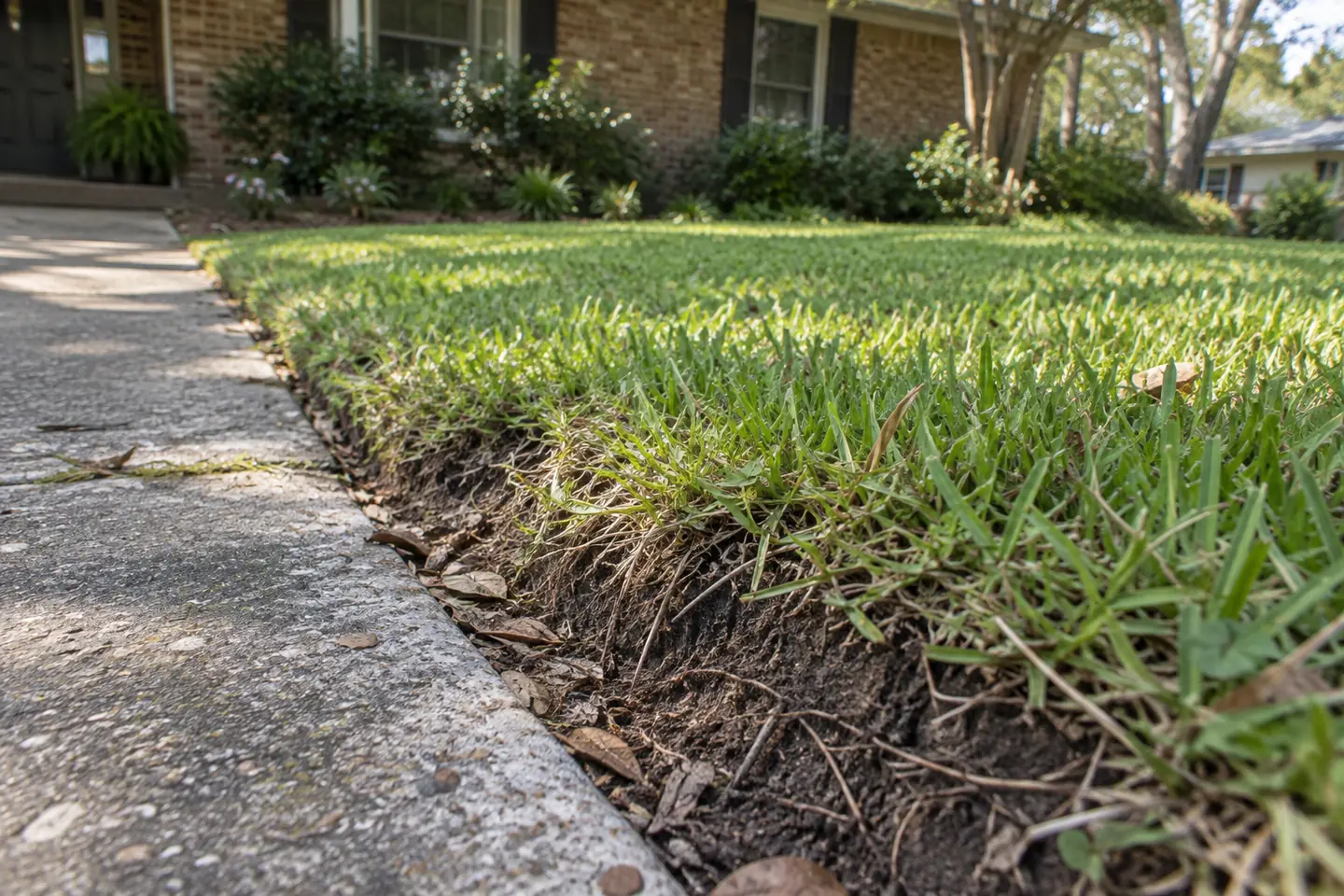
Compare areas with a reason for the comparison
Choose locations that answer the question you are investigating. If a delivery changed one strip, compare that strip with an appropriate unchanged area under a consistent method. If a wet corner differs from the center, note the slope and water route as well as any soil information. Do not select only the handfuls that fit your first idea. Keep the comparison locations on a sketch so their identities survive after the conversation moves from the yard to a laboratory or office. A comparison can be useful even when the answer remains uncertain. It is stronger when the selected areas and their differences are described honestly than when a few samples are presented as a complete map of the property.
Use laboratory and mapped information at the right scale
A report may estimate or measure texture depending on the test and laboratory. Ask what the result means and what area the sample represents. Published soil mapping can provide regional context, but a residential lot may include disturbed or imported material not resolved at that scale. Do not use a broad map as proof of the exact material beneath a recently built patio edge. Likewise, one laboratory sample should not automatically override every observed difference across a mixed site. The two types of information answer questions at different scales. An appropriate adviser can help connect them while keeping their limits clear. Save the source and method so later discussions do not blur an estimate, a field observation and a measurement into one unsupported claim.
Let the grass question remain a grass question
Poor turf growth may involve more than soil texture. Shade, grass identity, root injury, water distribution and other conditions can matter. A texture result provides context without proving which factor caused a thin patch. Keep the plant observations, site history and soil information together when asking for help. If the lawn changed suddenly, do not assume a long-standing texture explains the timing. Ask what else changed. That question can prevent an owner from authorizing a disruptive soil project because one familiar property was finally measured. Understanding the ground is useful; treating every new lawn symptom as a reason to rebuild it is a much larger conclusion that needs its own evidence.
Keep a field description separate from a delivery quantity
Knowing an area's texture does not establish how many yards of material a proposed project needs. That calculation also depends on area, intended depth and the purpose of the work. Ask that those assumptions be stated before accepting a delivery quantity as a soil-care recommendation. An estimate of volume can be arithmetically correct while the proposed material or depth remains unsuitable. Review the design question and the quantity question separately, retaining both explanations in the property record.
Translate the finding into a practical property record
Use clear language: which area was sampled, what method was used, what texture information was returned and what remains untested. Include any known layering or imported material. Keep the result beside the lawn's watering and maintenance history without letting it become a universal instruction for every provider. A homeowner in Gretna might learn that an assessed strip differs from the rest of the lawn and then ask how that affects the particular care question. The value is in making the next decision more informed. You do not need to replace every ordinary observation with a technical word. You need to know when the technical word adds useful information and when it is being asked to explain more than the evidence supports.
- Distinguish particle mixture from traffic-related soil condition.
- Keep sampling location, moisture condition and method with the result.
- Note surface layers and known imported materials separately.
- Ask whether a reported texture is estimated or measured.
- Preserve other plausible explanations for the lawn symptom.
Discuss the maintenance route with Happy
For mowing, edging, trimming and finishing work, describe current surface conditions and access rather than relying on a soil label alone. Happy Grass can discuss the agreed lawn-maintenance scope. Call 504-339-3571 and ask for Happy. Soil reconstruction and amendment work are not promised here.