
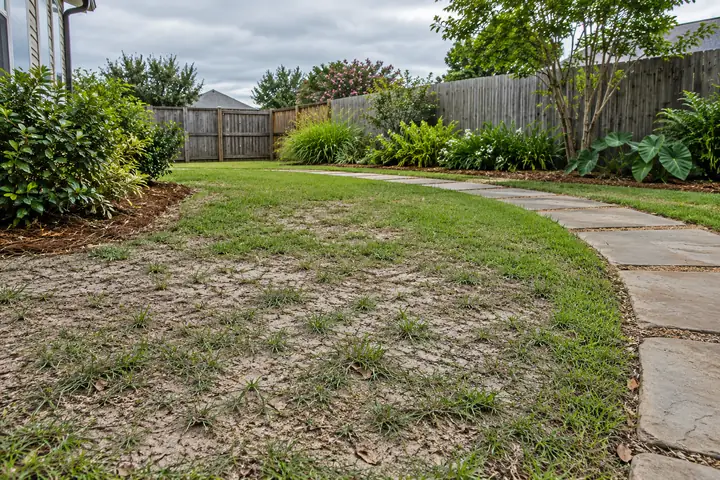
Begin with the surface, not the insect name
When a strip of turf looks lifted or disturbed, first describe the part you can see from an ordinary safe route. Name its location and extent using features that stay in place, such as a patio corner or fence line. The word tunnel can be a useful description of appearance, but it should not silently become a confirmed explanation of what made the mark.
Keep the lawn condition and the insect question on separate lines. You may know that the grass looks broken up while having no reliable identification of an organism below it. That is enough information to begin a useful conversation. A homeowner does not need to open the ground or walk across an uncertain patch merely to make a first message sound more complete.
Understand the two ways mole crickets can matter
LSU AgCenter describes mole crickets as soil-burrowing turfgrass insects present in Louisiana. Its guidance explains that their burrowing can disrupt grass and roots; some species also feed on plant material. UGA Extension likewise distinguishes feeding injury from the physical effects of tunneling. The concern therefore involves more than the height of the grass leaves.
That background helps explain why a lawn may need a closer ground-level assessment rather than an extra mowing pass. It does not identify every raised line or soft place as mole-cricket activity. Keep other possibilities open when the source of disturbance has not been established. The useful next step is to describe the surface and seek an appropriate assessment, not to use the appearance of one ridge as a treatment instruction.
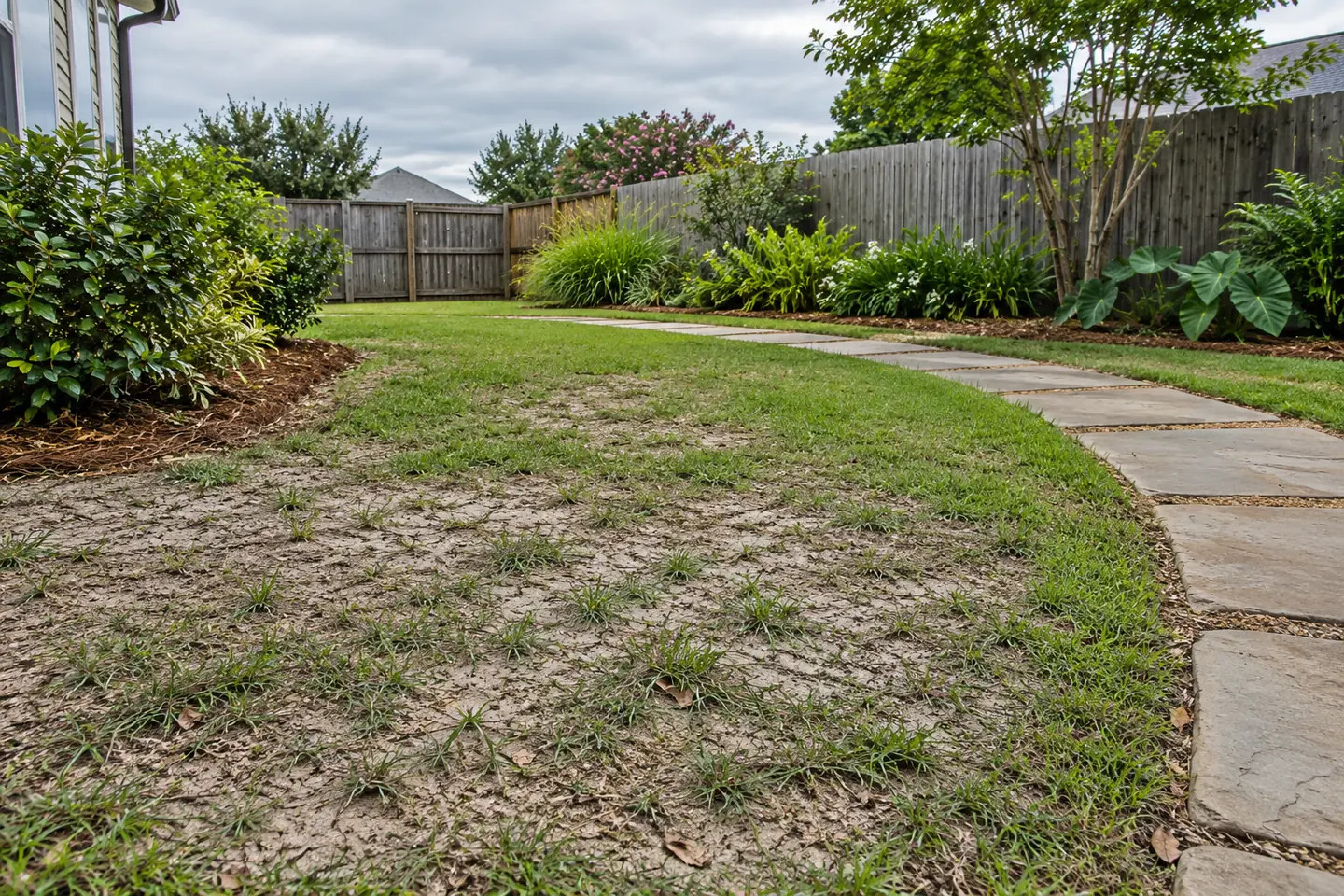
Show the route to the affected area
A damaged-looking patch can be located well away from the gate yet still affect the only path to the rest of the lawn. Photograph the relationship between the entrance, the disturbed strip and the grass beyond it. Explain whether another authorized route exists, and label any possible alternative as unconfirmed until it has been reviewed.
This makes the access consequence understandable without overstating the biological question. If the whole rear section depends on crossing the uncertain strip, say so. If the area is beside an otherwise ordinary path, explain that distinction. Happy needs a practical picture of the work area rather than a close photograph that makes the ground problem look isolated when it actually controls access to several other sections.
Keep existing holes and new disturbance distinct
The property may already have a known depression, old repair or uneven border close to the new mark. Name those features separately. A photograph showing several irregularities should not be described as one newly damaged area if part of it has been present for years. A short location key can prevent the older condition from being included in a new claim by accident.
Use ordinary factual labels: the old low spot beside the paving, the new raised line farther into the lawn, or the section not yet checked. Keep dates attached where they are known and uncertainty visible where they are not. That gives an adviser better context and gives the maintenance conversation an honest starting point. It also avoids blaming one recent event for every imperfect surface shown in the frame.
Notice whether loose turf is part of the question
LSU describes injured turf that may feel spongy or lose its normal anchoring as roots are affected. Treat that as background for an assessment, not a reason to repeatedly pull on the grass to reproduce an example. If turf is already visibly loose, describe the condition and show it from a safe position without enlarging the disturbed area for a better photograph.
Keep any separate inspection instructions with the qualified source that provides them. Do not infer that a mowing visit includes lifting turf, probing tunnels or conducting an insect survey. The practical lawn request can identify an uncertain patch and ask how it affects accessible maintenance while the investigation itself remains a distinct task with appropriate instructions and responsibility.
Avoid turning the yard into a tracking experiment
It can be tempting to flatten a mark and watch whether it returns, walk over a strip to compare firmness or dig along a line until something appears. Those actions change the evidence and can leave the next person uncertain about what was present originally. A location record and unaltered photographs are a clearer starting point for an introductory question.
If the owner has already changed the area, include that information honestly. State what was done, where and when, without trying to reconstruct an untouched condition that was never documented. A later adviser can then distinguish the original observation from the owner's intervention. For Happy, the important point is the surface being presented now, not a guessed version of the lawn before several informal tests were attempted.
Keep underground installations out of assumptions
A lawn can contain owner-known irrigation components, drainage features or other installations near the disturbed area. Tell the appropriate adviser about relevant known features, and identify their practical effect on the maintenance route. Do not assume a shallow-looking mark means that unrelated underground components are absent or that exploratory digging belongs in ordinary lawn preparation.
Use reliable owner information where available and leave unknown routes uncertain. A general insect guide cannot establish what is under a particular property. If a separate assessment involves excavation or another physical alteration, arrange the necessary questions through the responsible source rather than asking the lawn crew to improvise. The mowing discussion should describe an authorized, recognizable surface route around the actual features presented.
Ask identification questions without copying a calendar
The time of year can provide context, but it does not establish which insect is present or what stage it is in. LSU and UGA describe seasonal patterns within their respective guidance. Those regional descriptions should not be converted into a fixed appointment date or an instruction for a particular Westbank property without appropriate assessment.
When you seek advice, provide the date and your actual observations instead of saying that the calendar proves the cause. If an insect has been identified, retain the source and the specific area addressed by the answer. Keep later advice connected to that record rather than mixing it with an older account from another part of the yard. A useful seasonal note supports a question; it does not replace the evidence needed to answer it.
Make a mowing boundary that can be recognized on arrival
If a disturbed strip remains under review, describe the excluded area from the direction of the authorized entrance. Use stable references and explain whether the instruction applies to crossing it, working beside it or both. A note written only from the back-door viewpoint may be difficult to interpret by someone arriving at the side gate.
Name the owner contact who can update the arrangement. Keep a temporary boundary dated, and avoid leaving several competing diagrams or photographs in circulation. The rest of the lawn can be discussed separately where an ordinary route exists. This gives Happy a clear maintenance question without making an exclusion sound like a diagnosis or implying that a different tool automatically makes uncertain ground suitable to approach.
Separate surface repair from the grass finish
A tidy cut does not reconstruct disturbed soil, re-anchor loose turf or explain the cause of a subsurface problem. Keep those questions separate when you describe the desired result. A request to make it look normal can otherwise mean leaf height to one person and restoration work to another.
If another responsible professional will assess or restore the area, ask what lawn access will be appropriate afterward and keep the answer with its location. Do not promise a finish or reopening date on someone else's behalf. Happy can review the maintenance scope against the condition actually presented, while any repair, investigation or insect-control arrangement stays with the appropriate provider. Clear boundaries make the conversation useful without inventing work that is not part of Happy Grass's services.
Review the ground record after a meaningful change
Use the same safe viewing position when you provide an update. Name what changed: the visible line, the amount of loose soil, the accessible route or an instruction from the responsible adviser. Do not treat a mark becoming less obvious in taller grass as proof that the question is resolved. Describe visibility and assessment as different things.
Keep a completed repair or professional review distinct from an owner expectation that the area will probably be ready. If the situation remains uncertain, say so before the visit. A brief accurate update is more useful than an all-clear message that leaves the crew to discover the remaining concern. The next maintenance decision should follow the actual condition and authorized arrangement rather than a desire to return to the old calendar quickly.
Bring Happy a practical lawn question
For a lawn in Harvey, Marrero, Gretna, Algiers, Belle Chasse or Westwego, explain the affected area, available route and maintenance work you want considered. Call or text 504-339-3571 and ask for Happy. You can discuss ordinary lawn care while keeping an unresolved insect or ground-condition question with an appropriate source.
Keep the service scope honest
Happy Grass does not offer pest control, fertilization, aeration or overseeding. General mole-cricket background is educational and does not add investigation, treatment or ground-restoration services. Happy must confirm the actual maintenance work and available timing directly.
A short record to bring to the conversation
- Describe raised lines and loosened ground as separate features.
- Explain whether the disturbed surface lies on the work route.
- Request review without assuming ground repair is included.