
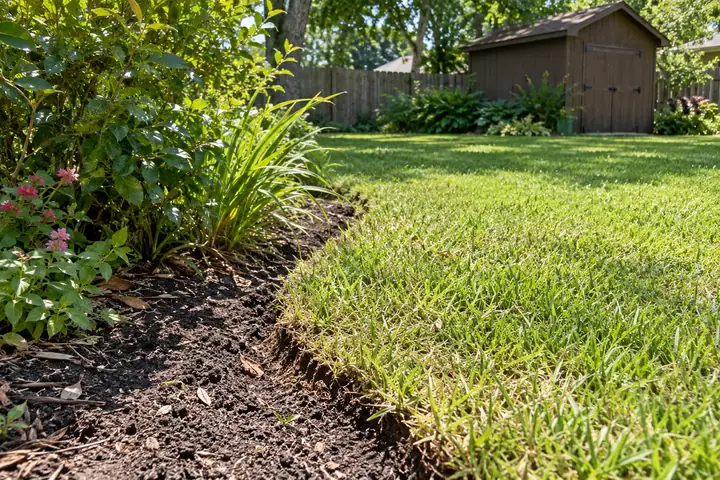
Describe what is loose before deciding why
A strip of grass lifting at an already disturbed edge is different from grass that is merely pale or short. Begin by describing the visible condition and its location. Say whether the turf was already lifted when noticed or whether another project exposed the edge. Avoid calling every detached piece grub damage before an appropriate assessment has connected the evidence.
Keep the original setting clear. A loose area beside recent construction, a bare patch created by another task and an otherwise undisturbed thin lawn can require different questions. A short accurate account of how the edge became visible is more useful than an attractive close photograph with that history omitted. Happy can then understand the maintenance concern without inheriting an unsupported conclusion about the cause.
Understand the root-feeding question
LSU AgCenter describes white grubs as larvae of several scarab beetle species that can feed on roots close to the soil surface. Its guidance associates injury with irregular thinning, yellowing or wilting and notes that animals seeking larvae can create additional disturbance. This explains why a root-zone assessment can matter when surface color alone is inconclusive.
Those descriptions do not prove that every loose patch contains damaging grubs or that every digging animal has the same reason for being there. Keep the direct observation separate from the possible explanation. If an organism is found, its identification and significance still need appropriate interpretation. A homeowner's record can be useful without converting one sighting into a whole-yard diagnosis or an automatic product recommendation.
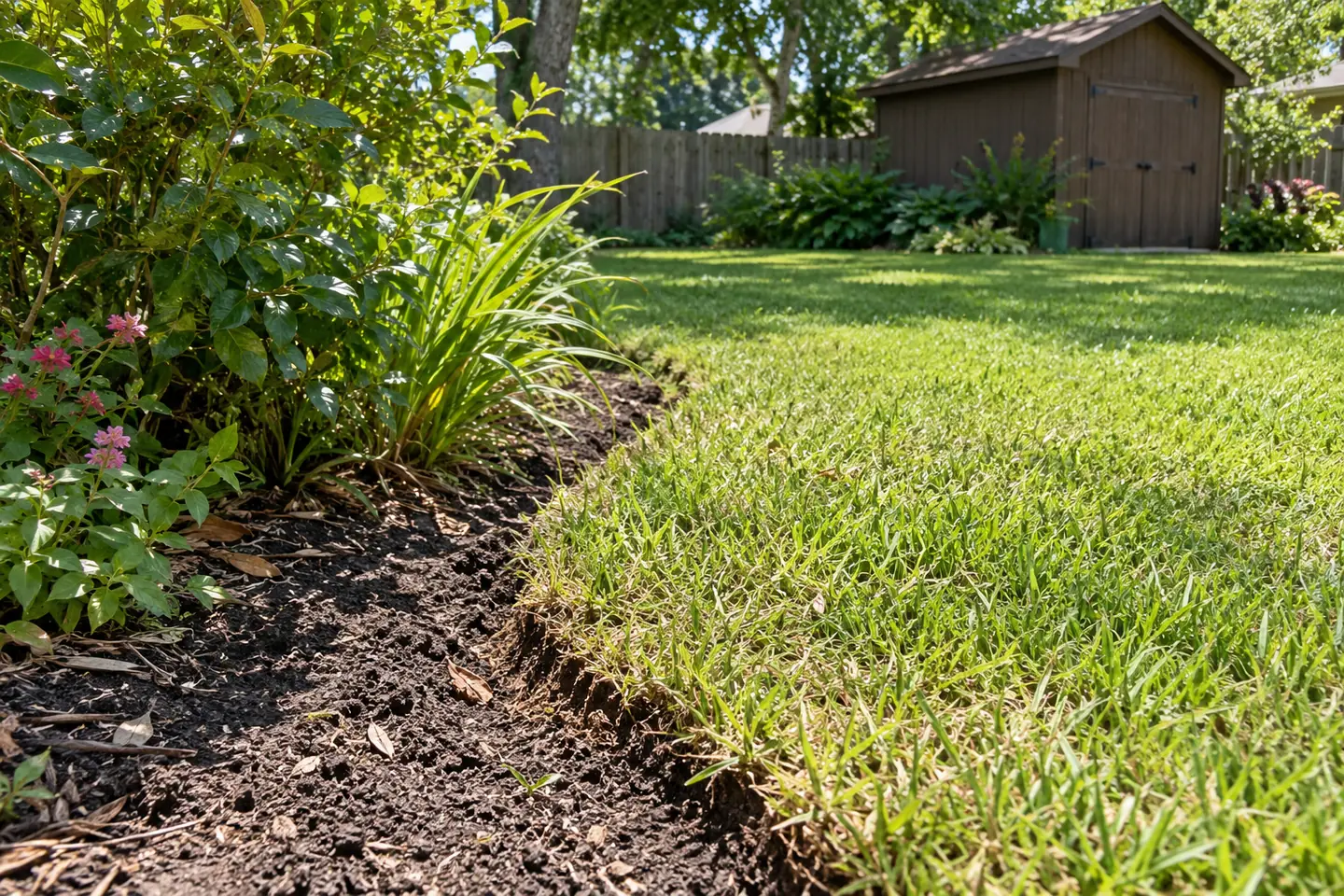
Distinguish a root concern from a leaf-height concern
A lawn can have short leaves and still be firmly attached to the ground, or taller leaves over an area that is already disturbed. Explain which condition prompted your question instead of using the word thin to mean both. Include a wider view that shows the affected area relative to the ordinary mowing footprint.
This distinction helps when discussing the next visit. The desired cutting height does not answer whether a loose piece is ready for normal access, and an uneven surface does not establish which insect, if any, is involved. A practical request can identify accessible grass separately from a portion awaiting assessment. There is no need to make every question about the yard part of one instruction to restore it during a routine maintenance visit.
Do not use repeated tugging as a substitute for assessment
Once the owner has noticed an already loose area, repeatedly lifting more turf can change the condition being documented. Preserve the location and the initial observation rather than enlarging the patch for a more dramatic picture. If a qualified source needs an examination or sample, ask for the appropriate current instructions for that task.
Keep any owner-created opening clearly identified in subsequent photographs. A later reader should be able to distinguish damage noticed first from a spot opened during investigation. This is not about making the record look tidy. It is about keeping the evidence interpretable and ensuring that the maintenance conversation reflects the ground that will actually be presented when a visit is considered.
Keep the insect and its location connected
If a grub-like organism is found during another task, record where that task occurred and how the organism became visible. Do not assume a specimen from a garden bed explains a thin patch several yards away. Likewise, keep different collection locations separate rather than combining them in a container and losing the connection to the original question.
Ask the receiving Extension office or appropriately qualified adviser what photographs or sample information are needed. Retain the instructions with the resulting record. The aim is to make identification and interpretation possible, not to gather as many organisms as possible without a defined purpose. A clear location label can be more useful than a much larger collection whose source has become uncertain.
Treat a single sighting as a question, not a whole-yard count
Finding one organism does not establish how it is distributed through the property or whether an action is justified. A number only becomes meaningful with its location, method and context. Do not compare a casual discovery during digging with a threshold from a different sampling procedure as if the two were equivalent.
If an adviser requests sampling, follow the relevant instructions rather than selecting a method that produces the answer you expected. Keep separate areas and dates identifiable. This page does not provide a treatment threshold, digging prescription or product choice. It helps homeowners preserve the distinction between noticing something in soil and reaching a supported decision about a particular lawn problem.
Give animal disturbance its own description
If the turf has also been dug or turned over, record that visible disturbance separately from any insect evidence. Show the extent from a safe existing route and name affected borders or access points. Do not identify an animal solely from a hole photograph unless an appropriate source has actually supported that conclusion.
The maintenance consequence may be clear even when the cause is not. Loose turf or an uncertain approach can change what work should be discussed before the visit. Keep any separate wildlife, repair or safety question with the responsible source. A mower should not be presented as a way to investigate the hole, press everything back into place or establish why the animal activity occurred.
Distinguish a known watering history from a guessed remedy
UF/IFAS discusses soil moisture as part of white-grub biology and the difficulty of diagnosing yellow turf from appearance alone. For a homeowner seeking advice, the useful contribution is the actual known water arrangement and any recent change, not a hurried attempt to make the lawn fit a suspected explanation.
Record relevant owner-controlled irrigation changes accurately and leave uncertain rainfall or system information uncertain. Avoid adding several new actions before the original condition has been described. If a professional requests specific information about moisture or management, keep that request with its source. The lawn service discussion can then stay focused on present access and suitable maintenance while the assessment uses a clear history rather than an unrecorded series of experiments.
Do not transfer a specimen name into a recovery promise
Even when an organism has been identified, that answer does not automatically establish how every affected area will recover or what work belongs in the lawn visit. Ask what the identification does and does not explain. Keep any recommendation connected to the actual area and evidence considered.
For Happy, state the current condition and any owner-confirmed restriction. Do not describe a routine mowing request as replacement sod, root repair, pest control or an assessment of recovery potential. Those are separate discussions. A useful service arrangement names the accessible grass and agreed finishing work, with unresolved restoration questions visible instead of hidden inside a broad request to make the lawn normal again.
Use a release note after a separate inspection
If someone opens or examines a section of turf, the property note should say what condition remains afterward. Identify any opening, loose material or excluded area that still affects the route. A completed inspection is not the same as a statement that every surface is ready for ordinary maintenance.
Ask the responsible person to explain the practical access arrangement they are leaving, and keep that answer dated. Do not ask Happy to infer the end of an exclusion from a close-up specimen photo or from the departure of another provider. A clear release note helps the next lawn conversation move forward while keeping investigation and any restoration responsibility with the appropriate source.
Compare the next view without changing the question
When you record a follow-up, return to the same location and keep the date visible. Describe the current surface, the known work since the first observation and any assessment that has actually been provided. Separate fresh grass growth, a changed camera view and an owner-created repair from conclusions about the original insect concern.
If the next question is whether a section can rejoin the ordinary mowing scope, ask that directly. If identification remains unresolved, keep that question with the adviser. A useful record does not have to deliver one answer to every concern. It should make the next decision understandable without quietly rewriting the earlier evidence to suggest a diagnosis, treatment or successful recovery that was never established.
Make the maintenance request about the presented lawn
For a property in Harvey, Marrero, Gretna, Algiers, Belle Chasse or Westwego, tell Happy which areas are accessible and what finish you want considered. Include a current wide view of any loose or excluded section. An accurate request is easier to review than a promise that the yard will probably be ready before arrival.
Keep the service limits in the conversation
Call or text 504-339-3571 and ask for Happy. Happy Grass does not offer pest control, fertilization, aeration or overseeding. General white-grub background does not add those services, authorize treatment or guarantee lawn restoration. The actual maintenance scope and available timing need direct agreement.
A short record to bring to the conversation
- Keep the root-attachment observation tied to its location.
- Label a specimen found elsewhere as a separate observation.
- Avoid converting animal digging into proof of a grub finding.